Artificial Intelligence Updates

Uncover our latest and greatest product updates
Redefining Infrastructure With AI: Aziro’s Approach to Scalability and Resilience

Redefining Infrastructure With AI: Aziro’s Approach to Scalability and Resilience

In today’s increasingly digital age, organizations face mounting challenges in managing large amounts of data, irregular workload fluctuations, and highly sophisticated technological ecosystems. The conventional infrastructure management turns out to be inadequate, incapable of delivering the required flexibility, responsiveness, or scalability to address such changing needs. Aziro, the innovator in AI-native engineering, meets these pivotal challenges through deeply embedding artificial intelligence into infrastructure management. Aziro’s cutting-edge solutions enable businesses with record-breaking scalability, strong operational resilience, and impressive system reliability, guaranteeing success in the face of technological changes and increasing business complexities. Can Aziro Improve Your Cloud Infrastructure? Cloud infrastructure is the virtual underpinning of modern-day organizations. It carries mission-critical applications, fuels real-time analytics, and enables dispersed teams. Yet, conventional cloud configurations tend to run with static provisioning designs, where resources are provisioned according to forecasted demand. This leads to over-provisioning (and unnecessary spending) or under-provisioning (and resulting slowdowns and downtime). That’s where Aziro’s AI-first architecture provides a significant step up. By integrating intelligent analytics into cloud operations, Aziro enables the analysis of workloads in real-time and the automatic scaling of resources. Consider a platform that not only identifies a traffic surge before it occurs but also auto-provisions resources to accommodate it, with no human intervention needed. This decreases the mean time to recovery (MTTR) and allows IT organizations to concentrate on long-term gains instead of firefighting. Aziro also supports robust infrastructure scaling during large-scale changes, whether it’s adding thousands of new users or moving legacy infrastructure. Their platform is easily integrated with CI/CD pipelines, infrastructure-as-code tools, and observability platforms. With this, change is no longer dangerous; it’s routine and controllable. How Can Aziro Help With Operational Resilience? Operational resilience is not only about responding to issues; it’s also about preventing them. Whatever the cause, regional outages, hardware malfunctions, software glitches, and unplanned downtime can lead to revenue loss, compliance penalties, and damage to the brand. Aziro bolsters business continuity through proactive, AI-driven infrastructure. A top value in Aziro’s resilience strategy is predictive incident management. By leveraging telemetry from throughout the tech stack, servers, VMs, containers, databases, Aziro trains its AI models to identify early warning signs of system deterioration. That means problems such as memory leaks, CPU spikes, or latency buildup can be corrected before users are affected. Self-healing automation adds yet another level of resilience. When problems are detected, Aziro’s system can automatically reroute traffic, create backup instances, or recover services from snapshots, eliminating the need for human intervention. This minimizes mean time to recovery (MTTR) and allows IT teams to prioritize long-term enhancements instead of firefighting. Aziro also enables resilient infrastructure scaling through large-scale changes, whether it’s adding thousands of new users or migrating legacy infrastructure. Their platform seamlessly integrates with CI/CD pipelines, infrastructure-as-code tools, and observability platforms. Change is no longer perilous — it’s standard operating procedure. How Does Aziro Enhance System Reliability? For nearly every company today, reliability is a currency. When your platform crashes, not only do you lose customers, but you also lose trust. As digital experience has become a leading brand differentiator, system reliability needs to be built into the core of the infrastructure. Aziro introduces AI to this equation by using predictive maintenance principles for IT systems. Like how smart factories today utilize machine learning and sensors to prevent equipment failures, Aziro applies AI to analyze logs, system metrics, and past incidents. The outcome? Downtime is no longer unexpected, it’s avoided thanks to smart planning. Anomaly detection is an important piece. Aziro constantly measures real-time system performance against learned baselines. When something is different, such as an API that begins slowing down or a database encountering unusual query volume, the system signals it and automatically starts triaging the problem. In most instances, it can even fix the problem by tweaking the configuration, clearing queues, or scaling resources. Yet another space where Aziro excels is load balancing and traffic distribution. With AI used to track user habits and system latency, it dynamically directs traffic to the healthiest, most responsive nodes. It doesn’t merely avoid outages, it also enhances overall user experience by removing latency and jitter. In regulated industries or mission-critical environments, Aziro also simplifies compliance. With audit logs, policy automation, and encrypted backup capabilities out of the box, it helps businesses remain compliant with HIPAA, GDPR, ISO 27001, and other standards, without overloading IT staff with manual audits. Why Does This Matter More Than Ever? We’re living through a time when digital infrastructure is both a competitive advantage and a potential vulnerability. The organizations that succeed are those that can scale intelligently, recover quickly, and operate with reliability across every layer of their stack. Aziro enables this by turning infrastructure into a living, learning system —one that adapts in real-time and improves continuously. Rather than adding AI to the solutions generated after the fact, Aziro has designed infrastructure anew. The company integrates AI into provisioning, monitoring, security, and maintenance, designing a single system that is much more than the sum of its components. The effect is real, from saving cloud expenses by as much as 30% to cutting incident response time by 50% and enhancing uptime in hybrid environments. Aziro is enabling companies to move smarter and faster. Not only to ride out digital disruption, but to drive it. To Sum Up Redefining infrastructure is more than just a catchphrase; it’s imperative. As organizations expand their online presence, their infrastructure must also evolve from a reactive system to an active partner. Aziro makes this vision a reality by marrying AI with the very fabric of infrastructure planning. With dynamic cloud optimization, inherent resilience, and innovative reliability models, Aziro is empowering forward-looking companies to scale boldly into the future. Whether you’re a rapidly expanding startup or an enterprise transforming legacy infrastructure, Aziro provides the smarts and infrastructure to enable you to succeed.

Aziro Marketing

What Sets Aziro Apart in AI-Powered Digital Transformation?

What Sets Aziro Apart in AI-Powered Digital Transformation?

Digital transformation is redefining the world, and Artificial Intelligence (AI) is leading this change. As companies strive to innovate, automate, and make informed decisions, selecting the right AI partner is crucial for staying competitive. Aziro, a pioneer in AI-based product engineering, is making a significant impact by offering solutions that exceed the norm. Formerly MSys Technologies, Aziro has transformed itself with an AI-first strategy that combines technical expertise with innovative solutions, created to address the real issues businesses encounter in today’s world. In this blog, we will discuss why Aziro’s AI-driven transformation stands apart. We will learn how they differentiate themselves through several innovative business solutions, how businesses integrate AI into automation, and how it enables them to make decisions based on data-driven insights. Ultimately, we will describe how they enable companies to unlock their full potential in a continually evolving digital world. What makes Aziro’s Solutions Unique? When it comes to AI-based solutions, Aziro is leading the way rather than just following the trends. The company takes a distinct approach by incorporating AI from the outset, rather than merely layering it on top of existing systems. This AI-first approach guarantees businesses don’t merely cope with digital transformation; they excel within it. What really differentiates this enterprise is its capacity to realize that each industry presents a different set of challenges and opportunities. They do not follow a one-size-fits-all policy. Rather, it creates tailored solutions for each industry based on its particular requirements and adapts its AI solutions to provide tangible, meaningful outcomes. Another differentiator is Aziro’s focus on scalability. With growth comes changes in technology needs. Their AI solutions take that into consideration, created to scale and keep pace as companies get bigger. Subsequently, by utilizing AI for automation, this company can scale businesses without a fear of outgrowing their AI systems, making their solutions profitable and future aligned. How does Aziro use AI for Automation? Automation is fundamental to Aziro’s AI solutions. In today’s dynamic business world, automation has appeared as a significant element for improving efficiency, minimizing costs, and maintaining a competitive edge. They do not just go with basic task management; it merges AI with the process of automation, allowing enterprises not just to carry out redundant tasks with no human involvement but also to adjust and transform according to changing circumstances. One of Aziro’s main products in automation is the combination of AI with Robotic Process Automation (RPA). When RPA is combined with AI, it becomes a highly effective tool for automating numerous business processes. The company utilizes AI-based RPA to automate tasks like data entry, transaction processing, and customer support. Moreover, by utilizing AI for automation, Aziro Technologies allows companies to refine their operations and make quick decisions. How does Aziro support AI-driven decision-making? Decision-making is extremely crucial in all small and large enterprises in today’s data-centric circumstances, and AI is gradually becoming an essential support for making strategic decisions. Aziro enhances decision-making by presenting AI-based insights that enable numerous businesses to make better, research-based decisions. With its sophisticated machine learning algorithms and data analysis functionality, it allows businesses to extract valuable insights from vast amounts of data, enabling all the decision-makers to act confidently. One of the primary ways this company facilitates AI-informed decision-making is through enhanced predictive analytics. By examining past data and recognizing trends, their AI frameworks are able to forecast future conditions and trends. This is especially valuable in fields like sales forecasting, inventory control, and market trend observation. In addition, Aziro’s AI solutions enable companies to predict future requirements based on previous purchase patterns, empowering enterprises to make informed decisions accordingly. Yet another crucial feature of their decision-support systems is their ability to process both structured and unstructured data. Most traditional data analysis techniques are often unable to provide meaning to unstructured data, such as customer feedback, social media messages, or emails. However, with the aid of natural language processing (NLP) and other advanced AI methods, Aziro analyzes this data, providing a more comprehensive view of customer sentiment, market conditions, and future trends. Additionally, the enterprise provides transparency and explainability in its AI models. In sectors like finance and healthcare, where accountability is the centerpiece, it is critical that decision-makers comprehend how AI-generated recommendations are created. Aziro prioritizes giving transparent, understandable explanations of its AI algorithms, promoting trust and confidence in users. Transparency is essential for organizations that must justify AI-driven decisions to customers, regulators, or stakeholders. By enabling AI-informed decision-making, Aziro Technologies also equips companies to make quicker and better decisions, therefore resulting in enhanced and faster business results. To Wrap Up In an era where digital transformation is imperative to remain competitive, Aziro Technologies is at the forefront of AI-based solutions. With its AI-native experience and automation and decision-making power, the company empowers businesses to revolutionize their operations, foster innovation, and maximize efficiency. Whether through the automation of routine tasks, data-driven decision-making, or the industrial-scale deployment of AI solutions across various industries, this enterprise enables multiple businesses to harness the full potential of their digital transformation journey. Now, as more and more companies adopt AI, Aziro Technologies is at the forefront of the curve by offering tailored, scalable, and effective AI solutions. Through them, companies are not only able to address their immediate needs but also future-proof their operations in a speedily AI-driven world.

Aziro Marketing

Transforming Enterprises: The Aziro Edge in AI, Cloud, and Resilience

Transforming Enterprises: The Aziro Edge in AI, Cloud, and Resilience

Across every industry, line-of-business leaders now share a common priority. They must modernize fast without sacrificing stability. Artificial Intelligence, cloud-first infrastructure, and Operations have become basic expectations, yet many businesses still run on extensive legacy systems and fragmented teams. They know the destination, but the route is filled with technical debt, security pitfalls, and talent shortages. What they need is a guide that brings deep product engineering roots together with forward-looking research, one that can embed intelligence into the very fabric of their platforms while keeping the lights on for millions of end-users. That guide must also showcase outcomes and provide measurable value that boardrooms can rely on. In this blog, we will explore how Aziro delivers this benefit by integrating AI expertise, cloud fluency, and resilience into a single, transformational edge for various businesses. What Benefits does Aziro Bring to Enterprises? As technology continues to reshape industries, businesses need more than just digital solutions, they need reliable partners who support their vision. Aziro helps in merging engineering expertise with a business-first mindset. Whether you’re creating a new platform, modernizing legacy systems, or scaling to millions of users, Aziro helps you get there faster, leaner, and smarter. Accelerated Time to Market: Aziro brings full-stack teams across AI/ML, cloud, UX, and architecture, therefore enterprises don’t waste time juggling vendors. Their pre-built accelerators like test automation frameworks and governance kits help jumpstart delivery. This speed enables companies to seize market opportunities ahead of competitors. Business-Aligned Agile Execution: Agile at Aziro is more than ceremonies, it is aligned to business value. By integrating value stream mapping into sprints, each iteration moves the needle on real KPIs. Scope changes are embraced smoothly without derailing the bigger picture. Regulatory & Domain Expertise: From FinTech to Healthcare, Aziro’s engineers bring deep regulatory understanding. This reduces back-and-forth with legal and compliance teams, shortening approval cycles. It also ensures that your product meets market standards from the outset. Scalable and Production-Ready Solutions: Aziro doesn’t stop at MVP, they even scale your platform with performance, security, and observability in place. Clients have seen incident volume drop by over 10% in just the first few months post-launch. These results come from solid DevOps foundations and cloud-native best practices. Internal Team Enablement: Aziro partners with your teams rather than just delivering code in isolation. Their co-engineering model turns each engagement into a skills-transfer opportunity. Your teams walk away smarter, more confident, and ready to build independently. Can Aziro Improve Cloud Infrastructure? A resilient digital business rests on an elastic, cost-aware, and policy-compliant cloud core. Many organizations, however, still manage lift-and-shift estates that mirror on-premise inefficiencies, or they fall into the opposite trap of runaway spending due to unchecked service sprawl. The transformation partner under review approaches cloud modernisation as a strategic program, not merely a migration checklist. Its architects begin by mapping workloads to the most efficient compute and data tiers, choosing between containers, serverless functions, or managed platforms according to latency, throughput, and compliance needs. Platform engineering blueprints then standardise infrastructure as code, continuous delivery pipelines, and secrets management so that every environment is recreated reliably. Best practice guardrails are baked into version-controlled templates, preventing configuration drift and reducing onboarding time for new developers. Observability is provided through a single pane that blends real-time metrics, distributed traces, and anomaly detection powered by machine learning. With Aziro, companies can also tap domain-specific solutions such as reference architectures for high-performance databases, immutable storage vaults for regulated data, and zero-trust networking overlays that protect hybrid estates without adding complexity. The cloud program is rounded out by financial governance. Tagging conventions, usage forecasts, and automated right-sizing scripts ensure that consumption remains aligned to budget. In several success stories, enterprises have reported savings of up to thirty percent within six months, while simultaneously improving deployment frequency by a factor of four. That dual achievement lowered spend and higher velocity and illustrates the difference between a cloud journey guided by ad hoc contractors and one led by engineering strategists who treat cost and performance as two sides of the same coin. How can Aziro Help with Operational Resilience? Operational resilience goes beyond uptime, it’s about engineering systems that withstand disruption, recover swiftly, and evolve stronger. Aziro builds this resilience through a layered approach that spans secure development, runtime preparedness, and data integrity, ensuring businesses can operate confidently in uncertain conditions. Proactive Security and Code Assurance: Aziro embeds security directly into the development lifecycle. This includes secure coding practices, static and dynamic code analysis, and SBOM (Software Bill of Materials) validation. These steps reduce vulnerability windows and protect software supply chains from hidden risks. Self-Healing Runtime Architecture: Site Reliability Engineers (SREs) implement self-healing mechanisms like circuit breakers, bulkheads, and adaptive throttling. These patterns ensure services degrade gracefully rather than failing catastrophically. Chaos testing in staging environments uncovers failure points early, reducing production incidents. Automated Incident Management: On-call rotations are supported with intelligent runbooks and automation scripts. This enables quick fault isolation, smooth rollbacks, and even regional failovers when needed. Post-incident reviews focus on system learning, not finger-pointing, turning each failure into a design improvement. Robust Data Durability and Recovery: Data resilience is ensured through multi-region replication and immutable backups. Transactional integrity checks guarantee precision recovery during outages or data loss. Compliance needs are met through tamper-proof logs and cryptographic audit trails. Resilience as a Business Differentiator: By improving MTBF (Mean Time Between Failures) and reducing MTTR (Mean Time To Resolution), Aziro helps turn resilience into a competitive edge. Customers experience higher trust, and leadership earns confidence from investors and regulators alike. It’s no longer just a compliance checkbox, it’s a strategic advantage. Conclusion Businesses that lead in the era of software products, must excel at three converging disciplines. They must harness AI to make software smarter, adopt cloud native foundations that scale on demand, and combine resilience into every layer so that innovation ensures stability. The journey can feel overwhelming when tackled independently, yet it becomes reasonable and even inspiring when guided by a partner that merges deep product lineage with forward-looking research. By combining multidisciplinary talent, proven accelerators, and a culture of improvement, Aziro empowers organizations to transform faster, operate leaner, and face the future with more confidence. The gains are not limited to technical metrics alone. But, they also provide new revenue streams, happier employees, and clients who trust that the services they rely on will be there every time they log in.

Aziro Marketing

Why Aziro’s AI-Native DevOps is the Future of Reliable Systems

Why Aziro’s AI-Native DevOps is the Future of Reliable Systems

The quest for always-on digital services has pushed DevOps far beyond its original goal of faster releases. Modern teams must also deliver resilience, security, and real-time adaptability. One company has re-imagined this landscape by baking intelligence into every layer of the software-delivery pipeline. Aziro couples classic DevOps culture with machine-learning models that predict issues before they arise, recommend the safest deployment path, and even trigger self-healing actions when anomalies are detected. First adopted by fast-moving ISVs, its AI-native approach is now influencing enterprises that cannot afford downtime or slow recovery times. More importantly, the platform treats AI as a first-class citizen rather than a plug-in. Telemetry from code, infrastructure, and user behavior is processed continuously, creating a feedback loop that learns, adapts, and optimizes without manual tuning. The result is a delivery engine that grows smarter with every commit and every incident, steadily shrinking the gap between code and customer value. How does Aziro integrate AI with DevOps? Continuous integration and continuous delivery generate millions of data points each day—from build logs and static-analysis results to real-time performance counters flowing out of staging clusters. Turning that torrent of data into actionable insights begins with disciplined data engineering. All records are normalised into a high-density feature store where they are timestamped, enriched with contextual metadata, and made instantly available to an ensemble of diagnostic models. Classification pipelines separate harmless noise from genuine risk, allowing defects to be identified and trapped long before they reach production. At this stage, the platform, branded as Aziro within customer dashboards, assembles a composite risk score for each commit. From there, a reinforcement-learning policy orchestrator evaluates live traffic from canary environments, continuously adjusting route percentages so end-users always experience the most stable version available. If outlier error rates begin to climb, the orchestrator triggers an automated rollback, explains the root cause in plain language, and opens a remediation ticket linking directly to the offending commit. Infrastructure-as-Code repositories are scanned in parallel; whenever drift is detected, an auto-generated pull request proposes the recommended state, keeping human owners fully in control. Once code reaches the main branch, a topology-aware pipeline graph selects the most efficient execution plan, grouping container builds by dependency so that identical layers are compiled only once. Edge cache invalidations are orchestrated automatically, ensuring that fresh binaries propagate through CDN nodes without human intervention. This end-to-end choreography drastically shortens cycle time while preserving strict traceability for every artefact. How does Aziro Enhance System Reliability? Site Reliability Engineering inside the platform begins with exhaustive observability. Every service call is tracked, every metric is tagged with business context, and every dependency is mapped, enabling the modeling of cascading risks in advance. Predictive analytics engines then scan those signals for precursor patterns—subtle increases in garbage-collection pauses, widening latency histograms, or fan-in spikes that foreshadow resource starvation. Engineers receive hourly posture reports that translate technical drift into potential financial impact, making error budgets tangible for non-technical stakeholders. When an alert exceeds the established budget, an incident graph engine springs into action. It correlates telemetry with historical remediation logs, producing a ranked shortlist of suspected failure domains. First responders see a clear decision tree: which node to inspect, which configuration to revert, and which mitigation playbook has the highest probability of success. Guided triage slashes mean time to acknowledgement and buys breathing room for deeper root-cause analysis. In parallel, a chaos-experimentation scheduler continuously probes the production-grade staging environment. Each experiment is chosen by a weighted algorithm that balances learning value against potential disruption, ensuring high-impact scenarios are tested early and often. Results flow into a resilience knowledge base so future releases inherit the defences learned from previous shocks. In addition, an auto-tuned recovery planner generates simulated rollback scripts for every central subsystem at the moment of deployment, guaranteeing that responders have a proven fallback long before any incident strikes. What is the role of AI in Aziro’s products? Beyond pipelines and infrastructure, the organisation embeds intelligence into standalone offerings that customers can plug into their ecosystems. Aziro doesn’t just use AI to enhance workflows; it builds entire product experiences around it. Mobitaz, for example, provides continuous mobile app test automation by mapping every test flow to device interactions, OS-specific behaviors, and usage patterns. MTAS, a lightweight and scriptless test automation engine, leverages AI to identify UI objects and automatically heal broken test cases, helping QA teams keep pace with frequent changes. PurpleStrike RT, focused on real-time performance testing, uses AI to model user load, detect potential bottlenecks, and adapt test conditions dynamically. These products share a common design philosophy: an explainable core, open APIs, and a learning loop that personalises recommendations to each environment. Over the past hundred words, we have maintained distance from the keyword while outlining product strategy. The architecture under the hood is also composable; models are deployed as microservices wrapped with feature flags, allowing teams to adopt new capabilities incrementally without compromising stability. To Wrap Up After surveying the practice and the platform, it is clear that Aziro has moved DevOps into the age of learning systems. By combining continuous delivery, site reliability engineering, and purpose-built AI products, the company delivers faster feedback, lower incident counts, and infrastructure that fixes itself before customers ever notice a glitch. For leaders evaluating how to modernise their delivery stacks, AI-native DevOps is no longer a research topic. Also, it is a proven route to resilient, scalable software that keeps pace with business ambition.

Aziro Marketing

How Aziro Uses AI to Automate and Optimize Business Processes

How Aziro Uses AI to Automate and Optimize Business Processes

Aziro is unlocking the potential of Artificial Intelligence (AI) to solve real-world business challenges and reinvent how businesses operate at every single level. From automating regular work to enhancing decision-making, they apply AI in a way that injects tangible benefits into business operations. Not only do Aziro’s AI-powered solutions replace human labor to an extent, but they also unlock team potential to perform operations in a leaner way and make quicker, smarter decisions. In this blog post, let’s dive into how it applies AI to automate workflows, optimize resource allocation more effectively, and offer actionable business insights that yield improved outcomes for businesses worldwide. How does Aziro use AI for Automation? Automation is one of the key benefits of artificial intelligence. Aziro has embraced AI to automate repetitive, routine tasks, enabling employees to focus on strategic and creative work. AI’s role in automation spans across multiple levels of operations: 1. Robotic Process Automation (RPA) At the heart of automation efforts lies Robotic Process Automation (RPA). RPA uses software robots, or ‘bots,’ to mimic human actions and perform repetitive tasks such as data entry, invoice processing, and document management. Automating these processes reduces errors and speeds up processing time, enhancing accuracy, boosting productivity, and freeing skilled human resources for more important tasks. Their AI-driven RPA can handle high transaction volumes. Tasks that were traditionally manual, such as invoice processing and record maintenance, are now carried out swiftly and efficiently via RPA systems. 2. Infrastructure Automation Aziro automates the management of IT infrastructure through AI. With the growing complexity of cloud computing, manual infrastructure management has become inefficient and prone to errors. AI systems manage and monitor infrastructure by analyzing real-time data. AI helps identify potential bottlenecks, predict system failures, and automatically scale resources based on workload demands. This automation optimizes resource allocation, ensuring robust systems and optimal performance with minimal human involvement. AI-powered automation optimizes resource allocation, ensuring systems are resilient and perform optimally without ongoing human supervision. The AI can also take corrective actions independently, preventing downtime and improving the reliability of cloud environments. 3. Workflow Automation Apart from processing individual tasks, Aziro applies AI to automate complete workflows. For example, in customer support, an automated chat powered by AI can process customer inquiries and escalate complex issues to human representatives only when necessary. That way, automated processing makes response time even quicker, customer satisfaction higher, and operational expenses lower. Likewise, in supply chain management, it can forecast delays, balance inventory levels, and process orders automatically, making operations even smoother. Through the integration of AI in business workflows, Aziro accelerates task completion and enhances accuracy, giving businesses a competitive advantage. How does Aziro Optimize Business Processes? Optimizing business procedures can enable businesses to operate more efficiently and cost-effectively. Aziro Technologies utilizes AI in various business process optimization applications, enabling organizations to operate more effectively and achieve their goals. Here’s how: 1. Predictive Analytics for Operational Effectiveness Aziro draws on the power of business process optimization using predictive analytics. Predictive analytics employs AI to review historical data, identify patterns, and forecast future trends. That helps business entities make wise choices guided by their data and anticipate problems before they happen. For example, in demand planning, forecasting algorithms can predict customer behavior, seasonal trends, and cycles of purchases. That would help businesses manage their stockpiles more effectively, avoiding overstocking or stockouts. Predictive analytics can further help businesses right-size their workforce by forecasting the number of employees required during peak times, ensuring staffing levels are consistent with demand. By making accurate predictions of demand and trends, AI enables businesses to streamline their operations, eliminate waste, and enhance customer satisfaction. 2. Resource Allocation and Optimization Aziro makes use of AI to monitor and enhance resource utilization across various departments. Whatever it may be, computer strength, cash, or people, AI applications keep track of how resources are being utilized and recommend ways of enhancing their utilization. Not only does it help to curb wastages, but it also increases productivity. For example, in cloud resource management, AI can track system performance and suggest resource allocation changes to optimize the utilization of computing resources. For instance, in cloud resource management, AI can monitor system performance and recommend changes in resource allocation to ensure optimal utilization of computing resources. Likewise, in human resources, AI can monitor employee workloads and propose task redistributions or training programs to enhance productivity and reduce burnout. AI-based resource optimization ensures that companies operate efficiently, with minimal overhead and maximum productivity. 3. Continuous Process Monitoring Artificial intelligence systems undertake real-time monitoring of business processes, allowing for real-time optimization. For instance, AI can track production lines, supply chains, or customer service workflows and instantly detect inefficiencies or delays. The AI system flags these issues to managers and suggests remedies. This real-time monitoring of business processes guarantees that problems are solved before they become an issue, resulting in more streamlined operations. Ongoing process monitoring also allows for on-the-fly adjustments, fine-tuning performance without the wait for planned reviews or audits. How Does Aziro Enable AI-driven Decision-Making? AI is not merely a matter of automating functions; it’s also about enabling more effective decision-making. Aziro also utilizes AI to help business leaders make data-driven, informed decisions. 1. Artificial Intelligence-driven Business Intelligence (BI) Aziro uses AI-driven Business Intelligence (BI) software to empower companies with actionable insights from their information. Most BI tools require manual data interpretation by users, a process that can be slow and prone to error. Through AI-driven BI, they automate data analysis, making it simple for companies to obtain meaningful reports, trends, and charts. For instance, BI tools powered by AI can automatically produce reports on sales performance, customer activity, or operational effectiveness and then suggest actions to be taken based on the results. This enables decision-makers to rapidly view performance and adjust it without necessarily getting into the data in depth themselves. 2. Real-Time Decision Support Aziro’s AI solutions offer instant decision support by analyzing enormous volumes of data in real-time and presenting insights to decision-makers as they happen. In finance, marketing, and operations, real-time data is vital for prompt decisions. For example, in the financial industry, AI has the ability to analyze market data and give real-time investment strategy suggestions considering present trends. Likewise, in marketing, AI can track customer behavior in real-time, enabling companies to modify their strategies, promotions, and campaigns in a reactive manner. 3. Predictive Decision-Making with Machine Learning Machine learning (ML), a branch of AI, is an important facilitator of predictive decision-making. Aziro applies ML algorithms to scan past data, detect patterns, and predict future performance. Predictive information may be used to inform strategic decisions in inventory management, marketing, and product development. For instance, ML algorithms can be used to forecast customer churn based on customer behavior and transactional patterns. Companies can then use that information in advance to foresee issues and retain their customers. Likewise, ML can forecast the chances of a product performing well in the market, allowing companies to optimize their product line accordingly. Wrapping Up Aziro’s application of AI to automate and streamline business processes is enabling businesses to be more efficient, save costs, and make informed decisions. From smart automation to perform repetitive tasks to predictive analytics that improve operational performance, they are leading in the application of AI to revolutionize business processes. Their AI-based decision support systems also enable businesses to obtain the insights necessary for staying nimble and competitive in the fast-paced world today. While AI is changing, Aziro Technologies stays dedicated to assisting organizations in unleashing their potential to fuel growth and innovation. By embracing AI across multiple aspects of business operations, they are paving the way for a smarter and more efficient future.

Aziro Marketing

blogImage

Leading AI-Native Engineering: Key Glimpses from HPE Discover 2025

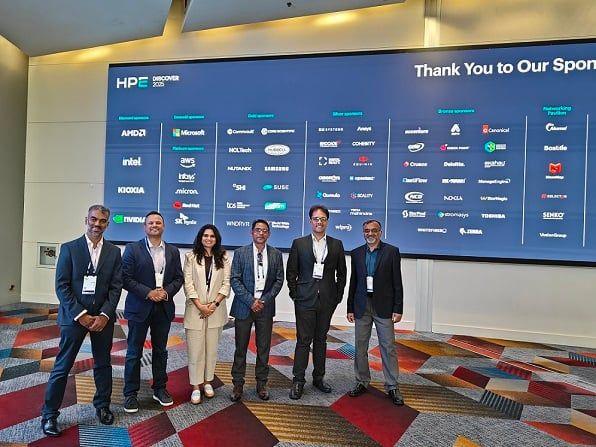
Mega. Magnetic. Monumental.That’s how we’d describe HPE Discover 2025—a spectacle of scale, smarts, and synergy. Held in the vibrant heart of Las Vegas, the event wasn’t just a tech conference. It was a living pulse of innovation, a place where thousands of technology leaders, futurists, engineers, and enterprises came together to shape what’s next.And Aziro was right there in the thick of it.For Aziro, HPE Discover 2025 wasn’t just another event—it marked our bold debut under a brand-new identity. New name, new booth, new energy. Aziro took the floor with intent: to connect, to co-create, and to champion a new era of AI-native engineering. The Journey to LA: Flight. Focus. Future.Every event begins well before the booth goes live—it starts with anticipation. As we boarded our flight to LA, our team carried more than just gear and gadgets; we had ambition. Together, we mapped out our outreach strategies and refined our AI-native pitch, energized and united in our mission. Excitement buzzed through us all, fueled by the knowledge that we were advancing toward the future of engineering, driven by intelligence and intention.The Aziro Booth: Bold. Beautiful. Branded.HPE Discover 2025’s floor was buzzing with energy, but our eyes were locked on one thing: the Aziro #3245 booth. We couldn’t take our eyes off the AI-themed structure, glowing in muted lights, sleek panels, and a brand-new name that made its presence felt.Immersion: The Grand SetupHPE Discover isn’t just the crowd—it’s the canvas. High ceilings with dynamic projection maps, endless rows of interactive displays, and collaborative pods filled with people from over 30 countries. It felt less like an event and more like a global tech ecosystem stitched together by innovation.Tuesday Kickoff: Making it CountHPE Discover started on June 23rd, and from the first handshake to the last notebook scribble, we made it count. We listened. We asked more profound questions. We didn’t pitch products—we unpacked real challenges our prospects were facing. From a fintech firm seeking risk-aware automation to a healthcare company needing compliance-ready AI, we offered more than just slides: solutions and services with substance.The Aziro Arsenal: Our AI-Native StackWe showcased our full AI-native stack, each layer designed to meet the real-world needs of digital enterprises:AI-Enabled AutomationAgentic AI-Driven Business ProcessesAI-Driven DevSecOpsSRE and ObservabilityRAG-Enabled Support SystemsAI-Driven TestSmartEnhanced User ExperienceAI-Native CybersecurityThe Speakers: Voices of the FutureFrom Day 1, the speaker line-up was power-packed. Thought leaders, tech CEOs, and public sector visionaries—all talking about the next big leaps. We had a detailed chat with Christine De Nardo, COO at the Olivia Newton-John Cancer Research Institute. Her interest in AI-powered research diagnostics and data-driven care led to a powerful brainstorming session on what could become a healthcare PoC. Beyond keynotes, the speaker lounges turned into think tanks. And we were right there, exchanging ideas with the best.Relationships > Booth VisitsWe built many real connections during the event. We hosted whiteboard sessions, reverse-pitched on-the-spot challenges, and opened doors to co-development. Our conversations were tailored, profound, and often surprising.Final Word: From Presence to PurposeIn the world today, when everyone just talks about AI, very few are engineering it for absolute scale, absolute velocity, and real outcomes.Aziro is one of those few.Aziro enables businesses to embrace cognitive automation, reimagine their platforms, and scale their software products from early-stage innovation to IPO-level readiness. Its new brand language underscores agility, innovation, and a deep passion for problem-solving — values that have long been part of its culture.“Aziro is our statement of intent, of who we are, what we solve, and how we show up for our clients,” said Sameer Danave, Senior Director – Marketing at Aziro.HPE Discover event deeply strengthened our identity as an AI-native, innovation-led transformation partner, built to tackle today’s enterprise challenges and design tomorrow’s opportunities. This is not just a name change; it is a bold elevation of our promise.If you met us at HPE Discover, we are pleased to reconnect with you. If you missed us, let’s still connect.Because the future is AI-native, and Aziro is already building it.

Aziro Marketing

Boosting Sprint Velocity with Agentic AI and JIRA Integration

Boosting Sprint Velocity with Agentic AI and JIRA Integration

Modern Agile teams know the pain of sprint delays, unexpected blockers, and mind-numbing administrative work that consumes half your day. Sure, automation has helped with some aspects of project management, but let’s be honest, it’s primarily reactive and follows rigid rules. Enter Agentic AI, these aren’t your typical chatbots. We’re talking about autonomous, goal-driven AI systems that get context, handle complex workflows, and help teams work smarter (not just harder). When integrated with JIRA, these intelligent agents enable predictive sprint forecasting, real-time identification of workflow bottlenecks, and streamlined backlog management driven by contextual data and historical patterns. An Introduction to Agentic AI Think of Agentic AI as that super-competent teammate who just gets it. Unlike traditional AI, which waits for you to ask a question, these agents take the initiative. Give them a goal, and they’ll figure out the steps, pull data from multiple sources, and do the work. This empowerment enables you to focus on higher-value tasks, knowing that the AI handles the rest. As Moveworks puts it, these AI solutions can identify what an employee needs and determine the necessary actions to make it happen. They’re like digital teammates who analyze context, check databases, create plans, and then execute them, with no hand-holding required. This doesn’t mean your role as a project manager or Scrum Master is obsolete. Instead, it frees you from mundane tasks, allowing you to focus on strategic planning and team management. How Agentic AI Solves Agile Bottlenecks? AI proactively addresses the most significant operational challenges faced by Agile teams, including sprint planning inaccuracies, unforeseen blockers, and repetitive administrative overhead, through intelligent automation and predictive insights. Predicting Sprint Outcomes Based on Historical Data Remember those painful estimation sessions where everyone’s guessing? AI can fix that. By analyzing your team’s historical sprint data, these tools can predict outcomes with remarkable accuracy. They look at past tickets, spot patterns, and suggest story points based on similar work you’ve already done. This level of accuracy instills confidence in your team’s planning and execution. Some JIRA marketplace apps already do this using machine learning and fuzzy matching. The result? Your team commits to sprint scopes that they can deliver. No more overpromising and underdelivering. Identifying Bottlenecks Here’s where it gets cool. Agentic AI watches your workflows like a hawk, spotting bottlenecks before they blow up your sprint. These agents track everything—ticket status, dependencies, and cycle times, and flag when something is stuck or when someone is overwhelmed with work. They can group problems by severity, type, or which part of the team is affected. Some ChatGPT-style JIRA integrations can even take action automatically, such as escalating critical bugs, reassigning tasks, or notifying individuals about unresolved dependencies. Your sprint continues to move forward, even when you’re not watching. Recommending Backlog Grooming and Sprint Scope Adjustments AI makes backlog management way less painful. These agents can break down massive epics into bite-sized user stories (with acceptance criteria!), spot duplicate tickets and merge them, and fill in requirement gaps by pulling from past discussions and sprint notes. During planning, if the AI thinks you’re biting off more than you can chew, it’ll suggest cutting or deferring lower-priority items. No more death marches because someone was too optimistic about capacity. Automating Routine Tasks and Admin Overhead This is the low-hanging fruit that makes everyone happy. AI agents in JIRA can handle all those repetitive tasks that make you question your career choices. Want to auto-assign critical bugs? Done. Need ticket summaries? Easy. Do you have a global team that requires translations? No problem. With AI taking care of these tasks, you’re liberated to focus on more strategic and creative aspects of your role. Instead of writing complex JQL queries for bulk updates (ugh), you just tell the AI what you want in plain English. Scrum Masters get their time back, and developers can focus on, you know, actually developing. Supporting Data-Backed, Continuous Improvement in Retrospectives Retrospectives often feel like Groundhog Day – the same issues, just a different sprint. AI changes that. Tools like TeamRetro can process vast amounts of feedback, automatically grouping comments into themes and highlighting recurring issues. They’ll summarize meeting notes, track action items, and analyze sentiment trends across sprints. Your Scrum Master gets real recommendations instead of vague “we should communicate better” feedback. Minor improvements add up to significant velocity gains over time. How to Integrate AI into JIRA Workflows? Modern engineering teams can significantly enhance operational efficiency by integrating AI into their Jira workflows. Unlike static, rule-based automation, these AI agents make autonomous, data-informed decisions, proactively managing Agile processes. Here’s how you can approach this integration: Identify Workflow Stages Prone to Administrative Overhead First, map out where your team wastes time on boring stuff. Typically, it involves backlog grooming, sprint estimation, ticket assignment, prioritization, and retrospective documentation. Start there – that’s where you’ll see immediate wins. Choose AI Tools Compatible with JIRA’s Ecosystem The Atlassian Marketplace offers numerous AI plugins for ticket summarization, sprint estimation, and backlog management. For instance, ChatGPT-powered agents are popular for summarizing tickets, and there are solid AI estimators for sprint planning. Some specific tools are Troopr AI, Jam.dev, and Better Estimates. Configure Agentic AI to Enforce Workflow Rules and Predict Issues This is where AI beats basic automation. While JIRA’s built-in rules are nice, AI agents bring natural language processing and machine learning to the party. They can read ticket content, identify unusual workflow patterns, and predict sprint risks before they occur. Then they take action – reassigning issues, updating priorities, or adjusting scope based on what they’ve learned. Automate Backlog Grooming and Sprint Planning Assistance Let AI agents handle the grunt work of breaking down epics, filling in missing requirements, and suggesting scope adjustments. Your backlog stays clean and actionable, and planning meetings no longer feels like torture. Integrate Continuous Feedback Loops for AI Performance Tuning Don’t just set it and forget it. Verify that the AI’s decisions align with your team’s needs. Review those AI-generated summaries, estimates, and assignments regularly. The more feedback you give, the better it gets at understanding your team’s specific context. One thing to be aware of is data privacy. If your AI is processing ticket content and team discussions, ensure it adheres to your security policies and any relevant regulations, such as GDPR or HIPAA. Whether you’re using hosted or third-party services, check their encryption, access controls, and audit trails. Some AI tools, such as Atlassian Intelligence and Kona AI, are recognized for their robust security features. To Wrap Up As development cycles become faster and more complex, traditional automation no longer suffices. Agentic AI brings intelligent decision-making directly into your JIRA workflows, predicting outcomes, identifying blockers early, and automating tedious tasks. These AI agents make planning more accurate, reduce mental overhead, and help teams improve based on real data. Select the right workflow stages, integrate thoughtfully, and continually refine based on feedback. Your engineering team stays productive and ahead of the curve, without burning out on admin work.

Aziro Marketing

Building Resilient Operations with Aziro’s AI Framework

Building Resilient Operations with Aziro’s AI Framework

Let’s face it—things break. Systems go down. Someone pushes the wrong update. The server overheats. It happens, and usually at the worst possible time. But some companies bounce back faster than others. Why? Because they don’t just rely on reacting to problems. They build systems that are ready for them. That’s what resilience is all about. And with AI stepping in, it’s no longer about hoping things don’t go wrong. It’s about preparing for when they do, and having systems that can learn, adapt, and keep everything moving without missing a beat. Spot a Problem Before it Becomes One Imagine if your system could tap you on the shoulder and say, “Hey, something’s not right here.” That’s what AI can do when it’s built into your operations. It quietly keeps an eye on all the moving parts—your traffic, server loads, user behavior, and more. And when something starts to drift from normal, it flags it before it turns into a real issue. No one wants to hear from a customer that the site is slow or that the app has crashed. It’s way better when your system notices something’s off and alerts you—or even better, fixes it—before anyone outside even notices. That’s not just smart. That’s peace of mind. What If Your Systems Didn’t Just Warn You, but Helped You Fix Things? Knowing something is wrong is one thing. Figuring out what to do about it is another. This is where AI becomes helpful. It doesn’t just point out the red flags—it offers up ideas, based on everything it’s seen before. Let’s say it notices a pattern that usually ends in a system slowdown. Instead of just warning you, it might suggest reducing the load on that service or temporarily shifting traffic. It’s like having a super helpful team member who’s seen everything and always has a backup plan, without needing a break or a coffee. Can Your Operations Keep Running Even When Things Go Sideways? Let’s be honest—no matter how much you prepare, things will still go sideways sometimes. Maybe a critical service fails. Perhaps a traffic spike comes out of nowhere. The real test is what happens next. Do your operations crash with it? Or do they find a way to recover and keep going? That’s what AI-powered resilience does best. It creates safety nets—automatic backups, rerouting options, and learning loops that adapt in real time. So instead of scrambling to figure things out manually, the system already knows what to do. And every time it handles a hiccup, it learns for next time. Quiet, behind-the-scenes resilience that keeps your business running smoothly. Is Resilience Just About Tech, or Does It Build Confidence Too? This isn’t just about the tech. When your systems are reliable, your people work better too. Teams can try new things without worrying that something will break. Leaders can make decisions knowing they’re not constantly putting out fires. And customers? They just get a smooth experience every time. Knowing your operations are solid builds confidence. You stop holding your breath every time there’s a product launch or a holiday sale. Because now, you know your systems aren’t just working—they’re thinking. Could Small Issues Be Hiding Something Bigger? We’ve all seen it—a tiny bug or a minor lag that gets ignored, until suddenly there’s a significant outage. Most disasters start small. A slow database query. A delay in a third-party service. Left unchecked, these little things quietly pile up. That’s why an innovative system doesn’t wait for the critical red alarm. It notices the tiny warning signs early. It connects the dots. And that early detection? It gives you a chance to fix things before they turn into something costly. What Does Real-world Resilience Look Like? Let’s say you’re running an online store. It’s the start of your biggest sale of the year. Just as orders start pouring in, your systems begin to strain. In the past, that might’ve meant crashing servers, frantic engineers, and angry customers. But now? AI sees the spike coming. It scales up your infrastructure, reroutes traffic, and pauses less critical processes. Your team gets a heads-up, not a meltdown. Customers continue shopping without even being aware of what happened. That’s not luck. That’s resilience, built right into your operations. Are You Ready for the Unexpected? Let’s be real—things will go wrong at some point. The question is: will you be ready? Building resilience isn’t about perfection. It’s about having systems that see problems early, respond quickly, and learn every time. That’s what Aziro’s AI framework makes possible. It turns chaos into calm and guesswork into clarity.

Aziro Marketing

AI-Driven Decisions: How Aziro Powers Smarter Enterprises?

AI-Driven Decisions: How Aziro Powers Smarter Enterprises?

Have you ever wondered how some businesses always seem one step ahead, whether it’s predicting market shifts, managing operations smoothly, or responding to customers before there’s even a complaint? It’s not magic. It’s AI, quietly working behind the scenes. We’re at a point where decisions can’t afford to be slow or based solely on gut feeling. Today’s enterprises deal with massive volumes of data, complex workflows, and high expectations. What helps them stay sharp is the ability to make faster, smarter decisions—and that’s where AI steps in. What If Your Systems Could Actually Think With You? Let’s face it: data is everywhere. But collecting data doesn’t automatically make a company data-driven. The real power lies in being able to do something meaningful with that information. Imagine your internal systems not just storing files or spitting out reports, but actively helping you decide what to do next. This is precisely what AI can do when it’s built into your decision-making process. It learns from past patterns, understands context, and makes suggestions based on facts, not guesswork. So instead of waiting for monthly reports, imagine getting a quiet nudge from your systems: “Hey, sales are dipping in this region—you might want to act on it now.” Wouldn’t that change the game? Why Waste Resources When You Can Adapt in Real Time? Managing resources, whether it’s cloud space, bandwidth, or even team capacity, is a constant juggling act. But what if your systems could handle that too? AI makes this possible by learning from real-time activity and automatically adjusting things in real-time. Think about a marketing tool that slows down the budget in low-performing campaigns before someone notices the drop. Or a support system that reassigns team members when it senses a surge in incoming queries. No more guesswork. No more over- or under-staffing. Just a system that’s always a step ahead, quietly balancing the load. What if Dashboards Stopped Just Showing Numbers? Leaders today have more data at their fingertips than ever before—but are they really seeing what matters? Most dashboards are static, backward-looking, and challenging to interpret without in-depth analysis. That’s a problem. What if your leadership dashboard didn’t just show you what happened, but why it happened? What if it helped you simulate different scenarios and even suggested what to do next? That’s where AI insights come in. They don’t just report. They guide. For example, a CFO could instantly see how a slight change in vendor pricing might affect next quarter’s margins. Or a COO might get alerted that operations in a region are trending toward delays based on weather and supplier patterns. Does AI Replace People? There’s a common fear that AI is here to take jobs or replace humans. But in reality, the best use of AI is to support humans. It filters the noise, gives clarity, and helps people do what they do best, think, create, and lead. Picture this: your teams don’t have to waste hours digging through spreadsheets or reports. Instead, they gain clear insights relevant to their role in real-time. That’s less time wasted and more time focusing on innovation and meaningful work. When every team—from product to HR—is on the same page, working with real-time AI-supported data, collaboration becomes smoother, and decisions become faster. What’s holding businesses back from smarter decisions? Many companies still rely on static reports, delayed data, or outdated workflows. And honestly, it’s not because they want to. It’s often because the tools aren’t connected, or the systems weren’t built with AI in mind. The solution isn’t to add AI as a shiny feature. It’s time to rethink how platforms are built—with AI at the core. That’s the only way to enable decisions that are not just reactive, but proactive. It’s not about chasing trends. It’s about preparing for a world where speed, precision, and insight are the new standard. Are your decisions ready for tomorrow? The businesses that will lead tomorrow aren’t just fast. They’re smart. They’ll be the ones whose systems help them think ahead, act faster, and adapt quicker. If you’re constantly feeling like you’re playing catch-up, it might be time to ask: Is my data working for me, or just sitting there? Are my systems just showing me the past—or preparing me for what’s next? Do I have the tools to make bold decisions, or am I stuck in guesswork? AI-powered decision-making isn’t just a buzzword—it’s becoming the new baseline. And the earlier your business leans into it, the better positioned you’ll be to lead, not follow.

Aziro Marketing

EXPLORE ALL TAGS
2019 dockercon
Advanced analytics
Agentic AI
agile
AI
AI ML
AIOps
Amazon Aws
Amazon EC2
Analytics
Analytics tools
AndroidThings
Anomaly Detection
Anomaly monitor
Ansible Test Automation
apache
apache8
Apache Spark RDD
app containerization
application containerization
applications
Application Security
application testing
artificial intelligence
asynchronous replication
automate
automation
automation testing
Autonomous Storage
AWS Lambda
Aziro
Aziro Technologies
big data
Big Data Analytics
big data pipeline
Big Data QA
Big Data Tester
Big Data Testing
bitcoin
blockchain
blog
bluetooth
buildroot
business intelligence
busybox
chef
ci/cd
CI/CD security
cloud
Cloud Analytics
cloud computing
Cloud Cost Optimization
cloud devops
Cloud Infrastructure
Cloud Interoperability
Cloud Native Solution
Cloud Security
cloudstack
cloud storage
Cloud Storage Data
Cloud Storage Security
Codeless Automation
Cognitive analytics
Configuration Management
connected homes
container
Containers
container world 2019
container world conference
continuous-delivery
continuous deployment
continuous integration
Coronavirus
Covid-19
cryptocurrency
cyber security
data-analytics
data backup and recovery
datacenter
data protection
data replication
data-security
data-storage
deep learning
demo
Descriptive analytics
Descriptive analytics tools
development
devops
devops agile
devops automation
DEVOPS CERTIFICATION
devops monitoring
DevOps QA
DevOps Security
DevOps testing
DevSecOps
Digital Transformation
disaster recovery
DMA
docker
dockercon
dockercon 2019
dockercon 2019 san francisco
dockercon usa 2019
docker swarm
DRaaS
edge computing
Embedded AI
embedded-systems
end-to-end-test-automation
FaaS
finance
fintech
FIrebase
flash memory
flash memory summit
FMS2017
GDPR faqs
Glass-Box AI
golang
GraphQL
graphql vs rest
gui testing
habitat
hadoop
hardware-providers
healthcare
Heartfullness
High Performance Computing
Holistic Life
HPC
Hybrid-Cloud
hyper-converged
hyper-v
IaaS
IaaS Security
icinga
icinga for monitoring
Image Recognition 2024
infographic
InSpec
internet-of-things
investing
iot
iot application
iot testing
java 8 streams
javascript
jenkins
KubeCon
kubernetes
kubernetesday
kubernetesday bangalore
libstorage
linux
litecoin
log analytics
Log mining
Low-Code
Low-Code No-Code Platforms
Loyalty
machine-learning
Meditation
Microservices
migration
Mindfulness
ML
mobile-application-testing
mobile-automation-testing
monitoring tools
Mutli-Cloud
network
network file storage
new features
NFS
NVMe
NVMEof
NVMes
Online Education
opensource
openstack
opscode-2
OSS
others
Paas
PDLC
Positivty
predictive analytics
Predictive analytics tools
prescriptive analysis
private-cloud
product sustenance
programming language
public cloud
qa
qa automation
quality-assurance
Rapid Application Development
raspberry pi
RDMA
real time analytics
realtime analytics platforms
Real-time data analytics
Recovery
Recovery as a service
recovery as service
Retail
rsa
rsa 2019
rsa 2019 san francisco
rsac 2018
rsa conference
rsa conference 2019
rsa usa 2019
SaaS Security
san francisco
SDC India 2019
SDDC
security
Security Monitoring
Selenium Test Automation
selenium testng
serverless
Serverless Computing
Site Reliability Engineering
smart homes
smart mirror
SNIA
snia india 2019
SNIA SDC 2019
SNIA SDC INDIA
SNIA SDC USA
software
software defined storage
software-testing
software testing trends
software testing trends 2019
SRE
STaaS
storage
storage events
storage replication
Storage Trends 2018
storage virtualization
support
Synchronous Replication
technology
tech support
test-automation
Testing
testing automation tools
thought leadership articles
trends
tutorials
ui automation testing
ui testing
ui testing automation
vCenter Operations Manager
vCOPS
virtualization
VMware
vmworld
VMworld 2019
vmworld 2019 san francisco
VMworld 2019 US
vROM
Web Automation Testing
web test automation
WFH

Real People, Real Replies.
No Bots, No Black Holes.

Big things at Aziro often start small - a message, an idea, a quick hello. A real human reads every enquiry, and a simple conversation can turn into a real opportunity.
私たちと一緒に始めましょう

Phone

Talk to us

+1 227 232 3176

Email

Drop us a line at

info@aziro.com

Got a Tech Challenge? Let’s Talk