Tag Archive

Below you'll find a list of all posts that have been tagged as "software defined storage"
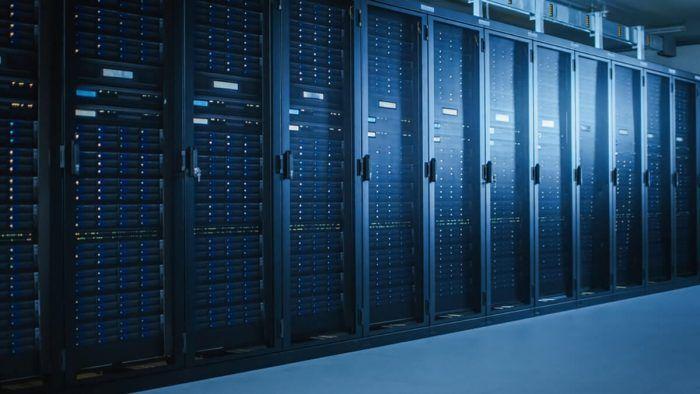
blogImage

Serving the Modern-Day Data With Software-Defined Storage

Storage is Getting Smarter Our civilization’s been veering towards intelligence all this time. And our storage infrastructures are keeping up by developing intelligence of their own. The Dynamic RAMs, GPUs, Cloud Infrastructures, Data Warehouses, etc., are all working towards predicting failures, withstanding disasters, pushing performance barriers, and optimizing costs, instead of just storing huge chunks of data. Per Gartner, more than 33% of large organizations are set to allow their analysts to use decision modeling and other decision intelligence by 2023. Smartening our storage capacities opened up some unfathomable realms for our business landscapes. And it won’t be wise to stop now. We are evolving our storage infrastructures to meet the scalability, performance, and intelligence requirements of the modern world. The same is reflected by the report by technavio claiming 35% growth in the software-defined storage market in North America alone. Our storage needs to step up to identify meaningful patterns and eliminate road blocking anomalies. Therefore, it makes sense to zoom in into the world of software-defined storage and see how it is helping to optimize the system. This blog will take a better look at Software-Defined Storage (SDS) and its role in dealing with modern day data requirements like Automation, Virtualization, and Transparency. Software-Defined Storage: The functional ally to Clouds We want our data blocks to be squeezed down to the last bit of intelligence they can cough out and then a little more. The more intelligent our systems and processes will be lesser will be our operational costs, process latencies, and workload complexities. Our IoT systems will be more coherent, our customer experience innovations will be more methodical, and our DevOps pipelines will be more fuel-efficient. We need storage resources to proactively identify process bottlenecks, analyze data, minimize human intervention, and secure crucial data from external and internal anomalies. And this is where Software-Defined Storage (SDS) fits in the picture. The prime purpose of SDS, as a storage architecture, is to present a functional allyship with clouds infrastructure. By separating the storage software from hardware, software-defined storage allows the storage architecture to have just the flexibility that can help full exploitation of clouds. Moreover, factors like the uptake of 5G, rising CX complexities, and advanced technologies – all serve as the fuel to drive for SDS to be accepted more immediately and efficiently. Be it public, private, or even hybrid cloud architecture, SDS implementation comes really handy against the need for centralized management. The data objects and the storage resources trusted by the on-premises storage can be easily extended to the cloud using SDS. Not only does SDS ensure robust data management between on-premises and cloud storage, it also strengthens disaster recovery, data backup, DevOps environments, storage efficiency, and data migration processes. Tightening the corners for Automation Software-Defined Storage has its core utility vested in its independence to hardware. This is also one of the prime reasons that it is greatly compatible with the cloud. This builds the case for SDS to qualify for one of the prime motivators in the contemporary IT industry – Automation. Automation has become a prime sustainability factor. It can only be deemed unfortunate if an IT services organization doesn’t have an active DevOps pipeline (if not several) for their product and services development and deployment. To add to that, Gartner suggests that by 2023, 40% of product and platform teams will have employed AIOps to support their DevOps pipeline to reduce unplanned downtime by 20%. Storage Programmability Storage policies and resource management can be more readily programmed for SDS as opposed to hardware dependent architectures. Abstracted storage management, including request controls, storage distribution, etc., makes it easier for the storage request to be manipulated for storing data based on its utility, usage frequency, size, and other useful metrics. Moreover, SDS controls also dictate storage access and storage networks, making them crucial for automating security and access control policies. Therefore, with SDS in place, automation is smoother, faster, and more sensible for DevOps pipelines and business intelligence. Resource Flexibility The independence from underlying hardware allows SDS to be easily communicated with. APIs can be customized to manage, request, manipulate and maintain the data. Not only does it make the data provisioning more flexible, it also limits the need to access the storage directly. Moreover, SDS APIs make it easier for it to work with tools like Kubernetes to access the scope of resource management over the cloud environment. Thus, storage programmability and resource flexibility allow Software-defined storage to internalize automation within the storage architecture, as well as secure, provide data for external automation tools. Furthermore, workloads based out of Cloud Native are more adaptive and comfortable with SDS than other hardware specific storage software. This makes SDS more desirable for enterprise-level automation products and services. Virtualization: Replacing ‘where’ with ‘how’ Virtualization belongs to the ancestry that led to modern day cloud computing. It doesn’t come as a surprise when Global Industry Analysts (GIA) predict in their report that the global virtualization software market would exceed $149 billion by 2026. With the abstraction of hardware infrastructure, businesses across industries expect data to be more easily accessible as well. Therefore, Software Defined Storage needs to have an ace in the hole, and it does. Software defined storage doesn’t virtualize the storage infrastructure itself, rather the storage services. It provides a virtualized data path for data blocks, objects, and files. These virtual data paths provide the interface for the application expecting to access them. Therefore, the abstracted services are separated from the underlying hardware making the data transactions smoother in terms of speed, compliance, and also scalability. In fact, SDS can prepare the data for hyper scalable applications making it the best choice for cloud-native, AI-based solutions. Monitoring the Progress with Transparency What the pandemic did to the IT world wasn’t unforeseen, just really, really hurried. For the first time, modern businesses were actually pushed to test the feasibility of remote connectivity. As soon as that happened, the prime concern for – Data Monitoring. Studies show that the average cost for a data breach in the US itself is up to $7.9 million. Thus, it is important that there is transparency in data transactions and that the storage services are up for it. Data Transparency would ensure reliable monitoring curbing the major causes of data corruption. With Software-defined storage, it is easy to program logging and monitoring of data access and transaction through the interfaces and APIs. SDS allows uninterrupted monitoring of the storage resources and integrates with automated monitoring tools that can pick the metric you want to be monitored. SDS can also be programmed to extend logging to the server requests to help with access audits as and when required. Similarly, API calls are logged to keep track of the cloud storage APIs called. With the operational data being – automation compatible, scalable through virtualization, and transparent in its transactions – it would be all ready to serve the modern business ambitions of IoT projects, CX Research and Development, AI/ML Engines, and more. Therefore SDS has a lot of futuristic aspirations; let us take a look at some in the next section. Final Thoughts Modern-day data needs are governed by speed, ease of use, and proactive offerings. Responsible for storing and protecting data with their nuanced resource, storage infrastructure cannot bail out on these needs. Software-Defined storage emerges as a by-product from this sense of responsibility. It abstracts the services to make them independent of the underlying infrastructure. It is programmable, making storage automation friendly. And it is easy to monitor. For a civilization aspiring better intelligence, Software-defined storage seems like a step in the right direction.

Aziro Marketing

EXPLORE ALL TAGS
2019 dockercon
Advanced analytics
Agentic AI
agile
AI
AI ML
AIOps
Amazon Aws
Amazon EC2
Analytics
Analytics tools
AndroidThings
Anomaly Detection
Anomaly monitor
Ansible Test Automation
apache
apache8
Apache Spark RDD
app containerization
application containerization
applications
Application Security
application testing
artificial intelligence
asynchronous replication
automate
automation
automation testing
Autonomous Storage
AWS Lambda
Aziro
Aziro Technologies
big data
Big Data Analytics
big data pipeline
Big Data QA
Big Data Tester
Big Data Testing
bitcoin
blockchain
blog
bluetooth
buildroot
business intelligence
busybox
chef
ci/cd
CI/CD security
cloud
Cloud Analytics
cloud computing
Cloud Cost Optimization
cloud devops
Cloud Infrastructure
Cloud Interoperability
Cloud Native Solution
Cloud Security
cloudstack
cloud storage
Cloud Storage Data
Cloud Storage Security
Codeless Automation
Cognitive analytics
Configuration Management
connected homes
container
Containers
container world 2019
container world conference
continuous-delivery
continuous deployment
continuous integration
Coronavirus
Covid-19
cryptocurrency
cyber security
data-analytics
data backup and recovery
datacenter
data protection
data replication
data-security
data-storage
deep learning
demo
Descriptive analytics
Descriptive analytics tools
development
devops
devops agile
devops automation
DEVOPS CERTIFICATION
devops monitoring
DevOps QA
DevOps Security
DevOps testing
DevSecOps
Digital Transformation
disaster recovery
DMA
docker
dockercon
dockercon 2019
dockercon 2019 san francisco
dockercon usa 2019
docker swarm
DRaaS
edge computing
Embedded AI
embedded-systems
end-to-end-test-automation
FaaS
finance
fintech
FIrebase
flash memory
flash memory summit
FMS2017
GDPR faqs
Glass-Box AI
golang
GraphQL
graphql vs rest
gui testing
habitat
hadoop
hardware-providers
healthcare
Heartfullness
High Performance Computing
Holistic Life
HPC
Hybrid-Cloud
hyper-converged
hyper-v
IaaS
IaaS Security
icinga
icinga for monitoring
Image Recognition 2024
infographic
InSpec
internet-of-things
investing
iot
iot application
iot testing
java 8 streams
javascript
jenkins
KubeCon
kubernetes
kubernetesday
kubernetesday bangalore
libstorage
linux
litecoin
log analytics
Log mining
Low-Code
Low-Code No-Code Platforms
Loyalty
machine-learning
Meditation
Microservices
migration
Mindfulness
ML
mobile-application-testing
mobile-automation-testing
monitoring tools
Mutli-Cloud
network
network file storage
new features
NFS
NVMe
NVMEof
NVMes
Online Education
opensource
openstack
opscode-2
OSS
others
Paas
PDLC
Positivty
predictive analytics
Predictive analytics tools
prescriptive analysis
private-cloud
product sustenance
programming language
public cloud
qa
qa automation
quality-assurance
Rapid Application Development
raspberry pi
RDMA
real time analytics
realtime analytics platforms
Real-time data analytics
Recovery
Recovery as a service
recovery as service
rsa
rsa 2019
rsa 2019 san francisco
rsac 2018
rsa conference
rsa conference 2019
rsa usa 2019
SaaS Security
san francisco
SDC India 2019
SDDC
security
Security Monitoring
Selenium Test Automation
selenium testng
serverless
Serverless Computing
Site Reliability Engineering
smart homes
smart mirror
SNIA
snia india 2019
SNIA SDC 2019
SNIA SDC INDIA
SNIA SDC USA
software
software defined storage
software-testing
software testing trends
software testing trends 2019
SRE
STaaS
storage
storage events
storage replication
Storage Trends 2018
storage virtualization
support
Synchronous Replication
technology
tech support
test-automation
Testing
testing automation tools
thought leadership articles
trends
tutorials
ui automation testing
ui testing
ui testing automation
vCenter Operations Manager
vCOPS
virtualization
VMware
vmworld
VMworld 2019
vmworld 2019 san francisco
VMworld 2019 US
vROM
Web Automation Testing
web test automation
WFH

LET'S ENGINEER

Your Next Product Breakthrough

Book a Free 30-minute Meeting with our technology experts.

Aziro has been a true engineering partner in our digital transformation journey. Their AI-native approach and deep technical expertise helped us modernize our infrastructure and accelerate product delivery without compromising quality. The collaboration has been seamless, efficient, and outcome-driven.

Customer Placeholder
CTO

Fortune 500 company