Tag Archive

Below you'll find a list of all posts that have been tagged as "Cloud Native Solution"

blogImage

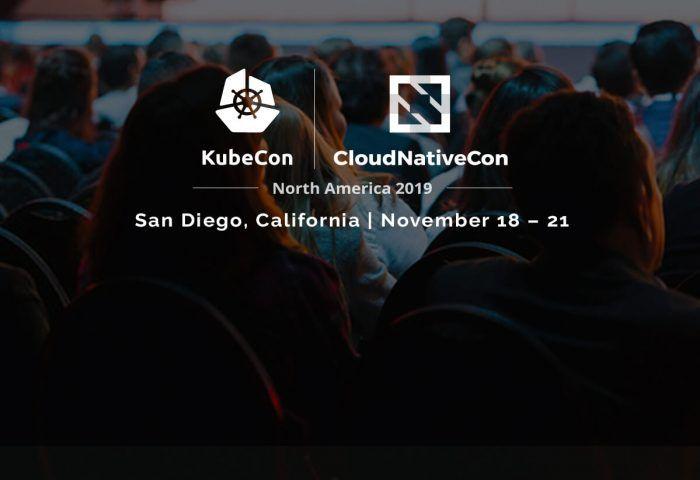
4 Things What Aziro (formerly MSys Technologies) will do at KubeCon 2019

The Kubernetes and cloud native communities have grown at a tremendous pace in the last couple of years. The buzz and the general vibe of before and after KubeCon is a testimony to this. As the storage and cloud industry veers towards cloud native technologies, events like Kubernetes are the perfect place to educate, brainstorm, and reflect on the further advancements of cloud native computing. This blog details the technologies that our cloud-native DNA digs at these events. KubeCon and CloudNativeCon are havens for technocrats, and as an active participant of the Digital Transformation epoch, you should check them out too. We have also enumerated key relevant events that you should attend at KubeCon 2019. Cloud Native Technologies 1. Cloud Native Technologies for Enterprises Today’s volatile markets expect high quality applications that are fast and agile. Enterprises need to shorten their time to market in terms of developing agile capabilities that can disarm competition and cater to the market. While critical business drivers for every enterprise may vary, business criteria such as time to market, cost reduction, and easier manageability are usually reckoned important. Containers are emerging as the default for applications across these use cases, and Kubernetes is the right choice to orchestrate these containers. With this in mind, KubeCon is the ideal venue for enterprises where they can learn and network with solution providers to strategize their Cloud Native roadmap. 2. The Cloud Native Solution to Cloud Security Risks Data Security is always a key concern for enterprises. The dynamic nature of containers exponentially increases security threats to enterprises. It is therefore important that cloud native-centric security products focus specifically on security needs of the cloud ecosystem. KubeCon 2019 has a host of talks and sessions that focus on the growing need of Kubernetes security, some of them being: The Devil in the Details: Kubernetes’ First Security Assessment – Aaron Small, Google & Jay Beale, InGuardians [Tuesday, November 19 • 10:55am – 11:30am] Securing Communication Between Meshes and Beyond with SPIFFE Federation – Evan Gilman, Scytale & Oliver Liu, Google [Thursday, November 21 • 2:25pm – 3:00pm] How Kubernetes Components Communicate Securely in Your Cluster – Maya Kaczorowski, Google [Thursday, November 21 • 11:50am – 12:25pm] How Yelp Moved Security From the App to the Mesh with Envoy and OPA – Daniel Popescu & Ben Plotnick, Yelp [Thursday, November 21 • 10:55am – 11:30am] Kuberenetes 3. Kubernetes: The Door to a Multi-Cloud World Today’s businesses are unfulfilled with applications that adhere strictly to one-track environments. Enterprises profit from applications that are versatile and can move between environments. Kubernetes and containers facilitate enterprises to run applications across environments- on-premise VMs, public cloud or multiple clouds, fostering portability, and agility. Kubernetes and containers have helped many IT leaders bridge on-premise and public cloud environments. The widespread adoption of Kubernetes and containers into the mainstream production environment is driving innovation. Kubernetes has helped companies turn the idea of multi-cloud into a reality. By being able to run the same container images across multiple cloud platforms, IT teams can maintain control over their IT and security. Despite this, businesses need to assess their cloud prowess time and again, and so require assistance to reevaluate existing strategy and to chart a new one wherever applicable. If you need to assess your serverless infrastructure or are looking to customize solutions for your business, here are some talks that you should attend: Serverless Platform for Large Scale Mini-Apps: From Knative to Production – Yitao Dong & Ke Wang, Ant Financial [Wednesday, November 20 • 5:20pm – 5:55pm] KubeFlow’s Serverless Component: 10x Faster, a 1/10 of the Effort – Orit Nissan-Messing, Iguazio [Tuesday, November 19 • 4:25pm – 5:00pm] Kubernetes Storage Cheat Sheet for VM Administrators – Manu Batra & Jing Xu, Google [Wednesday, November 20 • 4:25pm – 5:00pm] Only Slightly Bent: Uber’s Kubernetes Migration Journey for Microservices – Yunpeng Liu, Uber [Tuesday, November 19 • 10:55am – 11:30am] Growth and Design Patterns in the Extensions Ecosystem – Eric Tune, Google [Wednesday, November 20 • 11:50am – 12:25pm] 4. Application support and community Kubernetes is one of the agile-est technologies that offer a wide spectrum of workloads that sustain users and use cases. It supports multiple workloads like programming languages and frameworks, enabling stateless, stateful, and data-processing workloads. Kubernetes’ growth, support, and broad adoption justify its popularity among other container solutions. The project has gained a very large active user and developer open source community, as well as the support of global enterprises, IT market leaders, and major cloud providers. You can connect with some of the best minds in the business by participating in any of the social events at KubeCon USA 2019: Taco Tuesday Welcome Reception + Sponsor Booth Crawl, sponsored by SAIC [Tuesday, November 19 • 6:40pm – 8:40pm] Diversity Lunch + Hack – sponsored by Google Cloud [Wednesday, November 20 • 12:30pm – 2:15pm] All-Attendee Block Party (Name Badge Required to Attend) [Wednesday, November 20 • 6:00pm – 9:00pm] Meet Aziro (formerly MSys Technologies)’ architects [Click here to know how] These are some reasons why we eagerly look forward to this cloud native event. Are you as excited as us to attend KubeCon 2019? See you soon!

Aziro Marketing

blogImage

5 Key Motives to Adopt a Cloud-Native Approach

While some may argue that cloud-native history has been building for a while, it was companies like Amazon, Netflix, Apple, Google, and Facebook that heralded the underrated act of simplifying IT environments for application development. The last decade saw a bunch of highly innovative, dynamic, ready to deliver, and scaled-at-speed applications take over businesses that were stuck in complex, monolithic environments, and failed to deliver equally compelling applications. What dictated this change in track was the complexity and incompetence of traditional IT environments. These companies had already proven their competitive edge with their knack in identifying and adapting futuristic technology, but this time, they went back and uncomplicated matters. They attested cloud-native to be “the” factor that simplified app development if we are to continue this trend of data overload. Their success was amplified by their ability to harness the elasticity of the cloud by redirecting app development into cloud-native environments. Why Is Cloud-Native Gaining Importance? Application development has rapidly evolved into a hyper-seamless, almost invisible change woven into the users’ minds. We are now in an era where releases are a non-event. Google, Facebook, and Amazon update their software every few minutes without downtimes – and that’s where the industry is headed. The need to deploy applications and subsequent changes without disrupting the user experience have propelled software makers into harnessing the optimal advantages of the cloud. By building applications directly in the cloud, through microservice architectures, organizations can rapidly innovate and achieve unprecedented business agility, which is otherwise unimaginable. Key Drivers for Organizations to Going Native 1. Nurtures innovation With cloud-native, developers have access to functionally rich platforms and infinite computing resources at the infrastructure level. Organizations can leverage off the shelf SaaS applications rather than developing apps from scratch. With less time spent on building from the ground up, developers can spend more time innovating and creating value with the time and resources at hand. Cloud platforms also allow the trial of new ideas at lower costs –through low-code environments and viable platforms that cut back costs of infrastructure setup. 2. Enhances agility and scalability Monolithic application architectures make responding in real-time tedious; even the smallest tweaks in functionality necessitates re-test and deployment of the whole application. Organizations simply cannot afford to invest time in such a lengthy process. As microservice architectures are made of loosely tied independent elements, it is much easier to modify or append functionalities without disrupting the existing application. This process is much faster and is responsive to market demand. Additionally, microservice architectures are ideal for exploring fluctuations in user demands. Thanks to their simplicity, you only need to deploy additional capacity to cater to fluctuating demand (on an individual container), rather than the entire application. With the cloud, you can truly scale existing resources to meet real-time demand. 3. Minimizes time to market Organizations are heavily involved in time-consuming processes in traditional infrastructure management- be it provisioning, configuring, or managing resources. The complex entanglement between IT and dev teams often adds to the delay in decision making, therefore obstructing real-time response to market needs. Going cloud-native allows most processes to be automated. Tedious and bureaucratic operations that took up to 5-6 weeks in a traditional setup can be limited to less than two weeks in cloud-native environments. Automating on-premise applications can get complicated and time-consuming. Cloud-based app development overcomes this by providing developers with cloud-specific tools. Containers and microservice architectures play an essential part in making it faster for developers to write and release software sooner. 4. Fosters Cloud Economics It is believed that most businesses spend a majority of their IT budget in simply keeping the lights on. In a scenario where a chunk of the data center capacity is idle at any given point in time, it demands the need for cost-effective methodologies. Automation centric features like scalability, elastic computing, and pay-per-use models allow organizations to move away from costly expenditures and redirect them towards new features development. In simple words, with a cloud-native approach, you bring the expenses down to exactly what you use. 5. Improves management and security Managing cloud infrastructure can be handled with a cluster of options like API management tools, Container management tools, and cloud management tools. These tools lend holistic visibility to detect problems at the onset and optimize performance. When talking of cloud, concerns related to compliance and security are not far off. The threat landscape of IT is constantly evolving. When moving to the cloud, businesses often evolve their IT security to meet new challenges. This includes having architectures that are robust enough to support change without risking prevailing operations. The loosely coupled microservices of cloud-native architectures can significantly reduce the operational and security risk of massive failures. Adopting Cloud Native for Your Business Migrating to cloud-native is a paradigm shift in the approach of designing, development, and deployment of technology. By reducing the complexity of integration, cloud-native provides a tremendous opportunity for enterprises. They can drive growth by leveraging cloud-native environments to develop innovative applications without elaborate setups. Organizations are looking at a lifelong means of creating continuously scalable products with frequent releases, coupled with reduced complexities and opex. Cloud and cloud-native technologies signify the building of resilient and efficient IT infrastructure minus the complications, for the future. By selecting the right cloud-native solution provider, organizations can develop and deliver applications faster, without compromising on quality. Conclusion In an era of limitless choices, applications that quickly deliver on promises can provide a superior customer experience. Organizations can achieve this through faster product development, iterative quality testing, and continuous delivery. Cloud-native applications help organizations to be more responsive with the ability to reshape products and to test new ideas quickly, repetitively.

Aziro Marketing

EXPLORE ALL TAGS
2019 dockercon
Advanced analytics
Agentic AI
agile
AI
AI ML
AIOps
Amazon Aws
Amazon EC2
Analytics
Analytics tools
AndroidThings
Anomaly Detection
Anomaly monitor
Ansible Test Automation
apache
apache8
Apache Spark RDD
app containerization
application containerization
applications
Application Security
application testing
artificial intelligence
asynchronous replication
automate
automation
automation testing
Autonomous Storage
AWS Lambda
Aziro
Aziro Technologies
big data
Big Data Analytics
big data pipeline
Big Data QA
Big Data Tester
Big Data Testing
bitcoin
blockchain
blog
bluetooth
buildroot
business intelligence
busybox
chef
ci/cd
CI/CD security
cloud
Cloud Analytics
cloud computing
Cloud Cost Optimization
cloud devops
Cloud Infrastructure
Cloud Interoperability
Cloud Native Solution
Cloud Security
cloudstack
cloud storage
Cloud Storage Data
Cloud Storage Security
Codeless Automation
Cognitive analytics
Configuration Management
connected homes
container
Containers
container world 2019
container world conference
continuous-delivery
continuous deployment
continuous integration
Coronavirus
Covid-19
cryptocurrency
cyber security
data-analytics
data backup and recovery
datacenter
data protection
data replication
data-security
data-storage
deep learning
demo
Descriptive analytics
Descriptive analytics tools
development
devops
devops agile
devops automation
DEVOPS CERTIFICATION
devops monitoring
DevOps QA
DevOps Security
DevOps testing
DevSecOps
Digital Transformation
disaster recovery
DMA
docker
dockercon
dockercon 2019
dockercon 2019 san francisco
dockercon usa 2019
docker swarm
DRaaS
edge computing
Embedded AI
embedded-systems
end-to-end-test-automation
FaaS
finance
fintech
FIrebase
flash memory
flash memory summit
FMS2017
GDPR faqs
Glass-Box AI
golang
GraphQL
graphql vs rest
gui testing
habitat
hadoop
hardware-providers
healthcare
Heartfullness
High Performance Computing
Holistic Life
HPC
Hybrid-Cloud
hyper-converged
hyper-v
IaaS
IaaS Security
icinga
icinga for monitoring
Image Recognition 2024
infographic
InSpec
internet-of-things
investing
iot
iot application
iot testing
java 8 streams
javascript
jenkins
KubeCon
kubernetes
kubernetesday
kubernetesday bangalore
libstorage
linux
litecoin
log analytics
Log mining
Low-Code
Low-Code No-Code Platforms
Loyalty
machine-learning
Meditation
Microservices
migration
Mindfulness
ML
mobile-application-testing
mobile-automation-testing
monitoring tools
Mutli-Cloud
network
network file storage
new features
NFS
NVMe
NVMEof
NVMes
Online Education
opensource
openstack
opscode-2
OSS
others
Paas
PDLC
Positivty
predictive analytics
Predictive analytics tools
prescriptive analysis
private-cloud
product sustenance
programming language
public cloud
qa
qa automation
quality-assurance
Rapid Application Development
raspberry pi
RDMA
real time analytics
realtime analytics platforms
Real-time data analytics
Recovery
Recovery as a service
recovery as service
rsa
rsa 2019
rsa 2019 san francisco
rsac 2018
rsa conference
rsa conference 2019
rsa usa 2019
SaaS Security
san francisco
SDC India 2019
SDDC
security
Security Monitoring
Selenium Test Automation
selenium testng
serverless
Serverless Computing
Site Reliability Engineering
smart homes
smart mirror
SNIA
snia india 2019
SNIA SDC 2019
SNIA SDC INDIA
SNIA SDC USA
software
software defined storage
software-testing
software testing trends
software testing trends 2019
SRE
STaaS
storage
storage events
storage replication
Storage Trends 2018
storage virtualization
support
Synchronous Replication
technology
tech support
test-automation
Testing
testing automation tools
thought leadership articles
trends
tutorials
ui automation testing
ui testing
ui testing automation
vCenter Operations Manager
vCOPS
virtualization
VMware
vmworld
VMworld 2019
vmworld 2019 san francisco
VMworld 2019 US
vROM
Web Automation Testing
web test automation
WFH

LET'S ENGINEER

Your Next Product Breakthrough

Book a Free 30-minute Meeting with our technology experts.

Aziro has been a true engineering partner in our digital transformation journey. Their AI-native approach and deep technical expertise helped us modernize our infrastructure and accelerate product delivery without compromising quality. The collaboration has been seamless, efficient, and outcome-driven.

Customer Placeholder
CTO

Fortune 500 company