Tag Archive

Below you'll find a list of all posts that have been tagged as "data-storage"

blogImage

4 emerging Data Storage Technologies to Watch

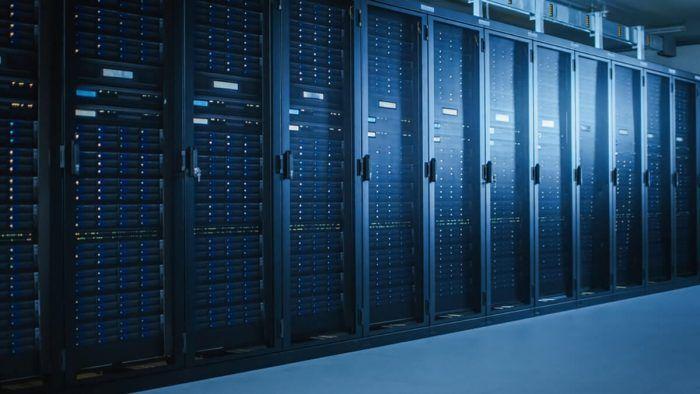
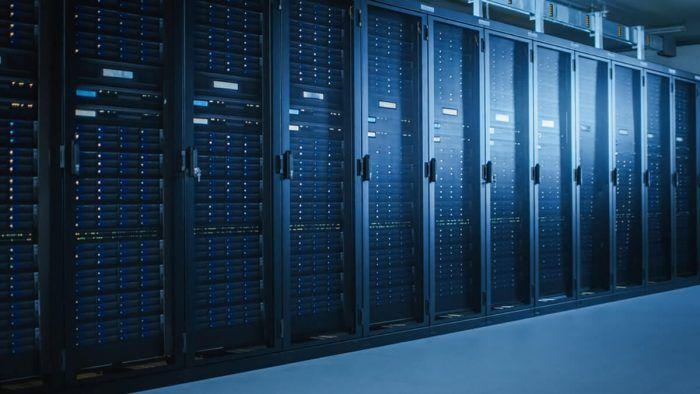
Many companies are facing the big data problem: spates of data waiting to be assorted, stored, and managed. When it comes to large IT corporations, such as Google, Apple, Facebook, and Microsoft, data is always on the rise. Today, the entire digital infrastructure of the world holds over 2.7 zetabytes of data—that’s over 2.7 billion terabytes. Such magnitude of data is stored using magnetic recording technologies used on high-density hard drives, SAN, NAS, cloud storage, object storage, and such other technologies. How is this achieved? What are the magnetic and optical recording technologies rising in popularity these days? Let’s find out.The oldest magnetic recording technology, which is still in use, is known as perpendicular magnetic recording (PMR) that made its appearance way back in 1976. This is the widespread recording technology used by most of the hard drives available today. May it be Western Digital, HGST, or Seagate, the technology used is PMR. The technology has the capability to store up to a density of 1 TB per square inch. But the data is still flowing in relentlessly, and that’s the reason why companies are investing in R&D to come up with higher-density hard drives.1. Shingled Magnetic RecordingLast year, Seagate announced their hard disks using a new magnetic recording technology known as SMR (shingled magnetic recording). This achieves about 25 percent increase in the data per square inch of a hard disk. That’s quite a whopping jump, one might say. This, according to Seagate, is achieved by overlapping the data tracks on a hard drive quite like shingles on a roof.By the first quarter of this year, Seagate was shipping SMR hard drives to select customers. Some of these drives come with around 8 TB of storage capacity. Not only Seagate but other companies such as HGST will be offering SMR drives in the next two years.2. Heat-Assisted Magnetic Recording (HAMR) aka Thermally Assisted Magnetic Recording (TAMR)When it comes to HAMR, learn about a phenomenon known as superparamagnetic effect. As hard drives become denser and the data access becomes faster, there is ample possibility of data corruption. In order to avoid the data corruption, density of hard drives has to be limited. Older longitudinal magnetic recording (LMR) devices (tape drives) have a limit of 100 to 200 Gb per square inch; PMR drives have a limit of about 1 TB per square inch.When it comes to HAMR, a small laser heats up the part of hard disk being written, thus eliminating the superparamagnetic effect temporarily. This technology allows recording on much smaller scales, so as to increase the disk densities by ten or hundred times. For a long time, HAMR was considered a theoretical technology, quite difficult, if not impossible, to realize. However, now several companies including Western Digital, TDK, HGST, and Seagate are conducting research on HAMR technology. Some demonstrations of working hard drives using HAMR have happened since 2012. By 2016, you may be able to see several HAMR hard drives in the market.3. Tunnel Magnetoresistance (TMR)Using tunnel magnetoresistance technologies, hard disk manufacturers can achieve higher densities with greater signal output providing higher signal-to-noise ratio (SNR). This technology works closely with ramp load/unload technology, which is an improvement over traditional contact start-stop (CSS) technology used on magnetic write heads. These technologies provide benefits like greater disk density, lower power usage, enhanced shock tolerance, and durability. Several companies, including WD and HGST, will be providing storage devices based on this technology in the coming days.4. Holographic Data StorageHolographic data storage technology existed as far back as 2002. However, not much research was done on this desirable data storage technology. In theory, the advantages of holographic data storage are manifold: hundreds of terabytes of data can be stored in a medium as small as a sugar cube; parallel data reading makes data reading hundreds of times faster; data can also be stored without corruption for many years. However, this technology is far from perfect. In the coming years, you may get to see quite a bit of research and development in this area, resulting in high-density storage devices.ConclusionGartner reports that over 4.4 million IT jobs will be created by the big data surge by 2015. A huge number of IT professionals and data storage researchers will be working on technologies to improve the storage in the coming years. Without enhancing our storage technologies, it will become difficult to improve the gadgets we have today.Research Sources:http://www.computerworld.com/article/2495700/data-center/new-storage-technologies-to-deal-with-the-data-deluge.php2. http://en.wikipedia.org/wiki/Heat-assisted_magnetic_recording3. http://www.in.techradar.com/news/computing-components/storage/Whatever-happened-to-holographic-storage/articleshow/38985412.cms4. http://asia.stanford.edu/events/spring08/slides402s/0410-dasher.pdf5. https://www.nhk.or.jp/strl/publica/bt/en/ch0040.pdf6. http://physicsworld.com/cws/article/news/2014/feb/27/data-stored-in-magnetic-holograms7. http://searchstorage.techtarget.com/feature/Holographic-data-storage-pushes-into-the-third-dimension8. http://en.wikipedia.org/wiki/Magnetic_data_storage9. http://www.cap.ca/sites/cap.ca/files/article/1714/jan11-offprint-plumer.pdf

Aziro Marketing

blogImage

AI/ML for Archival Storage in Quartz Glass

Data plays a crucial part in our modern communication world and daily life. As the usage of our data increases, exponential, users and customers are looking for long term efficient storage mechanisms. It’s evident that our existing storage technologies have a limited lifetime. From the below diagram, we can concur that there is a gap between data generation vs data storage. So, the need of the hour is to find technologies that will store data for a long period of time, at affordable cost and enhanced performance.Data storage in quartz glass is the upcoming new technology which addresses the limitations of the current ones. In this blog, we can see about this new technology in detail.Data storage:We all know, we can store the data in HDD, SSD and Tape drive. Each having its own Pros and cons. Based on the user requirement, cost, Performance and other factors we can choose it. Based on the temperature, we can categorize the data as Hot, Warm and Cold.For Hot data -> we use SSD,For Warm Data -> we use HDD andFor Cold data -> we use Tape DrivesArchival storage: Tape driveData archiving is the process of moving data that is no longer actively used to a separate storage device for long-term retention. Archive data consists of older data that remains important to the organization or must be retained for future reference.Need for Archival Storage: Keep the data safe and secure, Pass the information to future generations.Because of Low Cost and long archival stability, the Tape drive is the best option for Archival storage.The lifetime of Magnetic tape is around five to seven years. So, we need to Proactively migrate data to avoid any degradation issues as Regular Data migration results in high cost as the year goes on.A tape drive is Long-lasting, but they still can’t guarantee data safety over a long period of time, and it has high latency. Due to this, Archival storage is a big concern as the amount of data in the world grows. A solution to overcome this problem – To keep the data safely and securely and for over a long period of time?New Medium for Data Storage – Quartz glass.Quartz glass: Data storageQuartz is the most common form of crystalline silica and Second most common mineral on the earth’s surface, so it’s widely available and cost also less. It withstands extreme environmental conditions and doesn’t need any special environment like energy-intensive air conditioning. We are writing data in the glass (Not on the Glass). It means that even if something happens to the outer surface of the Quartz crystal, still we can able to retrieve the data. In general, we call it a WORM – Write Once Read Many.In Quartz glass, we can retain the data even after being put the glass in boiling water, put in a flame, or scratched the outer surface of the glass. Data always exists, even after 1000s of years.Tape and hard disks were designed before the cloud existed and both of them have limitations around temperature, humidity, air quality, and life-span.In Quartz glass, we can Access data non-sequentially, which is one of the best advantages when compared to a Tape drive, where we can access the data sequentially, which takes more time to retrieve the data.Data write in Quartz glass:By using Ultrafast laser optics and artificial intelligence, we are storing data in quartz glass. Femtosecond lasers — ones that emit ultrashort optical pulses and that are commonly used in LASIK surgery — permanently change the structure of the glass so that the data can be preserved over a long period of time. A laser encodes data in glass by creating layers of three-dimensional nanoscale gratings and deformations at various depths and angles.Data Read in Quartz glass:A special device – Computer-controlled microscope is used to read the data. A Piece of Quartz glass is placed in the read head and to begin with, it focuses on the layer of interest, and a set of polarization images are taken. These images are then processed to determine the orientation and size of the voxels. The process is then repeated for other layers. The images are fused using machine learning. To read the data back, machine learning algorithms decode the patterns created when polarized light shines through the glass. ML algorithms can quickly zero in on any point within the glass, which reduces lag time to retrieve information.Below is the image, how Quartz glass looks after storing the data.Future of Quartz glass:By using Quartz glass, we are able to store the data permanently for life long. We can store Lifelong medical data, financial regulation data, legal contracts, geologic information. By using this, we can Pass not only data, entire information to the future generations.At present, we are able to store 360 TB of data – Piece of Glass.A lot of research is going on to Store more amount of data, Maximize the performance and minimize the cost. If all these researches get success full and we can able to store the data permanently with less cost and able to scalable with no limits then “Quartz Glass will be the best archival cloud storage solution and revamp the entire Data Storage industry.

Aziro Marketing

blogImage

Data Reduction: Maintaining the Performance for Modernized Cloud Storage Data

Going With the Winds of Time A recent white paper by IDC claims that 95% of organizations are bound to re-strategize their data protection strategy. The new workloads due to work from home requirements, SaaS, and containerized applications call for the modernization of our data protection blueprint. Moreover, if we need to get over our anxieties of data loss, we are to really work with services like AI/ML, Data analytics, and the Internet of Things. Substandard data protection at this point is neither economical nor smart. In this context, we already talked about methods like Data Redundancy and data versioning. However, data protection modernization extends to the third time of the process, one that helps reduces the capacity required to store the data. Data reduction enhances the storage efficiency, thus improving the organizations’ capability to manage and monitor the data while reducing the storage costs substantially. It is this process that we will talk about in detail in this blog. Expanding Possibilities With Data Reduction Working with infrastructures like Cloud object storage, block storage, etc., have relieved the data admins and their organizations from the overhead of storage capacity and cost optimization. The organizations now show more readiness towards Disaster recovery and data retention. Therefore, it only makes sense that we magnify the supposed benefits of these infrastructures by adding Data Reduction to the mix. Data reduction helps you manage the data copies and increase the efficacy value of its analytics. The workloads for DevOps or AI are particularly data-hungry and need more optimized storage premises to work with. In effect, data reduction can help you track the heavily shared data blocks and prioritize their caching for frequent use. Most of the vendors now notify you beforehand about the raw and effective capacities of the storage infra, where the latter is actually the capacity post data reduction. So, how do we achieve such optimization? The answer unfolds in 2 ways: Data Compression Data Deduplication We will now look at them one by one. Data Compression Data doesn’t necessarily have to be stored in its original size. The basic idea behind data compression is to store a code representing the original data. This code would acquire less space but would store all the information that the original data was supposed to store. With the number of bits to represent the original data reduced, the organization can save a lot on the storage capacity required, network bandwidth, and storage cost. Data compression uses algorithms that represent a longer sequence of data set with a sequence that’s shorter or smaller in size. Some algorithms also replace multiple unnecessary characters with a single character that uses smaller bytes and can compress the data to up to 50% of its original size. Based on the bits lost and data compressed, the compression process is known to be of 2 types: Lossy Compression Lossless Compression Lossy Compression Lossy compression prioritizes compression over redundant data. Thus, it permanently eliminates some of the information held by the data. It is highly likely that a user may get all their work done without having to need the lost information, and the compression may work just fine. Compression for multimedia data sets like videos, image files, sound files, etc., are often compressed using lossy algorithms. Lossless Compression Lossless compression is a little more complex, as here, the algorithms are not supposed to permanently eliminate the bits. Thus, in lossless algorithms, the compression is done based on the statistical redundancy in the data. By statistical redundancy, one simply means the recurrence of certain patterns that are near impossible to avoid in real-world data. Based on the redundancy of these patterns, the lossless algorithm creates the representational coding, which is smaller in size than the original data, thus compressed. A more sophisticated extension of lossless data compression is what inspired the idea for Data deduplication that we would study now. Data Deduplication Data deduplication enhances the storage capacity by using what is known as – Single Instance Storage. Essentially a specific amount of data sequence bytes (as long as 10KB) are compared against already existing data that holds such sequences. Thus, it ensures that a data sequence is not stored unless it is unique. However, this does not affect the data read, and the user applications can still retrieve the data as and when the file is written. What it actually does is avoid repeated copies and data sets over regular intervals of time. This enhances the storage capacity as well as the cost. Here’s how the whole process works: Step 1 – The Incoming Data Stream is segmented as per a pre-decided segment window Step 2 – Uniquely identified segments are compared against those already stored Step 3 – In case there’s no duplication found, the data segment is stored on the disk Step 4 – In case of a duplicate segment already existing, a reference to this existing segment is stored for future data retrievals and read. Thus, instead of storing multiple data sets, we have a single data set referred at multiple times. Data compression and deduplication substantially reduce the storage capacity requirements allowing larger volumes of data to be stored and processed for modern day tech-innovation. Some of the noted benefits of these data reduction techniques are: Improving bandwidth efficiency for the cloud storage by eliminating repeated data Reduces storage capacity requirement concerns for data backups Lowered storage cost by reducing the amount of storage space to be procured Improves the speed for disaster recovery as reduced duplicate data makes the transfer easy Final Thoughts Internet of Things, AI-based automation, data analytics powered business intelligence – all of these are the modern day use cases meant to refine the human experience. The common pre-requisite for all these is a huge capacity to deal with the incoming data juggernaut. Techniques like data redundancy and versioning protect the data from performance failures due to cyberattacks and erroneous activities. On the other hand, data reduction enhances the performance of the data itself by optimizing its size and storage requirements. The modernized data requirements need modernized data protection, and data reduction happens to be an integral part of it.

Aziro Marketing

blogImage

Serving the Modern-Day Data With Software-Defined Storage

Storage is Getting Smarter Our civilization’s been veering towards intelligence all this time. And our storage infrastructures are keeping up by developing intelligence of their own. The Dynamic RAMs, GPUs, Cloud Infrastructures, Data Warehouses, etc., are all working towards predicting failures, withstanding disasters, pushing performance barriers, and optimizing costs, instead of just storing huge chunks of data. Per Gartner, more than 33% of large organizations are set to allow their analysts to use decision modeling and other decision intelligence by 2023. Smartening our storage capacities opened up some unfathomable realms for our business landscapes. And it won’t be wise to stop now. We are evolving our storage infrastructures to meet the scalability, performance, and intelligence requirements of the modern world. The same is reflected by the report by technavio claiming 35% growth in the software-defined storage market in North America alone. Our storage needs to step up to identify meaningful patterns and eliminate road blocking anomalies. Therefore, it makes sense to zoom in into the world of software-defined storage and see how it is helping to optimize the system. This blog will take a better look at Software-Defined Storage (SDS) and its role in dealing with modern day data requirements like Automation, Virtualization, and Transparency. Software-Defined Storage: The functional ally to Clouds We want our data blocks to be squeezed down to the last bit of intelligence they can cough out and then a little more. The more intelligent our systems and processes will be lesser will be our operational costs, process latencies, and workload complexities. Our IoT systems will be more coherent, our customer experience innovations will be more methodical, and our DevOps pipelines will be more fuel-efficient. We need storage resources to proactively identify process bottlenecks, analyze data, minimize human intervention, and secure crucial data from external and internal anomalies. And this is where Software-Defined Storage (SDS) fits in the picture. The prime purpose of SDS, as a storage architecture, is to present a functional allyship with clouds infrastructure. By separating the storage software from hardware, software-defined storage allows the storage architecture to have just the flexibility that can help full exploitation of clouds. Moreover, factors like the uptake of 5G, rising CX complexities, and advanced technologies – all serve as the fuel to drive for SDS to be accepted more immediately and efficiently. Be it public, private, or even hybrid cloud architecture, SDS implementation comes really handy against the need for centralized management. The data objects and the storage resources trusted by the on-premises storage can be easily extended to the cloud using SDS. Not only does SDS ensure robust data management between on-premises and cloud storage, it also strengthens disaster recovery, data backup, DevOps environments, storage efficiency, and data migration processes. Tightening the corners for Automation Software-Defined Storage has its core utility vested in its independence to hardware. This is also one of the prime reasons that it is greatly compatible with the cloud. This builds the case for SDS to qualify for one of the prime motivators in the contemporary IT industry – Automation. Automation has become a prime sustainability factor. It can only be deemed unfortunate if an IT services organization doesn’t have an active DevOps pipeline (if not several) for their product and services development and deployment. To add to that, Gartner suggests that by 2023, 40% of product and platform teams will have employed AIOps to support their DevOps pipeline to reduce unplanned downtime by 20%. Storage Programmability Storage policies and resource management can be more readily programmed for SDS as opposed to hardware dependent architectures. Abstracted storage management, including request controls, storage distribution, etc., makes it easier for the storage request to be manipulated for storing data based on its utility, usage frequency, size, and other useful metrics. Moreover, SDS controls also dictate storage access and storage networks, making them crucial for automating security and access control policies. Therefore, with SDS in place, automation is smoother, faster, and more sensible for DevOps pipelines and business intelligence. Resource Flexibility The independence from underlying hardware allows SDS to be easily communicated with. APIs can be customized to manage, request, manipulate and maintain the data. Not only does it make the data provisioning more flexible, it also limits the need to access the storage directly. Moreover, SDS APIs make it easier for it to work with tools like Kubernetes to access the scope of resource management over the cloud environment. Thus, storage programmability and resource flexibility allow Software-defined storage to internalize automation within the storage architecture, as well as secure, provide data for external automation tools. Furthermore, workloads based out of Cloud Native are more adaptive and comfortable with SDS than other hardware specific storage software. This makes SDS more desirable for enterprise-level automation products and services. Virtualization: Replacing ‘where’ with ‘how’ Virtualization belongs to the ancestry that led to modern day cloud computing. It doesn’t come as a surprise when Global Industry Analysts (GIA) predict in their report that the global virtualization software market would exceed $149 billion by 2026. With the abstraction of hardware infrastructure, businesses across industries expect data to be more easily accessible as well. Therefore, Software Defined Storage needs to have an ace in the hole, and it does. Software defined storage doesn’t virtualize the storage infrastructure itself, rather the storage services. It provides a virtualized data path for data blocks, objects, and files. These virtual data paths provide the interface for the application expecting to access them. Therefore, the abstracted services are separated from the underlying hardware making the data transactions smoother in terms of speed, compliance, and also scalability. In fact, SDS can prepare the data for hyper scalable applications making it the best choice for cloud-native, AI-based solutions. Monitoring the Progress with Transparency What the pandemic did to the IT world wasn’t unforeseen, just really, really hurried. For the first time, modern businesses were actually pushed to test the feasibility of remote connectivity. As soon as that happened, the prime concern for – Data Monitoring. Studies show that the average cost for a data breach in the US itself is up to $7.9 million. Thus, it is important that there is transparency in data transactions and that the storage services are up for it. Data Transparency would ensure reliable monitoring curbing the major causes of data corruption. With Software-defined storage, it is easy to program logging and monitoring of data access and transaction through the interfaces and APIs. SDS allows uninterrupted monitoring of the storage resources and integrates with automated monitoring tools that can pick the metric you want to be monitored. SDS can also be programmed to extend logging to the server requests to help with access audits as and when required. Similarly, API calls are logged to keep track of the cloud storage APIs called. With the operational data being – automation compatible, scalable through virtualization, and transparent in its transactions – it would be all ready to serve the modern business ambitions of IoT projects, CX Research and Development, AI/ML Engines, and more. Therefore SDS has a lot of futuristic aspirations; let us take a look at some in the next section. Final Thoughts Modern-day data needs are governed by speed, ease of use, and proactive offerings. Responsible for storing and protecting data with their nuanced resource, storage infrastructure cannot bail out on these needs. Software-Defined storage emerges as a by-product from this sense of responsibility. It abstracts the services to make them independent of the underlying infrastructure. It is programmable, making storage automation friendly. And it is easy to monitor. For a civilization aspiring better intelligence, Software-defined storage seems like a step in the right direction.

Aziro Marketing

EXPLORE ALL TAGS
2019 dockercon
Advanced analytics
Agentic AI
agile
AI
AI ML
AIOps
Amazon Aws
Amazon EC2
Analytics
Analytics tools
AndroidThings
Anomaly Detection
Anomaly monitor
Ansible Test Automation
apache
apache8
Apache Spark RDD
app containerization
application containerization
applications
Application Security
application testing
artificial intelligence
asynchronous replication
automate
automation
automation testing
Autonomous Storage
AWS Lambda
Aziro
Aziro Technologies
big data
Big Data Analytics
big data pipeline
Big Data QA
Big Data Tester
Big Data Testing
bitcoin
blockchain
blog
bluetooth
buildroot
business intelligence
busybox
chef
ci/cd
CI/CD security
cloud
Cloud Analytics
cloud computing
Cloud Cost Optimization
cloud devops
Cloud Infrastructure
Cloud Interoperability
Cloud Native Solution
Cloud Security
cloudstack
cloud storage
Cloud Storage Data
Cloud Storage Security
Codeless Automation
Cognitive analytics
Configuration Management
connected homes
container
Containers
container world 2019
container world conference
continuous-delivery
continuous deployment
continuous integration
Coronavirus
Covid-19
cryptocurrency
cyber security
data-analytics
data backup and recovery
datacenter
data protection
data replication
data-security
data-storage
deep learning
demo
Descriptive analytics
Descriptive analytics tools
development
devops
devops agile
devops automation
DEVOPS CERTIFICATION
devops monitoring
DevOps QA
DevOps Security
DevOps testing
DevSecOps
Digital Transformation
disaster recovery
DMA
docker
dockercon
dockercon 2019
dockercon 2019 san francisco
dockercon usa 2019
docker swarm
DRaaS
edge computing
Embedded AI
embedded-systems
end-to-end-test-automation
FaaS
finance
fintech
FIrebase
flash memory
flash memory summit
FMS2017
GDPR faqs
Glass-Box AI
golang
GraphQL
graphql vs rest
gui testing
habitat
hadoop
hardware-providers
healthcare
Heartfullness
High Performance Computing
Holistic Life
HPC
Hybrid-Cloud
hyper-converged
hyper-v
IaaS
IaaS Security
icinga
icinga for monitoring
Image Recognition 2024
infographic
InSpec
internet-of-things
investing
iot
iot application
iot testing
java 8 streams
javascript
jenkins
KubeCon
kubernetes
kubernetesday
kubernetesday bangalore
libstorage
linux
litecoin
log analytics
Log mining
Low-Code
Low-Code No-Code Platforms
Loyalty
machine-learning
Meditation
Microservices
migration
Mindfulness
ML
mobile-application-testing
mobile-automation-testing
monitoring tools
Mutli-Cloud
network
network file storage
new features
NFS
NVMe
NVMEof
NVMes
Online Education
opensource
openstack
opscode-2
OSS
others
Paas
PDLC
Positivty
predictive analytics
Predictive analytics tools
prescriptive analysis
private-cloud
product sustenance
programming language
public cloud
qa
qa automation
quality-assurance
Rapid Application Development
raspberry pi
RDMA
real time analytics
realtime analytics platforms
Real-time data analytics
Recovery
Recovery as a service
recovery as service
rsa
rsa 2019
rsa 2019 san francisco
rsac 2018
rsa conference
rsa conference 2019
rsa usa 2019
SaaS Security
san francisco
SDC India 2019
SDDC
security
Security Monitoring
Selenium Test Automation
selenium testng
serverless
Serverless Computing
Site Reliability Engineering
smart homes
smart mirror
SNIA
snia india 2019
SNIA SDC 2019
SNIA SDC INDIA
SNIA SDC USA
software
software defined storage
software-testing
software testing trends
software testing trends 2019
SRE
STaaS
storage
storage events
storage replication
Storage Trends 2018
storage virtualization
support
Synchronous Replication
technology
tech support
test-automation
Testing
testing automation tools
thought leadership articles
trends
tutorials
ui automation testing
ui testing
ui testing automation
vCenter Operations Manager
vCOPS
virtualization
VMware
vmworld
VMworld 2019
vmworld 2019 san francisco
VMworld 2019 US
vROM
Web Automation Testing
web test automation
WFH

LET'S ENGINEER

Your Next Product Breakthrough

Book a Free 30-minute Meeting with our technology experts.

Aziro has been a true engineering partner in our digital transformation journey. Their AI-native approach and deep technical expertise helped us modernize our infrastructure and accelerate product delivery without compromising quality. The collaboration has been seamless, efficient, and outcome-driven.

Customer Placeholder
CTO

Fortune 500 company