Tag Archive

Below you'll find a list of all posts that have been tagged as "Loyalty"
How Agentic AI is Transforming Software Development

How Agentic AI is Transforming Software Development

Software development is entering a new era where intelligent agents act less like static tools and more like active collaborators. Instead of simply generating code on demand, these systems can set goals, use memory and tools, monitor progress and adjust their behavior to meet outcomes. The ability to reason and act across tasks promises to shorten the distance between a developer’s intent and working software, reshaping everything from design to operations. To optimize for answer engines, this article organizes common questions about agent‑driven systems in software engineering and offers evidence‑based answers.What Is an Active AI Agent?In traditional programming assistants, the model waits for prompts and then responds. By contrast, the next generation of agents is built around an AI model with supporting components that give it memory, tools and the autonomy to plan and execute tasks. Such a system might access a code repository, remember previous interactions and decide the best sequence of actions. It can break down goals into subtasks, connect to tools like terminals and schedulers and adapt when circumstances change. This architecture uses perception modules to gather data, reasoning modules to interpret it and action modules to implement decisions. Beyond these core pieces, an agent uses memory to retain context across sessions, a planner to sequence subtasks and connectors to interact with external tools. This combination allows the system to operate autonomously while staying aligned with human objectives.How Do Agents Differ from Traditional AI Assistants?Unlike generative models, Agentic AI agents behave like team members who can reason, plan and maintain context across multiple tasks. Instead of just responding to prompts, they orchestrate tasks such as code generation, testing and deployment and continue acting until goals are achieved. This autonomy allows them to coordinate security scans, compliance checks and code reviews without constant human prompts, and teams can configure oversight levels based on risk. Unlike reactive assistants, agents learn from feedback, refining their strategies for future tasks.How Do AI Agents Enhance the Development Lifecycle?In early pilots, Agentic AI agents show that the biggest gains come from automating high‑friction tasks. They can:Summaries code and documentation.Generate and maintain tests.Capture knowledge from tickets and wikis.Assist with incident analysis and rollouts.Beyond these quick wins, agents compress the entire development lifecycle. Upstream, they turn unstructured inputs into backlogs and propose architectural patterns. Midstream, curated workbenches embed security and compliance, enabling agents to enforce policies and expand test coverage. Downstream, they aid anomaly detection and rollback planning, feeding lessons back into requirements and tests. By orchestrating across the lifecycle, these systems move from intent to delivery more rapidly.What Advantages Do AI Agents Bring to Development Teams?Intelligent AI agents offer several benefits that make teams more productive and creative for developers. Let’s have a look at some of advantages that AI agents offer:Efficiency and scalability: Agents handle repetitive or time‑consuming tasks with minimal supervision, allowing teams to scale processes without increasing headcount.Autonomous workflow automation: Unlike simple scripts, agents coordinate multi‑step processes, adapt to changing conditions and complete tasks end to end.Responsive decision making: They monitor inputs and update plans in real time, keeping work on track when priorities shift or new data appears.Creative freedom: By taking over routine tasks, agents free developers to focus on complex problems and experiment with new ideas. This shift moves teams from prompt‑based assistance to proactive collaboration.Taken together, these capabilities improve morale and enable teams to tackle ambitious projects without being bogged down by manual chores.What Risks and Challenges Should You Consider?Despite these advantages, Agentic AI adoption is not without obstacles. Organisations report uneven results when pilots skip governance, measurement or overreach for full automation. Potential challenges include prompt injection and misalignment, exposure of sensitive data and supply chain risks, amplification of biases and integration complexity when agents lack access to the right repositories, APIs and policies. Teams must also update review norms and release gates to accommodate AI‑generated work.How Can Leaders Prepare for this Technology?Preparing for agentic development requires deliberate investment and cultural readiness. Successful teams build governance and guardrails into their platforms so that agents operate within clear boundaries; ensure agents have access to the right data and scope tasks appropriately; measure outcomes to identify real productivity gains; select solutions that improve efficiency across the team and balance automation with human oversight, integrate security and compliance checks into pipelines, invest in training and change management so that developers can supervise AI‑generated output and foster collaboration with regulators and stakeholders to clarify liability and modernize identity infrastructure. Organizations adopting Agentic AI should treat it as a platform that demands continuous measurement and oversight.As teams design their agentic platforms, they should invest in organizational change programmes and incorporate ethical frameworks. Continuous learning loops and feedback from developers and customers will help align outputs with business objectives. Leaders should also encourage cross‑functional collaboration and transparent reporting to build trust in AI‑driven decisions. Treating agents as long‑term collaborators maximizes the technology’s potential while preserving trust and transparency.To SummarizeThe software industry is on the brink of a profound transformation. By combining generative capabilities with autonomy, memory and tool integration, Agentic AI acts as an active partner rather than a passive assistant. Agents can summarise code, generate tests, capture knowledge and support operations, compressing the development lifecycle and enabling faster delivery. At the same time, success demands careful governance, cultural readiness and a commitment to ethics and transparency. With a balanced approach that blends human insight with machine precision, organisations can unlock new levels of innovation and build a future in which people and intelligent agents collaborate to create better software.

Aziro Marketing

blogImage

Loyalty Program Ideas That Drive Repeat Business and Long Term Growth

Loyalty program ideas have become a critical part of modern customer loyalty strategy. A customer rewards program is a key marketing strategy for boosting loyalty and engagement, helping brands stand out in a crowded marketplace. With rising competition and increasing customer acquisition costs, businesses can no longer rely on one time purchases. A well designed loyalty program helps brands retain loyal customers, increase customer lifetime value, and encourage repeat purchases.Research shows that existing customers are five times more likely to buy again compared to new customers, and loyalty program members tend to spend more money over time. In fact, 77% of consumers are more likely to purchase from brands with reward programs. This makes loyalty programs a proven way to build sustainable growth across retail, ecommerce, restaurants, and local business segments.Introduction to Customer Loyalty ProgramsCustomer loyalty programs are strategic marketing initiatives designed to reward and retain customers by offering them valuable incentives such as discounts, exclusive deals, and other benefits. The primary goal of these programs is to increase customer retention, boost customer lifetime value, and foster brand loyalty, all while reducing reliance on expensive customer acquisition efforts. A successful loyalty program not only encourages repeat purchases but also strengthens the emotional connection between customers and your brand. By delivering ongoing value and recognizing loyal customers, businesses can drive long-term growth and maximize customer lifetime. The most effective loyalty programs share key features: they are easy to understand, offer meaningful rewards, and consistently reinforce the benefits of staying loyal, making them a cornerstone of any customer loyalty strategy.Why Loyalty Programs Are Essential for Customer RetentionCustomer retention has a direct impact on profitability. Increasing customer retention by 5% can increase a business's profitability by an average of 75%. Studies indicate that increasing retention by just five percent can increase profits by up to ninety five percent. Loyalty programs encourage customers to keep coming back by offering tangible value and emotional connection.A successful loyalty program also offers key benefits such as improved customer engagement and strengthened brand loyalty by making customers feel recognized and rewarded. When customers feel valued, they are more likely to become repeat customers and advocates for your brand.Setting Goals and Objectives for Your Loyalty ProgramEstablishing clear goals and objectives is crucial when designing a loyalty program that delivers results. Start by identifying your target audience and understanding what motivates them to engage with your brand. Next, determine the rewards structure that will best drive customer engagement and repeat purchases—whether it’s points for every visit, exclusive discounts, or special perks for frequent diners in a restaurant loyalty program. Set measurable key performance indicators (KPIs), such as increasing customer retention by a specific percentage or boosting repeat business within a set timeframe. For example, a retail loyalty program might aim to grow repeat purchases by 20% in the first year, while a restaurant could target a 30% increase in return visits. By aligning your loyalty program’s rewards structure with your business objectives, you can create a program that resonates with your customers and delivers long-term value.Points Based Loyalty Program Ideas That Customers UnderstandA points based loyalty program remains one of the most popular and effective loyalty program ideas because it encourages repeat business by giving customers rewards for spending money. Customers earn points for every dollar spent, referrals, reviews, or engagement actions. These loyalty points can later be redeemed for rewards, discounts, or exclusive perks. 63% of consumers are willing to change their spending habits to reap more rewards from loyalty programs.Clear communication is critical. Customers should easily understand how many points they earn, how points accrue, and what those points are worth. Confusing rewards structure is one of the biggest reasons loyalty program sign ups drop.Starbucks Rewards is a strong example of a points based loyalty program where customers earn points per dollar spent and redeem them for free coffee, birthday reward offers, and early access to new products.Tiered Rewards That Encourage Customers to Spend MoreTiered rewards create a sense of progress and exclusivity. Loyalty tiers motivate customers to increase their customer spend in order to unlock better rewards and exclusive perks. Retail loyalty programs often use silver, gold, and platinum tiers based on total spend or frequency. Higher tiers can include bonus points, priority access, exclusive discounts, and early access to new launches.Tiered rewards are especially effective for encouraging repeat business and increasing customer lifetime value.Paid Loyalty Programs That Attract Highly Engaged MembersPaid loyalty programs require customers to pay an ongoing fee in exchange for premium benefits. These benefits often include free shipping, exclusive rewards, priority access, and special member only offers. Customers who join paid loyalty programs are usually more engaged and loyal because they want to maximize the value of their membership. Successful paid loyalty programs can significantly increase lifetime value and repeat purchases when the benefits clearly outweigh the cost.Personalized Rewards Powered by Customer DataPersonalized rewards are becoming a defining factor in the best loyalty programs. By using customer data responsibly, brands can offer rewards that match individual preferences rather than generic discounts. Personalized loyalty rewards can include tailored offers, special promotions based on purchase history, or exclusive perks for loyal customers. Studies show that personalized experiences can increase customer engagement by over forty percent.This approach strengthens emotional brand loyalty while improving the overall customer experience.Gamified Loyalty Program Ideas That Boost EngagementGamified loyalty programs add fun and interaction to the rewards experience by using gamification techniques. Gamification can enhance customer engagement in loyalty programs by incorporating competitive elements like leaderboards and challenges.Leaderboards encourage competition among top customers, motivating them to participate more actively in the program. Digital scratch cards are another example of gamified loyalty program features, providing surprise instant rewards to customers.For example, customers may earn extra reward points for completing challenges such as multiple visits in a month or referring friends. Gamification encourages customers coming back while keeping the loyalty experience engaging and memorable.Referral Programs That Turn Loyal Customers Into AdvocatesReferral programs reward existing customers for bringing in new customers. These programs are effective because people trust recommendations from friends more than traditional advertising. By offering reward points, exclusive rewards, or discounts to both the referrer and the new customer, businesses can grow their customer base while strengthening loyalty among existing customers.Referral programs are one of the most cost effective loyalty program ideas for long term growth.Community Focused Loyalty Programs for Local BusinessesLocal business loyalty programs work best when they emphasize relationships and experiences. Community focused programs reward customers for participation, events, or supporting local initiatives. A restaurant loyalty program might offer free coffee after a set number of visits, early access to menu launches, or exclusive tasting events. These experiences create stronger emotional connections and encourage repeat purchases.Community based loyalty programs help local businesses build trust and long lasting customer relationships.Membership Programs That Offer Exclusive Access and PerksMembership programs focus on exclusivity rather than points alone. When members sign up, they gain access to exclusive discounts, promotions, and special offers. Rewards members can unlock special benefits and experiences, such as tiered perks and increased engagement opportunities. Launching a new loyalty program with member-only access can provide early sale access and VIP event invitations to loyalty program members. Additionally, exclusive content or tours can be offered to top-tier loyalty program members. Benefits may include early access to launches, exclusive discounts, priority support, and members only events. Membership programs are particularly effective for brands with strong brand loyalty and a clearly differentiated offering.Early Access and VIP Treatment for Loyal CustomersRewarding your most loyal customers with early access and VIP treatment is a powerful way to deepen brand loyalty and encourage repeat business. Offering early access to new products, exclusive discounts, or special perks like free shipping and priority support makes loyal customers feel valued and appreciated. These exclusive benefits not only incentivize customers to remain engaged with your brand but also create a sense of belonging and exclusivity. For example, a loyalty program might grant top-tier members early access to seasonal sales, limited-edition products, or members-only events. This VIP treatment can be especially effective in industries like fashion and beauty, where customers are eager to stay ahead of trends. By prioritizing your loyal customers with unique experiences and exclusive discounts, you can drive ongoing engagement and keep customers coming back.Technology and Infrastructure for Seamless Loyalty ProgramsA seamless customer loyalty program relies on a strong technology infrastructure to deliver a smooth and engaging experience. Investing in user-friendly platforms—such as mobile apps or integrated web portals—allows customers to easily track their loyalty points, access personalized rewards, and receive real-time updates on their status. Automated rewards tracking and instant notifications help keep loyalty program members engaged and informed. Leveraging technology also enables businesses to collect and analyze valuable customer data, which can be used to personalize offers and refine the loyalty strategy for even greater impact. Integrating your loyalty program with existing systems, like point-of-sale (POS) or ecommerce platforms, streamlines the rewards process and reduces administrative work. By prioritizing technology and data-driven insights, businesses can create loyalty programs that are efficient, scalable, and highly effective at boosting customer engagement and retention.Key Elements of an Effective Loyalty ProgramAn effective loyalty program is simple, transparent, and valuable. Customers should know how to sign up, how they accrue points, and how to redeem rewards without confusion. Mobile accessibility, consistent communication, and meaningful rewards are essential. The most successful loyalty programs continuously evolve based on customer behavior and feedback.How Loyalty Programs Increase Customer Lifetime ValueLoyalty programs directly impact lifetime value by encouraging repeat customers and increasing average spend. Loyal customers purchase more often, spend more per transaction, and stay longer with a brand. Studies show that loyalty program members can generate up to thirty percent higher lifetime value compared to non members, making loyalty programs a powerful long term revenue driver.Frequently Asked Questions About Loyalty Program IdeasWhat are the best loyalty program ideas for small and local businessesThe best loyalty program ideas for local business include points based loyalty programs, visit based rewards, referral programs, and community focused initiatives. Simple rewards like free products, exclusive discounts, or early access work well for encouraging repeat business.How do loyalty programs increase customer lifetime valueLoyalty programs encourage repeat purchases, higher customer spend, and longer customer relationships. By rewarding loyal customers consistently, businesses increase lifetime value and reduce dependence on acquiring new customers.What is the difference between a points based loyalty program and a membership programA points based loyalty program allows customers to earn and redeem points over time, while a membership program offers immediate exclusive perks after sign up. Both can be effective depending on business goals and customer preferences.Are paid loyalty programs worth it for businessesPaid loyalty programs can be highly effective if the value of benefits clearly exceeds the ongoing fee. These programs attract highly engaged loyalty members who are more likely to spend more money and remain loyal long term.How many points should customers earn in a rewards programThe ideal number of points depends on the rewards structure and average customer spend. The key is transparency so customers easily understand how many points they earn per dollar spent and how quickly they can redeem rewards.How can businesses encourage loyalty program sign upsBusinesses can encourage sign ups by offering immediate incentives such as bonus points, exclusive access, or a birthday reward. Clear messaging and easy sign up processes also improve conversion.Do loyalty programs work for ecommerce and retail brandsYes, retail loyalty programs and ecommerce loyalty programs are proven to increase repeat purchases, customer engagement, and brand loyalty when rewards are relevant and easy to redeem.Final Thoughts on Loyalty Program IdeasThe most successful loyalty program ideas focus on delivering real value, personalization, and a seamless customer experience. Whether you choose points based programs, tiered rewards, paid loyalty programs, or community driven models, the goal is to reward customers in ways that feel meaningful.A strong customer loyalty strategy builds trust, increases repeat business, and turns everyday customers into long term brand advocates.

Aziro Marketing

Integrate Loyalty Programs

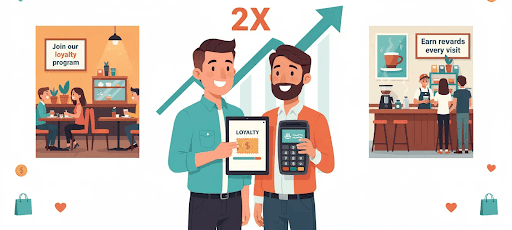
How Restaurants and Coffee Owners Can Integrate Loyalty Programs for 2X Revenue Growth

A complete guide for restaurants and coffee chains to turn repeat visits into long-term revenue.Running a restaurant or coffee shop today is not only about good food, ambience, or location. Guests are spoilt for choice. Competition is intense, and restaurants and coffee shops operate in a highly competitive market where standing out is essential. Delivery platforms dilute brand visibility. And in-store footfall is unpredictable.There is only one proven lever that gives business owners control over repeat visits, average order value, and customer lifetime value, and that is a well-designed loyalty program. For the business owner, integrating loyalty programs provides a strategic advantage in a competitive market by enabling easier rewards management, real-time data access, and improved decision-making.But the real value is unlocked only when these programs are integrated directly into your daily operations — your POS, payments, customer journeys, and digital touchpoints, ensuring you can segment customers effectively while offering seamless earn–redeem experiences along with exclusive rewards that make them feel truly valued. This blog breaks down how restaurant and coffee shop owners can integrate loyalty programs in a simple, effective, and scalable way using modern loyalty services, loyalty solutions, and loyalty program software development services.Why Loyalty Programs Matter More Than EverGuests return not only because they liked the food but because they feel recognised. A loyalty program helps customers feel valued and fosters an emotional connection, turning an occasional visitor into a predictable customer, and a predictable customer into a brand advocate.For restaurants and coffee chains, loyalty is no longer a nice-to-have. It is a business stabilizer.Here is why integrating a loyalty program is essential.You own your customer relationships instead of leaving it to aggregators.You earn directly from repeat visits without paying commissions.You can personalise offers based on preferences and behaviors.You make guests feel valued, leading to higher engagement.Customer loyalty programs are designed to create both transactional and emotional bonds, which are essential for long-term business growth. Modern loyalty solutions today are built to fit into your existing systems without disrupting operations. They work quietly in the background while creating visible business impact.Understanding Integrated Loyalty ProgramsAn integrated loyalty program connects your:Point-of-sale systemBilling and paymentsDigital menu and orderingMobile app or websiteCRM or customer databaseE-receipts and notificationsLoyalty platformUnlike a standalone punch-card or basic rewards system, integrated programs sync customer activity instantly. This makes earning and redeeming rewards effortless — for both staff and customers. Loyalty accounts play a key role by tracking and managing customer rewards across all channels, ensuring a seamless experience and better engagement.With loyalty management services, you can automate:Points earning rulesRechargeable loyalty walletsReferral journeysTier upgradesDigital stamp cardsPromo codes and offersBirthday rewardsSubscription perksThe smoother the experience, the more customers engage, and the more revenue flows back to the business. When all touchpoints and systems are seamlessly integrated, you achieve a unified customer journey.Step-by-Step Guide to Integrating Loyalty Programs in Restaurants and Coffee ShopsStep 1: Choose the Right Loyalty Program StructureYour rewards program must match your restaurant style and can be customized to fit different concepts. Some common formats include:Points system: Guests earn points on every transaction which can be redeemed later. Works best for quick-service restaurants and coffee chains.Tiered rewards: Customers unlock increasing benefits as they reach higher spending or visit more frequently, making this ideal for chains that want to gamify retention and boost engagement.Digital stamp or punch cards: Perfect for cafés where guests return for beverages and snacks regularly.Prepaid loyalty wallets: Guests pay upfront for credits and receive bonus value. This gives an immediate cash flow boost.Subscription programs: Monthly or yearly subscriptions with exclusive perks. Works well for premium cafés.Each rewards program structure can be automated and reward management streamlined through loyalty program software development services, ensuring smooth set-up and ongoing management.Step 2: Integrate Loyalty with Your POS and PaymentsThe biggest frustration for restaurant teams is switching screens or manually entering data.An integrated loyalty as a service model makes sure:Points get added the moment a bill is closedRewards apply automatically at checkoutDiscounts do not require staff to remember codesCustomer information gets updated in real timeRefunds adjust loyalty balances accuratelyMultiple payment methods, such as debit cards, ACH, A2A payments, and BNPL, are supported to enhance customer convenience and improve data collection for personalized marketing.This removes friction, errors, and delay.Restaurants that adopt integrated payment and loyalty solutions create a fast and delightful earning–redeeming experience. Integrating digital payments with loyalty programs also provides a seamless checkout experience, meeting the expectations of today’s customers.Step 3: Build a Seamless Digital Loyalty ExperienceCustomers love convenience. Your loyalty program must appear everywhere they interact:QR on the tableScan at the cash counterApp or web orderingPayment pageDelivery integrationFeedback formFor online shoppers, the loyalty program should be designed so they can easily access and redeem their rewards during the online shopping process, ensuring a smooth and integrated experience.When loyalty is embedded across all touchpoints, customers don’t need to “remember” to use it. It becomes a natural part of their visit. A well-designed loyalty rewards platform helps unify all these channels so customers experience your brand consistently.Step 4: Personalize Offers Based on Customer Data and BehaviourThis is where “2X revenue growth” becomes realistic. Modern loyalty programs powered by loyalty consulting and intelligent workflows help you: • Identify regulars, weekend visitors, and drop-offs by analyzing customer data and past purchases • Segment high-value customers • Track favourite items, ordering patterns, and loyalty behavior to further refine segmentation and recommendations • Send personalised recommendations • Create limited-time offers that drive urgency • Offer personalized incentives based on customer data to drive loyalty and repeat businessExamples:Coffee chain identifies early morning regulars and gives a “Breakfast Combo Reward” by analyzing past purchases.Restaurant notices high order of family meals on Sundays and sends a “Weekend Family Reward” as a personalized incentive.Café encourages trial of a new beverage through targeted bonus points, offering personalized incentives based on loyalty behavior.Personalization removes guesswork and brings predictable lift in orders by leveraging customer data to offer personalized incentives.Step 5: Turn Payment Receipts Into Loyalty Points MomentsWith loyalty program as a service, even your receipts become powerful customer engagement tools.Each bill can carry:Updated points balanceTier statusLoyalty statusLoyalty data (such as reward history and segmentation)Expiring rewardsRecommendationsQR to reorder or give feedbackScan to join the program instantlyThis keeps the customer connected with your brand long after they leave the outlet, and provides an opportunity to reward customers directly through their receipts, reinforcing engagement and loyalty.Step 6: Make Redemption Instant and DelightfulNo guest enjoys complicated redemption steps.Redemption should be as simple as:ScanRedeem pointsEnjoyInstant gratification is the secret behind sustainable customer loyalty in hospitality services.Your system must support:Earning rewards through purchases or specific activitiesItem-level redemptionPercentage discountsCashback into loyalty walletFree add-onsBonus treats for tiersOffering a variety of customer rewards keeps your program attractive and encourages ongoing participation. Fast and transparent redemption builds trust and boosts repeat visits.Step 7: Introduce Micro-Rewards to Encourage Everyday BehaviourSmall nudges, when automated properly, increase engagement drastically by encouraging customers to engage in desired behaviors.Examples:Reward for rating their visitReward for visiting twice a weekReward for trying new menu itemsReward for scanning QR to check balanceReward for referring a friendReward for participating in referral programsMicro-rewards keep the program exciting and dynamic without heavy discounts.Step 8: Use Loyalty Wallets for Instant Cash FlowThis is one of the most effective revenue-growth strategies.A loyalty wallet allows customers to:Load money upfrontReceive bonus creditsSpend it whenever they visitOffering valuable rewards through loyalty wallets increases customer motivation and engagement, encouraging more frequent use and higher wallet loads.For business owners, this acts like advance revenue and improves cash stability. Many restaurants use wallets during festive seasons, special events, or new store launches to generate upfront sales.How Loyalty Programs Lead to 2X Revenue GrowthWhen loyalty is integrated deeply into operations, these revenue drivers kick in:Higher repeat visits: Guests choose you over competitors because they are invested in your brand.Increased average order value: Rewards nudge customers to add more items or upgrade to combos, leading to a higher average order value.Improved customer retention: Integrated loyalty programs help retain customers by providing a seamless and engaging experience that reduces friction at checkout and fosters loyalty.Attracting new customers: Loyalty initiatives can draw in new customers through referrals and targeted promotions, helping you grow your customer base alongside retention efforts.Lower marketing cost: You grow through your existing customers instead of paying aggregators.Better customer experience: Faster checkout, personalised rewards, and consistent engagement increase satisfaction.Stronger brand identity: Your program becomes part of your culture and guest story.Data-driven decisions: Customer insights guide menu improvements, pricing, promotions, and new launches.These combined effects help restaurants and coffee chains achieve sustained growth — without aggressive discounting.Measuring Success: Tracking and Optimizing Your Loyalty ProgramMeasuring the success of your loyalty program is essential for maximizing its impact on customer retention, repeat purchases, and overall revenue growth. By closely monitoring key metrics, you can ensure your loyalty program integration is delivering real value to both your business and your customers.Start by tracking customer engagement—how often customers interact with your loyalty program, enroll as loyalty members, and participate in promotions. Monitor the rate at which loyalty points are earned and redeemed, as this indicates how compelling your rewards are and how effectively you’re encouraging repeat purchases.Customer lifetime value (CLV) is another critical metric. By analyzing how loyalty program members’ spending compares to non-members, you can quantify the program’s effect on customer lifetime and overall profitability. Additionally, keep an eye on customer retention rates to see how well your program is keeping existing customers coming back.Integrating your loyalty program with your point of sale (POS) and CRM systems streamlines data collection, making it easier to analyze purchase history, redemption patterns, and customer satisfaction. This unified view allows you to identify your most loyal customers, segment your audience, and tailor offers to boost customer satisfaction and loyalty.Why Restaurants and Coffee Chains Should Choose Professional Loyalty ServicesBuilding loyalty in-house can be complex. This is where loyalty program service providers make a difference.A specialised partner offers: • End-to-end design and deployment • Integrated POS + payment + CRM loyalty sync • Customisable reward mechanics • AI-powered recommendations • Scalable loyalty program solutions for multiple outlets • Complete UX, design, and branding • Security and compliance support, including protection of sensitive customer data • Reward management to structure, monitor, and optimize rewards efficiently • Assistance with loyalty engagement by tracking and analyzing customer loyalty behavior within CRM systems • Continuous optimisation and performance trackingThese capabilities ensure your loyalty program is not just running but performing at its best every day. Additionally, loyalty software development services ensure your solution grows with your business — whether you expand from one store to ten or scale across cities.Common Mistakes Restaurants Make with Loyalty ProgramsAvoiding these pitfalls will save time and effort.Too many rules: Confusion kills engagement. Keep rewards simple.Delayed points: Slow crediting breaks trust. Integrate for instant updates.No differentiation: Giving the same rewards to everyone feels boring. Use tiers and personalised offers.Heavy discounts: Loyalty is about behaviour building, not margin cutting.No visibility: If customers can’t see their rewards, they forget to use them.Only focusing on dine-in: Include delivery, takeaways, pre-orders, and online ordering.Not tracking loyalty behavior: Failing to combine purchase data with loyalty engagement means missed opportunities for targeted marketing and personalization.An integrated system prevents these mistakes and keeps your program healthy.Future Trends in Restaurant and Coffee Shop Loyalty ProgramsThe global loyalty management market is rapidly evolving, and restaurants and coffee shops are at the forefront of this transformation. As competition intensifies, loyalty programs will become even more critical for driving customer retention, repeat purchases, and sustainable revenue growth.Rise of Personalized and Omnichannel Loyalty ExperiencesOne major trend is the shift toward personalized, omnichannel loyalty experiences, and this transformation is becoming increasingly important for modern food and beverage businesses. Modern loyalty programs are moving beyond simple punch cards to offer tailored rewards and exclusive discounts based on individual customer behavior and purchase history, making the entire engagement journey more meaningful. This approach not only increases customer engagement but also helps businesses build stronger customer relationships and boost customer retention, ultimately creating a more loyal and emotionally connected customer base that returns more frequently.Mobile Payments, Digital Wallets, and Effortless Customer InteractionsMobile payments and digital wallets are also reshaping how customers interact with loyalty programs, introducing a level of convenience that customers have now come to expect. Seamless integration with mobile apps and digital payment systems allows customers to earn and redeem rewards effortlessly, whether they’re ordering in-store, online, or via delivery platforms, ensuring the loyalty experience stays smooth across every touchpoint. This frictionless process not only enhances the customer journey but also encourages more frequent participation in loyalty initiatives.AI-Powered Loyalty, Social Media Integration, and the Future of Customer RetentionArtificial intelligence-powered loyalty platforms are enabling smarter segmentation and more relevant offers, while social media integration is making it easier to engage customers and encourage referrals, creating a dynamic ecosystem of digital interactions. As the global loyalty management market grows, expect to see more restaurants and coffee shops adopting these advanced loyalty systems to stay competitive and meet the rising expectations of today’s digital-savvy consumers, who now demand personalization and speed in every interaction. By staying ahead of these trends and investing in modern loyalty programs, business owners can ensure their loyalty scheme remains a powerful driver of repeat business, customer loyalty, and long-term growth, positioning their brand for sustained success in an evolving marketplace.How to Get Started: A Simple 30-Day RoadmapWeek 1Define loyalty goalsChoose program modelIdentify customer segmentsWeek 2Integrate POSConnect payment journeyDesign earning and redeeming rulesWeek 3Set up digital touchpointsCreate communication templatesPrepare staff trainingAdd early access benefits for loyal members (e.g., early access to new menu items or promotions)Week 4Launch programPromote in-store and onlineTrack performance and refineThis approach allows even small businesses to launch quickly and scale intelligently.Final ThoughtsThe future of restaurant and café growth will be shaped by how well they build relationships with their customers. Food may bring them in, but loyalty keeps them coming back. The best loyalty programs and a successful loyalty program are key to sustainable, predictable, and repeatable revenue. An integrated loyalty program supported by modern loyalty services, loyalty program solutions, and customer loyalty platforms gives business owners a direct path to this growth.Whether you manage a single café or a growing chain, loyalty is your most dependable competitive advantage. If you are looking to integrate loyalty programs that are simple for staff, seamless for guests, and strong enough to drive 2X revenue growth, now is the best time to begin.

Aziro Marketing

Loyalty Program Integration Explained for Modern Businesses

Loyalty Program Integration Explained for Modern Businesses

Loyalty program integration is no longer a technical add on. It is a core foundation for modern loyalty programs that want to increase customer retention, drive repeat purchases, and grow customer lifetime value. When a loyalty program works in isolation, businesses lose visibility into customer behavior, loyalty points usage, and real customer engagement. A loyalty platform plays a crucial role in seamless integration by connecting loyalty program features with other business systems, ensuring a smooth customer experience and efficient data flow.Integrated loyalty programs connect loyalty program software with existing systems such as CRM systems, point of sale POS, ecommerce platforms, and marketing channels. This creates a unified view of the customer and enables businesses to reward customers at the right moment with the right incentive. A well designed loyalty platform should minimize the need to write code by offering seamless integrations that sync perfectly with existing customer databases, automatically create loyalty profiles, and make it easier to engage existing customers through targeted and integrated loyalty program features.API integration allows for custom connections that match specific business processes and needs.Introduction to Loyalty ProgramsA loyalty program is a strategic approach that rewards customers for their ongoing support, turning occasional shoppers into loyal customers and brand advocates. Unlike the simple punch cards of the past, modern loyalty programs leverage technology to create personalized experiences that resonate with each individual. By analyzing customer preferences and shopping habits, businesses can design loyalty programs that not only encourage repeat business but also increase customer lifetime value. These programs are essential for driving customer engagement and retention, as they make customers feel appreciated and incentivize them to return. Ultimately, a well-crafted loyalty program helps businesses build lasting relationships, reward customers for their loyalty, and foster a sense of belonging that extends the customer lifetime.Types of Loyalty ProgramsThere are several types of loyalty programs, each designed to reward customers in unique ways and recognize the most loyal customers. Point-based loyalty programs are among the most popular, allowing customers to earn points with every purchase and redeem them for rewards. Tiered loyalty programs take this a step further by offering escalating benefits based on a customer’s purchase history or engagement level, motivating customers to reach higher tiers for greater rewards. Paid loyalty programs, where customers pay a membership fee for exclusive perks, can be highly effective for brands with strong reputations. Partnered loyalty programs bring together businesses from complementary industries, enabling customers to earn and redeem rewards across multiple brands. Gamified loyalty programs introduce elements of competition and fun, encouraging customers to complete challenges for rewards. VIP loyalty programs focus on a brand’s most loyal customers, offering them special privileges and recognition. Each type of loyalty program is designed to reward customers, foster loyalty, and drive ongoing engagement.Why Loyalty Program Integration Matters for Customer LoyaltyCustomer loyalty is shaped by consistent and seamless experiences. When loyalty program integration is done correctly, customers earn points automatically, redeem rewards easily, and see their loyalty status updated in real time. Integrated systems help track and enhance customer's loyalty by providing personalized experiences and seamless connectivity with various platforms and systems.Research shows that loyal customers spend up to sixty seven percent more than new customers. Integrated loyalty programs help businesses recognize their most loyal customers across touchpoints and reward loyalty behavior consistently. Integration also allows businesses to quickly access and track a customer's loyalty status, enabling more personalized customer service. This improves customer satisfaction and strengthens the emotional connection with the brand.Loyalty programs create a sense of community among members, fostering emotional connections that enhance customer loyalty.How Loyalty Program Integration Improves Customer Lifetime ValueCustomer lifetime value increases when customers feel valued and rewarded across their entire journey. Loyalty program integration enables businesses to track purchase history, customer spend, and loyalty engagement in one place.When loyalty data flows into CRM integration and analytics systems, businesses can identify customers who make repeat purchases, customers coming back frequently, and customers who are close to reaching enough points for rewards. This allows brands to encourage customers to make future purchases and drive repeat sales more effectively.Connecting Loyalty Program Software with Existing SystemsModern loyalty program software is designed to integrate with existing systems rather than replace them. This includes ecommerce platforms, point of sale systems, CRM systems, and email marketing software.Point of sale integration allows customers to earn points and redeem points instantly at checkout. CRM integration helps segment customers based on loyalty status, customer lifetime, and loyalty behavior. Ecommerce integration ensures online shoppers see their loyalty points, rewards program status, and bonus points in real time.For a business owner, this reduces manual effort while improving accuracy and customer experience.Loyalty Program Integration and Customer Data UnificationCustomer data is often scattered across multiple platforms. Loyalty program integration unifies customer data into a single view. This includes customer’s loyalty status, loyalty points balance, purchase points, referral activity, and reward redemption history. Loyalty program integration also tracks and updates customer's points, tiers, and VIP status, enabling more personalized communications and offers. Unified loyalty data allows businesses to segment customers more effectively and understand individual preferences. Brands can then create personalized experiences that boost engagement and encourage repeat business.Data synchronization is crucial for maintaining accurate and updated customer profiles across integrated systems.Studies show that businesses using unified customer data outperform competitors by up to twenty percent in customer satisfaction metrics.Customer Engagement and ParticipationThe success of any loyalty program hinges on customer engagement and active participation. Businesses can encourage customers to join and stay involved by offering personalized rewards, exclusive offers, and early access to new products or events. Loyalty programs that incentivize customers to share their experiences on social media, refer friends, or write reviews can amplify brand reach and foster a sense of community. By making customers feel valued and tailoring rewards to their preferences, businesses can boost customer retention, drive repeat purchases, and increase customer lifetime value. Additionally, loyalty programs that collect and analyze customer data enable brands to launch targeted marketing campaigns, further enhancing customer satisfaction and loyalty. The more a loyalty program can incentivize customers and create meaningful touchpoints, the more likely it is to encourage customers to return and engage over the long term.Emotional Connection and Customer LoyaltyBuilding an emotional connection is at the heart of customer loyalty. When customers feel a genuine bond with a brand, they are more likely to become loyal customers and share their positive experiences with others. Modern loyalty programs are designed to make customers feel valued by offering personalized rewards, recognizing important milestones, and providing exceptional service. Features like bonus points for birthdays, tailored messages, and exclusive offers help create personalized experiences that deepen the emotional connection. By consistently making customers feel appreciated, businesses can cultivate a loyal customer base that not only drives repeat business but also advocates for the brand. This emotional connection is a powerful driver of long-term loyalty and sustainable growth.Using Loyalty Program Integration for Targeted Marketing CampaignsIntegrated loyalty platforms enable targeted marketing campaigns based on real loyalty signals. Instead of generic promotions, brands can send personalized messages to loyalty members based on their behavior. For example, customers who are close to redeem rewards can receive reminders through push notifications or email. It is also important to remind customers about the loyalty program through various channels such as post-purchase emails, order confirmations, and product pages, especially for new shoppers to increase engagement and participation. Customers with high average order value can be offered early access or exclusive loyalty rewards. Referral programs can be triggered automatically when loyal members hit milestones.This level of personalization significantly boosts customer engagement and repeat sales. Clear communication channels are essential to keep customers informed and engaged with the loyalty program.Real Time Points Based Rewards and RedemptionOne of the biggest benefits of loyalty program integration is real time points based rewards. Customers earn points instantly when a customer makes a purchase, whether online or in store. In addition to purchases, brands can award points for other interactions, such as social media engagement, and even retroactively assign points for past activities to further boost engagement. Points are awarded accurately based on purchase history and customer’s points balance updates immediately. Integrated systems also allow customers to redeem rewards without friction. When customers can easily redeem points, loyalty engagement increases and customers feel rewarded rather than frustrated.Brands that enable real time redemption see higher repeat purchases and stronger loyalty behavior. Regular updates and fresh content in loyalty programs help maintain customer interest and engagement.Customer Loyalty Program DesignDesigning an effective loyalty program starts with understanding your customers. By analyzing customer data, businesses can identify preferences, shopping behaviors, and what motivates their audience. A successful loyalty program should be simple to join, easy to understand, and seamless to use—whether customers are earning or redeeming rewards. The reward structure should align with customer expectations and business goals, ensuring that customers feel motivated to participate. Integrating loyalty program software with existing systems like CRM and point of sale streamlines management, tracks customer loyalty, and enables data-driven decisions. Regularly evaluating and optimizing the program ensures it remains relevant and engaging, driving customer satisfaction and repeat sales. With the right design and integration, a loyalty program becomes a powerful tool for building lasting relationships and boosting business performance.Loyalty Program Integration for Retail and Online StoresRetail loyalty programs benefit significantly from point of sale POS integration. Customers earn points automatically, redeem rewards at checkout, and view loyalty status without staff intervention. For online stores, loyalty program integration ensures customers see their loyalty points during browsing and checkout. This encourages customers to spend more and drives repeat business.Research shows that loyalty members in retail loyalty programs have a higher average order value compared to non members.Making Customers Feel Valued Through Integrated Loyalty ExperiencesMaking customers feel valued goes beyond discounts. Integrated loyalty programs allow businesses to reward customers with early access, bonus points, exclusive rewards, and personalized incentives. A well-implemented customer rewards system can enhance customer retention, boost revenue, and turn first-time buyers into loyal advocates. When customers interact with a brand and see their loyalty recognized instantly, customer’s loyalty deepens. This emotional connection plays a major role in long term customer retention and customer lifetime growth.Gathering feedback from customers is essential for refining and improving loyalty programs over time.Key Benefits of Loyalty Program Integration for BusinessesLoyalty program integration helps businesses improve customer retention, increase repeat purchases, and drive repeat sales. It also reduces operational complexity by automating points awarding, reward redemption, and loyalty status updates.For businesses scaling across channels, integrated loyalty platforms provide consistency and reliability. They also help gather feedback, track loyalty engagement, and measure the true impact of customer loyalty programs.Frequently Asked Questions About Loyalty Program IntegrationWhat is loyalty program integrationLoyalty program integration connects loyalty program software with existing systems such as CRM systems, point of sale, ecommerce platforms, and marketing channels. This enables real time earning, redemption, and tracking of loyalty rewards.How does loyalty program integration improve customer retentionIntegrated loyalty programs make it easier for customers to earn points, redeem rewards, and track loyalty status. This seamless experience encourages repeat purchases and improves customer retention.Can loyalty program integration work with existing CRM systemsYes. Most modern loyalty platforms support CRM integration, allowing businesses to use loyalty data for targeted marketing campaigns, customer segmentation, and personalized experiences.Does loyalty program integration increase customer lifetime valueYes. By rewarding loyalty behavior consistently and encouraging repeat business, loyalty program integration helps increase customer lifetime value and average customer spend.Is loyalty program integration suitable for small businessesLoyalty program integration is beneficial for businesses of all sizes. Even small businesses can improve customer engagement and repeat sales by integrating loyalty programs with point of sale and CRM systems.Final Thoughts on Loyalty Program IntegrationLoyalty program integration is no longer optional for businesses that want to build strong customer relationships. Integrated loyalty programs create seamless experiences, improve customer satisfaction, and drive measurable business growth. By connecting loyalty platforms with existing systems, businesses can reward customers intelligently, engage customers meaningfully, and turn everyday transactions into long term loyalty.

Aziro Marketing

blogImage

Next-Generation Loyalty Platforms and Technology Trends

Customer loyalty is no longer powered by simple point accrual engines. The next generation of loyalty platforms is being shaped by AI-native architectures, composable ecosystems, real-time decision engines, and deep behavioral analytics, as brands move away from one-dimensional incentives toward richer value exchanges. These platforms are moving beyond transactional rewards and into intelligent experience orchestration that blends digital loyalty cards, a rewards program with customizable rewards, sms marketing, and data collection into a unified, adaptive engagement layer.In 2026 and beyond, loyalty technology is becoming a core part of digital infrastructure sitting alongside CRM, CDP, marketing automation, and commerce systems as a first-class component of enterprise architecture. Customer loyalty is therefore evolving from isolated schemes into strategic systems, and Let’s explore the defining trends shaping this transformation.1. Loyalty Platforms: AI-Driven Personalization at ScaleModern loyalty platforms are embedding machine learning models directly into the reward engine. Modern loyalty management software incorporates advanced features and essential features, such as AI-driven personalization, to support scalability and strategic engagement. Instead of static “earn 10 points per dollar” models, AI dynamically adjusts incentives based on:Purchase frequencyCustomer lifetime valueChurn probabilityReal-time behaviorEmotional sentiment signalsLoyalty engines leverage unified customer profiles and valuable first-party data to deliver tailored offers and product recommendations across all touchpoints.For example, high-value customers may receive experiential rewards instead of discounts, while price-sensitive segments might receive targeted point multipliers. AI-driven systems can also automate personalized incentives like birthday rewards to strengthen engagement and emotional connection.This shift ensures that loyalty programs optimize both engagement and profitability. The operational flow of loyalty platforms includes enrollment, tracking and earning points, accumulation and tiers, redemption of rewards, and data analytics. Robust loyalty features and clear insights into key metrics help brands continually refine their programs for maximum impact.2. Composable and API-First ArchitecturesLegacy loyalty systems were monolithic. Next-generation platforms are API-first and composable, allowing businesses to plug loyalty capabilities into:Headless commerce stacksMobile applicationsIn-store POS systemsThird-party partner ecosystemsSuper apps and marketplacesThese platforms are designed to work with virtually any tech stack.Leading loyalty solutions now offer a multi-product suite, integrating loyalty, referral, and engagement tools to meet enterprise needs. This modular architecture supports rapid innovation and reduces vendor lock-in. Loyalty is no longer a standalone system, it becomes a reusable service layer within the digital ecosystem.API-first platforms, such as Talon.One's promotion and loyalty engine, eliminate silos and enable real-time engagement across all touchpoints. Composable architectures empower loyalty management as a strategic, integrated solution for long-term customer engagement.3. Real-Time Event-Driven Reward EnginesBatch processing is disappearing. Modern loyalty engines operate on event streams. Modern loyalty platforms are built to handle unlimited transactions, supporting enterprise-scale reward activity.When a customer:Completes a purchaseShares contentWrites a reviewRefers a friendAttends an eventEvent-driven loyalty campaigns and flexible reward structures, such as points programs, enable brands to incentivize a wide range of behaviors. The system reacts instantly. Event-driven platforms use technologies like Kafka-based streams, serverless architectures, and webhook triggers to ensure rewards are delivered in milliseconds, enhancing the customer experience and increasing engagement. Real-time synchronization allows customers to seamlessly earn and redeem rewards, making participation in points programs and other reward structures effortless.Real-time analytics and reporting are crucial for tracking customer engagement and optimizing loyalty strategies.4. Loyalty + CDP ConvergenceCustomer Data Platforms are becoming deeply integrated with loyalty systems. Omnichannel support ensures loyalty programs engage customers across online, mobile, and in-store touchpoints.Instead of loyalty data sitting in isolation, next-generation platforms:Sync behavioral, transactional, and demographic dataEnable micro-segmentationFeed loyalty tiers into personalization enginesAlign reward logic with churn modelsSeamless CRM and CDP integration enriches customer profiles with loyalty data and enables tracking of loyalty status across all channels. This convergence allows brands to treat loyalty as a predictive engagement tool rather than a reporting dashboard.5. Emotional and Behavioral AnalyticsNext-gen loyalty platforms are moving beyond transactional metrics toward emotional indicators.They analyze:Sentiment in customer support conversationsSocial engagement patternsCommunity participationAdvocacy behaviorEmotional and behavioral analytics help brands identify and reward their best customers, not just by spend but also by their influence and impact on the community. This allows businesses to identify their most loyal customers not just by spend, but by influence and brand alignment. Loyalty scoring is evolving from points earned to “emotional commitment index” models.A well-designed loyalty program fosters brand affinity by creating personal experiences and emotional connections with customers. Such programs can drive positive word-of-mouth and new customer acquisition, fueling long-term business growth.6. Blockchain and Tokenized RewardsSome platforms are experimenting with tokenized loyalty systems using blockchain frameworks. Blockchain-based loyalty platforms enable coalition programs, allowing customers to earn and redeem rewards across multiple brands within a collaborative, multi-partner ecosystem.Benefits include:Interoperable reward ecosystemsTransparent reward accountingTransferable digital assetsReduced fraudThese platforms can also allow customers to support charities with their earned rewards, enhancing emotional loyalty and community impact. While still emerging, token-based systems could redefine loyalty across travel, gaming, and cross-brand coalitions.7. Gamification and Experiential RewardsPoints are becoming less exciting. Experiences are becoming more powerful. Exclusive rewards, such as early access to products and special content, foster a sense of community and belonging among members.Next-generation platforms reward:Access to exclusive eventsEarly product launchesVIP communitiesCo-creation opportunitiesImpact-based contributions (sustainability participation, social causes)Flexible reward structures and gamification elements, like challenges and leaderboards, are increasingly used to engage customers and cater to diverse preferences, including cashback, tiered memberships, and experiential rewards.This transition increases brand loyalty and reduces pure discount dependency. Community features and values-driven loyalty initiatives also help create emotional connections and a sense of belonging among members.8. Predictive Loyalty Liability ManagementFinance teams now demand visibility into loyalty economics. Choosing loyalty platforms with a proven track record in large-scale loyalty management provides confidence in financial forecasting.Modern platforms provide:Real-time liability forecastingBreakage prediction modelsReward ROI analysisScenario modeling for tier changesStrategic guidance from loyalty experts helps businesses optimize their loyalty initiatives and adjust strategies using real-time analytics. Tracking and analyzing your loyalty initiatives is crucial to the success of your program, and a robust customer loyalty software should offer real-time insights, enabling enterprises to understand which rewards are most effective for optimizing engagement strategies.This allows loyalty leaders to balance emotional value with financial sustainability.9. Privacy-First and Zero-Party Data StrategiesWith stricter data regulations, next-gen loyalty platforms prioritize consent-driven data. Collecting first-party and zero-party data enables brands to personalize and automate the customer journey, guiding customers across multiple touchpoints for better retention and satisfaction.They collect:Zero-party data through surveysPreference-based inputsVoluntary profile enrichmentLoyalty platforms like Rivo and Smile.io help small businesses enhance the customer journey through automated, consent-driven personalization. This ensures compliance while improving personalization quality.10. Customer Loyalty as a Growth Engine, not a Cost CenterPerhaps the most important trend is strategic.Next-generation loyalty platforms are not treated as marketing tools. They are:Integrated into product designAligned with customer successConnected to customer acquisition strategyMeasured against revenue contributionLoyalty platforms help brands attract new customers through referral incentives and encourage repeat customers with ongoing rewards. When loyalty data influences personalization, upsell, referral generation, and churn reduction, it becomes a measurable growth multiplier. Loyalty programs are especially popular among direct-to-consumer brands, with solutions like Yotpo Loyalty offering deep customization and strategic support for growth-oriented e-commerce businesses.Fostering long-term customer relationships is more cost-effective than acquiring new customers, and even a small 5% increase in retention can boost profits by 25% to 95%.The Role of Customer Loyalty SoftwareCustomer loyalty software is the backbone of modern loyalty programs, empowering businesses to design, manage, and optimize their loyalty initiatives from a single platform. By automating essential tasks, such as tracking customer purchases, calculating points, managing member profiles, and distributing rewards, loyalty software streamlines the entire process of rewarding customers. Advanced reporting tools provide real-time insights into program performance, enabling businesses to analyze customer behavior and refine their strategies for maximum impact.Today’s customer loyalty software supports a wide range of loyalty program structures, including points-based systems, VIP tiers, cashback rewards, referral programs, and paid memberships. Personalization features allow businesses to tailor offers and rewards based on individual customer preferences, purchase history, and engagement patterns. This level of customization not only increases customer retention but also fosters deeper customer loyalty by making each member feel recognized and valued. By leveraging loyalty software, brands can build lasting relationships, encourage repeat purchases, and drive long-term growth.Integration Capabilities and Brand AdvocatesRobust integration capabilities are essential for any customer loyalty software aiming to deliver seamless performance across multiple channels. The best loyalty platforms connect effortlessly with existing systems, such as e-commerce platforms, CRM databases, and marketing automation tools enabling businesses to unify customer data and track behavior at every touchpoint. This seamless integration ensures that loyalty programs can deliver personalized rewards and experiences, whether customers are shopping online, in-store, or engaging through social media channels.By connecting loyalty programs with other business systems, companies can identify their most loyal customers and transform them into brand advocates. These loyal customers not only make repeat purchases but also actively promote the brand to their networks, amplifying reach through word-of-mouth and user generated content. Customer loyalty software makes it easy to reward brand advocates with exclusive experiences, personalized offers, and referral incentives, further strengthening their connection to the brand. Ultimately, integration capabilities empower businesses to engage customers across multiple channels, build a loyal community, and drive sustainable growth through advocacy.Creating a Digital Loyalty ProgramLaunching a digital loyalty program is a strategic move for brands looking to increase customer retention, boost average order value, and enhance customer engagement. A well-designed digital loyalty program should be intuitive, easy to join, and offer rewards that resonate with your target audience. Start by defining clear objectives, such as increasing repeat sales, growing customer lifetime value, or encouraging referral marketing and select customer loyalty software that aligns with these goals and integrates smoothly with your existing systems.Modern loyalty software supports a variety of program structures, including points-based programs, tiered programs, and coalition programs, giving businesses the flexibility to choose the model that best fits their brand identity and customer base. Key features like personalized rewards, experiential rewards, and referral marketing help engage customers and encourage ongoing participation. By leveraging digital loyalty programs, brands can reward customers for every interaction, drive repeat sales, and build long-term loyalty. The result is a measurable increase in customer lifetime value and a stronger, more engaged customer community.Final InsightThe next generation of loyalty platforms is defined by intelligence, integration, and immediacy. Next-generation loyalty management software and loyalty solutions are designed for scalability, supporting business growth and digital transformation across multiple channels. Organizations that adopt AI-native, composable, event-driven loyalty systems will not just increase retention rates, they will build durable brand ecosystems where customers feel recognized, rewarded, and emotionally connected.The question is no longer whether to launch a loyalty program. The question is whether your loyalty platform is architected for the next decade of digital transformation. The global loyalty management market is expected to grow from $5.57 billion in 2022 to $24.44 billion by 2029, reflecting a CAGR of 23.5% and highlighting the increasing investment in loyalty solutions to enhance customer retention. 

Aziro Marketing

blogImage

Customer Retention vs Customer Loyalty: Which is Better?

In today’s experience-driven economy, businesses are constantly evaluating the ROI of marketing strategies not just to acquire more customers, but to keep existing customers. Two terms dominate this discussion: Customer loyalty and Customer retention. Though they are closely linked, they are not the same, and understanding their differences is vital for sustainable business growth. When evaluating customer retention and loyalty strategies, it is essential to consider the needs and behaviors of the average customer. Focusing on the average customer helps businesses identify what drives typical purchase behavior and loyalty, leading to more effective retention efforts.This in-depth article explores the distinctions, technologies, metrics, and strategic value of both. We’ll also answer why building a loyal customer base and a high customer retention rate are not mutually exclusive goals.What is Customer Retention?Customer retention refers to a company’s ability to maintain relationships with customers over time. It focuses on ensuring that existing customers continue to engage, subscribe, or buy repeatedly from your business. This is typically achieved through convenience, pricing strategies, and meeting customer expectations consistently.A good customer retention rate indicates that your product or service delivers sustained value. In SaaS and subscription-based models, it is often one of the most critical key metrics used to forecast customer lifetime value (CLV) and overall business performance.A customer retention program is a structured approach designed to encourage customer loyalty, reduce switching, and build long-term relationships. These programs often include initiatives such as customer research, loyalty programs, VIP rewards, and personalized onboarding processes.Customer retention strategies might include:Lifecycle emails: Automated email campaigns that guide users through the onboarding, engagement, and reactivation phases, encouraging repeat behavior and ensuring that customers feel valued throughout their customer journey.Churn prediction models: AI-powered systems that analyze customer behavior and usage patterns to detect signals of dissatisfaction or disengagement, enabling proactive interventions to boost customer retention.Subscription management: Tools that handle auto-renewals, billing cycles, and plan adjustments to reduce friction and improve satisfaction among repeat customers.Excellent customer service: Investing in fast, efficient, and personalized support using customer service software to maintain trust, keep customers happy, and retain customers who encounter issues.Timely customer feedback loops: Gathering and acting on customer feedback to identify pain points, improve the customer experience, and signal to users that their voices shape the product.Many leading brands implement unique customer retention strategies. The Four Seasons uses technology and white-glove service to make every customer feel like a VIP, enhancing customer retention. Zappos created a hotline during the COVID pandemic for customers to talk about anything, fostering genuine relationships and improving retention. Dollar Shave Club uses a chatbot to welcome website visitors and answer common questions, proactively addressing needs to retain customers. Bombas donates a clothing item to a homeless shelter with every purchase, appealing to socially conscious customers and enhancing retention.Polaris uses powerful support software to create a unified customer view, helping retain valued customers by improving service quality. Starbucks has a return policy that allows customers to have their drinks remade if dissatisfied, encouraging loyalty and retention. Patagonia’s commitment to environmental stewardship and ethical consumption fosters loyalty by aligning with customer values. Spotify uses a personalization engine to analyze customer behavior and create tailored recommendations, enhancing retention. Audible offers promotions to users who attempt to cancel their subscriptions, providing incentives to stay and improving customer retention.To measure customer retention, companies often use the customer retention rate formula:         (Number of customers at end of period – New customers acquired) / Total customers at start of periodThis formula provides clarity on how many customers retained value your brand enough to stay, and whether retention rates are improving or declining.What is Customer Loyalty?Customer loyalty goes a step further. It is the emotional and behavioral commitment that repeat customers show towards a brand. Loyal customers are not just those who make repeat purchases; they are brand advocates, highly resistant to switching, and they often participate in loyalty programs and referral programs.While customer retention focuses on maintaining business relationships, customer loyalty centers around customer engagement, identity alignment, and emotional connections.High brand loyalty translates to:Word of mouth marketing: Loyal customers often recommend your product or service organically, significantly lowering your cost of acquiring new customers and increasing trust with unique customers.Higher average order value: Loyal users tend to spend more per transaction because they trust the brand's quality, boosting both profit and lifetime value.More than one purchase per customer: Loyalty transforms a one-time buyer into a repeat customer, directly improving purchase frequency and LTV.Stronger customer relationship management: Loyalty creates deeper, more personalized interactions that build lasting emotional ties and a loyal customer base.Customer Acquisition vs Customer RetentionCustomer acquisition and customer retention are two pillars of a successful business strategy, but they serve different purposes. Customer acquisition is all about attracting new customers to your brand, expanding your reach, and growing your customer base. On the other hand, customer retention focuses on keeping your existing customers engaged and satisfied so they continue to choose your business over competitors.While bringing in new customers is important for growth, customer retention is often more cost effective. Studies show that acquiring a new customer can cost up to five times more than retaining an existing one. By prioritizing customer retention, businesses can maximize the value of their current customer base, foster customer loyalty, and encourage repeat purchases. This not only reduces marketing and sales expenses but also drives sustainable business growth. Ultimately, the most successful companies find the right balance between acquiring new customers and nurturing the relationships they already have.Why is Customer Retention Important?There are several benefits of customer retention that can lead to rapid business growth:It's more cost effective than customer acquisition: Retaining a customer costs five to seven times less than acquiring a new one. This makes customer retention programs a highly efficient strategy to protect your customer base.It leads to higher customer lifetime value: Long-term customers contribute significantly more revenue over time, leading to higher customer lifetime metrics and improved unit economics.It requires fewer resources to maintain than to attract new customers: With systems like automated onboarding and CRM tools, retaining customers demands fewer touchpoints than winning over new customers who require trust-building and education.It enhances purchase frequency and repeat customer rate: Engaged customers come back more often, increasing repeat business and providing predictable revenue streams from your current customers.By designing effective customer retention strategies, businesses not only reduce customer churn but increase the lifetime value of each customer relationship. For example, retaining customers through a customer education program, onboarding, or post-purchase engagement can reduce churn by up to 30%.The Importance of Customer LifetimeUnderstanding the concept of customer lifetime value (CLV) is essential for any business aiming to thrive in a competitive market. CLV measures the total revenue a business can expect from a single customer throughout their entire relationship with the brand. By analyzing purchase frequency, average order value, and the length of the customer relationship, businesses can identify their most loyal customers and focus efforts on increasing customer retention.A higher customer lifetime value means that loyal customers are consistently contributing more to your bottom line. This insight allows businesses to tailor marketing campaigns, enhance customer satisfaction, and develop strategies that increase customer retention. By recognizing and nurturing the most loyal customers, companies can boost their overall revenue, achieve higher customer lifetime value, and ensure long-term business success.The Role of Product or Service in Customer RetentionThe quality and reliability of your product or service are at the heart of customer retention. When a business consistently meets or exceeds customer expectations, it builds trust and encourages customers to return for repeat purchases. Delivering exceptional value through your offerings not only satisfies customers but also lays the foundation for strong customer loyalty.To maintain a competitive edge, businesses should actively seek customer feedback and use it to refine and improve their products or services. This ongoing commitment to quality ensures that your offerings remain relevant and continue to meet the evolving needs of your customers. By focusing on delivering a superior product or service, you can foster long-term relationships, drive repeat purchases, and strengthen your customer retention strategy.Retaining Repeat CustomersRetaining repeat customers is a cornerstone of effective customer retention. Repeat customers are more likely to become loyal advocates for your brand, and their continued business is essential for sustained growth. To keep these valuable customers engaged, businesses should prioritize exceptional customer service, create personalized experiences, and offer incentives that reward repeat purchases.Analyzing customer behavior and purchase history can help identify trends and preferences, allowing for targeted marketing campaigns that resonate with repeat customers. By recognizing and appreciating their loyalty, businesses can increase customer satisfaction and encourage even more frequent purchases. Ultimately, focusing on retaining repeat customers not only boosts retention rates but also drives long-term business growth.Customer Feedback and RetentionCustomer feedback is a powerful tool for improving customer retention. By actively collecting and analyzing feedback from various channels, such as surveys, social media, and reviews, businesses can gain valuable insights into customer satisfaction and identify areas for improvement. Responding promptly to feedback and addressing concerns demonstrates a genuine commitment to customer satisfaction, which helps build trust and customer loyalty.Incorporating customer feedback into your business strategy allows you to refine your offerings and create experiences that truly meet customer needs. Additionally, feedback can help identify your most loyal customers, enabling you to develop targeted retention campaigns that further increase retention rates and drive business growth. By making customer feedback a central part of your retention efforts, you can foster stronger relationships and ensure your customers feel valued.Technology Stack: Loyalty vs RetentionModern companies use data and automation to implement both strategies, but the tools differ based on intent.Customer Retention Tools:Customer service software (e.g., Zendesk): Supports issue resolution and ongoing customer success by responding to tickets, complaints, and queries in real time.CDPs for segmenting customer groups: Aggregate and activate user data across touchpoints to personalize campaigns and track customer retention metrics.CRM platforms for engagement tracking: Monitor interactions with existing customers to optimize re-engagement and upsell opportunities.AI-based churn modeling tools: Identify at-risk customers lost to competitor offerings or lack of engagement.Post-purchase re-engagement systems: Trigger upsell messages and check-ins to keep customers engaged and informed.Customer Loyalty Tools:Loyalty program engines like Yotpo or Antavo: Reward participation, repeat purchases, and referrals via points, tiers, or exclusive benefits.Reward customers through gamification, tiers, and experiences: Encourage behavior that increases emotional investment and retention rates.Advocacy platforms for most loyal customers: Convert top-tier users into brand ambassadors to influence more customers.Personalization engines driven by AI: Dynamically adapt experiences to reward high-value segments and encourage customers to remain loyal.Customer success platforms for VIP nurturing: Deliver white-glove support and personalized recognition that enhances brand attachment.Metrics to TrackCustomer Retention Metrics:Customer retention rate: The percentage of total customers who remain engaged over a set period.Repeat purchase rate: Tracks how many customers return to buy more than once.Lifetime value (LTV): The total revenue a business expects from a single customer over their customer lifetime.Customers lost over time: Signals systemic churn and helps diagnose poor customer experience or broken product or service alignment.Customer churn rate: A key indicator of brand health and the efficiency of your customer retention strategy.Customer Loyalty Metrics:Loyalty tier engagement: Measures how engaged customers are across various loyalty levels and whether your structure truly rewards loyalty.Referral program performance: Tracks customers acquired through referrals and how effective your reward customers incentive model is.Word of mouth referrals: Monitors the organic sharing of your brand, influenced by satisfaction, brand loyalty, and emotional connection.Social sharing and UGC frequency: Signals high customer engagement and loyalty-related behaviors.Net Promoter Score (NPS): A direct measure of how willing customers feel valued enough to recommend your brand.How to Improve Customer Retention and Loyalty TogetherIt’s not a matter of customer retention vs customer loyalty. Modern brands engineer ecosystems that drive both. Here are ways to merge the two:Use AI to track customer behavior and personalize both offers and experiences: Leverage predictive analytics to deliver the right message, product, or incentive at the right moment based on user patterns.Design loyalty programs that reward retaining customers not just for purchases but for feedback, referrals, and reviews: Make customer feedback part of the value cycle, not an afterthought.Invest in customer success to ensure current customers become your most loyal customers: Empower CS teams to manage onboarding, escalations, and proactive outreach that enhances trust and long-term retention.Build omnichannel experiences that provide a consistently positive experience: Ensure your brand delivers reliable, seamless service whether through apps, in-store, or online, aligning with evolving customer needs and expectations.When customers are both retained and loyal, they don’t just return. They bring more customers, reduce acquisition cost, and become multipliers in the customer journey.Final ThoughtsNeither customer retention nor customer loyalty exists in isolation. One ensures continuity; the other ensures advocacy. Retention is essential to optimize the cost per acquisition and protect the customer base. Loyalty, on the other hand, is what creates long-term differentiation. In 2026 and beyond, companies must build customer retention strategies that also nurture brand affinity. The future belongs to brands that don’t just keep customers coming, but make them proud to stay.

Aziro Marketing

blogImage

How Loyalty Program Optimization Drives Customer Retention

Artificial loyalty programs do not retain customers. Optimized loyalty programs do.Most brands already run some form of points or rewards. Yet they still struggle with repeat purchase, declining open rates, and promoting fatigue. The gap is rarely the existence of a program. The gap is how intentionally it is designed, governed, and tuned as a strategic retention engine.Recent industry work shows that well-structured rewards programs can lift repeat purchase rates, average order value, and even persuade customers to choose a higher-priced brand when the rewards feel meaningful and easy to use. This is especially true for online shoppers, where the ease of digital access can influence how often customers spend it. At the same time, many programs see high sign-ups and very low ongoing activity, which means liability on the balance sheet without real loyalty in the customer base.For leadership teams, the question is no longer whether to have a loyalty program. The real question is how to optimize that program so that it becomes a predictable retention engine, not a perpetual discount line item.What Loyalty Program Optimization Really MeansMost operational teams use the term optimization to mean small tweaks in earning rules, expiry dates, or campaign creatives. In a mature retention strategy, optimization is much broader. Customer loyalty programs, which are designed to drive retention and repeat business, require ongoing optimization to remain effective in today's competitive landscape.It is the continuous process of refining the program across five dimensionsWho do you enroll in and how?What do you reward and why?How do members earn and redeem every channel?How do you use data to adjust rules and journeys?How clearly can you measure an incremental impact?Optimized programs are built around customer behavior, not internal convenience. They tune points, tiers, paid memberships, value-based rewards, and experiences so that every change is grounded in evidence rather than guesswork. In practical terms, optimization is how you convert a static marketing asset into a living system that keeps learning where your customers find value. A key outcome of this process is increased customer engagement, as ongoing improvements help deepen relationships and encourage advocacy.To ensure your loyalty program continues to meet customer needs, it's essential to regularly gather feedback from members and use their input to guide further enhancements.From Discount Tactic to Strategic Retention EngineSource: StatistaMost programs start life as a defensive initiative:Reduce churn in a competitive categoryMatch a rival who launched a points programMake promotions feel less like pure discountingAs they mature, the most successful brands quietly flip the script. Loyalty stops being a discount tactic and becomes a core infrastructure for retention of economics.Three shifts mark this transitionFrom transactions to relationships: The program tracks not just spending but engagement actions, referrals, reviews, and advocacy. Building an emotional connection with customers and making customers feel valued are now central to fostering long-term loyalty.From one size fits all to context specific: Rules and rewards differ by segment, channel, lifecycle stage, and purchase cycle, which helps boost engagement with the brand.From sunk cost to asset: The program is evaluated through incremental revenue, frequency lift, and lower churn, not just total rewards issued. Retention strategies increasingly focus on existing customers, recognizing their growing value over time.Once leadership starts viewing loyalty as a retention engine rather than a promotional tool, optimization stops being optional. It becomes the only way to protect margins while defending share.The Leadership Imperatives for Loyalty OptimizationThe patterns are consistent across sectors and platforms. Brands that turn loyalty into a sustained retention advantage follow four imperatives.1. Imperative OneMake loyalty economics a leadership priority. Loyalty design is often delegated to marketing or growth teams. Technology handles integration. Finance monitor's overall cost. No one owns the full economic picture. That fragmentation is exactly why many programs remain optimized. The business owner plays a critical role in overseeing loyalty program integration, ensuring it aligns with overall business goals and that the system runs smoothly, allowing them to focus on other aspects of their operation.Why It Matters:Retention drives valuation: For subscription and repeat purchase businesses, modest improvements in retention compound into outsized impact on lifetime value and long-term profitability.Rules are strategy, not operations: Decisions about tiers, paid memberships, partner offers, and liability management to touch pricing, positioning, and cash flow. Those decisions shape the brand’s ability to fund growth.Geopolitics and regulation are creeping in: Privacy laws, data residency requirements, and consent frameworks are tightening, which directly affects how you can use loyalty data across journeys and channels. It is essential to ensure the platform complies with GDPR, PCI DSS, and other data protection laws for handling sensitive information.What Leadership Needs to own:Define where loyalty fits in the growth model: Is it primarily a margin defense tool, a frequency driver, a data asset, or all threeSet clear economic guardrails: Target ranges for reward cost as a share of revenue, acceptable liability levels, and expected lift in frequency or basket sizeAssign a single accountable owner: Someone who can coordinate product, marketing, finance, and engineering around one loyalty roadmap rather than parallel initiativesTip: Define clear objectives such as reducing churn, increasing purchase frequency, or growing customer lifetime value (CLV)Without explicit executive ownership, optimization efforts will remain tactical, with teams adjusting mechanics but rarely tackling the structural questions that unlock real retention gains.2. Imperative TwoDesign for value, not just points. Most underperforming programs share the same symptoms:Generic discounts that erode marginComplexes earn and burn rules that confuse customersRewards that do not match actual preferencesThe common root cause is a narrow focus on points rather than perceived value.What the data showsEvidence from multiple providers indicates that customers will accept higher prices and remain loyal when rewards are clearly valuable, easy to understand, and aligned with their priorities. Conversely, poorly structured programs see low redemption rates and high breakage, which signals that members do not find the benefits compelling enough to act.A well-structured loyalty program often uses points-based rewards, allowing customers to award points for various actions such as purchases, social media engagement, or referrals. Tiered and point-based systems encourage customers to spend more on hit reward thresholds or unlock exclusive perks.Optimized design focuses on three layers of valueFunctional value: Monetary benefits such as cash back, discounts, free shipping, or store creditExperiential value: Early access, reserved inventory, faster service lanes, community events, and tailored experiencesValues based alignment: Rewards that support causes, sustainability goals, or community projects that customers actively care aboutTiered membership allows customers to unlock better benefits as they spend more, categorized into levels like Bronze, Silver, Gold. The more your program combines these layers, the more resilient retention becomes when competitors react with blunt promotions.Design questions that matterWould a rational customer trade their email, behavioral data, and wallet share for these rewardsDo higher tiers or paid memberships deliver a step change in value, not just cosmetic badgesAre there genuinely exclusive experiences or services that customers cannot get as non-membersOptimization in this context is the ongoing process of removing rewards that are not used, doubling down on those that move behavior, and continually refreshing benefits, so the program never feels stale.3. Imperative ThreeBuild a connected loyalty ecosystemLoyalty programs were once a closed system, mostly tied to a single channel or rigid card infrastructure. The modern customer does not live in that world. They expect rewards to follow themFrom marketplace to own siteFrom app to storeFrom website to social commerceResearch highlights that integrated programs which connect loyalty with ecommerce platforms, payment systems, point of sale (POS integration), online stores, and messaging tools deliver higher engagement, higher visit frequency, and stronger sales growth. Many loyalty program software solutions offer pre-built connections for popular small business tools, enabling quick setup, while many loyalty platforms support API integration for custom connections tailored to specific business needs. API integration also allows seamless connection with email marketing software and other business tools, ensuring all marketing channels are leveraged to promote the program.What a connected ecosystem looks likeUnified identity: Customers are recognized as the same person across apps, web, online store, and store, with a single wallet for points, credits, and tier status. Customer Identity and Access Management (CIAM) systems manage member credentials and multi-factor authentication across digital touchpoints. Data synchronization is crucial for keeping customer profiles and customer points updated across integrated systems, and a well-designed loyalty platform should sync perfectly with existing customer databases to create loyalty profiles automatically.Earn anywhere, redeem anywhere: Points and benefits can be accrued and used in product pages, carts, checkout flows, and at physical counters without manual lookups or delays. POS integration connects your loyalty program directly to your checkout process, making rewards collection automatic for in-store purchases. When a customer makes a purchase, customers earn points or purchase points that are added instantly, and they can redeem points or redeem rewards at the point of sale or online. Mobile app integration and digital wallet integration allow loyalty members and loyal members to manage their customer rewards and status on the go, increasing convenience and engagement.Orchestrated engagement: Email, SMS, push notifications, and on-site messaging use the same loyalty state to trigger nudges, remind customers about available rewards, and run win-back campaigns. These communication channels are essential to engage customers, encourage customers to participate, and keep them informed about their customer's loyalty status, future purchases, and exclusive offers. Regular updates and fresh content help maintain customer interest, while training staff on the loyalty program ensures effective support and engagement.Partner extensions: Select partners to extend the program into adjacent categories, increasing perceived value without requiring you to carry the entire reward cost. Referral programs are also key, incentivizing loyal members to attract new customers and encourage future purchases, leveraging the fact that 92% of consumers trust referrals from friends and family.Optimization in this ecosystem is not about adding more channels. It is about ensuring that the program feels seamless, predictable, and instant regardless of where the customer chooses to interact. Fragmented execution is one of the fastest ways to kill loyalty. Customers remember when they are told that points are not available on a specific channel or that redemption is only allowed under narrow conditions. Each friction point erodes trust.4. Imperative FourArchitect for intelligence and continuous tuningMost teams know they should track metrics such as retention, repeat purchase rate, and average order value. Fewer have a systematic way to connect those metrics to specific choices in loyalty design. Optimized programs treat the loyalty engine as an intelligent system that can be tested, tuned, and forecasted.A points-based model typically follows the structure "spend $X, get Y points," making it easy for customers to understand how their purchases translate into rewards. Customers must accumulate enough points to redeem rewards, such as gift cards or exclusive offers.Key capabilities that separate leadersClear measurement of incrementality: The ability to distinguish between revenue that would have happened anyway and revenue that was genuinely driven by the program. This often includes comparing member and non-member cohorts, measuring lift in frequency and basket size, and tracking churn reduction over time.Granular behavioral insight: Metrics such as redemption rate, time to first redemption, activity by tier, uptake of specific rewards, and response to bonus campaigns. Tracking the customer's loyalty status within CRM tools enables targeted offers and personalized experiences.Embedded experimentation: A and B testing of earning rules, expiry windows, reward displays, and communication cadences, so that each change is validated rather than assumed. It is essential to gather feedback from customers during these experiments to inform program adjustments and enhance engagement.Liability and profitability forecasting: Forward looking views of unredeemed rewards and expected redemption behavior, enabling finance teams to plan for both cost and cash flow impact confidently.When these capabilities are in place, optimization becomes an always on disciplineIf redemption is low, you experiment with visibility and value, not just more pointsIf churn rises in a specific segment, you can target win back offers before customers lapse completelyIf a reward is popular but unprofitable, you can adjust thresholds or packaging with precisionThe goal is simple. Deliver the maximum loyalty lift for the lowest sustainable reward cost, while protecting trust and experience at every step.Loyalty Program Technology - The Digital Backbone of Modern LoyaltyModern loyalty programs are only as strong as the technology that powers them. Loyalty program software has become the digital backbone for businesses seeking to deliver seamless, personalized experiences that keep loyal customers coming back. With robust loyalty program technology, brands can efficiently manage loyalty points, track customer data, and monitor loyalty status across every touchpoint.The right loyalty platform enables effortless program integration with existing systems, automating the process of awarding points, updating customer lifetime value, and ensuring that every interaction is captured. This automation frees teams to focus on building relationships, rather than managing manual processes. Modern loyalty programs leverage technology to create personalized experiences, tailoring offers, rewards, and communications to each customer’s preferences and behaviors.By investing in advanced loyalty program software, businesses can drive customer retention and increase repeat purchases. The ability to track and analyze customer lifetime value means brands can identify their most loyal customers and reward them in ways that matter. Ultimately, technology transforms loyalty from a static program into a dynamic engine for growth, helping businesses nurture a loyal customer base and maximize the value of every customer relationship.Customer Insights and Analytics - Turning Data into Retention PowerThe true power of a loyalty program lies in its ability to turn customer data into actionable insights. By harnessing analytics, businesses can identify loyal customers, understand loyalty behavior, and design targeted marketing campaigns that resonate with loyal customers. Modern loyalty programs rely on a data-driven approach to segment customers, predict purchase history, and deliver personalized loyalty rewards that incentivize customers to return.With advanced analytics, brands can measure loyalty engagement at every stage, tracking which rewards to drive repeat business, which segments respond to specific offers, and how loyalty behavior evolves over time. This level of insight allows businesses to continually refine their programs, ensuring that loyalty rewards remain relevant and compelling.Customer insights also enable businesses to gauge customer satisfaction, pinpoint areas for improvement, and optimize loyalty engagement strategies. By understanding what motivates their most loyal customers, brands can create targeted campaigns that encourage repeat business and foster deeper emotional connections. In today’s competitive landscape, leveraging customer data and analytics is essential for building modern loyalty programs that deliver measurable results and long-term customer loyalty.Customer Experience Mapping and Journey - Designing Loyalty Touchpoints That MatterA successful loyalty program is built around the customer journey, with every touchpoint designed to make customers feel valued and engaged. Customer experience mapping allows businesses to visualize how customers interact with their brand, identifying key moments where loyalty can be earned, reinforced, and rewarded.By understanding the full customer journey, brands can create personalized experiences that foster emotional connections and drive loyalty engagement. This might include offering bonus points for specific loyalty behavior, providing early access to new products, or sending personalized messages that recognize a customer’s loyalty status. Each of these touchpoints is an opportunity to reward customers, encourage them to earn points, and drive repeat sales.Effective customer experience mapping requires a deep understanding of customer preferences, behaviors, and pain points. By putting the customer at the center of the loyalty program, businesses can design journeys that not only increase customer lifetime value but also build a loyal customer base that returns. The result is a loyalty program that feels less like a marketing tactic and more like a natural extension of the customer experience, one that drives repeat sales, strengthens relationships, and maximizes the value of every customer interaction.Advancing The Retention Metrics That MatterLoyalty optimization only matters if it moves the metrics that decide customer lifetime value. Leadership should expect the loyalty engine to contribute to four outcomesHigher repeat purchase rates: Members purchase more often within the same time window than comparable non-members. Loyalty programs encourage customers to spend more over time, increasing both revenue and customer lifetime value.Stronger average order value: Members increase their basket size to unlock rewards or reach new tiers, without relying solely on heavy discounts.Lower churn and higher reactivation: At risk customers respond to targeted offers based on their loyalty data, reentering active status instead of silently leaving.Better customer data and insight: Every interaction through the program enriches your understanding of what customers value, which in turn improves product, pricing, and experience decisions beyond the program itself.The retention advantage comes from compounding. A small increase in frequency, combined with a small lift in average order value and a small reduction in churn, creates a much larger impact over time than any single promotion spike.The New Retention AdvantageLoyalty program optimization is not about adding more bells and whistles to an already crowded interface. At the leadership level, it is about three strategic outcomesTurning customer trust and data into a durable retention moatFunding growth with predictable repeat revenue instead of constant acquisition pressureProtecting margin while still rewarding the customers who matter mostIn a crowded market, competitors can copy products, features, and campaigns in months. What they cannot easily copy is a deeply optimized loyalty engine that is tuned to your customers, your unit of economics, and your ecosystem.That engine is built over time through intentional design, disciplined measurement, and continuous adjustment. The brands that treat loyalty as infrastructure, not as a short-term tactic, will own the next decade of customer retention.

Aziro Marketing

How Paid Loyalty Services Programs can Help Bring Consumers Back

How Paid Loyalty Services Programs can Help Bring Consumers Back

Paid loyalty programs charge a membership fee and use that revenue to fund exclusive perks and personalized experiences. In a marketplace where consumers easily switch brands, these programs can anchor shoppers and foster repeat business. This blog answers common questions about paid loyalty programs and explains how Loyalty services can help businesses grow without relying on heavy discounts.What Are Paid Loyalty Programs?Paid programs are fee‑based memberships that provide immediate benefits such as free shipping, premium customer service or exclusive product access. McKinsey notes that these schemes deliver high‑touch experiences funded by membership fees. Because benefits are financed by the fee, companies can offer perks too costly to provide broadly. Digital commerce and data make these models scalable. Brands such as Amazon Prime show how premium perks keep members within a company’s ecosystem.These programs differ from free points‑based schemes. While free programs reward purchases over time, paid programs deliver service upgrades from day one and foster a sense of belonging. Modern Loyalty services combine convenience with status and reward, encouraging customers to remain loyal.How Do Paid Programs Boost Retention and Bring Consumers Back?Charging a fee creates an economic loop in which members return to maximize their investment. Research shows that loyalty programs increase engagement and make customers feel valued. Paid programs amplify this because the up‑front commitment signals deeper intent. When customers receive personalised offers or members‑only access, they form an emotional connection. That connection keeps them coming back even when competitors offer lower prices.Paid memberships also help brands stand out in crowded markets. Exclusive perks like priority support or extended return windows lock in high‑value customers. By shifting from discounting to experiential value, businesses encourage members to return for the brand experience. This is how Loyalty services transition companies from competing on price to cultivating long‑term relationships.What Benefits Do Paid Programs Offer to Customers?Consumers join paid programs when the value is clear and immediate. Effective programs typically offer a combination of:Instant rewards: Sign‑up bonuses, free shipping or welcome discounts deliver immediate gratification.Exclusive access: Early product releases and members‑only events build prestige.Personalized experiences: Tailored recommendations strengthen emotional bonds.Tiered or gamified incentives: Levels, badges or challenges motivate continued engagement.Beyond these perks, strong programs foster community through forums, workshops, or events. Programs that recognize that today’s consumers value experiences as much as discounts use Loyalty services to meet those expectations. The mix of tangible rewards and emotional engagement explains why paid memberships often deliver higher retention than free alternatives.How Can Businesses Implement Successful Paid Loyalty Services?Designing a paid program requires a thoughtful approach. Best practices include:Clarify the value proposition: Highlight exclusive benefits and ensure immediate returns.Use data to personalize: Leverage purchase history and preferences to tailor rewards.Engage of emotions: Reward referrals and offer tiers or VIP events.Keep it simple: Make earnings and redemption clear and frictionless.Integrate channels: Let members earn and redeem rewards across online, mobile and in‑store experiences.Invest in automation and partnerships: Automation supports real‑time personalization, while partnerships expand reward options.Companies may also enrich programs by adding experiences or partnerships aligned with customers’ values. When executed well, these strategies ensure that Loyalty services become a retention engine rather than just another subscription.What Trends Are Shaping Paid Loyalty?Recent research highlights several trends that are reshaping loyalty programs. Brands are moving away from short‑term promotions and toward longer‑term connections built through personalization, smarter use of automation and sustainable practices. Gamification and experience‑based rewards are considered game changers that shift programs from transactional to engagement‑driven interactions. Partnerships, including cross‑brand collaborations, allow companies to offer unique benefits that amplify the program’s appeal. Automation enables real‑time personalization and predictive offers at scale, while sustainability initiatives align loyalty schemes with consumer values. These trends underscore the need for modern programs to evolve continually; embracing innovation helps retain customers and keeps memberships relevant.What Challenges Should Companies Watch Out For?Paid programs are not a fit for every audience. Potential challenges include:Limited appeal: Some customers will balk at paying, especially for low‑frequency purchases.High expectations: Generic discounts may disappoint; innovation is required.Data and privacy concerns: Personalization requires collecting customer data, raising privacy issues.Measuring impact: Demonstrating financial returns can be challenging.Operational complexity: Integrating systems across pricing, inventory, and marketing can be complicated.Awareness of these obstacles enables companies to design solutions that mitigate risks and avoid common pitfalls.How to Prepare for Launching a Paid Program?Preparation is crucial to success. Companies should:Research the audience: Identify what benefits would motivate customers to pay.Choose a fee structure: Decide between one‑time, monthly or annual fees.Develop clear messaging: Communicate with the immediate and future benefits that justify the fee.Invest in technology: Use analytics and automation to personalize benefits and ensure compliance.Align teams: Ensure marketing, IT and customer service teams understand the program.Pilot and monitor: Run pilots, gather feedback and track retention and engagement metrics.With careful planning and continuous improvement, businesses can launch memberships that resonate with their own businesses. Adaptability is key: what delights members today may need to update tomorrow. By aligning the program with brand values and customer expectations, companies can ensure their paid loyalty initiatives feel authentic and worthwhile.To SummarizePaid loyalty programs represent a shift from transactional rewards to value‑driven relationships. By funding premium experiences through membership fees, brands deliver immediate and personalized benefits. When designed thoughtfully, these programs deepen engagement, encourage repeat purchases, and differentiate a brand in crowded markets. They also provide data that supports ongoing optimization. Success depends on a compelling value proposition, seamless execution and a willingness to evolve. With these elements in place, Loyalty services can turn occasional shoppers into lifelong advocates and bring consumers back again.

Aziro Marketing

EXPLORE ALL TAGS
2019 dockercon
Advanced analytics
Agentic AI
agile
AI
AI ML
AIOps
Amazon Aws
Amazon EC2
Analytics
Analytics tools
AndroidThings
Anomaly Detection
Anomaly monitor
Ansible Test Automation
apache
apache8
Apache Spark RDD
app containerization
application containerization
applications
Application Security
application testing
artificial intelligence
asynchronous replication
automate
automation
automation testing
Autonomous Storage
AWS Lambda
Aziro
Aziro Technologies
big data
Big Data Analytics
big data pipeline
Big Data QA
Big Data Tester
Big Data Testing
bitcoin
blockchain
blog
bluetooth
buildroot
business intelligence
busybox
chef
ci/cd
CI/CD security
cloud
Cloud Analytics
cloud computing
Cloud Cost Optimization
cloud devops
Cloud Infrastructure
Cloud Interoperability
Cloud Native Solution
Cloud Security
cloudstack
cloud storage
Cloud Storage Data
Cloud Storage Security
Codeless Automation
Cognitive analytics
Configuration Management
connected homes
container
Containers
container world 2019
container world conference
continuous-delivery
continuous deployment
continuous integration
Coronavirus
Covid-19
cryptocurrency
cyber security
data-analytics
data backup and recovery
datacenter
data protection
data replication
data-security
data-storage
deep learning
demo
Descriptive analytics
Descriptive analytics tools
development
devops
devops agile
devops automation
DEVOPS CERTIFICATION
devops monitoring
DevOps QA
DevOps Security
DevOps testing
DevSecOps
Digital Transformation
disaster recovery
DMA
docker
dockercon
dockercon 2019
dockercon 2019 san francisco
dockercon usa 2019
docker swarm
DRaaS
edge computing
Embedded AI
embedded-systems
end-to-end-test-automation
FaaS
finance
fintech
FIrebase
flash memory
flash memory summit
FMS2017
GDPR faqs
Glass-Box AI
golang
GraphQL
graphql vs rest
gui testing
habitat
hadoop
hardware-providers
healthcare
Heartfullness
High Performance Computing
Holistic Life
HPC
Hybrid-Cloud
hyper-converged
hyper-v
IaaS
IaaS Security
icinga
icinga for monitoring
Image Recognition 2024
infographic
InSpec
internet-of-things
investing
iot
iot application
iot testing
java 8 streams
javascript
jenkins
KubeCon
kubernetes
kubernetesday
kubernetesday bangalore
libstorage
linux
litecoin
log analytics
Log mining
Low-Code
Low-Code No-Code Platforms
Loyalty
machine-learning
Meditation
Microservices
migration
Mindfulness
ML
mobile-application-testing
mobile-automation-testing
monitoring tools
Mutli-Cloud
network
network file storage
new features
NFS
NVMe
NVMEof
NVMes
Online Education
opensource
openstack
opscode-2
OSS
others
Paas
PDLC
Positivty
predictive analytics
Predictive analytics tools
prescriptive analysis
private-cloud
product sustenance
programming language
public cloud
qa
qa automation
quality-assurance
Rapid Application Development
raspberry pi
RDMA
real time analytics
realtime analytics platforms
Real-time data analytics
Recovery
Recovery as a service
recovery as service
Retail
rsa
rsa 2019
rsa 2019 san francisco
rsac 2018
rsa conference
rsa conference 2019
rsa usa 2019
SaaS Security
san francisco
SDC India 2019
SDDC
security
Security Monitoring
Selenium Test Automation
selenium testng
serverless
Serverless Computing
Site Reliability Engineering
smart homes
smart mirror
SNIA
snia india 2019
SNIA SDC 2019
SNIA SDC INDIA
SNIA SDC USA
software
software defined storage
software-testing
software testing trends
software testing trends 2019
SRE
STaaS
storage
storage events
storage replication
Storage Trends 2018
storage virtualization
support
Synchronous Replication
technology
tech support
test-automation
Testing
testing automation tools
thought leadership articles
trends
tutorials
ui automation testing
ui testing
ui testing automation
vCenter Operations Manager
vCOPS
virtualization
VMware
vmworld
VMworld 2019
vmworld 2019 san francisco
VMworld 2019 US
vROM
Web Automation Testing
web test automation
WFH

Real People, Real Replies.
No Bots, No Black Holes.

Big things at Aziro often start small - a message, an idea, a quick hello. A real human reads every enquiry, and a simple conversation can turn into a real opportunity.
私たちと一緒に始めましょう

Phone

Talk to us

+1 844 415 0777

Email

Drop us a line at

info@aziro.com

Got a Tech Challenge? Let’s Talk