Storage Updates

Uncover our latest and greatest product updates
blogImage

Comprehensive Observability Solutions: From Implementation to Optimization

Observability is a term that raises many eyebrows. Before you hit the back button, let’s clarify: observability is way cooler than it sounds. Think of it as the Tony Stark of IT infrastructure—always watching, constantly aware. We all want our systems to work seamlessly, whether you’re managing a gargantuan enterprise network or a scrappy startup’s cloud environment.We’re about to embark on a journey through the nitty-gritty of observability solutions—from implementation to optimization. We’ll explore how an observability platform integrates various tools and capabilities to provide a holistic view of system health and performance. These platforms consolidate data from multiple sources, offering complete visibility into each layer of a distributed environment and delivering real-time insights into applications and infrastructure.Source: AcceldataWhat is Observability?Let’s start with the basics: Observability isn’t just another buzzword by tech-savvy folks. It’s a critical concept that refers to the ability to measure a system’s internal state by examining its outputs. This involves collecting telemetry data such as logs, metrics, and traces—collectively known as the “three pillars” of observability.The Three Pillars of ObservabilityLogs, metrics, and traces provide unique insights that help diagnose issues and maintain optimal system performance. Metrics offer quantitative performance data points that measure specific aspects of system performance over time. Below, we delve into these elements to highlight their distinct roles and benefits.1. Logs: Logs provide a detailed account of discrete events within a system. They are your go-to when something goes wrong, and you need to understand what happens at a granular level. With logs, you can trace the sequence of events and pinpoint where issues may have occurred.2. Metrics: Metrics offer quantitative data points that measure specific aspects of system performance over time. Think CPU usage, memory consumption, and request rates. These measurements help you monitor system health and identify trends that could signal potential problems.3. Traces: Traces follow a request as it moves through various services in a distributed system, offering a high-level view of how different components interact. This end-to-end tracking helps you see where delays or failures occur, facilitating faster problem resolution. Traces are invaluable for understanding complex dependencies within your system.Implementing Observability SolutionsIdentify the key metrics, logs, and traces critical for monitoring application performance. Establish clear objectives for what you aim to achieve with observability (e.g., reducing downtime, improving performance, detecting anomalies). Understanding your goals helps focus efforts on areas that provide the most value and ensures alignment with business needs.Select Appropriate Tools and PlatformsResearch and choose observability tools that best meet your requirements, such as Prometheus for metrics, ELK Stack for logging, and OpenTelemetry for tracing. Ensure the chosen tools integrate seamlessly with your existing infrastructure and support scalability. The right tools are crucial for data collection, visualization, and analysis.Instrument Your ApplicationAdd instrumentation to your codebase to collect relevant metrics, logs, and traces. This usually involves using SDKs or APIs provided by your observability tools. Ensure comprehensive coverage by instrumenting all critical components of your application. Proper instrumentation is the backbone of an effective observability strategy, providing the data needed for insights.Set Up Data Collection and StorageConfigure data collection pipelines to gather metrics, logs, and traces from your application and infrastructure, which is essential for managing the data generated by IT systems. Set up storage solutions to handle the collected data efficiently. Use scalable and cost-effective storage options to manage large volumes of data. Efficient data collection and storage ensure you can retain and access the information necessary for ongoing analysis and troubleshooting.Implement Dashboards and AlertsCreate dashboards on a centralized platform that visualizes key metrics, logs, and traces, making it easier to monitor your system’s health and performance. Set up alerts to notify you of potential issues in real time. Define alert thresholds based on historical data and business requirements. Dashboards and alerts provide immediate visibility into system status and enable quick response to emerging problems.Integrate with Incident Management SystemsConnect your observability tools with incident management platforms like PagerDuty or Opsgenie to streamline the response process. Establish clear protocols for incident escalation and resolution based on the alerts generated by your observability tools. Integration with incident management systems facilitates efficient issue handling, minimizing downtime and impact.Perform Regular Reviews and RefinementsContinuously review the effectiveness of your observability setup. Analyze the data and insights gathered to identify areas for improvement. Adjust your instrumentation, dashboards, and alert configurations to adapt to changing requirements and evolving systems. Regular reviews ensure that your observability solutions remain relevant and practical.Train Your TeamConduct training sessions to ensure your team understands how to use the observability tools and interpret the collected data. Encourage continuous learning and improvement, where team members share insights and best practices regularly. Well-trained teams are essential for maximizing the benefits of observability tools and maintaining system reliability.Leverage Advanced Analytics and Machine LearningImplement advanced analytics and machine learning models to enhance anomaly detection and predictive maintenance capabilities. These technologies can help you gain deeper insights into system behavior and preemptively address potential issues. They can also significantly improve the accuracy and efficiency of your observability efforts.Document and Share Best PracticesTo build a knowledge repository, document your observability processes, configurations, and lessons learned. Share best practices across teams to promote consistency and reliability in implementing observability solutions. Documentation helps ensure that valuable knowledge is preserved and accessible, fostering an environment of continuous improvement.Okay, so you’re convinced that observability is essential. But how do you implement it? I’m glad you asked!Choosing the Right ToolsThere are countless tools out there, each with its strengths and weaknesses. Selecting the right tool can significantly enhance your ability to monitor, diagnose, and optimize system performance. Here are a few heavyweights in the field:Prometheus is an open-source monitoring and alerting toolkit designed for reliability and scalability. It excels at collecting and storing metrics, making it an ideal choice for tracking performance indicators such as CPU usage, memory consumption, and request rates. One of its standout features is the powerful querying language PromQL, which allows users to slice and dice time-series data in real time. Additionally, Prometheus supports a variety of integrations and exporters, enabling seamless data collection from diverse sources.The ELK Stack, consisting of Elasticsearch, Logstash, and Kibana, is perfect for centralized logging. Elasticsearch provides a robust search engine that can quickly index and query large volumes of log data. Logstash acts as the data processing pipeline, ingesting logs from various sources and transforming them before sending them to Elasticsearch.Kibana, the visualization tool, allows users to create interactive dashboards and gain insights into their log data. Together, these components form a robust ecosystem for managing and analyzing logs, helping teams troubleshoot issues, and maintaining system health.Jaeger is an open-source, end-to-end distributed tracing tool that monitors complex, microservice-based architectures. It tracks the flow of requests through different services, providing a high-level view of how components interact. Jaeger’s capabilities include root cause analysis, performance optimization, and monitoring service dependencies. By visualizing traces, developers can quickly identify bottlenecks, latency issues, and failure points within the system, leading to faster resolution of problems and more efficient service operations.Setting Up Your Monitoring Stack for Infrastructure MonitoringObservability enables you to monitor application and infrastructure components effectively, ensuring better reliability and user experience. Here are essential steps to integrate logging, capture metrics, and enable tracing in your system.Integrate LoggingStart with an ELK stack for comprehensive log management. The ELK stack, which includes Elasticsearch, Logstash, and Kibana, offers a powerful solution for collecting, parsing, and visualizing logs from various sources. Centralize logs from all your systems to make querying and analysis more manageable, providing a single pane of glass for all your log data. Implementing the ELK stack helps proactively identify issues, understand system behavior, and facilitate root-cause analysis.Capture MetricsDeploy Prometheus to capture and store metrics. Prometheus is a flexible monitoring solution that can collect metrics from various sources, including application instrumentation and infrastructure components. Set up Grafana for beautiful dashboards that visualize your data. These dashboards allow you to monitor key performance indicators, track trends over time, and quickly identify anomalies. Prometheus and Grafana provide a powerful combination for real-time monitoring and alerting.Enable TracingUse Jaeger to capture traces across your microservices architecture, giving insights into request flow and latency. Jaeger is designed to monitor and troubleshoot transactions in complex distributed systems, making it easier to pinpoint bottlenecks and optimize performance. By enabling tracing, you gain a deeper understanding of how requests propagate through your services, essential for diagnosing issues and improving overall system efficiency.Configuring AlertsImplementing observability without alerts is like using traditional monitoring tools that lack proactive capabilities. Use Alertmanager with Prometheus to set up actionable alerts. Make sure these alerts are well-defined to avoid alert fatigue.Optimizing Observability SolutionsOnce you’ve implemented your observability solution, it’s time to optimize it. Optimization ensures that your observability framework remains effective as your system scales.Fine-Tuning Metrics CollectionCollecting too many metrics can be overwhelming and costly. Focus on the ones that matter most for your specific use case. Prioritize key performance indicators (KPIs) that align closely with your business objectives. This makes it easier to derive actionable insights without getting bogged down in data noise. Use labels wisely to add context to your metrics, but avoid over-labeling, which can lead to cardinality issues. Dynamic thresholds and anomaly detection can refine your metrics collection by focusing on significant deviations rather than normal fluctuations.Log Management, Aggregation, and Query OptimizationCentralized logging is excellent but can become a bottleneck if not managed well. Index patterns in Elasticsearch can be used to optimize search queries, drastically improving query performance. Regularly prune old logs to manage storage costs and ensure efficient log searching.Consider tiered storage options to move less frequently accessed logs to cheaper storage solutions. Additionally, rate limiting and logging levels should be implemented to control the volume of logs generated, ensuring that only essential information is captured and stored.Trace SamplingCapturing 100% of traces might sound ideal, but it’s usually unnecessary and resource-intensive. Implement trace sampling to capture a representative subset of traces. This will reduce overhead without sacrificing the quality of insights. Use adaptive sampling techniques to ensure that you still capture traces from critical paths and high-priority transactions.Focusing on a smaller, more relevant data set can help your tracing system maintain high performance while gaining valuable insights into application behavior. Furthermore, integrating trace data with your metrics and logs can provide a more comprehensive view of your system’s performance and help resolve issues faster.Advanced Observability TechniquesAs you become more comfortable with the basics, you can explore the advanced techniques offered by modern observability tools for deeper insights.Machine Learning for Anomaly DetectionLeverage machine learning algorithms to detect anomalies in real time. Traditional monitoring systems rely on predefined thresholds, which can miss subtle issues or generate false alarms for normal variations. Machine learning models, however, can learn from historical data to identify unusual patterns or deviations from the norm. Tools like Elastic APM and Prometheus have built-in capabilities for anomaly detection, helping you identify issues before they escalate.These tools can automatically adjust to changing conditions and be fine-tuned to recognize specific anomalies relevant to your application. Additionally, integrating anomaly detection with alerting systems ensures that you receive timely notifications about potential issues, allowing for faster resolution and minimizing downtime.Distributed Tracing with OpenTelemetryOpenTelemetry is an open-source observability framework that provides APIs and instrumentation for collecting traces and metrics. Unlike traditional tracing tools, OpenTelemetry supports multiple backends, making switching or integrating new observability platforms easier. This flexibility allows you to start with one backend and move to another as your needs evolve without significant rework. OpenTelemetry supports various programming languages and frameworks, enabling comprehensive visibility across different parts of your stack.By capturing end-to-end transaction data, OpenTelemetry helps you understand how requests propagate through your system, identify performance bottlenecks, and trace errors to their source. It also facilitates the correlation of metrics, logs, and traces, providing a holistic view of your application’s health and performance. Integrating OpenTelemetry into your observability strategy can lead to more efficient troubleshooting, improved performance tuning, and better system reliability.Real-World Use CasesNo article on observability solutions would be complete without some real-world examples. Let’s explore how companies are using observability to their advantage.E-commerce PlatformsE-commerce giants like Amazon and eBay rely heavily on observability to maintain uptime and ensure a flawless user experience. These platforms use real user monitoring to enhance customer experiences and identify and fix customer-facing issues with complete visibility into the end-user experience across web and mobile platforms. They handle millions of daily transactions; even minor issues can lead to significant revenue loss and customer dissatisfaction. Distributed tracing helps them monitor complex workflows, from browsing products to checkout, catching any hiccups. By tracing each request through multiple services and components, engineers can quickly pinpoint performance bottlenecks, identify failed transactions, and optimize resource utilization.Real-time metrics and logs provide immediate insight into system health, allowing for proactive maintenance and rapid incident response. Additionally, anomaly detection algorithms flag unusual patterns in traffic or error rates, enabling early intervention before issues escalate. This comprehensive observability framework ensures that e-commerce platforms remain resilient, scalable, and user-friendly, maintaining customer trust and driving continuous growth.Financial ServicesBanks and financial institutions use observability to meet stringent compliance requirements and ensure transaction integrity. The financial sector is highly regulated, with strict guidelines around data security, transaction monitoring, and audit trails. Real-time monitoring and log analysis are crucial for promptly detecting fraudulent activities and system breaches. Financial institutions can proactively identify and resolve performance issues by leveraging advanced observability tools, including synthetic monitoring, ensuring transaction integrity and seamless operations.Machine learning models enhance this by analyzing historical data to detect anomalies indicative of fraud or other security threats. Moreover, comprehensive logging and monitoring support robust audit trails, making it easier to comply with regulatory requirements and conduct thorough investigations when needed. This multi-faceted approach to observability safeguards financial assets and reinforces customer confidence in the institution’s ability to protect their sensitive information.Best Practices for ObservabilityTo wrap things up, here are some best practices to remember as you implement and optimize your observability solution.Consistent Naming ConventionsConsistency is vital in making your observability data useful. Stick to naming conventions for your logs, metrics, and traces to ensure everything is easily searchable and understandable. A consistent naming scheme helps avoid confusion and makes it easier for team members to locate and analyze the necessary data. It also simplifies the creation of queries, dashboards, and alerts, enhancing overall efficiency and accuracy.Regular AuditsConduct regular audits of your observability setup. Audits help verify that your tools capture the correct data and that your alerts remain relevant to current operational conditions. Regular reviews can identify gaps in monitoring, outdated metrics, or areas where performance has degraded. This proactive approach ensures you stay ahead of potential issues, maintaining system reliability and performance.Invest in TrainingYour observability tools are only as good as the people using them. Invest in training your team to understand and maximize your observability stack. Comprehensive training programs can bridge knowledge gaps, enabling your team to effectively leverage your tools’ advanced features. Skilled users are better equipped to interpret data, troubleshoot issues, and optimize system performance, leading to a more resilient infrastructure.ConclusionSo there you have it, a comprehensive guide to observability solutions—from implementation to optimization. Just remember, observability isn’t a one-time project but an ongoing effort. Stay vigilant, continually refine your setup, and soon enough, you’ll have a robust system that tells you when and why things go wrong.Got questions or need further insights? Feel free to reach out. Let’s make your systems as observable as Tony Stark’s Iron Man suit—minus the snarky AI. Have you already started implementing observability solutions in your organization?

Aziro Marketing

blogImage

The Complete Guide to Full Stack Observability: Tools, Techniques, and Use Cases

In the fast-paced digital world, maintaining a seamless user experience is more critical than ever. Enter full stack observability—the superhero cape for IT operations and development teams providing complete visibility. Full stack observability gives you a 360-degree view of your systems, applications, and infrastructure, enabling alignment and collaboration between IT and business teams to detect anomalies and fix issues before they impact users.Full stack observability also plays a crucial role in enhancing the overall customer experience by identifying and mitigating issues that may negatively impact it. This guide delves into the nuances of full stack observability, covering essential tools, cutting-edge techniques, and real-world use cases. Buckle up and get ready for a deep dive!What is Full Stack Observability?Source: AcceldataFull stack observability is the practice of monitoring and managing the performance of your entire technology stack—from the application layer down to the infrastructure. It’s like having X-ray vision for your tech environment. By providing comprehensive insights into every component of your entire stack, full stack observability helps you ensure optimal performance and quickly resolve issues.Key Components of Full Stack ObservabilitySource; ManageEngineIn today’s digital landscape, ensuring optimal performance and reliability of IT environments is crucial for business success. Every organization should consider five critical aspects of monitoring: Application performance monitoring (APM), infrastructure monitoring, log management, user experience monitoring, and network monitoring.Telemetry data, which includes logs, metrics, and traces collected from various infrastructure and application layers, is crucial for achieving full stack observability.Application Performance Monitoring (APM)Application Performance Monitoring (APM) involves tracking the performance of software applications to ensure they function smoothly and efficiently. It helps identify issues such as slow response times, errors, and bottlenecks affecting user satisfaction and business outcomes. Organizations can often diagnose and resolve performance problems using APM tools before they impact end-users.Additionally, digital experience monitoring focuses on improving customer experience by identifying and resolving issues related to application performance, such as page load times and latency.Infrastructure MonitoringInfrastructure Monitoring focuses on observing the health and performance of hardware components, servers, and virtual machines that support IT environments. It ensures that all infrastructure elements operate optimally and helps identify potential failures or resource constraints. Effective infrastructure monitoring maintains system uptime, optimizes resource utilization, and prevents downtime.Additionally, cloud monitoring is essential for managing the performance of cloud-based applications and services.Log ManagementLog Management involves collecting, storing, and analyzing log data generated by various systems, applications, and devices within an IT environment. This data is invaluable for troubleshooting, security analysis, and compliance auditing. By leveraging log management tools, organizations can gain insights into operational issues, detect anomalies, and respond swiftly to security incidents.User Experience MonitoringUser Experience Monitoring tracks how real users interact with applications and websites to ensure a seamless and satisfactory experience. It captures metrics such as load times, transaction success rates, and user journey mapping to highlight improvement areas. Understanding user behavior through this monitoring allows businesses to optimize their digital interfaces and enhance customer satisfaction.User Experience MonitoringUser Experience Monitoring tracks how real users interact with applications and websites to ensure a seamless and satisfactory experience. It captures metrics such as load times, transaction success rates, and user journey mapping to highlight improvement areas. Understanding user behavior through this monitoring allows businesses to optimize their digital interfaces and enhance customer satisfaction.Network MonitoringNetwork Monitoring oversees a computer network’s status and performance to ensure availability and efficiency. It includes monitoring traffic and bandwidth usage and detecting connectivity issues or security threats. Proper network monitoring helps maintain robust performance, prevent outages, and secure the network against breaches.Why is Full Stack Observability Important?Source: New RelicModern applications are complex, often comprising microservices, distributed systems, and various third-party services. Traditional monitoring approaches fall short of providing cohesive insights across these components. IT teams are crucial in identifying and responding to evolving issues across the technology stack. Full stack observability offers:Enhanced Troubleshooting: Enhanced troubleshooting allows organizations to pinpoint and resolve issues within their IT environment quickly. By using advanced monitoring tools, teams can detect anomalies and diagnose problems before they escalate. This proactive approach minimizes downtime and enhances overall system reliability.Better User Experience: Maintaining a consistent and reliable service delivery is vital to ensuring a better user experience. Businesses can swiftly address issues by continuously monitoring user interactions and system performance. This commitment to high-quality service results in higher user satisfaction and loyalty.Performance Optimization: Identifying bottlenecks and optimizing resource usage are crucial for maintaining peak performance in any IT system. Performance optimization tools help uncover inefficiencies and allocate resources more effectively. As a result, organizations can achieve faster response times, reduced costs, and improved operational efficiency.Data-Driven Decisions: Leveraging insights from monitoring tools enables organizations to make data-driven decisions. These actionable insights guide strategic improvements and help prioritize projects that deliver the most value. Ultimately, this approach empowers businesses to stay competitive and adapt to changing market demands.Core Tools for Full Stack ObservabilitySource: Expert InsightsCore tools for full stack observability are essential for a comprehensive view of an entire IT ecosystem, from frontend user interactions to backend infrastructure. These tools provide deep insights into application performance, network health, and user experience, enabling teams to detect and resolve issues more efficiently. A full stack observability solution uses telemetry data to gain insights into application, infrastructure, and UX performance.By leveraging full stack observability, organizations can ensure optimal performance, enhance security, and deliver exceptional user experiences. Here’s a rundown of some essential ones:Application Performance Monitoring (APM)New Relic: A comprehensive APM solution offering real-time insights into application performance, user interactions, and transaction traces.Datadog: Provides seamless integration with multiple platforms and in-depth application performance monitoring.AppDynamics: Offers end-to-end visibility into application performance with powerful analytics and diagnostic features.Infrastructure MonitoringPrometheus: An open-source tool designed for monitoring and alerting, especially for complex, dynamic systems.Nagios: A veteran in the monitoring space, Nagios excels in monitoring servers, network devices, and applications.Zabbix: Another robust open-source solution, Zabbix provides extensive monitoring capabilities and customizability.Log ManagementSplunk: A dominant player in log management, Splunk allows for comprehensive log analysis and correlation.ELK Stack (Elasticsearch, Logstash, Kibana): A versatile trio that enables powerful search, visualization, and analysis of log data.Graylog: An open-source alternative that offers scalable log management and analysis.User Experience MonitoringDynatrace: An AI-powered platform that monitors user experience across web, mobile, and IoT applications.Raygun: Specializes in accurate user monitoring and crash reporting, helping teams enhance user satisfaction.Google Analytics: While primarily a web analytics tool, it provides valuable insights into user behavior and interactions.Network MonitoringSolarWinds Network Performance Monitor: Offers robust network monitoring capabilities, including automatic mapping and performance analysis.Wireshark: A popular open-source network protocol analyzer used for troubleshooting and analysis.PRTG Network Monitor: Provides comprehensive network monitoring with customizable dashboards and alerts.Techniques for Effective Full Stack ObservabilityMastering full stack observability goes beyond just using the right tools; it requires implementing best practices and techniques. Observability in cloud-native environments is crucial for effective full stack observability. Here are some to consider:Distributed TracingDistributed tracing allows you to track requests as they flow through various services and components of your application. This technique is essential for identifying performance issues and bottlenecks in microservices architectures. Tools like Jaeger and Zipkin specialize in distributed tracing and can significantly enhance your observability efforts.Anomaly Detection and Root Cause AnalysisMachine learning-powered anomaly detection helps you automatically identify deviations from normal behavior, such as sudden spikes in latency or resource usage. Integrating anomaly detection algorithms into your observability strategy can lead to proactive issue resolution.Real-Time DashboardsReal-time dashboards provide up-to-the-minute insights into your stack’s health and performance. Customizable dashboards, available in tools like Grafana and DataDog, enable teams to visualize key metrics and trends at a glance.Automated AlertingAutomated alerting ensures that your team is immediately notified of critical issues, minimizing downtime and potential user impact. Configuring intelligent alerts based on thresholds and anomalies is crucial for maintaining system reliability.Contextual Log Correlation for End-to-End VisibilityContextual log correlation involves linking related log entries to view an event or incident comprehensively. This technique is invaluable for troubleshooting and root cause analysis. The ELK Stack and Splunk excel in log correlation capabilities.Additionally, breaking down operational silos by fostering cross-functional collaboration and having a single source of truth can significantly enhance the effectiveness of contextual log correlation.Real-World Use Cases of Full Stack ObservabilityE-Commerce PlatformsE-commerce businesses rely heavily on seamless user experiences and high availability. Full-stack observability helps these platforms monitor user interactions, transaction flows, and backend processes. By quickly identifying issues like slow page load times or failed transactions, companies can reduce cart abandonment and increase revenue.Financial ServicesFinancial institutions require robust observability to ensure the security and performance of their systems. Full stack observability enables these organizations to monitor transaction integrity, detect fraudulent activities, and comply with regulatory requirements. Anomaly detection and real-time alerting play a pivotal role in safeguarding sensitive financial data.Healthcare SystemsHealthcare providers depend on reliable and secure systems to manage patient information and deliver services. Full-stack observability ensures that electronic health records (EHR) systems, telehealth platforms, and other critical applications run smoothly. Healthcare organizations can mitigate risks and enhance patient care by monitoring performance and security metrics.SaaS ApplicationsSoftware-as-a-service (SaaS) companies must deliver exceptional performance and uptime to retain customers. Full stack observability allows SaaS providers to monitor application performance, user engagement, and infrastructure health. Proactive issue resolution and data-driven optimizations result in improved customer satisfaction and retention.ConclusionIn a world where digital experiences reign supreme, full stack observability is your trusty sidekick. It offers unparalleled insights into your applications and infrastructure, ensuring that you can anticipate issues, optimize performance, and deliver stellar user experiences. Whether you’re running an e-commerce platform, financial service, healthcare system, or SaaS application, embracing full stack observability is a game-changer.By leveraging the right tools, techniques, and practices, you’ll be well-equipped to navigate the complexities of modern IT environments and stay ahead of the curve. So, put on your observability cape and take control of your tech stack like never before!

Aziro Marketing

blogImage

Leading AI-Native Engineering: Key Glimpses from HPE Discover 2025

Mega. Magnetic. Monumental.That’s how we’d describe HPE Discover 2025—a spectacle of scale, smarts, and synergy. Held in the vibrant heart of Las Vegas, the event wasn’t just a tech conference. It was a living pulse of innovation, a place where thousands of technology leaders, futurists, engineers, and enterprises came together to shape what’s next.And Aziro was right there in the thick of it.For Aziro, HPE Discover 2025 wasn’t just another event—it marked our bold debut under a brand-new identity. New name, new booth, new energy. Aziro took the floor with intent: to connect, to co-create, and to champion a new era of AI-native engineering. The Journey to LA: Flight. Focus. Future.Every event begins well before the booth goes live—it starts with anticipation. As we boarded our flight to LA, our team carried more than just gear and gadgets; we had ambition. Together, we mapped out our outreach strategies and refined our AI-native pitch, energized and united in our mission. Excitement buzzed through us all, fueled by the knowledge that we were advancing toward the future of engineering, driven by intelligence and intention.The Aziro Booth: Bold. Beautiful. Branded.HPE Discover 2025’s floor was buzzing with energy, but our eyes were locked on one thing: the Aziro #3245 booth. We couldn’t take our eyes off the AI-themed structure, glowing in muted lights, sleek panels, and a brand-new name that made its presence felt.Immersion: The Grand SetupHPE Discover isn’t just the crowd—it’s the canvas. High ceilings with dynamic projection maps, endless rows of interactive displays, and collaborative pods filled with people from over 30 countries. It felt less like an event and more like a global tech ecosystem stitched together by innovation.Tuesday Kickoff: Making it CountHPE Discover started on June 23rd, and from the first handshake to the last notebook scribble, we made it count. We listened. We asked more profound questions. We didn’t pitch products—we unpacked real challenges our prospects were facing. From a fintech firm seeking risk-aware automation to a healthcare company needing compliance-ready AI, we offered more than just slides: solutions and services with substance.The Aziro Arsenal: Our AI-Native StackWe showcased our full AI-native stack, each layer designed to meet the real-world needs of digital enterprises:AI-Enabled AutomationAgentic AI-Driven Business ProcessesAI-Driven DevSecOpsSRE and ObservabilityRAG-Enabled Support SystemsAI-Driven TestSmartEnhanced User ExperienceAI-Native CybersecurityThe Speakers: Voices of the FutureFrom Day 1, the speaker line-up was power-packed. Thought leaders, tech CEOs, and public sector visionaries—all talking about the next big leaps. We had a detailed chat with Christine De Nardo, COO at the Olivia Newton-John Cancer Research Institute. Her interest in AI-powered research diagnostics and data-driven care led to a powerful brainstorming session on what could become a healthcare PoC. Beyond keynotes, the speaker lounges turned into think tanks. And we were right there, exchanging ideas with the best.Relationships > Booth VisitsWe built many real connections during the event. We hosted whiteboard sessions, reverse-pitched on-the-spot challenges, and opened doors to co-development. Our conversations were tailored, profound, and often surprising.Final Word: From Presence to PurposeIn the world today, when everyone just talks about AI, very few are engineering it for absolute scale, absolute velocity, and real outcomes.Aziro is one of those few.Aziro enables businesses to embrace cognitive automation, reimagine their platforms, and scale their software products from early-stage innovation to IPO-level readiness. Its new brand language underscores agility, innovation, and a deep passion for problem-solving — values that have long been part of its culture.“Aziro is our statement of intent, of who we are, what we solve, and how we show up for our clients,” said Sameer Danave, Senior Director – Marketing at Aziro.HPE Discover event deeply strengthened our identity as an AI-native, innovation-led transformation partner, built to tackle today’s enterprise challenges and design tomorrow’s opportunities. This is not just a name change; it is a bold elevation of our promise.If you met us at HPE Discover, we are pleased to reconnect with you. If you missed us, let’s still connect.Because the future is AI-native, and Aziro is already building it.

Aziro Marketing

blogImage

The Complete Guide to Infrastructure Automation: Tools, Techniques, and Use Cases

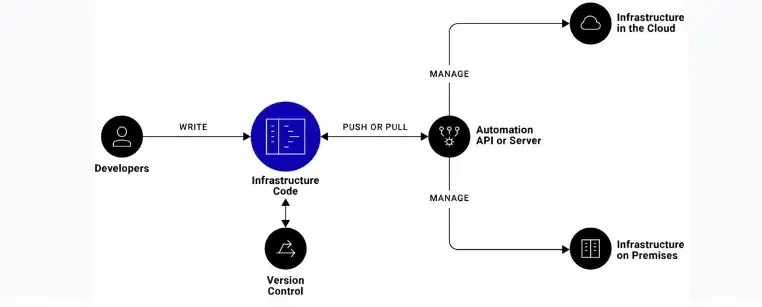
In today’s fast-paced technological landscape, infrastructure automation is a game-changer for businesses aiming to achieve scalability, efficiency, and reliability in their IT operations. Implementing infrastructure automation solutions can significantly reduce costs and simplify infrastructures across various industries, such as banking, finance, logistics, and telecommunication. Understanding infrastructure automation becomes crucial as organizations increasingly adopt cloud computing, DevOps practices, and continuous delivery models. This comprehensive guide covers everything you need about infrastructure automation, including essential tools, techniques, best practices, and real-world use cases.What is Infrastructure Automation?Infrastructure automation is using technology to perform tasks related to managing and provisioning computing resources without manual intervention. This approach leverages automation tools to define, deploy, configure, and manage infrastructure components such as servers, storage, networks, databases, and infrastructure resources through machine-executable scripts and configurations. Organizations can achieve greater efficiency, consistency, and scalability in their IT operations by automating these processes.A core principle of infrastructure automation is Infrastructure as Code (IaC), which involves defining the desired state of infrastructure using code. This code is then used to automatically configure and maintain the infrastructure, ensuring it remains consistent and compliant with the defined specifications. IaC enables version control of infrastructure configurations, similar to application code, allowing for tracking changes, auditing, and rollback capabilities. By treating infrastructure definitions as code, teams can apply software development best practices, such as code reviews, automated testing, and continuous integration/continuous deployment (CI/CD) pipelines, to infrastructure management.One significant benefit of infrastructure automation is eliminating human errors that often occur with manual configuration tasks. Automated processes ensure that infrastructure is provisioned and maintained consistently across different environments, reducing the risk of configuration drift and discrepancies. This consistency translates into more reliable and predictable deployments, critical for maintaining applications’ high availability and performance. Additionally, automation accelerates the deployment process, enabling rapid scaling of infrastructure to meet changing demands and reducing time-to-market for new services and features.Infrastructure automation also plays a crucial role in enhancing security and compliance. Automated scripts can enforce security policies and apply patches and updates across all infrastructure components uniformly, ensuring that security standards are met consistently. Compliance checks and audits can be integrated into the automation workflows, providing real-time insights into the state of the infrastructure and facilitating prompt identification and remediation of issues. By automating routine and repetitive tasks, IT teams can focus on higher-value activities, such as optimizing performance, improving user experience, and innovating new solutions, ultimately driving business growth and agility.Infrastructure automation interacts with the operating system to manage system resources and hardware, ensuring efficient allocation and utilization of physical resources.Benefits of Infrastructure AutomationConsistency and ReliabilityAutomated processes in infrastructure management significantly reduce the likelihood of human errors, which are common in manual configurations. By defining infrastructure as code (IaC), scripts and templates specify the desired state of resources, ensuring that configurations are applied uniformly across all environments. This leads to consistent deployments, as the same code is executed each time, minimizing discrepancies and configuration drift. Tools like Terraform, Ansible, and Puppet enforce idempotent operations, meaning repeated executions yield the same results, further enhancing reliability. Version control systems track changes to these configurations, enabling rollbacks and auditing, which maintain the integrity of the infrastructure over time.Speed and EfficiencyAutomation tools streamline the deployment and management of infrastructure by converting complex, multi-step processes into straightforward, repeatable scripts. This acceleration is achieved through continuous integration/continuous deployment (CI/CD) pipelines, where infrastructure changes are automatically tested, validated, and deployed. For instance, using Terraform, infrastructure can be provisioned within minutes with a single command, compared to hours or days of manual setup. Automated scaling policies in cloud platforms like AWS Auto Scaling and Google Cloud’s Managed Instance Groups dynamically adjust the number of running instances based on real-time demand, ensuring optimal performance without manual intervention. Consequently, this rapid provisioning and scaling reduce the time-to-market for applications and features, enabling businesses to respond swiftly to market changes.ScalabilityInfrastructure automation supports horizontal and vertical scaling by programmatically adjusting resource allocations based on predefined criteria or real-time metrics. Horizontal scaling involves adding more instances or nodes to distribute the load, while vertical scaling increases the capacity of existing resources (e.g., adding CPU and memory). Automation tools integrate with cloud services like AWS CloudFormation, Azure Resource Manager, and Kubernetes to orchestrate these changes seamlessly. Policies and triggers can be set to automatically scale resources up during peak demand and down during low usage periods, optimizing resource utilization. This elasticity ensures that applications can handle varying workloads efficiently without over-provisioning, which saves costs and maintains performance levels.Cost SavingsOrganizations can significantly reduce manual labor provisioning, configuring, and maintaining resources by automating infrastructure management. Automation minimizes the need for extensive IT staffing and lowers the potential for costly human errors. Tools like Docker and Kubernetes facilitate container orchestration, allowing multiple applications to run on shared infrastructure more efficiently, reducing hardware and licensing costs. Additionally, integrating monitoring and analytics tools such as Prometheus, Grafana, and AWS CloudWatch enables real-time resource utilization tracking, providing insights for optimizing cost. Monitoring tools like Prometheus and Grafana help track resource utilization and optimize costs. Automated policies ensure that unused or underutilized resources are decommissioned, preventing waste and ensuring spending aligns with actual usage.Improved SecurityAutomation enforces consistent application of security policies and updates across all infrastructure components, significantly reducing the risk of vulnerabilities due to misconfigurations or outdated software. Infrastructure as Code (IaC) tools like Chef and Puppet allow for codifying security standards, ensuring that every deployment adheres to the same security protocols. Automated compliance checks can be integrated into CI/CD pipelines to enforce security baselines before deployments reach production environments. Tools like HashiCorp Vault programmatically manage secrets and sensitive data, ensuring secure access controls. Regular automated patching and updates ensure that all components are up-to-date with the latest security fixes, reducing exposure to threats. Furthermore, security monitoring and incident response can be automated using tools like Splunk and ELK Stack, which provide real-time detection and mitigation of security incidents.Key Tools for Infrastructure AutomationSeveral tools have emerged as industry standards for infrastructure automation. Here are some of the most popular ones:3.1 TerraformTerraform is an open-source tool for defining and provisioning infrastructure using a high-level configuration language. It supports multiple cloud providers and enables you to manage your infrastructure as code.3.2 AnsibleAnsible is an open-source tool for simple IT automation, configuration management, and application deployment. It describes automation jobs using simple, human-readable language.3.3 PuppetPuppet is a configuration management tool that automates server provisioning, configuration, and management. It uses declarative language to describe the state of your infrastructure.3.4 ChefChef is an automation platform that transforms infrastructure into code. It allows you to automate how your network configures, deploys, and manages infrastructure.3.5 SaltStackSaltStack is an open-source software for event-driven IT automation, remote task execution, and configuration management. It uses a high-speed communication bus to provide real-time automation.3.6 Google Cloud Deployment ManagerGoogle Cloud Deployment Manager is a powerful tool for infrastructure automation and resource management in cloud-based environments. It lets you declaratively create, deploy, and manage Google Cloud resources. Using Google Cloud Deployment Manager, you can automate the creation and management of resources, ensuring consistency and reducing the potential for human error.1. TerraformTerraform by HashiCorp is an open-source tool for safely and efficiently building, changing, and versioning infrastructure. It uses a declarative language to define infrastructure as code (IaC).Features:Supports multiple cloud providersEnables version control of infrastructure configurationsFacilitates modular and reusable code2. AnsibleAnsible, developed by Red Hat, is an open-source automation tool that automates software provisioning, configuration management, and application deployment.Features:Agentless architectureSimple YAML syntax for writing playbooksStrong community support and extensive modules3. PuppetPuppet is a configuration management tool that automates infrastructure provisioning, configuration, and management using its declarative language, Puppet DSL.Features:Idempotent operationsComprehensive reporting and auditing capabilitiesIntegration with various third-party tools4. ChefChef is another popular configuration management tool that automates infrastructure management through code. It uses Ruby-based DSL for defining configurations.Features:Test-driven development for infrastructureFlexible and extensible cookbook systemStrong integration with cloud platforms5. KubernetesKubernetes is an open-source container orchestration platform that automates containerized applications’ deployment, scaling, and management.Features:Automated rollouts and rollbacksSelf-healing capabilitiesScalability and high availabilityTechniques for Effective Infrastructure AutomationTo maximize the benefits of infrastructure automation, it’s essential to follow best practices and techniques:1. Infrastructure as Code (IaC)IaC is a paradigm that involves managing and provisioning computing infrastructure through code, enabling version control, testing, and reproducibility.Benefits:Improved collaboration and transparencySimplified disaster recoveryEnhanced testing and validation2. Continuous Integration and Continuous Deployment (CI/CD)CI/CD pipelines automate integrating code changes, running tests, and deploying applications to production environments.Benefits:Faster release cyclesReduced risk of integration issuesImproved code quality and stability3. Configuration ManagementConfiguration management involves maintaining the consistency of infrastructure configurations across environments through automated tools.Benefits:Consistent and reliable deploymentsSimplified management of large-scale environmentsEnhanced change tracking and auditing4. Monitoring and LoggingInfrastructure monitoring and logging tools provide visibility into the performance and health of infrastructure components, including servers, switches, applications, and services both on-premises and in the cloud, enabling proactive issue resolution.Benefits:Improved incident response timesEnhanced capacity planningBetter insights for optimization and troubleshooting5. OrchestrationOrchestration involves coordinating and managing complex workflows and processes across multiple infrastructure components.Benefits:Streamlined and efficient workflowsReduced operational overheadImproved coordination between different systems and servicesUse Cases of Infrastructure AutomationInfrastructure automation has various use cases across various industries and scenarios. Here are some notable examples:1. Cloud Infrastructure ManagementWhen a company migrates its applications to the cloud, managing dynamic and scalable infrastructure becomes essential to meet changing demands efficiently. Virtual machines play a crucial role in cloud infrastructure management, with tools like Packer and Vagrant helping to manage and configure them. Using tools like Terraform and Ansible significantly enhances this process by automating the provisioning and configuration of cloud resources. Terraform facilitates the creation and management of infrastructure through code, ensuring consistent and repeatable deployments across multiple environments.Ansible complements this by automating configuration management, software deployment, and task execution, simplifying complex processes, and reducing manual effort. These tools enable rapid scaling and adaptation to workload variations, ensuring the infrastructure remains reliable, cost-effective, and aligned with business.2. DevOps PracticesWhen an organization adopts DevOps practices to enhance collaboration between development and operations teams, it needs efficient mechanisms to streamline code integration and deployment. Operating systems are crucial in DevOps practices, as they are managed and configured using configuration management tools. Implementing Continuous Integration/Continuous Deployment (CI/CD) pipelines with tools like Jenkins and GitLab CI facilitates this by automating the process of integrating code changes, running tests, and deploying applications to production environments. CI/CD pipelines ensure that code is continuously tested and validated, reducing the risk of integration issues and accelerating release cycles.Complementing this setup with configuration management tools such as Chef or Puppet further automates infrastructure provisioning, configuration, and maintenance. These tools enable consistent and reliable deployments by managing infrastructure as code, ensuring that environments are configured identically, and minimizing the chances of configuration drift.3. Disaster RecoveryWhen a business requires a robust disaster recovery plan to ensure continuity in case of failures, automating the creation of backup and recovery environments using Infrastructure as Code (IaC) tools becomes crucial. Tools like Terraform and AWS CloudFormation can be used to define and deploy disaster recovery infrastructure swiftly and reliably.By codifying the backup and recovery processes, these tools ensure that secondary environments are consistently configured and ready to take over in the event of a primary system failure. Automated scripts can regularly back up data and application states, facilitating quick restoration. This approach minimizes downtime and data loss, ensuring critical services can be restored rapidly, maintaining operational integrity, and reducing the impact on business operations.4. Scalable Microservices ArchitectureWhen an enterprise adopts a microservices architecture to enhance the scalability and maintainability of its applications, leveraging Kubernetes for container orchestration and management is an effective solution. Kubernetes automates containerized applications’ deployment, scaling, and operation, ensuring that each microservice can be independently managed and scaled based on demand. This flexibility allows efficient resource utilization and seamless updates or rollbacks without impacting other services.Integrating automated monitoring and logging tools like Prometheus, Grafana, and ELK Stack (Elasticsearch, Logstash, Kibana) is essential to maintaining service health. These tools provide real-time insights into application performance, detect anomalies, and enable quick troubleshooting. Together, Kubernetes and these monitoring solutions create a robust environment where microservices can thrive, ensuring reliability, resilience, and ease of maintenance.5. Compliance and SecurityWhen a company must ensure compliance with industry regulations and maintain a secure infrastructure, automating security policies and compliance checks using tools like Ansible and Puppet is essential. These configuration management tools enable the codification and enforcement of security standards across all environments, ensuring that configurations are consistent and adhere to regulatory requirements.Ansible can automate the deployment and verification of security policies, while Puppet ensures that the desired state of the infrastructure is maintained, automatically correcting any deviations. By integrating these tools into the CI/CD pipeline, continuous compliance checks can be performed, providing real-time assurance that the infrastructure remains secure and compliant. This automation reduces the risk of human error and misconfiguration and streamlines audits and reporting.Best Practices for Implementing Infrastructure AutomationTo successfully implement infrastructure automation, consider the following best practices:1. Define Clear ObjectivesIdentifying infrastructure automation’s goals and expected outcomes, such as reducing deployment times or improving scalability, is crucial for guiding and evaluating automation efforts. This approach provides a clear direction and measurable success criteria for automation initiatives, ensuring that resources are effectively allocated and progress can be accurately assessed. By defining objectives like decreasing deployment times or increasing scalability to handle peak loads seamlessly, organizations can align their automation strategies with business needs, track improvements over time, and demonstrate the value of automation in enhancing operational efficiency and flexibility.2. Start Small and Scale GraduallyBeginning with automating simple tasks and gradually expanding to more complex processes reduces the risk of disruptions and allows teams to gain experience and confidence with automation tools. This phased approach helps ensure that initial successes build momentum and provide valuable insights, which can be applied to more intricate automation projects. By starting small, organizations can troubleshoot issues early, refine their strategies, and incrementally improve their automation capabilities, ultimately leading to a smoother and more effective implementation.3. Standardize and ModularizeUsing standardized templates and modular code to ensure consistency and reusability simplifies maintenance and reduces duplication of effort. This approach enables teams to create a unified framework easily adapted for various projects, minimizing the time spent on redundant tasks. Standardized templates provide a reliable starting point for new initiatives, while modular code allows for easy integration and updating of components. Together, these practices enhance efficiency, promote best practices, and streamline the development and maintenance process.4. Implement Robust TestingIncorporating automated testing into the infrastructure automation process to validate configurations and changes enhances the reliability and stability of automated deployments. Automated tests ensure that any modifications to the infrastructure are thoroughly vetted before being implemented, reducing the likelihood of errors and downtime. This practice enables continuous verification of configurations, leading to more robust and dependable deployment processes. By catching issues early and consistently, teams can maintain high quality and performance standards, ultimately fostering a more resilient infrastructure.5. Document and TrainMaintaining comprehensive documentation of automation processes and providing training for team members ensures knowledge transfer and reduces dependence on specific individuals. Detailed documentation serves as a valuable resource, enabling team members to understand and follow automated workflows without relying on the availability of particular experts. Training programs further enhance this by equipping all team members with the necessary skills and understanding to confidently manage and expand automation efforts. Together, these practices promote a more collaborative and resilient team structure capable of effectively sustaining and evolving automation initiatives.6. Monitor and OptimizeContinuously monitoring the performance of automated infrastructure and making improvements based on feedback and analytics keeps the automation process aligned with evolving business needs and technological advancements. Regular performance evaluation allows for the timely identification of inefficiencies or issues, enabling proactive adjustments and optimizations. By leveraging data-driven insights and user feedback, teams can ensure that their automation strategies remain effective and responsive to changing requirements, ultimately fostering a more adaptive and forward-thinking infrastructure.ConclusionInfrastructure automation is a powerful approach that can transform how organizations manage and deploy their IT resources. Businesses can achieve greater efficiency, scalability, and reliability by leveraging the right tools, techniques, and best practices. Whether starting with infrastructure automation or looking to enhance your existing processes, this guide provides a comprehensive roadmap to help you succeed. Are you ready to automate your infrastructure and unlock new levels of efficiency and scalability? Dive into the world of infrastructure automation and experience the future of IT operations today.By focusing on these key areas and continuously evolving your automation strategies, you’ll be well-equipped to navigate the complexities of modern IT infrastructure and drive your organization toward success.Do you have any specific questions about infrastructure automation or need assistance with a particular aspect?

Aziro Marketing

blogImage

Data Observability vs Data Quality: Understanding the Differences and Importance

In today’s data-driven world, businesses heavily rely on data to make informed decisions, optimize operations, and drive growth. However, ensuring the reliability and usability of this data is not straightforward. Two crucial concepts that come into play here are data observability and data quality. Although they share some similarities, they serve different purposes and address distinct aspects of data management. This article delves into the differences and importance of data observability vs. data quality, highlighting how both practices work together to ensure data integrity and reliability, offering a comprehensive understanding of both.Source: CriblWhat is Data Observability?Source: acceldataData observability refers to the ability to fully understand and monitor the health and performance of data systems. It includes understanding data lineage, which helps track data flow, behavior, and characteristics. It involves monitoring and analyzing data flows, detecting anomalies, and gaining insights into the root causes of issues. Data observability provides a holistic view of the entire data ecosystem, enabling organizations to ensure their data pipelines function as expected.Key Components of Data ObservabilitySource: TechTargetUnderstanding the critical components of data observability is essential for grasping how it contributes to the overall health of data systems. These components enable organizations to gain deep insights into their data operations, identify issues swiftly, and ensure the continuous delivery of reliable data. Root cause analysis is a critical component of data observability, helping to identify the reasons behind inaccuracies, inconsistencies, and anomalies in data streams and processes. The following paragraphs explain each element in detail and highlight its significance.Monitoring and Metrics in Data PipelinesMonitoring and metrics form the backbone of data observability by continuously tracking the performance of data pipelines. Through real-time monitoring, organizations can measure various aspects such as throughput, latency, and error rates. These metrics provide valuable insights into the pipeline’s efficiency and identify bottlenecks or areas where performance may deteriorate.Monitoring tools help set thresholds and generate alerts when metrics deviate from the norm, enabling proactive issue resolution before they escalate into significant problems. Data validation enforces predefined rules and constraints to guarantee data conforms to expectations, preventing downstream errors and ensuring data integrity.TracingTracing allows organizations to follow data elements through different data pipeline stages. By mapping the journey of data from its source to its destination, tracing helps pinpoint where issues occur and understand their impact on the overall process. Tracing is an integral part of data management processes, helping refine and improve how organizations manage their data.For example, tracing can reveal whether the problem originated from a specific data source, transformation, or storage layer if data corruption is detected at a particular stage. This granular insight is invaluable for diagnosing problems and optimizing data workflows.LoggingLogging captures detailed records of data processing activities, providing a rich source of information for troubleshooting and debugging. Logs document events, errors, transactions, and other relevant details within the data pipeline.By analyzing logs, data engineers can identify patterns, trace the origins of issues, and understand the context in which they occurred. Effective logging practices ensure that all critical events are captured, making maintaining transparency and accountability in data operations easier. Data profiling involves analyzing datasets to uncover patterns, distributions, anomalies, and potential issues, aiding in effective data cleansing and ensuring data adheres to defined standards.AlertingAlerting involves setting up notifications to inform stakeholders when anomalies or deviations from expected behavior are detected in the data pipeline. Alerts can be configured based on predefined thresholds or anomaly detection algorithms. For instance, an alert could be triggered if data latency exceeds a specific limit or error rates spike unexpectedly.Timely alerts enable rapid response to potential issues, minimizing their impact on downstream processes and ensuring that data consumers receive accurate and timely information. Alerting helps proactively identify and resolve data quality issues, ensuring accuracy, completeness, and consistency.What is Data Quality?Source: AlationData quality, on the other hand, focuses on the attributes that make data fit for its intended use. High-quality data is accurate, complete, consistent, timely, and relevant. Data quality involves processes and measures to cleanse, validate, and enrich data, making it reliable and valid for analysis and decision-making.Data quality and observability are both crucial for ensuring data reliability and accuracy, focusing on real-time monitoring, proactive issue detection, and understanding data health and performance.Key Dimensions of Data QualityIn data management, several key attributes determine the quality and effectiveness of data. Attributes such as accuracy, completeness, consistency, timeliness, and relevance ensure that data accurately reflects real-world entities, supports informed decision-making, and aligns with business objectives.AccuracyAccuracy is the degree to which data correctly represents the real-world entities it describes. Inaccurate data can lead to erroneous conclusions and misguided business decisions. Ensuring accuracy involves rigorous validation processes that compare data against known standards or sources of truth.For example, verifying customer addresses against official postal data can help maintain accurate records. High accuracy enhances the credibility of data and ensures that analyses and reports based on this data are reliable.CompletenessCompleteness refers to the extent to which all required data is available, and none is missing. Incomplete data can obscure critical insights and lead to gaps in analysis. Organizations must implement data collection practices that ensure all necessary fields are populated, and no vital information is overlooked.For instance, ensuring that all customer profiles contain mandatory details like contact information and purchase history is essential for comprehensive analysis. Complete data sets enable more thorough and meaningful interpretations.ConsistencyConsistency ensures uniformity of data across different datasets and systems. Inconsistent data can arise from discrepancies in data formats, definitions, or values used across various sources. Standardizing data entry protocols and implementing data integration solutions can help maintain consistency.For example, using a centralized data dictionary to define key terms and formats ensures that all departments interpret data uniformly. Consistent data enhances comparability and reduces misunderstandings.TimelinessTimeliness means that data is up-to-date and available when needed. Outdated data can lead to missed opportunities and incorrect assessments. Organizations should establish processes for regular data updates and synchronization to ensure timeliness.For instance, real-time data feeds from transaction systems can keep financial dashboards current. Timely data enables prompt decision-making and responsiveness to changing circumstances.RelevanceRelevance ensures that data is pertinent to the context and purpose for which it is used. Irrelevant data can clutter analysis and dilute focus. Organizations must align data collection and maintenance efforts with specific business objectives to ensure relevance.For example, collecting data on user interactions with a website can inform targeted marketing strategies. Relevant data supports precise and actionable insights, enhancing the value derived from data analysis.Data Observability vs. Data Quality: Key DifferencesSource: DQOpsQuality and data observability safeguard data-driven decisions, maintain data integrity, and address real-time issues. Here is a list of the key differences between the two:1. ScopeThe scope of data observability focuses on monitoring and understanding the data ecosystem’s health and performance. It encompasses the entire data pipeline, from ingestion to delivery, and ensures that all components function cohesively.Data quality, however, is concerned with the intrinsic attributes of the data itself, aiming to enhance its fitness for purpose. While observability tracks the operational state of data systems, quality measures assess the data’s suitability for analysis and decision-making.2. ApproachThe approach to achieving data observability involves monitoring, tracing, logging, and alerting. These methods provide real-time visibility into data processes, enabling quick identification and resolution of issues. Data quality enhances data attributes using cleansing, validation, and enrichment processes.It involves applying rules and standards to improve data accuracy, completeness, consistency, timeliness, and relevance. While observability ensures smooth data flow, quality management ensures the data is valuable and trustworthy. Implementing data quality and observability practices involves systematic and strategic steps, including data profiling, cleansing, validation, and observability.3. GoalsThe primary goal of data observability is to ensure the smooth functioning of data pipelines and early detection of problems. Organizations can prevent disruptions and maintain operational efficiency by maintaining robust observability practices. In contrast, data quality aims to provide accurate, complete, consistent, timely, and relevant data for analysis and decision-making.High-quality data supports reliable analytics, leading to more informed business strategies. Both observability and quality are essential for a holistic data management strategy, but they focus on different objectives.Why Both MatterUnderstanding the differences between data observability and data quality highlights why both are crucial for a robust data strategy. Organizations need comprehensive visibility into their data systems to maintain operational efficiency and quickly address issues. Simultaneously, they must ensure their data meets quality standards to support reliable analytics and decision-making.Benefits of Data ObservabilitySource: InTechHouseHigh-quality data is essential for deriving precise business intelligence, making informed decisions, and maintaining regulatory compliance. Organizations can unlock valuable insights, support better decision-making, and meet industry standards by ensuring data accuracy.Accurate Insights: High-quality data leads to more precise and actionable business intelligence. Accurate data forms the foundation of reliable analytics and reporting, enabling organizations to derive meaningful insights from their data.With accurate insights, businesses can more precisely identify trends, spot opportunities, and address challenges, leading to more effective strategies and improved outcomes.Better Decision-Making: Reliable data supports informed and effective strategic decisions. When decision-makers have access to high-quality data, they can base their choices on solid evidence rather than assumptions.This leads to better-aligned strategies, optimized resource allocation, and improved overall performance. Reliable data empowers organizations to navigate complex environments confidently and make decisions that drive success.Regulatory Compliance: Adhering to data quality standards helps meet regulatory requirements and avoid penalties. Many industries have strict data regulations that mandate accurate and reliable data handling.Organizations can ensure compliance with these regulations by maintaining high data quality and reducing the risk of legal and financial repercussions. Regulatory compliance enhances the organization’s reputation and builds trust with customers and partners.ConclusionIn the debate of data observability vs data quality, it is clear that both play vital roles in ensuring the effectiveness of an organization’s data strategy. While data observability provides the tools to monitor and maintain healthy data systems, data quality ensures the data is reliable and valuable. By integrating both practices, organizations can achieve a comprehensive approach to managing their data, ultimately leading to better outcomes and sustained growth.Do you have any further questions or need additional insights on this topic?

Aziro Marketing

blogImage

Navigating the Future with Data Management as a Service (DMaaS)

In today’s exponentially growing digital landscape, the ability to manage vast amounts of data efficiently is not just an operational need but a strategic asset. For CXOs, IT Managers, and Software Engineers, understanding the nuances of Data Management as a Service (DMaaS) can be the difference between leading in their industry or lagging. This blog post aims to demystify DMaaS, outlining its benefits, key features, use cases, challenges, and future of this innovative service.Introduction to Data Management as a Service (DMaaS)Data Management as a Service represents a cloud-based approach to data integration, storage, and analytics. It provides organizations with comprehensive capabilities to handle large volumes of data from diverse sources without needing on-premises infrastructure. By leveraging DMaaS, businesses can focus on extracting value from their data rather than managing data storage and maintenance complexities.Leveraging Data Management as a Service entails a strategic realignment of focus for businesses. They shift their attention away from the intricacies of data storage and maintenance towards the more lucrative pursuit of deriving actionable insights and value from their data assets. At its core, DMaaS redefines the traditional data management landscape, offering a holistic suite of capabilities tailored to the complexities of modern data ecosystems.Through streamlined cloud-based operations, DMaaS facilitates seamless data integration and storage, enabling enterprises to transcend the limitations of physical infrastructure. Consequently, businesses can allocate resources more efficiently, directing efforts towards leveraging advanced analytics techniques to uncover meaningful patterns and trends within their datasets, thereby unlocking the untapped potential for innovation and competitive advantage.Key Features and Components of Data Management as a ServiceDMaaS is characterized by several key features that make it an indispensable tool for modern organizations. These include:1. Multi-cloud and Hybrid Cloud SupportEnsuring seamless data management across various cloud environments is crucial for organizations utilizing a combination of public, private, and hybrid clouds. DMaaS achieves this by offering a unified platform to manage data dispersed across cloud providers and on-premises data centers. This enables businesses to leverage the full potential of their data, regardless of where it resides, ensuring flexibility and optimizing costs associated with data storage and management.2. Data Integration and AnalyticsAnother vital aspect of DMaaS is providing tools for integrating data from multiple sources and extracting actionable insights. This feature allows organizations to consolidate disparate data forms into a coherent framework, including structured and unstructured data. Advanced analytics capabilities are applied to this integrated data, enabling businesses to derive meaningful insights that can inform decision-making processes, improve operational efficiency, and drive innovation.3. Automated Backups and RecoveryOffering robust disaster recovery solutions to minimize data loss is essential for business continuity. DMaaS platforms usually include automated backup and recovery features, which periodically save copies of data across different locations. This redundancy allows users to quickly restore data in the event of hardware failure, cyberattacks, or other types of data loss incidents, significantly reducing downtime and the associated costs.4. Scalable Storage SolutionsThanks to DMaaS’s cloud-based nature, businesses can scale their storage needs without physical constraints. This scalability allows for accommodating growing data volumes without upfront investment in physical storage infrastructure. Organizations can adjust their storage resources dynamically, ensuring that they only pay for what they use and can easily expand their capacity as their needs evolve.5. Compliance and SecurityImplementing stringent security measures and compliance protocols to protect sensitive information is a fundamental component of DMaaS. Given the increasing prevalence of cyber threats and the growing regulatory landscape, DMaaS providers incorporate advanced security technologies and best practices to safeguard data. This includes encryption, access controls, regular security audits, and adherence to international standards and regulations to ensure data handling practices meet compliance requirements.Benefits of Data Management as a ServiceSource: Cloud PatternsThe adoption of DMaaS represents a strategic imperative for organizations seeking to capitalize on the benefits of cloud-based data management while mitigating the inherent challenges of traditional on-premises solutions. By embracing the scalability, cost efficiency, and security features offered by DMaaS, businesses can unlock new opportunities for innovation, accelerate time-to-insight, and gain a competitive edge in today’s data-driven economy.1. Scalability and ElasticityDMaaS offers unparalleled scalability and elasticity, allowing organizations to scale their data management resources up or down in response to changing demand. With cloud-based infrastructure, businesses can dynamically adjust storage capacity, computing power, and data processing resources as needed, ensuring optimal performance and cost efficiency.2. Cost Efficiency and PredictabilityBy adopting DMaaS, organizations can significantly reduce capital expenditures associated with hardware procurement, maintenance, and upgrades. With a pay-as-you-go pricing model, businesses only pay for the resources they consume, enabling predictable budgeting and cost management. This cost-efficient approach eliminates the need for upfront investments in infrastructure while providing flexibility to scale resources based on actual usage patterns.3. Enhanced Data Security and ComplianceDMaaS providers implement robust security measures and compliance frameworks to safeguard sensitive data against unauthorized access, breaches, and regulatory violations. Through encryption, access controls, and regular audits, businesses can ensure their data’s integrity, confidentiality, and availability, thereby mitigating risks and maintaining regulatory compliance. By entrusting their data management to reputable DMaaS providers, organizations can build trust with customers, partners, and regulators, reinforcing their commitment to data protection and privacy.4. Improved Data Accessibility and AvailabilityDMaaS makes data more accessible and available to users across the organization, regardless of their location or device. Cloud-based storage and integration solutions enable seamless access to data from any internet-connected device, facilitating collaboration, decision-making, and innovation. By breaking down silos and enabling real-time access to data, DMaaS empowers businesses to extract actionable insights and drive informed decision-making at every level of the organization.5. Streamlined Data Integration and ManagementDMaaS simplifies data integration and management complexities, providing organizations with tools and frameworks to streamline data ingestion, transformation, and governance processes. Through pre-built connectors, APIs, and data pipelines, businesses can seamlessly integrate data from disparate sources, enabling a single source of truth for analysis and reporting. This streamlined approach reduces time-to-insight, minimizes errors, and enhances data quality, empowering organizations to derive maximum value from their data assets.6. Agility and InnovationWith DMaaS, organizations gain the agility and flexibility to experiment with new data-driven initiatives, technologies, and business models. Cloud-based infrastructure and services enable rapid prototyping, development, and deployment of innovative solutions, accelerating time-to-market and fostering a culture of continuous innovation. By leveraging DMaaS capabilities, businesses can adapt swiftly to changing market dynamics, seize emerging opportunities, and stay ahead of the competition in today’s fast-paced digital landscape.7. Disaster Recovery and Business ContinuityDMaaS offers robust disaster recovery and business continuity capabilities, ensuring the resilience and availability of critical data and applications during unforeseen disruptions or disasters. Cloud-based backup and replication services enable automated, geo-redundant data protection, minimizing downtime and data loss risks. With built-in failover mechanisms and recovery options, businesses can maintain continuity of operations, mitigate financial losses, and safeguard their reputation in the face of adversity.Use Cases and Applications of Data Management as a ServiceDMaaS finds application across various sectors, demonstrating its versatility. Organizations dealing with large amounts of data can benefit from DMaaS’s services, harnessing its scalable storage, integrated analytics, and robust data protection to enhance operational efficiency and decision-making capabilities.Healthcare: Data Management as a Service (DMaaS) is critical in securely managing vast patient records and ensuring compliance with privacy regulations such as HIPAA. By centralizing patient data in a secure cloud environment, healthcare providers can streamline access to medical records, enabling timely and informed decision-making by healthcare professionals.FinTech: DMaaS is instrumental in enabling real-time fraud detection and compliance monitoring to mitigate risks and ensure regulatory compliance within the financial services industry. By leveraging DMaaS solutions, financial institutions can aggregate and analyze vast amounts of transactional data from multiple sources in real-time, enabling them to identify suspicious activities and fraudulent transactions promptly.Retail: Businesses harness the power of DMaaS to gain deeper insights into customer behavior and preferences, driving personalized shopping experiences and enhancing customer satisfaction. By analyzing vast amounts of real-time transactional and customer data, retailers can identify trends, predict consumer preferences, and optimize pricing and product recommendations.Education: DMaaS facilitates efficient student data management, academic records, and administrative processes. Educational institutions can leverage DMaaS solutions to centralize student information, streamline enrollment processes, and enhance collaboration among faculty and staff.Manufacturing: DMaaS empowers organizations to optimize production processes, improve supply chain visibility, and enhance product quality. By integrating data from IoT sensors, equipment, and supply chain systems, manufacturers can gain real-time insights into production metrics, identify potential bottlenecks, and proactively address maintenance issues.Energy: DMaaS is crucial in optimizing energy generation, distribution, and consumption processes. Energy companies can utilize DMaaS solutions to aggregate data from smart meters, grid sensors, and renewable energy sources, enabling real-time monitoring and management of energy assets.Challenges and ConsiderationsSource: ResmoData sovereignty and privacy concerns are paramount, requiring organizations to meticulously choose DMaaS providers that adhere to regional and international regulations, like GDPR in Europe or CCPA in California. The technical sophistication of DMaaS solutions necessitates that businesses possess or develop advanced in-house capabilities. This includes familiarity with API integrations, a thorough understanding of cloud architecture, and data analytics and security protocols expertise.Essential tools like Terraform for cloud infrastructure as code, Kubernetes for container orchestration, and Apache Kafka for real-time data streaming might be integral to leveraging DMaaS effectively. Interoperability with legacy systems presents another layer of complexity. Organizations must assess the extent to which a DMaaS can integrate with existing IT ecosystems, possibly requiring middleware or custom-developed adapters.Vendor lock-in is a significant risk, with proprietary technologies or platforms potentially limiting future flexibility. Strategies to mitigate this risk include adopting open standards and technologies where possible and considering multi-cloud DMaaS solutions that avoid dependence on a single provider’s ecosystem.Future Trends and OutlookThe future of DMaaS is bright, with several trends indicating its increasing importance. The rise of edge computing and IoT devices will generate even more data, further emphasizing the need for efficient data management solutions. Artificial Intelligence and Machine Learning integrations within DMaaS platforms are expected to enhance data analytics capabilities, offering deeper insights and predictive analytics. Furthermore, as concerns around data privacy heighten, DMaaS providers will likely introduce more advanced security features to meet these demands.1. Edge Computing and IoT ExpansionThe proliferation of edge computing and Internet of Things (IoT) devices is poised to fuel exponential growth in data generation. This surge in data volume underscores the critical importance of efficient data management solutions like DMaaS to handle and process data closer to its source.2. Integration of AI and Machine LearningIntegrating Artificial Intelligence (AI) and Machine Learning (ML) capabilities within DMaaS platforms is set to revolutionize data analytics. These advanced technologies enable more sophisticated data processing, facilitating deeper insights, pattern recognition, and predictive analytics, empowering organizations to make data-driven decisions more accurately and quickly.3. Enhanced Data Security MeasuresAs data privacy concerns continue to mount, DMaaS providers are expected to bolster their security measures to safeguard sensitive information. Anticipated advancements include implementing robust encryption techniques, access controls, and data anonymization methods to ensure compliance with stringent data protection regulations like GDPR and CCPA.Wrap-UpData Management as a Service transforms how organizations approach data storage, integration, and analysis. DMaaS enables businesses to focus on extracting value from their data by offering a scalable, cost-effective, and secure solution. Despite the challenges, the strategic adoption of DMaaS positions organizations to better manage the complexities of the modern data landscape and harness the power of their data assets. For CXOs, IT Managers, and Software Engineers, staying informed about DMaaaS developments is crucial to successfully navigate the future of data management.

Aziro Marketing

blogImage

How to Build Open-Source AWS S3-Compatible Storage on Docker?

AWS S3 compatible storage is one of the emerging technologies in the enterprise storage medium. Initially, it was used only by Amazon in public cloud environments. However, today it has been commonly used by all the storage & cloud vendors in on-premises and private cloud environments.‘S3 compatible storage’ offers rich Amazon S3 API complaint interfaces.Use-cases:1 Backup & Disaster Recovery:S3 compatible storage is suitable for storing and archiving mission-critical data on-premises providing maximum availability, reliability, and durability.2 Storing large data-sets over network:S3 compatible storage is ideal when you want to store all kinds of documents and unstructured data: images, materials like PDFs and Excel docs, music, videos, backup files, database dumps, log files and render with faster performance.3 File sharing solutions:S3 compatible storage can also be used as a file-sharing solution or a network drive and be integrated into your environment.4 Pricing:Lesser cost than public cloud: With industry-standard hardware/ VMs, S3 compatible storage solutions can be installed and these solutions deliver the highest value.5 Secured & Performance:S3 compatible storage is deployed on industry-standard hardware/ VMs, which is in your data center and has secured data access. It also delivers higher throughput and lesser latencies.Open-source AWS S3-compatible storage solutions:Below, I am going to explain 2 solutions as an example of open-source AWS S3-compatible storage built on the Docker platform.Scality/s3server.MinIO Object Storage.Solution1: Scality/s3serverAbout Scality:Scality is an open-source AWS S3 compatible storage solution that provides an S3-compliant interface for IT professionals. It allows using there S3-compatible storage applications, develop there S3 compliant apps faster by doing testing and integration locally or against any remote S3 compatible cloud.Quick Start: Used Centos-7 VM[root@localhost ~]# docker run --name AWS_S3 -p 8000:8000 -e SCALITY_ACCESS_KEY_ID=accessKey1 -e SCALITY_SECRET_ACCESS_KEY=verySecretKey1 scality/s3server [root@localhost ~]# docker ps CONTAINER ID        IMAGE               COMMAND                  CREATED             STATUS              PORTS                    NAMES bc290f05ad5c        scality/s3server    "/usr/src/app/dock..."   8 hours ago         Up 8 hours          0.0.0.0:8000->8000/tcp   AWS_S3 Testing – Create buckets on Scality S3server using CYBERDUCK UI and create/upload files on the bucket.Solution2: MinIO Object StorageAbout MinIO:MinIO is a 100 percent open-source, distributed object storage system. It is software-defined, runs on industry-standard hardware, and API compatible with Amazon S3 cloud storage service.Quick Start: Used Centos-7 VM[root@localhost ~]# docker run -p 9000:9000 --name S3_minio -e "MINIO_ACCESS_KEY=accessKey1" -e "MINIO_SECRET_KEY=verySecretKey1"  minio/minio server /mnt/data [root@localhost ~]# docker ps CONTAINER ID        IMAGE               COMMAND                  CREATED              STATUS              PORTS                    NAMES 13f2fc802ec9        minio/minio         "/usr/bin/docker-e..."   About a minute ago   Up About a minute   0.0.0.0:9000->9000/tcp   S3_minio Testing – Create buckets on MinIO Object Storage using AWS CLI and create/upload files on the bucket.References:https://min.io/https://www.scality.com/topics/what-is-s3-compatible-storage/pre, .singlePostContent img{margin-bottom:2rem;} .filledCheckboxes input[type="checkbox"]{opacity:0;display :none;}.multiStepFormBody button.close{z-index:99;}

Aziro Marketing

blogImage

Data Security and Compliance in Storage as a Service

In today’s digital era, cloud computing has revolutionized “Storage as a Service” (SaaS) by providing scalable, cost-effective, and flexible data storage options. However, with the convenience of storing data in the cloud comes the paramount responsibility of ensuring data security and compliance with various regulations. This blog explores the critical security measures and compliance standards for protecting data in storage as a service environment, focusing on encryption techniques, access control mechanisms, data integrity, and key regulations such as GDPR and HIPAA.Encryption TechniquesIn an increasingly digital world, safeguarding sensitive data is paramount, especially in storage as a service environments. End-to-end encryption (E2EE) is a formidable shield, ensuring data remains encrypted from sender to recipient, impervious to interception even by cloud service providers. Alongside encryption at rest and in transit, robust key management practices fortify data security, empowering businesses to maintain control over their encryption keys and safeguard their valuable information.1. End-to-End Encryption: End-to-end encryption (E2EE) is a robust security measure ensuring that data is encrypted on the sender’s device and remains encrypted until it reaches the recipient’s device. This approach guarantees that data is protected during transit and storage, making it unreadable to unauthorized parties, including cloud service providers. E2EE is particularly important in storage as a service environment where sensitive information is frequently transmitted and stored.2. Encryption at Rest and in Transit: Encryption at rest protects data stored on physical media, such as hard drives or SSDs, by converting it into an unreadable format using cryptographic algorithms. Block storage is a common storage method for STaaS, enabling customers to provision block storage volumes for lower-latency input/output (I/O) operations. Common algorithms include the Advanced Encryption Standard (AES) with 256-bit keys. Encryption in transit, on the other hand, secures data while it is being transmitted over networks. Protocols like Transport Layer Security (TLS) and Secure Sockets Layer (SSL) protect data during transfer, preventing interception and eavesdropping.3. Key Management: Effective encryption relies on secure key management practices. This includes securely generating, distributing, storing, and rotating encryption keys. Many storage-as-a-service providers offer managed key services, which automate these processes while ensuring that keys are stored in hardware security modules (HSMs) or other secure environments. Some providers also support bring-your-own-key (BYOK) models, allowing businesses to retain control over their encryption keys.Access Control MechanismsFeatures like multi-factor authentication (MFA), single sign-on (SSO), and role-based access control (RBAC) fortify defenses by requiring stringent verification methods and limiting access based on users’ roles and responsibilities. Moreover, regular auditing and monitoring of access logs are pivotal, providing insights into user activity and enabling swift detection and response to potential security threats, thus ensuring the integrity and confidentiality of stored data.1. Identity and Access Management (IAM): Identity and Access Management (IAM) systems are crucial for enforcing access control policies in storage as a service environment. IAM systems manage user identities and access privileges, ensuring only authorized users can access sensitive data. Features such as multi-factor authentication (MFA), single sign-on (SSO), and role-based access control (RBAC) enhance security by requiring multiple forms of verification and limiting access based on users’ roles and responsibilities.2. Role-Based Access Control (RBAC): RBAC is a security mechanism that assigns permissions to users based on their roles within an organization. By defining roles with specific access rights, RBAC ensures that users only have access to the data and resources necessary for their job functions. This minimizes the risk of unauthorized access and data breaches.3. Audit Logs and Monitoring: Regularly auditing access logs and monitoring user activity are critical for identifying and responding to potential security threats. Storage as a service providers typically offer logging and monitoring tools that track access events, changes to data, and other relevant activities. These logs can be analyzed to detect suspicious behavior, such as unauthorized access attempts or unusual data transfers, enabling prompt action to mitigate risks.Data Security and IntegrityMaintaining stringent control over access to sensitive data is imperative, and Identity and Access Management (IAM) systems serve as the cornerstone of security protocols. These systems orchestrate user identities and access privileges, employing robust features like multi-factor authentication (MFA) and role-based access control (RBAC) to fortify defenses against unauthorized entry.1. Checksums and Hashing: Ensuring data integrity involves verifying that data has not been altered or corrupted. Checksums and cryptographic hashing algorithms, such as SHA-256, are commonly used techniques. When data is stored or transmitted, a checksum or hash value is calculated and stored alongside the data. Upon retrieval or reception, the checksum or hash is recalculated and compared to the original value to detect discrepancies, indicating potential data corruption or tampering.2. Version Control: Version control systems help maintain data integrity by tracking changes to data over time. This allows users to revert to previous versions of files if necessary, ensuring that data can be restored to a known good state in case of accidental modification or deletion. Many storage as a service providers offer built-in versioning capabilities, enabling automatic tracking and management of file versions.3. Redundancy and Replication: Data redundancy and replication strategies are essential for ensuring data availability and integrity. By storing multiple copies of data across different locations or devices, these strategies protect against data loss due to hardware failures, natural disasters, or other incidents. Redundant storage systems can automatically detect and correct errors, further enhancing data integrity.Compliance StandardsNavigating the complex landscape of data security and compliance standards is essential for businesses, particularly in storage as a service. The General Data Protection Regulation (GDPR) sets stringent guidelines for protecting personal data within the European Union. At the same time, the Health Insurance Portability and Accountability Act (HIPAA) mandates safeguards for sensitive healthcare information in the US. STaaS helps organizations meet these compliance standards by eliminating the need to manage their own storage infrastructure.1. General Data Protection Regulation (GDPR)The General Data Protection Regulation (GDPR) is a comprehensive data protection law that applies to organizations operating within the European Union (EU) or processing the personal data of EU residents. GDPR mandates strict requirements for data protection, including obtaining explicit consent for data processing, implementing data minimization principles, and ensuring data security through appropriate technical and organizational measures. Non-compliance with GDPR can result in substantial fines and reputational damage.2. Health Insurance Portability and Accountability Act (HIPAA)HIPAA is a US law that sets national standards for protecting sensitive patient health information. It applies to healthcare providers, health plans, and their business associates. HIPAA requires the implementation of administrative, physical, and technical safeguards to ensure the confidentiality, integrity, and availability of electronic protected health information (ePHI). As a service provider catering to the healthcare industry, Storage must comply with HIPAA regulations to avoid severe penalties and ensure patient data protection.3. Payment Card Industry Data Security Standard (PCI DSS)PCI DSS is a set of security standards to protect payment card information. It applies to organizations that process, store, or transmit credit card data. Compliance with PCI DSS involves implementing measures such as encryption, access control, regular monitoring, and testing of security systems. Storage as a service provider handling payment card data, must adhere to PCI DSS requirements to safeguard sensitive financial information.4. Federal Risk and Authorization Management Program (FedRAMP)FedRAMP is a US government program that standardizes the security assessment, authorization, and continuous monitoring of cloud services used by federal agencies. FedRAMP compliance ensures that cloud service providers meet stringent security requirements, protecting government data and systems. Providers offering storage as a service to federal agencies must achieve FedRAMP certification to demonstrate their commitment to data security.Implementing Security and Compliance in Cloud Storage as a ServiceIn the digital landscape, ensuring data security and compliance starts with selecting a storage as a service provider that adheres to industry standards and regulations. Evaluating providers based on certifications, security practices, and compliance with GDPR, HIPAA, PCI DSS, and FedRAMP is paramount.1. Choosing a Compliant ProviderSelecting a storage as a service provider that complies with relevant security and regulatory standards is the first step in ensuring data protection. Businesses should evaluate providers based on their certifications, security practices, and compliance with GDPR, HIPAA, PCI DSS, and FedRAMP regulations. Providers that undergo regular third-party audits and assessments offer greater assurance of their security capabilities. Businesses should evaluate providers based on the storage services they offer, including subscription models, access through standard protocols or APIs, and value-added features like file sharing and backup management.2. Conducting Regular Security AuditsRegular security audits are essential for identifying vulnerabilities and ensuring compliance with established standards. Businesses should conduct internal audits and engage third-party auditors to evaluate their storage as a service environment. These audits should assess the effectiveness of encryption techniques, access control mechanisms, data integrity measures, and compliance with relevant regulations. Regular audits can help manage and optimize storage costs by identifying opportunities to transfer expenses from capital expenditure to operating expenditure, such as through leasing storage equipment.3. Employee Training and AwarenessEnsuring data security and compliance is not solely the responsibility of IT departments; it requires a collective effort across the organization. Regular training and awareness programs can educate employees about security best practices, compliance requirements, and their roles in protecting sensitive data. Training should cover topics such as recognizing phishing attempts, using strong passwords, and following data handling procedures.4. Incident Response and Disaster Recovery PlanningDespite robust security measures, data breaches and incidents can still occur. An incident response plan is crucial for minimizing the impact of security breaches. The plan should outline procedures for detecting, reporting, and responding to security incidents, including data breaches. It should also include steps for notifying affected parties, conducting forensic investigations, and implementing corrective actions to prevent future incidents. Additionally, planning for sufficient storage capacity is essential to ensure resources are available for data recovery and managing the aftermath of breaches.ConclusionAs businesses increasingly rely on “Storage as a Service” solutions, ensuring data security and compliance becomes a critical priority. Implementing robust encryption techniques, access control mechanisms, and data integrity measures is essential for protecting sensitive information in cloud environments. Additionally, compliance with regulations such as GDPR, HIPAA, PCI DSS, and FedRAMP is necessary to avoid legal penalties and build trust with customers.Businesses can effectively safeguard their data in storage as a service environment by selecting compliant providers, conducting regular security audits, educating employees, and having a well-defined incident response plan. As technology and regulatory landscapes evolve, staying informed and proactive in data security practices will remain key to maintaining the integrity and confidentiality of valuable information.

Aziro Marketing

blogImage

Demystifying Infrastructure as Code (IaaC): A Comprehensive Technical Guide

Source:StackpathInfrastructure as Code (IaaC) stands as a cornerstone in contemporary cloud computing, fundamentally altering the landscape of infrastructure provisioning, management, and scalability. It symbolizes a paradigmatic transition towards automated, repeatable, and scalable approaches within IT operations. In this exhaustive technical exposition, we explore Infrastructure as Code in-depth, delving into its nuanced concepts, multifaceted benefits, intricate implementation strategies, best practices, history, and future trajectories.Understanding Infrastructure as Code (IaaC)Infrastructure as Code (IaaC) represents a sophisticated software engineering solution methodology meticulously designed to streamline and automate the provisioning and management of infrastructure resources.At its core, IaaC relies on machine-readable definition files, meticulously crafted to encapsulate the intricacies of infrastructure configuration.By abstracting infrastructure elements into code, this approach enables developers and operations teams to transcend the limitations of manual intervention, empowering them to define, deploy, and manage infrastructure resources programmatically.Leveraging the power of code, organizations can achieve unprecedented efficiency, consistency, and scalability in their infrastructure operations, ushering in a new era of agility and innovation.Developers and operations teams collaborate seamlessly online, leveraging version control systems to track changes, perform code reviews, and ensure the integrity of infrastructure configurations. Moreover, the programmable nature of IaaC empowers organizations to adopt a DevOps mindset, fostering collaboration, automation, and continuous improvement across the software development lifecycle. As organizations embrace IaaC, they unlock the potential to accelerate deployment cycles, minimize operational overhead, and deliver value to customers with unprecedented speed and efficiency.Key Concepts of Infrastructure as Code (IaaC)Source: MediumAt the core of IaaC lie vital concepts that shape its implementation and efficacy. From understanding the distinction between declarative and imperative paradigms to embracing idempotency and versioning, grasping these fundamental concepts is essential for unlocking the full potential of Infrastructure as Code.Key Concepts of Infrastructure as Code (IaaC)In Infrastructure as Code (IaaC), understanding the distinction between declarative and imperative paradigms is essential. Declarative IaaC focuses on specifying the desired state of the infrastructure without prescribing the exact steps to achieve it. Instead, it describes the result, leaving the implementation details to the IaaC tool. On the other hand, imperative IaaC provides explicit instructions on providing and configuring infrastructure resources, delineating each step in the process. Deciding between these approaches hinges on complexity, maintainability, and team preferences, each offering advantages and trade-offs.Idempotency: Ensuring Consistency and ReliabilityIdempotency is a cornerstone principle in Infrastructure as Code (IaaC), underpinning the reliability and predictability of infrastructure provisioning and management. At its core, idempotency ensures that executing the same code multiple times yields the same desired state, regardless of the initial state of the infrastructure. This consistency mitigates unintended side effects or discrepancies caused by repeated executions, fostering reliability and reproducibility in infrastructure deployments. By adhering to idempotent coding practices, organizations can minimize errors, streamline operations, and enhance the overall stability of their infrastructure environments.Infrastructure as Versioned Code: Harnessing the Power of Version ControlTreating infrastructure configuration as code introduces the concept of versioning, enabling teams to track changes, collaborate effectively, and manage configuration drifts over time. Version control systems like Git play a pivotal role in managing infrastructure code, offering features such as branching, merging, and rollback capabilities. By creating and maintaining a centralized repository of infrastructure code, teams can gain visibility into changes, facilitate code reviews, and ensure auditability and compliance.Additionally, versioned infrastructure code empowers teams to experiment with new configurations, revert to known working states, and implement changes confidently, fostering a culture of continuous improvement and innovation within the organization.The Power of Events in IaaC OrchestrationIn Infrastructure as Code (IaaC), events play a pivotal role in orchestrating the deployment and management of infrastructure resources. Events represent triggers or notifications that initiate actions or change workflows within the infrastructure deployment process. These events can range from manual interventions, such as user-initiated changes or approvals, to automated triggers created based on predefined conditions, such as resource scaling thresholds or configuration changes. Organizations can implement dynamic and responsive infrastructure management workflows by leveraging events, enabling automatic scaling, fault remediation, and real-time configuration updates.Harnessing Environment in the IaaC JourneyIn Infrastructure as Code (IaaC), the environment serves as distinct configurations or contexts within which infrastructure resources are provisioned, managed, and operated. Environment typically corresponds to the software development lifecycle stages: development, testing, staging, and production. Each environment may have unique configurations, resource allocations, and access controls tailored to its specific purpose and requirements. Organizations can ensure consistency, reproducibility, and isolation across diverse infrastructure deployments by defining and managing environments programmatically.Benefits of Infrastructure as Code (IaaC)Source: VeritisIn the era of cloud computing and DevOps, Infrastructure as Code (IaaC) stands as a cornerstone technology, offering many benefits to organizations striving for agility, scalability, and efficiency in their IT operations. By abstracting infrastructure configuration into code, IaaC enables automation, repeatability, and consistency in the provisioning and managing of infrastructure resources. This section delves into the myriad benefits Infrastructure as Code brings, ranging from automation and consistency to scalability and DevOps integration.Maximizing Efficiency through AutomationIaaC revolutionizes infrastructure resource provisioning, configuration, and management through automation, drastically reducing manual intervention, human error, and time-to-market delays. Organizations can achieve unprecedented agility, scalability, and operational efficiency by automating repetitive tasks and workflows, empowering teams to focus on innovation and value-added activities.Ensuring Unwavering ConsistencyWith IaaC, infrastructure configuration becomes codified, ensuring uniformity and consistency across diverse environments. By eliminating the possibility of configuration drift and maintaining identical setups across development, testing, and production environments, IaaC enhances application deployments’ reliability, repeatability, and predictability. This meticulous consistency fosters confidence in the integrity of infrastructure configurations, mitigating the risk of discrepancies and errors.Unleashing Limitless ScalabilityIaaC empowers organizations to scale infrastructure resources dynamically in response to fluctuating workload demands. Organizations can use automated scaling policies and cloud-native services such as auto-scaling groups to optimize resource utilization and cost efficiency while seamlessly accommodating spikes in traffic or processing requirements. This inherent scalability ensures that infrastructure resources align precisely with business needs, enabling organizations to scale effortlessly as they grow.Bridging the Gap with DevOps IntegrationInfrastructure as Code is a linchpin in DevOps practices, facilitating seamless collaboration and integration between development and operations teams. Organizations can embrace DevOps principles such as collaboration, automation, and continuous delivery by treating infrastructure as code, accelerating the software development lifecycle. IaaC enables organizations to achieve shorter development cycles, faster time-to-market, and enhanced agility in responding to customer needs and market demands through automated testing, deployment pipelines, and infrastructure provisioning.Implementation Strategies for IaaCEmbarking on implementing Infrastructure as Code (IaaC) requires organizations to navigate a complex landscape of technical considerations, operational challenges, and organizational dynamics. From selecting the right tools and adopting modularization techniques to embracing testing and validation practices and integrating with CI/CD pipelines, implementing IaaC demands a strategic approach. This section explores critical implementation strategies that pave the way for the successful adoption of Infrastructure as Code.Crafting the Perfect ToolkitSelecting the optimal toolkit is paramount for a successful Infrastructure as Code (IaaC) implementation. Well-established IaaC tools such as Terraform, AWS CloudFormation, or Azure Resource Manager are pillars in this domain, offering robust capabilities for defining, provisioning, and managing infrastructure resources. Organizations can make informed decisions to align their tooling with specific requirements and objectives by evaluating functionality, compatibility, and community support.Embracing Modularization for Enhanced AgilityEmbracing a modular approach to infrastructure code fosters code reuse, maintainability, and scalability. Fragmenting infrastructure configurations into smaller, reusable, independent components or modules streamline development workflows, enhances code organization, and promotes consistency across diverse environments and applications. Through modularization, organizations can effectively manage complexity, expedite development cycles, and adapt swiftly to evolving business needs, ensuring agility and resilience in their infrastructure deployments.Testing and Validation: Ensuring Code IntegrityImplementing rigorous testing and validation practices is indispensable to uphold the reliability and correctness of infrastructure code. Leveraging automated testing frameworks such as KitchenCI or Terratest, organizations can validate infrastructure changes in isolated environments, meticulously scrutinizing their impact before deployment. By conducting comprehensive testing and validation procedures, organizations can mitigate the risk of errors, enhance code quality, and bolster the resilience of their infrastructure deployments, safeguarding against potential disruptions and vulnerabilities.Streamlining Deployment with CI/CD IntegrationIntegrating infrastructure code into Continuous Integration/Continuous Deployment (CI/CD) pipelines is instrumental in streamlining deployment workflows and ensuring rapid and reliable deployments. With tools like Jenkins, GitLab CI/CD, or AWS CodePipeline, organizations can automate testing, validation, and deployment processes, facilitating seamless integration of infrastructure changes into the software delivery pipeline. By embracing CI/CD practices, organizations can achieve faster time-to-market, reduce manual intervention, and enhance collaboration between development and operations teams, fostering a culture of continuous improvement and innovation.Best Practices for Infrastructure as Code (IaaC)From leveraging design patterns and implementing robust configuration management to prioritizing infrastructure security, understanding and implementing best practices is paramount. This section delves into a comprehensive overview of the best practices for Infrastructure as Code. We aim to provide insights and guidelines to help organizations optimize their IaaC implementations and reap the benefits of automated, programmable infrastructure management.Elevating Deployment Reliability with Infrastructure as Code Design PatternsHarnessing Infrastructure as Code (IaaC) design patterns, including immutable infrastructure, blue-green deployments, or canary releases, fortify infrastructure deployments’ reliability, scalability, and resilience. These design patterns offer reusable solutions to common infrastructure challenges, providing organizations with a framework to promote consistency and implement best practices. Organizations can streamline deployment processes, minimize downtime, and enhance overall infrastructure performance by leveraging design patterns.Mastering Configuration Management for Consistency and SecurityImplementing robust configuration management practices ensures consistency, security, and auditability of infrastructure configuration. With powerful configuration management tools such as Ansible, Puppet, or Chef, organizations can automate software and services’ installation, configuration, and maintenance across their infrastructure resources. By centralizing configuration management, organizations can enforce standardization, streamline operations, detect issues, and mitigate the risk of configuration drift, enhancing overall infrastructure stability and reliability.Bolstering Infrastructure Security from Design to DeploymentIntegrating security into every facet of infrastructure code, from design to deployment, is essential to safeguard against evolving threats and compliance risks. By implementing security best practices such as least privilege access, encryption, and vulnerability scanning, organizations can fortify their infrastructure resources against potential security vulnerabilities and compliance breaches. With a proactive security approach, organizations can bolster their defenses, protect sensitive data, and maintain regulatory compliance, fostering stakeholder trust and confidence.Future Trends and Outlook for IaaCAs organizations continue to embrace cloud-native technologies and DevOps practices, the adoption of Infrastructure as Code is expected to accelerate. Emerging trends such as GitOps, which emphasizes version-controlled workflows and declarative infrastructure management, are reshaping the landscape of IaaC. Moreover, the convergence of IaaC with other technologies, such as machine learning, artificial intelligence, and serverless computing, unlocks new possibilities in infrastructure automation and optimization. Organizations that embrace Infrastructure as Code are poised to gain a competitive edge in the digital economy, enabling them to innovate faster, scale efficiently, and deliver value to their customers with unparalleled agility.ConclusionThe topics under Infrastructure as Code (IaaC) represent a transformative approach to infrastructure provisioning, management, and automation. By treating infrastructure as code, organizations can achieve greater agility, scalability, and efficiency in their IT operations, paving the way for accelerated innovation, creativity, and competitive advantage. As IaaC continues to evolve and mature, organizations must be open-minded and embrace this paradigm shift, harnessing its full potential to thrive in the fast-paced world of cloud computing and DevOps.FAQs1. How can I register resources in Infrastructure as Code (IaaC) deployments?In IaaC, registering resources typically refers to defining and configuring infrastructure resources within the codebase. You usually write code to register resources using IaaC tools such as Terraform, AWS CloudFormation, or Azure Resource Manager templates.

Aziro Marketing

EXPLORE ALL TAGS
2019 dockercon
Advanced analytics
Agentic AI
agile
AI
AI ML
AIOps
Amazon Aws
Amazon EC2
Analytics
Analytics tools
AndroidThings
Anomaly Detection
Anomaly monitor
Ansible Test Automation
apache
apache8
Apache Spark RDD
app containerization
application containerization
applications
Application Security
application testing
artificial intelligence
asynchronous replication
automate
automation
automation testing
Autonomous Storage
AWS Lambda
Aziro
Aziro Technologies
big data
Big Data Analytics
big data pipeline
Big Data QA
Big Data Tester
Big Data Testing
bitcoin
blockchain
blog
bluetooth
buildroot
business intelligence
busybox
chef
ci/cd
CI/CD security
cloud
Cloud Analytics
cloud computing
Cloud Cost Optimization
cloud devops
Cloud Infrastructure
Cloud Interoperability
Cloud Native Solution
Cloud Security
cloudstack
cloud storage
Cloud Storage Data
Cloud Storage Security
Codeless Automation
Cognitive analytics
Configuration Management
connected homes
container
Containers
container world 2019
container world conference
continuous-delivery
continuous deployment
continuous integration
Coronavirus
Covid-19
cryptocurrency
cyber security
data-analytics
data backup and recovery
datacenter
data protection
data replication
data-security
data-storage
deep learning
demo
Descriptive analytics
Descriptive analytics tools
development
devops
devops agile
devops automation
DEVOPS CERTIFICATION
devops monitoring
DevOps QA
DevOps Security
DevOps testing
DevSecOps
Digital Transformation
disaster recovery
DMA
docker
dockercon
dockercon 2019
dockercon 2019 san francisco
dockercon usa 2019
docker swarm
DRaaS
edge computing
Embedded AI
embedded-systems
end-to-end-test-automation
FaaS
finance
fintech
FIrebase
flash memory
flash memory summit
FMS2017
GDPR faqs
Glass-Box AI
golang
GraphQL
graphql vs rest
gui testing
habitat
hadoop
hardware-providers
healthcare
Heartfullness
High Performance Computing
Holistic Life
HPC
Hybrid-Cloud
hyper-converged
hyper-v
IaaS
IaaS Security
icinga
icinga for monitoring
Image Recognition 2024
infographic
InSpec
internet-of-things
investing
iot
iot application
iot testing
java 8 streams
javascript
jenkins
KubeCon
kubernetes
kubernetesday
kubernetesday bangalore
libstorage
linux
litecoin
log analytics
Log mining
Low-Code
Low-Code No-Code Platforms
Loyalty
machine-learning
Meditation
Microservices
migration
Mindfulness
ML
mobile-application-testing
mobile-automation-testing
monitoring tools
Mutli-Cloud
network
network file storage
new features
NFS
NVMe
NVMEof
NVMes
Online Education
opensource
openstack
opscode-2
OSS
others
Paas
PDLC
Positivty
predictive analytics
Predictive analytics tools
prescriptive analysis
private-cloud
product sustenance
programming language
public cloud
qa
qa automation
quality-assurance
Rapid Application Development
raspberry pi
RDMA
real time analytics
realtime analytics platforms
Real-time data analytics
Recovery
Recovery as a service
recovery as service
rsa
rsa 2019
rsa 2019 san francisco
rsac 2018
rsa conference
rsa conference 2019
rsa usa 2019
SaaS Security
san francisco
SDC India 2019
SDDC
security
Security Monitoring
Selenium Test Automation
selenium testng
serverless
Serverless Computing
Site Reliability Engineering
smart homes
smart mirror
SNIA
snia india 2019
SNIA SDC 2019
SNIA SDC INDIA
SNIA SDC USA
software
software defined storage
software-testing
software testing trends
software testing trends 2019
SRE
STaaS
storage
storage events
storage replication
Storage Trends 2018
storage virtualization
support
Synchronous Replication
technology
tech support
test-automation
Testing
testing automation tools
thought leadership articles
trends
tutorials
ui automation testing
ui testing
ui testing automation
vCenter Operations Manager
vCOPS
virtualization
VMware
vmworld
VMworld 2019
vmworld 2019 san francisco
VMworld 2019 US
vROM
Web Automation Testing
web test automation
WFH

LET'S ENGINEER

Your Next Product Breakthrough

Book a Free 30-minute Meeting with our technology experts.

Aziro has been a true engineering partner in our digital transformation journey. Their AI-native approach and deep technical expertise helped us modernize our infrastructure and accelerate product delivery without compromising quality. The collaboration has been seamless, efficient, and outcome-driven.

Customer Placeholder
CTO

Fortune 500 company