Loyalty Updates

Uncover our latest and greatest product updates
Integrate Loyalty Programs

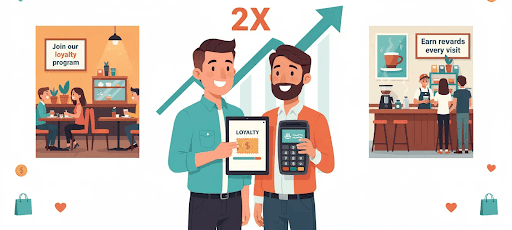
How Restaurants and Coffee Owners Can Integrate Loyalty Programs for 2X Revenue Growth

A complete guide for restaurants and coffee chains to turn repeat visits into long-term revenue.Running a restaurant or coffee shop today is not only about good food, ambience, or location. Guests are spoilt for choice. Competition is intense, and restaurants and coffee shops operate in a highly competitive market where standing out is essential. Delivery platforms dilute brand visibility. And in-store footfall is unpredictable.There is only one proven lever that gives business owners control over repeat visits, average order value, and customer lifetime value, and that is a well-designed loyalty program. For the business owner, integrating loyalty programs provides a strategic advantage in a competitive market by enabling easier rewards management, real-time data access, and improved decision-making.But the real value is unlocked only when these programs are integrated directly into your daily operations — your POS, payments, customer journeys, and digital touchpoints, ensuring you can segment customers effectively while offering seamless earn–redeem experiences along with exclusive rewards that make them feel truly valued. This blog breaks down how restaurant and coffee shop owners can integrate loyalty programs in a simple, effective, and scalable way using modern loyalty services, loyalty solutions, and loyalty program software development services.Why Loyalty Programs Matter More Than EverGuests return not only because they liked the food but because they feel recognised. A loyalty program helps customers feel valued and fosters an emotional connection, turning an occasional visitor into a predictable customer, and a predictable customer into a brand advocate.For restaurants and coffee chains, loyalty is no longer a nice-to-have. It is a business stabilizer.Here is why integrating a loyalty program is essential.You own your customer relationships instead of leaving it to aggregators.You earn directly from repeat visits without paying commissions.You can personalise offers based on preferences and behaviors.You make guests feel valued, leading to higher engagement.Customer loyalty programs are designed to create both transactional and emotional bonds, which are essential for long-term business growth. Modern loyalty solutions today are built to fit into your existing systems without disrupting operations. They work quietly in the background while creating visible business impact.Understanding Integrated Loyalty ProgramsAn integrated loyalty program connects your:Point-of-sale systemBilling and paymentsDigital menu and orderingMobile app or websiteCRM or customer databaseE-receipts and notificationsLoyalty platformUnlike a standalone punch-card or basic rewards system, integrated programs sync customer activity instantly. This makes earning and redeeming rewards effortless — for both staff and customers. Loyalty accounts play a key role by tracking and managing customer rewards across all channels, ensuring a seamless experience and better engagement.With loyalty management services, you can automate:Points earning rulesRechargeable loyalty walletsReferral journeysTier upgradesDigital stamp cardsPromo codes and offersBirthday rewardsSubscription perksThe smoother the experience, the more customers engage, and the more revenue flows back to the business. When all touchpoints and systems are seamlessly integrated, you achieve a unified customer journey.Step-by-Step Guide to Integrating Loyalty Programs in Restaurants and Coffee ShopsStep 1: Choose the Right Loyalty Program StructureYour rewards program must match your restaurant style and can be customized to fit different concepts. Some common formats include:Points system: Guests earn points on every transaction which can be redeemed later. Works best for quick-service restaurants and coffee chains.Tiered rewards: Customers unlock increasing benefits as they reach higher spending or visit more frequently, making this ideal for chains that want to gamify retention and boost engagement.Digital stamp or punch cards: Perfect for cafés where guests return for beverages and snacks regularly.Prepaid loyalty wallets: Guests pay upfront for credits and receive bonus value. This gives an immediate cash flow boost.Subscription programs: Monthly or yearly subscriptions with exclusive perks. Works well for premium cafés.Each rewards program structure can be automated and reward management streamlined through loyalty program software development services, ensuring smooth set-up and ongoing management.Step 2: Integrate Loyalty with Your POS and PaymentsThe biggest frustration for restaurant teams is switching screens or manually entering data.An integrated loyalty as a service model makes sure:Points get added the moment a bill is closedRewards apply automatically at checkoutDiscounts do not require staff to remember codesCustomer information gets updated in real timeRefunds adjust loyalty balances accuratelyMultiple payment methods, such as debit cards, ACH, A2A payments, and BNPL, are supported to enhance customer convenience and improve data collection for personalized marketing.This removes friction, errors, and delay.Restaurants that adopt integrated payment and loyalty solutions create a fast and delightful earning–redeeming experience. Integrating digital payments with loyalty programs also provides a seamless checkout experience, meeting the expectations of today’s customers.Step 3: Build a Seamless Digital Loyalty ExperienceCustomers love convenience. Your loyalty program must appear everywhere they interact:QR on the tableScan at the cash counterApp or web orderingPayment pageDelivery integrationFeedback formFor online shoppers, the loyalty program should be designed so they can easily access and redeem their rewards during the online shopping process, ensuring a smooth and integrated experience.When loyalty is embedded across all touchpoints, customers don’t need to “remember” to use it. It becomes a natural part of their visit. A well-designed loyalty rewards platform helps unify all these channels so customers experience your brand consistently.Step 4: Personalize Offers Based on Customer Data and BehaviourThis is where “2X revenue growth” becomes realistic. Modern loyalty programs powered by loyalty consulting and intelligent workflows help you: • Identify regulars, weekend visitors, and drop-offs by analyzing customer data and past purchases • Segment high-value customers • Track favourite items, ordering patterns, and loyalty behavior to further refine segmentation and recommendations • Send personalised recommendations • Create limited-time offers that drive urgency • Offer personalized incentives based on customer data to drive loyalty and repeat businessExamples:Coffee chain identifies early morning regulars and gives a “Breakfast Combo Reward” by analyzing past purchases.Restaurant notices high order of family meals on Sundays and sends a “Weekend Family Reward” as a personalized incentive.Café encourages trial of a new beverage through targeted bonus points, offering personalized incentives based on loyalty behavior.Personalization removes guesswork and brings predictable lift in orders by leveraging customer data to offer personalized incentives.Step 5: Turn Payment Receipts Into Loyalty Points MomentsWith loyalty program as a service, even your receipts become powerful customer engagement tools.Each bill can carry:Updated points balanceTier statusLoyalty statusLoyalty data (such as reward history and segmentation)Expiring rewardsRecommendationsQR to reorder or give feedbackScan to join the program instantlyThis keeps the customer connected with your brand long after they leave the outlet, and provides an opportunity to reward customers directly through their receipts, reinforcing engagement and loyalty.Step 6: Make Redemption Instant and DelightfulNo guest enjoys complicated redemption steps.Redemption should be as simple as:ScanRedeem pointsEnjoyInstant gratification is the secret behind sustainable customer loyalty in hospitality services.Your system must support:Earning rewards through purchases or specific activitiesItem-level redemptionPercentage discountsCashback into loyalty walletFree add-onsBonus treats for tiersOffering a variety of customer rewards keeps your program attractive and encourages ongoing participation. Fast and transparent redemption builds trust and boosts repeat visits.Step 7: Introduce Micro-Rewards to Encourage Everyday BehaviourSmall nudges, when automated properly, increase engagement drastically by encouraging customers to engage in desired behaviors.Examples:Reward for rating their visitReward for visiting twice a weekReward for trying new menu itemsReward for scanning QR to check balanceReward for referring a friendReward for participating in referral programsMicro-rewards keep the program exciting and dynamic without heavy discounts.Step 8: Use Loyalty Wallets for Instant Cash FlowThis is one of the most effective revenue-growth strategies.A loyalty wallet allows customers to:Load money upfrontReceive bonus creditsSpend it whenever they visitOffering valuable rewards through loyalty wallets increases customer motivation and engagement, encouraging more frequent use and higher wallet loads.For business owners, this acts like advance revenue and improves cash stability. Many restaurants use wallets during festive seasons, special events, or new store launches to generate upfront sales.How Loyalty Programs Lead to 2X Revenue GrowthWhen loyalty is integrated deeply into operations, these revenue drivers kick in:Higher repeat visits: Guests choose you over competitors because they are invested in your brand.Increased average order value: Rewards nudge customers to add more items or upgrade to combos, leading to a higher average order value.Improved customer retention: Integrated loyalty programs help retain customers by providing a seamless and engaging experience that reduces friction at checkout and fosters loyalty.Attracting new customers: Loyalty initiatives can draw in new customers through referrals and targeted promotions, helping you grow your customer base alongside retention efforts.Lower marketing cost: You grow through your existing customers instead of paying aggregators.Better customer experience: Faster checkout, personalised rewards, and consistent engagement increase satisfaction.Stronger brand identity: Your program becomes part of your culture and guest story.Data-driven decisions: Customer insights guide menu improvements, pricing, promotions, and new launches.These combined effects help restaurants and coffee chains achieve sustained growth — without aggressive discounting.Measuring Success: Tracking and Optimizing Your Loyalty ProgramMeasuring the success of your loyalty program is essential for maximizing its impact on customer retention, repeat purchases, and overall revenue growth. By closely monitoring key metrics, you can ensure your loyalty program integration is delivering real value to both your business and your customers.Start by tracking customer engagement—how often customers interact with your loyalty program, enroll as loyalty members, and participate in promotions. Monitor the rate at which loyalty points are earned and redeemed, as this indicates how compelling your rewards are and how effectively you’re encouraging repeat purchases.Customer lifetime value (CLV) is another critical metric. By analyzing how loyalty program members’ spending compares to non-members, you can quantify the program’s effect on customer lifetime and overall profitability. Additionally, keep an eye on customer retention rates to see how well your program is keeping existing customers coming back.Integrating your loyalty program with your point of sale (POS) and CRM systems streamlines data collection, making it easier to analyze purchase history, redemption patterns, and customer satisfaction. This unified view allows you to identify your most loyal customers, segment your audience, and tailor offers to boost customer satisfaction and loyalty.Why Restaurants and Coffee Chains Should Choose Professional Loyalty ServicesBuilding loyalty in-house can be complex. This is where loyalty program service providers make a difference.A specialised partner offers: • End-to-end design and deployment • Integrated POS + payment + CRM loyalty sync • Customisable reward mechanics • AI-powered recommendations • Scalable loyalty program solutions for multiple outlets • Complete UX, design, and branding • Security and compliance support, including protection of sensitive customer data • Reward management to structure, monitor, and optimize rewards efficiently • Assistance with loyalty engagement by tracking and analyzing customer loyalty behavior within CRM systems • Continuous optimisation and performance trackingThese capabilities ensure your loyalty program is not just running but performing at its best every day. Additionally, loyalty software development services ensure your solution grows with your business — whether you expand from one store to ten or scale across cities.Common Mistakes Restaurants Make with Loyalty ProgramsAvoiding these pitfalls will save time and effort.Too many rules: Confusion kills engagement. Keep rewards simple.Delayed points: Slow crediting breaks trust. Integrate for instant updates.No differentiation: Giving the same rewards to everyone feels boring. Use tiers and personalised offers.Heavy discounts: Loyalty is about behaviour building, not margin cutting.No visibility: If customers can’t see their rewards, they forget to use them.Only focusing on dine-in: Include delivery, takeaways, pre-orders, and online ordering.Not tracking loyalty behavior: Failing to combine purchase data with loyalty engagement means missed opportunities for targeted marketing and personalization.An integrated system prevents these mistakes and keeps your program healthy.Future Trends in Restaurant and Coffee Shop Loyalty ProgramsThe global loyalty management market is rapidly evolving, and restaurants and coffee shops are at the forefront of this transformation. As competition intensifies, loyalty programs will become even more critical for driving customer retention, repeat purchases, and sustainable revenue growth.Rise of Personalized and Omnichannel Loyalty ExperiencesOne major trend is the shift toward personalized, omnichannel loyalty experiences, and this transformation is becoming increasingly important for modern food and beverage businesses. Modern loyalty programs are moving beyond simple punch cards to offer tailored rewards and exclusive discounts based on individual customer behavior and purchase history, making the entire engagement journey more meaningful. This approach not only increases customer engagement but also helps businesses build stronger customer relationships and boost customer retention, ultimately creating a more loyal and emotionally connected customer base that returns more frequently.Mobile Payments, Digital Wallets, and Effortless Customer InteractionsMobile payments and digital wallets are also reshaping how customers interact with loyalty programs, introducing a level of convenience that customers have now come to expect. Seamless integration with mobile apps and digital payment systems allows customers to earn and redeem rewards effortlessly, whether they’re ordering in-store, online, or via delivery platforms, ensuring the loyalty experience stays smooth across every touchpoint. This frictionless process not only enhances the customer journey but also encourages more frequent participation in loyalty initiatives.AI-Powered Loyalty, Social Media Integration, and the Future of Customer RetentionArtificial intelligence-powered loyalty platforms are enabling smarter segmentation and more relevant offers, while social media integration is making it easier to engage customers and encourage referrals, creating a dynamic ecosystem of digital interactions. As the global loyalty management market grows, expect to see more restaurants and coffee shops adopting these advanced loyalty systems to stay competitive and meet the rising expectations of today’s digital-savvy consumers, who now demand personalization and speed in every interaction. By staying ahead of these trends and investing in modern loyalty programs, business owners can ensure their loyalty scheme remains a powerful driver of repeat business, customer loyalty, and long-term growth, positioning their brand for sustained success in an evolving marketplace.How to Get Started: A Simple 30-Day RoadmapWeek 1Define loyalty goalsChoose program modelIdentify customer segmentsWeek 2Integrate POSConnect payment journeyDesign earning and redeeming rulesWeek 3Set up digital touchpointsCreate communication templatesPrepare staff trainingAdd early access benefits for loyal members (e.g., early access to new menu items or promotions)Week 4Launch programPromote in-store and onlineTrack performance and refineThis approach allows even small businesses to launch quickly and scale intelligently.Final ThoughtsThe future of restaurant and café growth will be shaped by how well they build relationships with their customers. Food may bring them in, but loyalty keeps them coming back. The best loyalty programs and a successful loyalty program are key to sustainable, predictable, and repeatable revenue. An integrated loyalty program supported by modern loyalty services, loyalty program solutions, and customer loyalty platforms gives business owners a direct path to this growth.Whether you manage a single café or a growing chain, loyalty is your most dependable competitive advantage. If you are looking to integrate loyalty programs that are simple for staff, seamless for guests, and strong enough to drive 2X revenue growth, now is the best time to begin.

Aziro Marketing
How Loyalty Services Drive Revenue Growth and Customer Engagement

How Loyalty Services Drive Revenue Growth and Customer Engagement

In an age when consumers can switch brands with a swipe, loyalty has become more than a marketing lever, it is a strategic asset. Over the past few years, loyalty programs have evolved from simple retention tools into comprehensive platforms for deepening relationships and unlocking growth. The economic pressures of late 2024 and 2025 have pushed companies to do more with less, making loyalty programs an essential hedge against volatility. Research shows that most shoppers belong to at least one loyalty program, and many are enrolled in several, yet emotional connections remain weak. To stand out, brands must deliver convenience, relevance and trust while embracing emerging technologies. This blog organizes the key questions leaders ask about loyalty services and offers evidence‑based answers. We’ll also explore how technologies such as Agentic AI are beginning to automate and personalize interactions without replacing human judgment.What Are Loyalty Services and How Do They Work?Agentic AI is poised to help loyalty programs become more responsive, but the foundation of a strong loyalty service remains the same: build meaningful relationships that encourage repeat engagement. Effective programs focus on both emotional and behavioral loyalty. Emotional loyalty stems from positive experiences and feeling valued, while behavioral loyalty is expressed through repeat purchases, referrals and brand advocacy. Modern loyalty services act as platforms connecting digital and physical touchpoints, they collect first‑party data, tailor rewards and facilitate seamless interactions across channels. Key elements of a modern loyalty program include:Cultivating emotional and behavioral loyalty: Loyal customers stick around because they feel understood and appreciated; the program becomes part of their routine rather than a simple discount.Gathering and using first‑party data: Programs collect information on preferences and behavior, enabling hyper‑personalization that goes beyond transactional rewards.Delivering digital‑first convenience: Mobile apps and seamless experiences allow customers to enroll, earn and redeem rewards effortlessly.Offering personalized rewards and experiences: Programs tailor perks based on generational and individual preferences, from exclusive products to gamified challenges.Earning trust through transparency: Clear rules and honest communication about data usage build confidence and encourage deeper engagement.These elements set the stage for deeper relationships and enable programs to adapt quickly as customer expectations evolve.How Do Loyalty Programs Drive Revenue Growth?When properly designed, loyalty services become engines for predictable revenue. By encouraging customers to return more often and stay longer, they smooth out demand and make forecasting easier. They also reduce marketing and acquisition costs; it is cheaper to retain and nurture existing customers than to acquire new ones, and loyal customers often act as advocates who refer others. Agentic AI enhances these effects by using real‑time data to fine‑tune offers and adjust rewards as customer behaviour changes. Beyond basic retention, loyalty programs support revenue growth in several ways:Creating predictable income: Frequent buyers provide a stable base of revenue, allowing businesses to plan staffing and inventory more accurately.Reducing acquisition costs: Loyal customers are less expensive to reach and more likely to respond to direct communications than cold prospects.Increasing lifetime value: Customers who feel engaged are inclined to spend more per visit and remain longer with the brand.Unlocking cross‑sell and upsell opportunities: Personalized offers encourage customers to explore new products or services, increasing average order values.Integrating pricing strategies: Combining loyalty with targeted pricing — such as member‑only promotions or points‑based currencies — attracts new members and encourages higher‑tier engagement.When these levers are orchestrated thoughtfully, loyalty programs shift from cost centers to growth platforms, generating incremental revenue while enhancing the brand’s resilience in uncertain markets.How Do Loyalty Services Boost Customer Engagement?Long‑term engagement is built on relevance, trust and ease of use, and Agentic AI can help maintain that relevance at scale. Customers now expect loyalty programs to be intuitive and consistent across every touchpoint. Digital experiences such as mobile apps, chatbots and web portals provide a central hub where members track points, access offers and interact with the brand. Many consumers also want loyalty to feel like a community or an experience rather than a transaction. Here are few factors that keeps the customer engaged:Personalized experiences and communications: Messaging and rewards tailored to individual behaviors and preferences make members feel recognized and valued.Seamless multi‑channel convenience: Whether via mobile, web, or in-store, loyalty programs need to function reliably and quickly; convenience‑oriented consumers are unlikely to tolerate friction.Gamification and innovative rewards: Points, tiers, badges and challenges tap into intrinsic motivation and keep the program fun and fresh.Community and experiences: Access to exclusive events, content or early product releases fosters a sense of belonging and deepens emotional ties.Relevance and consistency: Regular, timely communication and rewards that align with customer values build trust and reduce churn.By weaving together personalization, convenience and meaningful experiences, loyalty services inspire customers to stay engaged and share their positive experiences with others.How Should Businesses Design Effective Loyalty Services?Designing an impactful loyalty program requires a holistic view of the customer journey. Agentic AI can automate personalization and decision‑making, but success still hinges on understanding what motivates each customer segment. Companies should view loyalty as a long‑term strategy rather than a short‑term promotion. Key design principles include:Mapping customer personas:  Identify the diverse motivations of your audience — convenience seekers, bargain hunters, program enthusiasts, satisfied but emotionally detached customers, and truly loyal advocates and tailor experiences accordingly.Making mobile and digital the default: Consumers increasingly expect to manage loyalty through mobile apps, yet preferences vary by age; ensure experiences are seamless across channels and adapt for generational differences.Personalizing and tailoring rewards: Use first‑party data to deliver relevant benefits and content rather than generic offers. Hyper‑personalization, accelerated by AI and machine learning, can deepen relationships if transparency and ethics are prioritized.Integrating pricing and loyalty: Offer members‑only promotions, points‑based currencies or tiered benefits tied to pricing strategies to extend value and encourage membership growth.Forging partnerships and ecosystems: Collaborate with complementary brands or services to widen redemption options and create richer experiences.Prioritizing trust and data governance: Communicate openly about data collection, usage and security; align privacy practices with customer expectations.Iterating and improving: Regularly analyze program performance, solicit feedback and refine rewards, features and communication cadence to keep the program relevant.By anchoring design in genuine customer insight, integrating technology thoughtfully and maintaining a focus on long‑term value, businesses can craft loyalty services that resonate and endure.Wrapping UpLoyalty services are no longer optional add‑ons but crucial strategic drivers of revenue and engagement. In an environment where customers can move on in seconds, programs that offer real value, meaningful experiences and transparent practices create a durable competitive advantage. The most successful programs blend emotional and behavioral loyalty, gather and use first‑party data responsibly, deliver digital‑first convenience and personalize rewards across customer segments.Although Agentic AI and other advanced technologies will increasingly automate aspects of personalization and decision‑making, the heartbeat of loyalty remains human. Understanding what motivates different types of customers, building trust through transparent data use and continuously refining the program are what transform loyalty from a cost center into a platform for growth. As consumer expectations continue to evolve, brands that listen, adapt and invest in experiences and not just discounts. It will cultivate the deep connections that drive sustained loyalty and revenue. 

Aziro Marketing

How Loyalty Services Can Transform Your Business Strategy

How Loyalty Services Can Transform Your Business Strategy

Businesses are rethinking how they cultivate long‑term relationships with customers. Instead of relying on one‑time promotions or generic offers, loyalty services aim to build enduring connections that deliver mutual value. These programs recognise individual preferences, reward recurring purchases and create a sense of belonging. In today’s hypercompetitive market, the right loyalty strategy can differentiate your brand and turn casual consumers into brand advocates. In this blog, we are going to address key questions about loyalty services and how they can reshape your business approach.What Are Loyalty Services and Why Do They Matter?Loyalty services encompass platforms and initiatives designed to reward customers for their continued patronage. They often incorporate points, tiers, personalised offers and experiential benefits to encourage repeat engagement. Unlike simple discount schemes, effective loyalty programs align with brand identity and provide benefits beyond price reductions. For example, a boutique retailer might offer exclusive previews of upcoming collections, while a grocery chain may provide meal-planning tools and tailored coupons. These services demonstrate appreciation and foster an emotional bond between the brand and the customer, using Agentic AI principles in the sense of anticipating needs and crafting relevant experiences.In an age where consumers have countless choices, loyalty serves as a differentiator. They create a reason for customers to stay and spend, and they encourage data sharing that enables deeper personalisation. Brands use loyalty services to gather feedback, test new offerings and cultivate community. Well-designed services can transform transactional relationships into enduring partnerships that withstand competitive pressures.How Do Loyalty Services Enhance Customer Engagement?Customer engagement is more than simply getting users to click on an email or redeem a coupon. It involves nurturing ongoing interaction, trust and advocacy. Loyalty services enhance engagement by offering rewards that match individual preferences and by making the customer feel seen and valued. A tiered system, for instance, can motivate customers to reach the next level by offering progressively better benefits. Gamified elements such as badges, progress bars or challenges foster fun and encourage continued participation while respecting privacy and consent. A well‑crafted loyalty strategy is responsive and adaptable, using insights akin to those of Agentic AI to adjust offers in real time based on behaviour.Engagement deepens when loyalty services are integrated across channels. In‑store purchases, mobile app interactions and online browsing should all feed into the same rewards ecosystem. Every touchpoint can be an opportunity to recognise and reward the customer, whether through surprise perks at checkout or personalised product recommendations. Engaged customers often become brand ambassadors, sharing their positive experiences with friends and social networks, further extending the loyalty programs reach. Some of the advantages that strengthen engagement are:Personalised rewards: Tailor incentives to individual preferences to make each interaction feel special.Seamless integration: Ensure the services works consistently across physical and digital channels.Surprise and delight: Incorporate unexpected perks or experiences that exceed expectations.Community building: Offer forums, events or social features that allow customers to connect with your brand and each other.How Do Loyalty Services Drive Repeat Purchases and Retention?The core objective of any loyalty initiative is to encourage repeat purchases and long‑term retention. By providing ongoing incentives, businesses reduce the likelihood that customers will defect to competitors. Points systems, cashback offers and exclusive deals make returning more appealing. When customers perceive tangible and intangible benefits in staying loyal, they are less inclined to switch. A thoughtful service aligns rewards with behaviours the brand values, such as higher spending, frequent visits or engagement with eco-friendly products. Over time, these small reinforcements accumulate, forming habits that strengthen loyalty.Repeat purchases also stem from a sense of belonging. Many loyalty services create branded identities for members, such as gold or platinum tiers. These designations recognise commitment and convey prestige. Using insights similar to Agentic AI, the loyalty service can adapt to each customer’s lifecycle stage, offering onboarding rewards to new members and special milestones to long-term customers. Effective retention strategies use feedback to refine benefits continually, ensuring they remain relevant as customer needs evolve. Some of the key benefits of loyalty program for retention comprises:Lower churn: Keeping existing customers costs less than acquiring new ones.Higher lifetime value: Engaged members tend to spend more over time.Referral momentum: Satisfied customers recommend the brand, bringing new members into the fold.Data-driven improvements: Data can inform product and service enhancements that further encourage loyalty.How Can Loyalty Services Provide Insights and Personalisation?Modern loyalty platforms generate a wealth of data that can inform business decisions. Every purchase, redemption and interaction reveals preferences, lifestyle indicators and potential future needs. Analysing this data allows brands to personalise communications, offers and experiences. In addition, predictive insights can also anticipate when a customer may be ready to try a complementary product or upgrade. In practice, this approach echoes the adaptability of Agentic AI, which learns from behaviour to deliver timely, relevant responses.Beyond marketing, loyalty data can guide product development, store layout and inventory decisions. If loyalty members consistently skip certain items or respond well to specific promotions, businesses can adjust accordingly. Personalisation fosters stronger connections; customers feel that the brand understands them and is invested in meeting their needs. However, it is crucial to balance data use with privacy and transparency. Clearly communicating how data enhances the services builds trust and encourages ongoing participation. There are some significant aspects of loyalty-driven insights:Holistic view of the customer: Consolidating data across channels to form a complete profile.Contextual offers: Delivering rewards at moments when they are most likely to be appreciated.Continuous learning: Refining personalisation strategies over time based on what resonates.Ethical data practices: Respecting privacy and obtaining consent to ensure trust.How Can Business Leaders Implement or Enhance Loyalty Services?Implementing or revamping a loyalty loyalty program as a service requires strategic planning. Leaders should begin by defining clear objectives: increasing frequency of purchase, boosting average order value or deepening engagement. Align these goals with the overall brand strategy so the program feels integral rather than an add-on. Choose a technology platform that supports real-time data capture, integration with existing systems and flexible reward structures. During design, involve stakeholders from marketing, operations, finance and customer service to ensure alignment and feasibility. Program rules should be tested with a pilot group to gather feedback and refine features.Rollout should be accompanied by a clear communication plan, explaining the benefits to customers and providing guidance on how to enrol and participate. Continuous optimization is crucial. Monitor key metrics such as enrolment rates, active membership, redemption patterns and customer satisfaction. Adjust the services based on feedback and performance, keeping it fresh with seasonal challenges or tier refreshes. Throughout, ensure that the value exchange is balanced; customers should feel that the benefits justify their loyalty, while the business must see a positive return. Incorporating adaptive elements reminiscent of Agentic AI can help the program stay relevant and responsive. Here are some steps to implement or enhance loyalty services:Define goals: Know what success looks like and how it supports broader business objectives.Select the right technology: Choose platforms that scale and integrate easily.Pilot and refine: Test concepts with a small group before full deployment.Communicate clearly: Educate customers about how to join, earn and redeem.Iterate regularly: Keep the services dynamic through updates and new features.To ConcludeLoyalty services have evolved far beyond simple discount cards. Today’s services are strategic initiatives that can transform how customers perceive and interact with a brand. By rewarding repeat engagement, personalising experiences and providing valuable insights, loyalty program as a service become powerful tools for growth and retention. They enhance customer satisfaction, encourage advocacy and yield data that informs product and service enhancements. The most successful loyalty programs balance emotional connections with tangible rewards, maintaining fairness and transparency throughout. When designed with care and continuous adaptation, loyalty services can integrate seamless experiences and foster enduring relationships, demonstrating the business‑transforming potential of sophisticated, responsive approaches akin to Agentic AI.

Aziro Marketing

EXPLORE ALL TAGS
2019 dockercon
Advanced analytics
Agentic AI
agile
AI
AI ML
AIOps
Amazon Aws
Amazon EC2
Analytics
Analytics tools
AndroidThings
Anomaly Detection
Anomaly monitor
Ansible Test Automation
apache
apache8
Apache Spark RDD
app containerization
application containerization
applications
Application Security
application testing
artificial intelligence
asynchronous replication
automate
automation
automation testing
Autonomous Storage
AWS Lambda
Aziro
Aziro Technologies
big data
Big Data Analytics
big data pipeline
Big Data QA
Big Data Tester
Big Data Testing
bitcoin
blockchain
blog
bluetooth
buildroot
business intelligence
busybox
chef
ci/cd
CI/CD security
cloud
Cloud Analytics
cloud computing
Cloud Cost Optimization
cloud devops
Cloud Infrastructure
Cloud Interoperability
Cloud Native Solution
Cloud Security
cloudstack
cloud storage
Cloud Storage Data
Cloud Storage Security
Codeless Automation
Cognitive analytics
Configuration Management
connected homes
container
Containers
container world 2019
container world conference
continuous-delivery
continuous deployment
continuous integration
Coronavirus
Covid-19
cryptocurrency
cyber security
data-analytics
data backup and recovery
datacenter
data protection
data replication
data-security
data-storage
deep learning
demo
Descriptive analytics
Descriptive analytics tools
development
devops
devops agile
devops automation
DEVOPS CERTIFICATION
devops monitoring
DevOps QA
DevOps Security
DevOps testing
DevSecOps
Digital Transformation
disaster recovery
DMA
docker
dockercon
dockercon 2019
dockercon 2019 san francisco
dockercon usa 2019
docker swarm
DRaaS
edge computing
Embedded AI
embedded-systems
end-to-end-test-automation
FaaS
finance
fintech
FIrebase
flash memory
flash memory summit
FMS2017
GDPR faqs
Glass-Box AI
golang
GraphQL
graphql vs rest
gui testing
habitat
hadoop
hardware-providers
healthcare
Heartfullness
High Performance Computing
Holistic Life
HPC
Hybrid-Cloud
hyper-converged
hyper-v
IaaS
IaaS Security
icinga
icinga for monitoring
Image Recognition 2024
infographic
InSpec
internet-of-things
investing
iot
iot application
iot testing
java 8 streams
javascript
jenkins
KubeCon
kubernetes
kubernetesday
kubernetesday bangalore
libstorage
linux
litecoin
log analytics
Log mining
Low-Code
Low-Code No-Code Platforms
Loyalty
machine-learning
Meditation
Microservices
migration
Mindfulness
ML
mobile-application-testing
mobile-automation-testing
monitoring tools
Mutli-Cloud
network
network file storage
new features
NFS
NVMe
NVMEof
NVMes
Online Education
opensource
openstack
opscode-2
OSS
others
Paas
PDLC
Positivty
predictive analytics
Predictive analytics tools
prescriptive analysis
private-cloud
product sustenance
programming language
public cloud
qa
qa automation
quality-assurance
Rapid Application Development
raspberry pi
RDMA
real time analytics
realtime analytics platforms
Real-time data analytics
Recovery
Recovery as a service
recovery as service
Retail
rsa
rsa 2019
rsa 2019 san francisco
rsac 2018
rsa conference
rsa conference 2019
rsa usa 2019
SaaS Security
san francisco
SDC India 2019
SDDC
security
Security Monitoring
Selenium Test Automation
selenium testng
serverless
Serverless Computing
Site Reliability Engineering
smart homes
smart mirror
SNIA
snia india 2019
SNIA SDC 2019
SNIA SDC INDIA
SNIA SDC USA
software
software defined storage
software-testing
software testing trends
software testing trends 2019
SRE
STaaS
storage
storage events
storage replication
Storage Trends 2018
storage virtualization
support
Synchronous Replication
technology
tech support
test-automation
Testing
testing automation tools
thought leadership articles
trends
tutorials
ui automation testing
ui testing
ui testing automation
vCenter Operations Manager
vCOPS
virtualization
VMware
vmworld
VMworld 2019
vmworld 2019 san francisco
VMworld 2019 US
vROM
Web Automation Testing
web test automation
WFH

Real People, Real Replies.
No Bots, No Black Holes.

Big things at Aziro often start small - a message, an idea, a quick hello. A real human reads every enquiry, and a simple conversation can turn into a real opportunity.
私たちと一緒に始めましょう

Phone

Talk to us

+1 844 415 0777

Email

Drop us a line at

info@aziro.com

Got a Tech Challenge? Let’s Talk