DevOps Updates

Uncover our latest and greatest product updates
blogImage

2 Approaches to Ensure Success in Your DevOps Journey

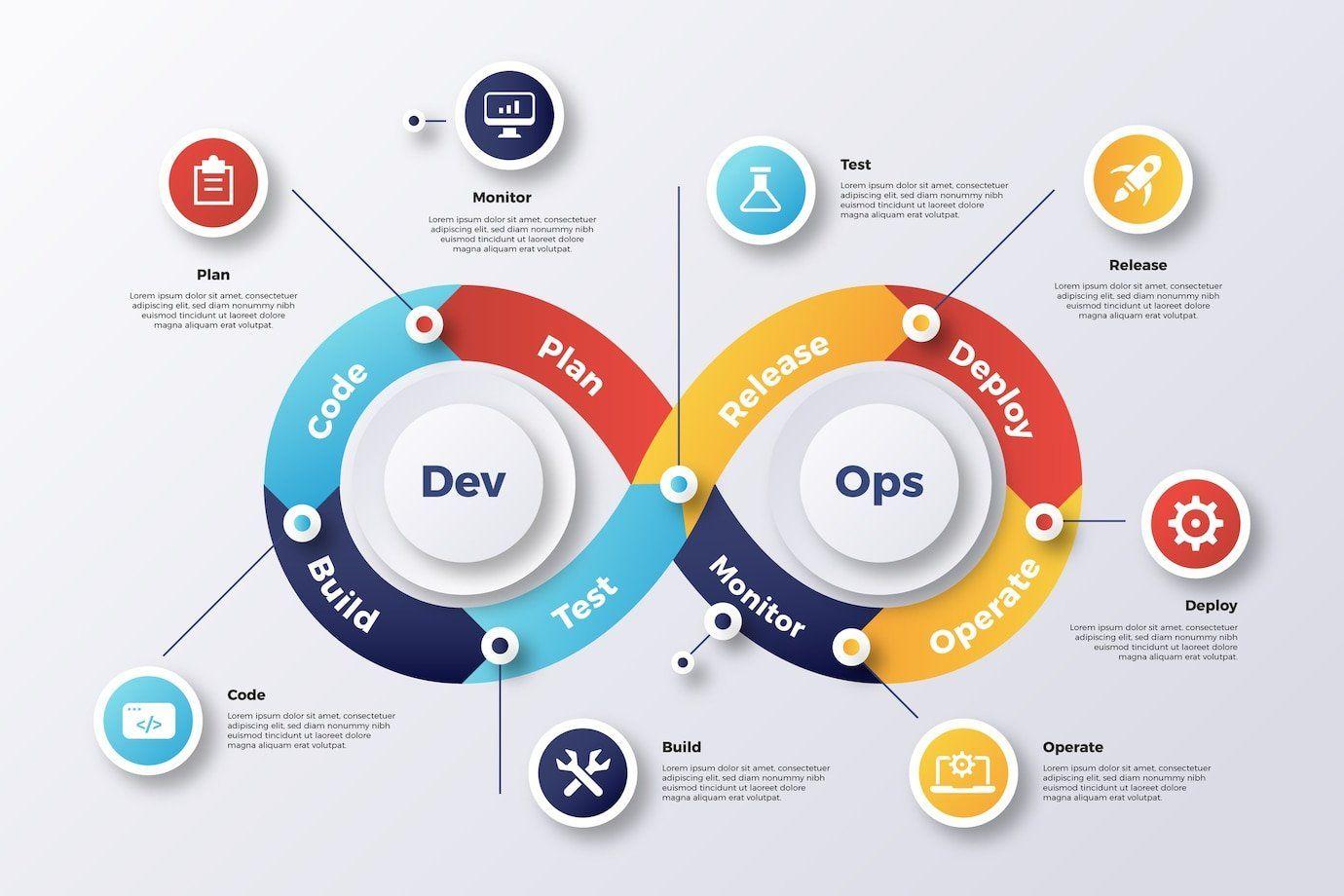
DevOps makes continuous software delivery simple for both development and operation teams, with a set of tools and best practices. In order to understand the power of DevOps, we chose a standard development environment with a suite of applications such as git, Gerrit, Jenkins, JIRA and Nagios. We studied setting up such a traditional environment and compared the same with a more modern approach involving docker containers. Introduction In this article we will discuss about DevOps, traditional and container based ways of approaching it. For this purpose, we will have a fictitious software company (client) which wants to streamline its development and delivery process. What is DevOps? DevOps means many things to many people. The one that is closest to our view is “DevOps is the practice of operations and development engineers participating together in the entire service lifecycle, from design through the development process to production support”. The process of continuous delivery of good quality code with the help of tools that make it easy. There are many tools that work in tandem to ensure that only good quality code ends up to the production. Our client wants to use the following tools. DevOps Tools Git – Most popular distributed version control system. Gerrit – Code review tool. Jenkins -Continuous integration tool. JIRA – Bug tracking tool. Development Workflow We came up with the following workflow that captures a typical development life cycle: A developer will commit their changes to the staging area of a branch. Gerrit will watch for commits in the staging area. Jenkins will watch Gerrit for new change sets to review. It will then trigger a set of jobs to run on the patch set. The results are shared with both Gerrit and JIRA. Based on the commit message the appropriate JIRA issue will be updated. When reviewers accept the change, it will be ready to commit. In order to let Jenkins auto update JIRA issue, a pattern was enforced for all commits. This allowed us to automate Jenkins to find and update a specific JIRA issue. DevOps Operations Workflow Operation teams were more concerned with provisioning machines (physical or virtual), installing suite of applications and eventually monitoring those machines and applications. Alert notifications are important too, in order to address any anomalies at the earliest. For monitoring and alert notification we used Nagios. Two Types of DevOps Approach Traditional Approach The traditional approach is to manually install these tools on bare metal boxes or virtual machines and configuring them to talk to each other. Following are the brief steps for traditional DevOps infrastructure. Git/Gerrit, Jenkins, JIRA is installed on single or multiple machines. Gerrit project,accounts are created and access is provided as per the requirement. Required plugins are installed on Jenkins( i.e. Gerrit-trigger, Git client, JIRA issue updater, Git etc). Previously installed plugins are configured on Jenkins. Jenkins ssh key is added against Gerrit account. Multiple accounts with few issues are created in JIRA. Now the whole DevOps infrastructure is ready to be used. DevOps Automation Services via Python Script We automated the workflow for both installation, configuration and monitoring using python script. Actual python code for downloading, installing and configuring Git, Gerrit, Jenkins, JIRA and Nagios can be found in the following Github repository. https://github.com/sujauddinmullick/dev_ops_traditional Container Approach The automation of installation and configuration relieves us of some pain in setting up infrastructure. Think of a situation where the client’s environment dependencies conflict with our DevOps infrastructure dependencies. In order to solve this problem, we tried isolating the DevOps environment from existing environment. We used docker engine to setup these tools. A docker engine builds over a linux container. A linux container is an operating system-level virtualization method for running multiple isolated linux systems (continers) on a single control host[2]. It differs from virtual machines in many ways. One stricking difference is containers share host’s kernel and library files but virtual machines do not. This makes containers lightweight than virtual machines. Getting a linux container up and running is once again a difficult task. Docker makes it simple. Docker is built on top of Linux containers, which makes it easy to create, deploy and run applications using containers. Dockerfile is used to create a container image. It contains instructions for docker to assemble an image. For example, following Dockerfile will build a Jenkins image. Sample Dockerfile for Jenkins: FROM jenkins MAINTAINER sujauddin # Install plugins COPY plugins.txt /usr/local/etc/plugins.txt RUN /usr/local/bin/plugins.sh /usr/local/etc/plugins.txt # Add gerrit-trigger plugin config file COPY gerrit-trigger.xml /usr/local/etc/gerrit-trigger.xml COPY gerrit-trigger.xml /var/jenkins_home/gerrit-trigger.xml # Add Jenkins URL and system admin e-mail config file COPY jenkins.model.JenkinsLocationConfiguration.xml /usr/local/etc/jenkins.model.JenkinsLocationConfiguration.xml COPY hudson.plugins.JIRA.JIRAProjectProperty.xml /var/jenkins_home/hudson.plugins.JIRA.JIRAProjectProperty.xml COPY jenkins.model.JenkinsLocationConfiguration.xml /var/jenkins_home/jenkins.model.JenkinsLocationConfiguration.xml #COPY jenkins.model.ArtifactManagerConfiguration.xml /var/jenkins_home/jenkins.model.ArtifactManagerConfiguration.xml # Add setup script. COPY jenkins-setup.sh /usr/local/bin/jenkins-setup.sh # Add cloud setting in config file. COPY config.xml /usr/local/etc/config.xml COPY jenkins-cli.jar /usr/local/etc/jenkins-cli.jar COPY jenkins_job.xml /usr/local/etc/jenkins_job.xml We can run the previously built images inside a docker container. To setup and run a set of containers, docker-compose tool is used. This command will take a docker-compose.yml file and builds and runs all the containers defined there. The actual compose file we used to build git, gerrit, jenkins and JIRA is given below. docker-compose.yml final_gerrit: image: sujauddin/docker_gerrit_final restart: always ports: - 8020:8080 - 29418:29418 final_JIRA: build: ./docker-JIRA ports: - 8025:8080 restart: always final_jenkins: build: ./docker-jenkins restart: always ports: - 8023:8080 - 8024:50000 links: - final_JIRA - final_gerrit final_DevOpsnagios: image: tpires/nagios ports: - 8036:80 - 8037:5666 - 8038:2266 restart: always With one command we got all the containers up and running with all the necessary configurations done so that the whole DevOps workflow runs smoothly. Isn’t that cool? Conclusion Clearly docker based approach is easy to setup and more efficient. Containers can be quickly deployed (usually in a few seconds), can be ported along with the application and its dependencies and has minimal memory footprint. Resulting into a happy client!

Aziro Marketing

blogImage

3 Essential Examples of DevOps Automation

In the dynamic realm of software development, automation is the key to unlocking peak productivity. From continuous monitoring to infrastructure provisioning and CI/CD deployment, automation streamlines processes minimizes manual intervention, and drives efficiency at every turn. In this blog, we’ll explore three compelling examples of DevOps automation in action. These real-world case studies showcase the transformative power of automation in modern software development to achieve unprecedented levels of efficiency and innovation. Let’s get started! DevOps Automation Examples Let’s dive into detailed examples of essential DevOps automation techniques, aimed at enhancing organizational efficiency. 1. Continuous Monitoring Continuous monitoring is a cornerstone of efficient DevOps practices, ensuring that teams have real-time insights into the health and performance of their systems. Through automation, monitoring tools can sift through vast amounts of data, instantly detecting anomalies and flagging potential issues before they escalate. Automated monitoring systems provide DevOps teams with actionable insights, enabling them to make informed decisions swiftly and proactively address any issues that arise. For example, consider a scenario where an e-commerce platform experiences a sudden surge in traffic. With automated monitoring in place, the system can automatically scale resources to accommodate the increased load, ensuring smooth performance and uninterrupted service for users. Additionally, automated alerts can notify the team of any performance degradation or unusual behavior, allowing them to investigate and resolve issues promptly. 2. Automation Using Infrastructure as a Code Automated provisioning through infrastructure as code (IaC) revolutionizes how DevOps teams manage resources. By automating the creation and configuration of infrastructure, IaC eliminates manual errors and accelerates deployment cycles. For instance, using tools like Terraform or AWS CloudFormation, teams can define infrastructure requirements in code and deploy them with consistency and repeatability. This automation ensures that environments are quickly provisioned, scalable, and easily reproducible across development, testing, and production stages. With IaC, teams can efficiently manage complex infrastructure, reduce operational overhead, and respond rapidly to changing business needs. 3. CI/CD Deployment Automation CI/CD deployment automation revolutionizes software delivery by automating the entire deployment pipeline. This streamlines the process from code commit to production, reducing human error and accelerating time to market. With CI/CD automation, each code change triggers automated testing, integration, and deployment processes. For instance, tools like Jenkins or GitLab CI enable teams to define pipelines that automatically build, test, and deploy applications consistently and reliably. This automation ensures that software updates are rapidly and consistently deployed to production environments, fostering a culture of continuous delivery and innovation. By automating CI/CD deployment, DevOps teams can achieve faster release cycles, improve software quality, and respond quickly to customer feedback, ultimately driving business growth and success. Conclusion In the realm of software development, DevOps Automation is the catalyst for peak productivity and innovation. Through continuous monitoring, Infrastructure as Code (IaC), and CI/CD deployment automation, organizations streamline processes and accelerate delivery cycles. Aziro (formerly MSys Technologies) offers expertise and solutions to empower this automation journey. Connect with Aziro (formerly MSys Technologies) to embrace automation fully and drive business growth.

Aziro Marketing

blogImage

4 Things What Aziro (formerly MSys Technologies) will do at KubeCon 2019

The Kubernetes and cloud native communities have grown at a tremendous pace in the last couple of years. The buzz and the general vibe of before and after KubeCon is a testimony to this. As the storage and cloud industry veers towards cloud native technologies, events like Kubernetes are the perfect place to educate, brainstorm, and reflect on the further advancements of cloud native computing. This blog details the technologies that our cloud-native DNA digs at these events. KubeCon and CloudNativeCon are havens for technocrats, and as an active participant of the Digital Transformation epoch, you should check them out too. We have also enumerated key relevant events that you should attend at KubeCon 2019. Cloud Native Technologies 1. Cloud Native Technologies for Enterprises Today’s volatile markets expect high quality applications that are fast and agile. Enterprises need to shorten their time to market in terms of developing agile capabilities that can disarm competition and cater to the market. While critical business drivers for every enterprise may vary, business criteria such as time to market, cost reduction, and easier manageability are usually reckoned important. Containers are emerging as the default for applications across these use cases, and Kubernetes is the right choice to orchestrate these containers. With this in mind, KubeCon is the ideal venue for enterprises where they can learn and network with solution providers to strategize their Cloud Native roadmap. 2. The Cloud Native Solution to Cloud Security Risks Data Security is always a key concern for enterprises. The dynamic nature of containers exponentially increases security threats to enterprises. It is therefore important that cloud native-centric security products focus specifically on security needs of the cloud ecosystem. KubeCon 2019 has a host of talks and sessions that focus on the growing need of Kubernetes security, some of them being: The Devil in the Details: Kubernetes’ First Security Assessment – Aaron Small, Google & Jay Beale, InGuardians [Tuesday, November 19 • 10:55am – 11:30am] Securing Communication Between Meshes and Beyond with SPIFFE Federation – Evan Gilman, Scytale & Oliver Liu, Google [Thursday, November 21 • 2:25pm – 3:00pm] How Kubernetes Components Communicate Securely in Your Cluster – Maya Kaczorowski, Google [Thursday, November 21 • 11:50am – 12:25pm] How Yelp Moved Security From the App to the Mesh with Envoy and OPA – Daniel Popescu & Ben Plotnick, Yelp [Thursday, November 21 • 10:55am – 11:30am] Kuberenetes 3. Kubernetes: The Door to a Multi-Cloud World Today’s businesses are unfulfilled with applications that adhere strictly to one-track environments. Enterprises profit from applications that are versatile and can move between environments. Kubernetes and containers facilitate enterprises to run applications across environments- on-premise VMs, public cloud or multiple clouds, fostering portability, and agility. Kubernetes and containers have helped many IT leaders bridge on-premise and public cloud environments. The widespread adoption of Kubernetes and containers into the mainstream production environment is driving innovation. Kubernetes has helped companies turn the idea of multi-cloud into a reality. By being able to run the same container images across multiple cloud platforms, IT teams can maintain control over their IT and security. Despite this, businesses need to assess their cloud prowess time and again, and so require assistance to reevaluate existing strategy and to chart a new one wherever applicable. If you need to assess your serverless infrastructure or are looking to customize solutions for your business, here are some talks that you should attend: Serverless Platform for Large Scale Mini-Apps: From Knative to Production – Yitao Dong & Ke Wang, Ant Financial [Wednesday, November 20 • 5:20pm – 5:55pm] KubeFlow’s Serverless Component: 10x Faster, a 1/10 of the Effort – Orit Nissan-Messing, Iguazio [Tuesday, November 19 • 4:25pm – 5:00pm] Kubernetes Storage Cheat Sheet for VM Administrators – Manu Batra & Jing Xu, Google [Wednesday, November 20 • 4:25pm – 5:00pm] Only Slightly Bent: Uber’s Kubernetes Migration Journey for Microservices – Yunpeng Liu, Uber [Tuesday, November 19 • 10:55am – 11:30am] Growth and Design Patterns in the Extensions Ecosystem – Eric Tune, Google [Wednesday, November 20 • 11:50am – 12:25pm] 4. Application support and community Kubernetes is one of the agile-est technologies that offer a wide spectrum of workloads that sustain users and use cases. It supports multiple workloads like programming languages and frameworks, enabling stateless, stateful, and data-processing workloads. Kubernetes’ growth, support, and broad adoption justify its popularity among other container solutions. The project has gained a very large active user and developer open source community, as well as the support of global enterprises, IT market leaders, and major cloud providers. You can connect with some of the best minds in the business by participating in any of the social events at KubeCon USA 2019: Taco Tuesday Welcome Reception + Sponsor Booth Crawl, sponsored by SAIC [Tuesday, November 19 • 6:40pm – 8:40pm] Diversity Lunch + Hack – sponsored by Google Cloud [Wednesday, November 20 • 12:30pm – 2:15pm] All-Attendee Block Party (Name Badge Required to Attend) [Wednesday, November 20 • 6:00pm – 9:00pm] Meet Aziro (formerly MSys Technologies)’ architects [Click here to know how] These are some reasons why we eagerly look forward to this cloud native event. Are you as excited as us to attend KubeCon 2019? See you soon!

Aziro Marketing

blogImage

5 CI/CD Tools to Watch in 2025 for Cutting-Edge DevOps

The software development lifecycle is evolving rapidly, and CI/CD (Continuous Integration and Continuous Deployment) remains at the core of modern development workflows. As businesses strive for faster release cycles, automation, and enhanced security, choosing the right CI/CD tools is crucial. In 2025, emerging trends in AI-driven automation, cloud-native technologies, and security-focused DevOps are shaping the next generation of CI/CD tools. This article explores five cutting-edge CI/CD tools that are redefining the software development process and empowering development and operations teams. 1. GitHub Actions: Streamlining CI/CD with Native GitHub Integration GitHub Actions has become a leading CI/CD tool due to its seamless integration with GitHub repositories. This open-source automation server enables automated code integration, testing, and deployments within the GitHub ecosystem. Key Features of GitHub Actions GitHub Actions leverages YAML-based workflows to automate the deployment process, ensuring reliable deployments across different environments. The platform supports parallel execution, allowing multiple developers to run tasks simultaneously, improving efficiency. Additionally, it integrates seamlessly with version control systems, enabling developers to manage code changes effectively. Security and Compliance in GitHub Actions Security remains a priority with built-in secret management, role-based access controls, and compliance automation. Secure software development is further enhanced through automated testing and vulnerability scanning features. GitHub Actions in Modern Development Environments With continued advancements in AI-powered automation and flexible integration options, GitHub Actions is set to be a cornerstone of modern development environments. Its compatibility with multiple platforms and cloud providers makes it an essential tool for scaling DevOps workflows. 2. GitLab CI/CD: A One-Stop DevOps Platform GitLab CI/CD is a robust continuous integration tool offering an all-in-one DevOps solution. It simplifies development workflows by integrating CI/CD pipelines with source code repositories, security scanning, and configuration management tools. Automating CI/CD with GitLab GitLab CI/CD supports deployment pipelines through .gitlab-ci.yml files, allowing teams to define automated workflows for continuous integration and continuous delivery. Its Auto DevOps feature reduces manual processes by automatically detecting project types and configuring pipelines accordingly. Security and Compliance in GitLab CI/CD Security is a key focus, with dynamic application security testing (DAST), static application security testing (SAST), and container registry vulnerability scanning built-in. These features help in ensuring reliable deployments and minimizing deployment failures. Cloud-Native Capabilities in GitLab GitLab’s Kubernetes integration streamlines cloud-native deployments, supporting multiple cloud providers. As an automation platform, GitLab continues to evolve with AI-driven compliance automation and enhanced security features, making it an ideal choice for modern development teams. 3. CircleCI: High-Performance CI/CD for Cloud-Native Development CircleCI is known for its speed, reliability, and scalability, making it a preferred choice for CI/CD automation across cloud environments. It enhances the development cycle with optimized parallelism, adaptive configurations, and automated testing. Performance and Scalability in CircleCI CircleCI supports cloud platforms such as Google Cloud Platform and other cloud providers, ensuring seamless integration with source code repositories. It enables automated testing across multiple platforms, optimizing test code execution. Deployment Efficiency with CircleCI Developers can leverage prebuilt Docker executors to deploy code efficiently while minimizing deployment failures. Its insights dashboard provides test history reports, helping teams refine their workflows. AI-Driven Enhancements in CircleCI As AI-driven DevOps gains traction, CircleCI is expanding its capabilities with enhanced security, flexible integration, and intelligent test orchestration for faster, more reliable deployments. 4. Argo CD: The Future of GitOps-Driven Deployments Argo CD is a Kubernetes-native deployment tool designed for GitOps workflows. It enables teams to automate building and deploying applications across production environments with precision and security. GitOps and Declarative Deployment with Argo CD Argo CD uses a declarative approach, synchronizing Kubernetes manifests with source code repositories to maintain consistency. Automated drift detection ensures that deployment pipelines remain aligned with the intended configuration. Managing Different Environments in Argo CD It supports different environments through multi-cluster management, facilitating scalable and secure software deployment. The tool enables teams to deploy applications seamlessly across cloud services and private infrastructure. Security and Policy Management in Argo CD The platform also integrates advanced security features, such as policy-driven access controls and cloud-native technologies for enhanced security. As GitOps adoption grows, Argo CD is expected to become a crucial component of modern DevOps strategies. 5. Harness: AI-Driven CI/CD for Faster, Secure Releases Harness is transforming CI/CD with AI-powered automation and cost-efficient DevOps solutions. It simplifies the deployment process with continuous delivery pipelines, feature flagging, and security automation. Intelligent Deployment Automation in Harness Harness employs AI/ML-based continuous verification to detect deployment failures and automate rollbacks, ensuring reliable deployments. Its cloud cost management capabilities optimize spending across cloud services and multiple cloud providers. Feature Flag Management and Progressive Delivery With feature flag management, teams can release software gradually while monitoring impact. This enables developers to test code in real-world scenarios without full-scale deployments. Security-First DevOps with Harness Security as code automates policy enforcement, integrating seamlessly with configuration management tools. The no-code pipeline builder reduces manual processes, making CI/CD accessible to a broader range of development teams. Conclusion: The Future of CI/CD in 2025 The CI/CD landscape is rapidly evolving, with AI-driven automation, cloud-native technologies, and security-first DevOps shaping the future. GitHub Actions enhances GitHub-native workflows, while GitLab CI/CD refines its all-in-one DevOps platform. CircleCI leads in high-performance cloud-native builds, Argo CD advances GitOps-driven deployments, and Harness revolutionizes CI/CD with AI automation.

Aziro Marketing

blogImage

5 DevSecOps Best Practices for Your Security Team

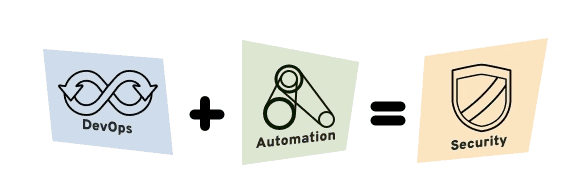
Pamela, Product Head of an ISV, envisions the transformation of her team’s Dev and Ops processes. Pamela establishes a DevOps team to facilitate ‘continuous everything.’ She intends to achieve unmatched product quality, process automation, and risk-averse digital infrastructure. Six months down the line – her team witnessed a faster development cycle. But Pamela isn’t satisfied. This is because, in the last six months, a couple of security incidents have been reported. After investigation, the cause was identified as undetected bugs, which were there right from the coding environment. Well, the fact remains that Pamela and her team aren’t only one to suffer. Per the 2019 Sonatype DevSecOps survey, every one in four companies has experienced a breach in 2018-2019. DevOps Mantra – Make Security its Core and not just a Preservative It is awesome how DevOps automates development, production, testing, and deployment environment. However, the automation chain often ignores the essential security protocols. Therefore, data, which is left unencrypted in the development environment, becomes an easy target for breaches. So, the key is to integrate security right at an earlier stage. When practicing DevOps, there are multiple changes in codes in less time. The speed often outdoes the security team’s efforts and leaves them flat-footed. This poor alignment between teams results in a lack of security disciplines – unplanned vulnerabilities, less robust codes, insecure passwords, to name a few. The Sonatype survey states that 48 percent of respondents admitted lack of time for not practicing security at an early stage of the SDCL lifecycle. An interesting thing to note is that this number hasn’t gone down since 2018. Honestly, DevSecOps completes the DevOps lifecycle by injecting security into its core. It helps companies transcend into a broader security blanket with source code analysis, vulnerability testing, penetration testing, and access management, among others. However, having in place a DevSecOps guide has been a matter of concern. Let us analyze the top two challenges experienced by organizations in implementing DevSecOps. People Neutralizing corporate mindsets to accepting the change is like untying an intricate knot. You need to bring the team on one page and show them the bigger picture. Make them realize the long-term benefits of practicing security since inception. The Sonatype survey says that only one in four respondents believe that safety and quality run parallel. Expertise A 2018-2019 survey, which was based on DevOps, showed that 58 percent of tech leaders think lack of skills hinders the embedment of security and testing within the SDCL. Lack of expertise will make the complete DevSecOps plan vulnerable. What to do is essential, but how to do is the key. Often organizations lack the skills to design an effective DevSecOps plan with defined milestones, clear operative procedures, and deliverables and project owners. Mapping DevSecOps process flow within an organization and ensuring its success requires the right mix of tools, policies, methodologies, and practices. The bottom-line remains smooth synchronization between Dev, Ops, and the Infosec team. So, let us now look at the five-pointer DevSecOps security checklist that can be included as DevSecOps best practices. 1 Embrace Automation The standard requirement for continuous testing and continuous integration is speed, which makes automation a fundamental requirement. Therefore, having essential security controls and trigger points is essential. Per the Sonatype 2019 survey, 63 percent of the respondents said to have automated their security practices. Further, it is also vital to have mindful automation is place. For example, your source code scan need not be done for the whole application daily. It can be confined to the daily codes committed only. Also, the key is to have not only static application security testing but also include dynamic application security testing. This way, we will ensure vulnerability scanning in real-time. It is equally important to have a relevant and optimal set of tools that will infuse automation to your configuration management, code analysis, patching, and access management. 2 Risk Management of Third-Party Tools & Technologies The use of open source technologies for application development is on the rise. Per the 2019 Red Hat report, 69% of respondents believe that open source technology is crucial. However, there are security concerns around the use of open source technologies that must be addressed. The Red Hat report cites – “Security is still cited as an open-source concern. Some of that fear likely stems from general security concerns since hacks and data breaches seem to be daily news. This concern may also reflect how unmanaged open source code—found across the web or brought in through dependencies—can introduce vulnerabilities in both open source and proprietary solutions.” Developers are too busy to review open-source codes. This might bring unidentified vulnerabilities and other security issues on the codes. Therefore, code dependency testing is necessary. Having an OWASP utility check will ensure that there is no vulnerability in codes, which are dependent on open-source components. 3 Uniform Security Management Process The security team will usually post the bugs report in different bug repositories. Developers don’t have the bandwidth to check all the reports. And top of it, multiple priorities result in precedence to functional testing over security issues. Therefore, it is fundamental to DevSecOps to have in place a uniform security application management system. This way any modification in codes is reflected in one place. The security team is also immediately notified of executing the authentication-testing protocol. Another critical point is to follow the ‘secure by design’ principle via the automation of security tasks. This helps to create and maintain collective software and security elements like correct authorization, control mechanisms, audit management, and safety protocol. Resultant – a transparent security culture. 4 Integrating Application Security System with Bugs Tracker The application security system should be integrated with your task management system. This will create a list of bugs tasks automatically that can be executed by the infosec team. Additionally, it will provide actionable details such as the nature of the bug, its severity and treatment required. Thus, the security team becomes empowered to fix issues before they land to the production and deployment environment. 5 Threat Modeling – The Last Key The SANS Institute advocates risk assessment before implementing DevSecOps methodology. Following threat modeling will result in risk-gap analysis – helping you identify software components, which are under threats, level of threats, and possible solutions to counter those threats. In fact, with threat modeling, the development team is equipped to locate fundamental glitches in the architecture. This way they can make necessary changes in application designs. Conclusion The ferocious rise in the competition demand reduction in time-to-market of the application. This must be supplemented with superior quality. Therefore, DevOps as a practice is only expected to increase. Rendering DevSecOps services for a while now, we have realized that imbibing security right from the early stages is only the key to maintain zero deployment downtime. Organizations must be thoughtful while shifting to Dev + Security + Operations. They should follow the idea of the People>Process>Technology. And, while doing so, the above 5 DevSecOps best practices will lay the foundation.

Aziro Marketing

blogImage

5 key ingredients of Microservices Architecture (MSA) you should not ignore

At the helm of Information Technology is the innovation of cutting-edge practices that optimize the complete software delivery lifecycle. One such outcome of this innovative mindset is Microservices Architecture (MSA). Microservices comes from the family of Cloud-Native that aims to change the implementation of backend services radically. In no time, Microservices has emerged as a digital disruptor and a differentiator to stay ahead of the competition. Per statistics, Microservices reduced the overall development time by a whopping 75 percent. What drive-through did to the food industry, Microservices are doing to Software Industry The invention of a drive-through in America revolutionized the culture of fast food. People were served food on the go, real-fast and hot. The idea was such a hit that other businesses jumped on the bandwagon. Drive-through established itself as the ultimate fast-track platform for delivering products/services efficiently. Just like a drive-through, Microservices are enabling the pinnacle of efficiency in software development. The main aim of Microservices is to shy away from the monolithic application delivery. It breaks down your application components into standalone services (Microservices). These services then must undergo development, testing, and deployment in different environments. The services’ numbers can be in 100s or 1000s. Additionally, teams can use various tools for each service. The resultant will be mammoth tasks coupled with an exponential burden on the operations. The process complexities and time-battle will also be a nightmare. Companies such as Netflix and Amazon have lauded the benefits of Microservices. It instills application scalability and drives product release speed. Companies also leverage Microservices to stay nimble and boost their product features. Microservices function effortlessly when a few key ingredients from a part of its architecture. Let’s study them. 1. Continuous Integration and Continuous Deployment (CI/CD) From a release standpoint, Microservices needs to ensure a continuous loop of software development, testing, and release. Therefore, when you look at Microservices and its practical implementation, you cannot ignore CICD. Establishing a CICD pipeline through Infrastructure as Code (IaC) minimal operational hurdles and deliver a better user experience in the application management. 2. API Gateway for request handling Microservices leverage different communication protocols for internal use. The API Gateway will route HTTP requests via reverse proxy towards endpoints of internal Microservices. The API gateway works as the single URL source for application to map their request internally to the Microservices. An API’s key functions are Authentication, Authorization, Logging, and Proxying. With an API gateway, it becomes easy to invoke these functionalities at desired efficiency. API gateway also helps Microservices to retrieve data from multiple services in one-go, thereby improving overhead and overall user experience. 3. Toolchain for automation CICD and Microservices work hand in glove. Your Microservices architecture needs a set of the toolchain that powers automation to ensure the CICD pipeline is well oiled for uninterrupted performance. These tools span build environment, testing, and regression, deployment, image registry, and platform. 4. Configuration component to save time The idea is to avoid restructuring while running multiple configurations in Microservices. There are multiple configurations used in different services. These include formats, date, time, etc. With rising service requests managing these configurations becomes treacherous. Further, these configurations mustn’t be held static, rather they should run dynamically to suit multiple environments. Also, storing such configuration in source code will affect the API. Therefore, it is essential to use a component for managing configuration. 5. Infrastructure Scalability and Monitoring Microservices involves multiple deployments of APIs across the IT infrastructure. This means it is essential that infrastructure provisioning is in the auto-pilot mode to ensure APIs run independently. Therefore, it is viable to have a robust infrastructure that can scale on demand while maintaining performance and efficiency. Infrastructure monitoring is a key aspect of Microservices, which is also a distributed architecture. Distributed tracing becomes critical to ensure efficient tracking of multiple services at different endpoints allowing complete visibility. What do we infer Microservices is slated for widespread adoption without a doubt. As cloud-native technologies gain traction, Microservices would increasingly become a necessity. By 2025, we should expect 90 percent of the applications depending on Microservices architecture. Before any organization thinks of reaping the benefit of Microservices for scalability, they must remember one thumb rule – the real potential is hidden in its building blocks discussed above. These blocks ensure that one gets a robust Microservices architecture to enable continuous software delivery and upgrade practices.

Aziro Marketing

blogImage

5 Tips To Build A Fail-Proof DevSecOps Culture

A simple yet overlooked concept lies at the heart of a successful DevOps initiative: Developers drive the software agenda, so developer participation is essential for achieving a more secure framework. That is where the term DevSecOps comes into play – and more importantly, the practices and culture it represents – can begin to make a huge difference. A solid DevSecOps culture suits our evolving hybrid computing environments, faster and more frequent software delivery, and other demands for modern IT. This is the main reason why DevSecOps matters to IT leaders. DevSecOps helps ship safer applications by prioritizing secure development alongside speed by making security part of the current DevOps pipeline. It’s more than just reviewing the security vulnerabilities or sorting through false positives. Here are 5 essential tips for nurturing a DevSecOps culture of your own – and using the metrics to gauge success. 1. No “one size fits all” concept A downside of a methodological and cultural shift like DevSecOps is that people might assume there’s just a single “right” way of doing DevSecOps. But that’s not true. Not all enterprises are built equal, which is why there’s more than just one model to implement DevSecOps. You can take your security staff and embed them into your DevOps teams. Or you can train up your developers to become the embedded security experts. Or you can build cross-functional teams or task forces. It’s simply any combination that works organizationally and culturally. These setups share a standard denominator core to DevSecOps: Recognizing and addressing security concerns as early as possible. So that any of them can help endorse a powerful DevSecOps culture, given they make better sense for your organization and culture. 2. Transparency If you think the battle between traditional development processes and operations silos was bad, well, those teams were comparatively agile compared to the traditional isolation of security teams. Strangely, most of these silos are deliberately created by the workforce because they believe it makes them more secure. But it doesn’t. All these silos create an incapacity for each team to speak the same language. As a result, they face difficulty in translating what they do back into people and processes. Getting rid of the isolation of security teams and making use of some model that better combines multiple roles and responsibilities together and can yield meaningful benefits. The foundation of a thriving DevSecOps culture is total organizational transparency, including all the aspects of the IT department, which implies that security can no longer be siloed. Enterprises going through a digital transformation or developing modern applications work off the same data through various lenses, bringing together everyone instead of creating silos. 3. Security education and training investment for Developers Training and educating software developers (and related job titles and roles) is an excellent step toward a healthy DevSecOps culture. It’s because security is everyone’s responsibility, and it’s essential to arm everyone with the right knowledge and tools required to make that so. The developers who previously didn’t have to bear much responsibility for the security of their code can’t be suddenly expected to bring in the hardcore security know-how of a white-hat hacker. But if you do invest in enhancing your developers’ security knowledge and tools, everyone benefits from it. Today’s IT leaders must invest in security training, which can come in the form of short sprints, code review, understanding which libraries are safe to use, or setting up feature flags that will review the code accurately, one piece at a time. This way, if anything goes wrong, the DevSecOps team can immediately get into the quality assurance mindset for applying fixes accordingly, with security as a top priority. 4. Make “sec” in security silent The key to a perfect DevSecOps culture is to eliminate as much friction as possible from processes. The perfect way to think about implementing security into DevSecOps is to make ‘Sec’ silent. To lessen friction or make security “silent,” include automation into your security processes and tools. The ultimate purpose is to enable DevOps teams to implement security automatically as part of their everyday processes. By implementing security controls directly into the CI/CD pipeline and taking development tools as an example, you’ve got good options at your disposal, including plenty of open source platforms. From a technical perspective, an excellent place to start is to make sure each team makes use of the available open source tools to perform security-related tasks. Configuration management tools also have made the integration of operations and security a much easier proposition. 5. Shared goals and KPIs A robust DevSecOps culture also depends on eliminating the conflicting performance incentives across various roles on the same team. A typical struggle in this category would be for developers who are measured almost solely by how quickly and frequently they ship code and security pros tasked with limiting vulnerabilities in production. One wants to move as fast as possible; the other is motivated to slow down everything. DevSecOps must be, in part, about getting people on the same page, working toward collective goals – with shared responsibilities and metrics. There are numerous key performance indicators as examples for measuring the DevSecOps efforts. Everyone should share in the responsibility for these measurements and not just the security team: Number of app security issues discovered in production: You want this number to decrease. Issues identified in production are issues missed during the development period, so this number should be minimized. Percentage of deployments stopped/delayed due to failing security tests: Ideally, such issues should be resolved before deployment. Time to fix security issues: This is a time-consuming approach that must decrease over time; it should be a reward for a healthy DevSecOps culture. In that, it reduces the effort and pain involved in resolving security issues when they do occur. Hopefully, issues that are discovered pre-integration are easier and faster to fix, so this is also a perfect picture of how well the team is performing. Takeaway Enterprises that values security see it to be a culture rather than just a step. And for this to be accomplished, it’s crucial to have a robust DevSecOps culture. With this, security won’t be viewed just as a technological flaw and won’t be ignored. It’ll be prioritized, and the ways discussed above are a few of the ideas on how your organization can go ahead and implement this.

Aziro Marketing

blogImage

5 Ways How DevOps Becomes a Dealmaker in Digital Transformation

The culture of DevOps-ism is a triumph for companies. DevOps has plundered the inefficiencies of the traditional model of software product release. But, there is a key to it. Companies must unlock the true DevOps tenacity by wiring it with its primary stakeholders – People and Process. A recent survey shows that most teams don’t have a flair for DevOps implementation. Another study reveals that around 78 percent of the organizations fail to implement DevOps. So, what makes the difference? Companies must underline and acclimatize the cultural shift, which erupts with DevOps. This culture is predominantly driven by automation to empower resilience, reduce costs and accelerate innovation. The atoms that make up the cultural ecosystem are people and processes. Funny story, most companies that dream of being digital savvy, still carry primitive mind-sets. Some companies have recognized this change. The question remains – are they adept at pulling things together? Are You in the Pre-DevOps Era, Still? It is archaic! Collaboration and innovation, for the most part, is theoretical. The technological proliferation coupled with cut-throat competition has put your company in a hotspot. You feel crippled embracing the disruptive wave of the digital renaissance. Also, you feel threatened by a maverick Independent Software Vendor – who is new to the software sector. If the factors above seem, relevant, it is time to move away from the legacy approach. The idea is simple – streamline and automate your software production – across the enterprise. It is similar to creating assembly lines, which operates parallel, continuous and in real-time. If you consider manufacturing, this concept is more than 150 years old. In software space, we have just realized the noble idea. Where it all started….. The IT industry experienced a radical change due to rapid consumerization and technological disruption. This created a need for companies to be more agile, intuitive and transparent in their service offerings. The digital transformation initiatives are continually pushing the boundaries to deliver convergent experiences that are insightful, social and informative. Further, the millennials who form more than 50 percent part of the overall IT decision makers globally are non-receptive to inefficient technologies and slow processes. They want their employees to work in an innovative business environment with augmented collaboration and intelligent operations. It is essential for the organization to follow an integrated approach for driving digital transformation, integrating cross-functionalities and enabling IT agility. DevOps enables enterprises to design, create, deploy and manage applications with new age software delivery principles. It also helps in creating unmatched competencies for delivering high-quality applications faster and easier; while accelerating innovation. With DevOps, organizations can divide silos facilitating collaboration, communication, and automation with better quality and reduced risk and cost. Below are the five key DevOps factors to implement for improving efficiency and accelerating innovation. 1. Automating Continuous Integration/Continuous Delivery DevOps is not confined to your departments. Nor it is just a deployment of some five-star tools. DevOps is a journey to transform your organization. It is essential to implement and assess a DevOps strategy to realize the dream of software automation. Breaking the silos, connecting isolated teams and wielding a robust interface can become taskmasters. This gets more tedious for larger companies. The initial focus must remain on integrating people in this DevOps model. The idea is to neutralize resistance, infuse confidence, and empower collaboration. Once these ideas become a reality, automation will become the protagonist. The question remains – How automation will be the game changer? This brings the lens on Continuous Integration/ Continuous Delivery (CI/CD). It works as a catalyst in channelizing automation throughout your organization. Historically, software development and delivery have been teeth-grinding. Even the traditional DevOps entails a manual cycle of writing codes, conducting tests, and deploying codes. This brings several pitfalls – multiple touchpoints, non-singular monitoring, increased dependencies on various tools, etc. How to Automate the CI/CD Pipeline? Select an automation server that provides numerous tools and interfaces for automation Select a version control and software development platform to commit codes Pull the codes in the build phase via automation server Compile codes in the build phase for various tasks Execute a series of tests for the compiled codes Release the codes in the staging environment Deploy the codes from the staging server via Docker An automated CI/CD pipeline will mitigate caveats associated with the traditional DevOps. It will result in a single, centralized view of project status, across stages. It drastically brings down the human intervention, moving you towards zero errors. But, is that all simple? Definitely no. It has its own set of challenges. Companies that are maneuvering from waterfall to DevOps, often end up automating wrong processes. How can teams avoid this? Well, have the following checklist handy. The frequency of process/workflow repetitions The time duration of the process Dependencies on people, tools, and technologies Delays resulting due to dependencies Errors in processes, if it is not automated These checklists will provide insights on the bottlenecks. It will help prioritize and automate critical tasks – starting from code compiling, testing to deployment. 2. The Holy Nexus of Cloud and DevOps You don’t buy a superbike to drive it in city traffics. You would prefer wide roads, less traffic to unleash its true speed. Then why do Cloud without DevOps? The combination of Cloud and DevOps is magical. Often, IT managers don’t realize it. Becoming a Cloud first company is not possible without a DevOps first approach. It is a case of the sum being more significant than parts. What is the point of implementing DevOps correctly, when the deployment platform is inefficient? Similarly, a scalable deployment platform loses its charm without fast and continuous software development. Cloud creates a single ecosystem, which provides DevOps with its natural playground. The centralized platform offered by Cloud enables continuous production, testing, and deployment. Most Cloud platforms come with DevOps capabilities of Continuous Integration and Continuous Delivery. This reduces the cost of DevOps in an On-Premise environment. Consider the case of Equifax – a consumer credit reporting company. They store their data on cloud and in-house data centers. In 2018, they released a document on the cyber-attack, which hit them in Sep 2017. Hackers collected around 2.4 million personally identifiable information (PII) of their customers. The company had to announce that they will provide credit file monitoring services to affected customers at no cost. Isn’t it damaging – monetarily and morally? But, what made hackers get access to such sensitive customer information? Well, per the website, there was a vulnerability Apache Struts CVE-2017-5638 to steal the data. Although the company patched this vulnerability in March 2017, it required more profound expertise and smarter process regime. If they had a DevOps strategy to redeploy software with continuous penetration testing more frequently, a cyber-attack could have averted. It is a genuine concern for any CIO to derive the value of cost, agility, security, and automation from their Cloud investment. The most common hurdle to this is the less compatible IT process. There other significant challenges too. Per a recent survey by RightScale, around 58 percent of Cloud users think saving cost is their top priority. Approximately 73 percent of the respondents believe that lack of skill expertise is a significant challenge. More than 70 percent of respondent said that governance and quality is an issue. The report also outlines integration as a challenge when moving from a legacy application to the Cloud. DevOps can standardize the processes and set the right course to leverage Cloud. DevOps in the backend and Cloud in the frontend gives a competitive edge. Cloud works well when your Infrastructure as Code (IaC) is successful. IT teams must write the right scripts and configure it in the application. Manually writing infrastructure scripts can be daunting. DevOps can automate scripts for aligning IT processes to Cloud. 3. Microservices – The Modern Architecture Microservices Without DevOps? Think Again! The sea-changes in consumer preferences have altered companies’ approach to delivering applications. Consumers want results in real-time, unique to their needs. Perhaps, this is why companies such as Netflix and Amazon have lauded the benefits of Microservices. It instills application scalability and drives product release speed. Companies also leverage Microservices to stay nimble and boost their product features. The main aim of Microservices is to shy away from the monolithic application delivery. It breaks down your application components into standalone services (Microservices). These services then must undergo development, testing, and deployment in different environments. The services’ numbers can be in 100s or 1000s. Additionally, teams can use various tools for each service. The resultant will be mammoth tasks coupled with an exponential burden on the operations. The process complexities and time-battle will also be a nightmare. Leveraging Microservices with a waterfall approach will not extract its real benefits. You must de-couple the silo approach to incubate the gems of DevOps – People>Process>Automation. Microservices without DevOps would severely jolt teams productivity. The Quality Assurance teams would experience neck-breaking pressure due to untested codes. They will become bottlenecks, hampering the process efficiencies. DevOps with its capability to trigger continuity will stitch every workflow through automation. 4. Containers –Without DevOps? Consider companies of the size and nature of Netflix that require to update data in real-time and on an on-going basis. They must keep their customers updated with new features and capabilities. This isn’t feasible without Cloud. And, on top of that, releasing multiple changes daily, will be dreadful. Thereby, for smooth product operations, Container Architecture is a must. In such a case, they must daily update their Container Services – multiple times. It entails website maintenance, releasing new services (in different locations) and responding to security threats. Even if you are a small to medium Independent Software Vendor operating in the upper echelons of the technology world, your software product requires a daily upbeat. Your developers will always be on their toes for daily security and patching updates. This a daunting task, isn’t it? DevOps is the savior. DevOps will hold back for your applications that are built in the Cloud. It will set a continuous course of monitoring through automation and ease the pressure of monitoring from developers. Without DevOps, Container Architecture won’t sustain the pressure. 5. Marrying DevOps, Lean IT, and Agile The right mix of DevOps, Lean and Agile amplifies business performance. Agile emphasizes greater collaboration for developing software. Lean focuses on eliminating wastes. DevOps wants to align software development with software delivery. The three work as positives; adding them will only augment the outcome. However, there persists a contradiction in perception towards adopting these three principles. When Agile took strides, the teams said that we already do Lean IT. When DevOps took strides, the teams said that we already do Agile. But, the three principles strive to achieve similar things in different areas of the software lifecycle. Combining DevOps, Lean and Agile can be an uphill task. Especially, for leaders that carry the traditional mindset. Organizations must revive their leadership style to align with modern business practices. The aim must be moving towards a collaborative environment for delivering value to the customers. Companies must focus on implementing a modern communication strategy at the workplace. It is necessary that they address the gaps between IT and the rest of the groups within an organization. They must be proactive in initiating mindful cross-functional relationships, backed by streamlined communications. The software development teams will then work as protagonists in embracing DevOps, Lean and Agile to survive the onslaught of competition. It is also essential to champion each of the above concept. This will ensure that we profit out of each component in the combination. Organizational leadership must relentlessly work to create a seamless workflow, while removing bottlenecks, cutting delays, and eliminating reworks. Companies haven’t yet fathomed the true benefits of DevOps-Agile-Lean combination. It needs time and the team of experts to capitalize on these three principles. Additionally, companies shy away from exploiting the agility and responsiveness of modern delivery architects – Microservices, in particular. This becomes a hindrance in reaping the full potential of the combination. The crux of driving DevOps-Agile-Lean combination is a business-driven approach. Continual feedback backed by the right analytics also plays a crucial role. It facilitates fail-fast, thereby, creating a loop of continuous improvement. Agile offers a robust platform to design software, which is tuned with the market demands. DevOps stitches the process, people and technology, ensuring efficient software delivery. Final Thoughts Adopting DevOps is a promising move. Above, we have depicted in 5 manners how DevOps is your digital transformation dealmaker. However, it can be nerve crunching. It takes patience, expertise, and experience for embodying its purest form. A half-baked DevOps strategy might give you a few immediate results. In the long run, it will deride your teams’ efforts. However, automation is the best way to sail through it.

Aziro Marketing

blogImage

70% Faster Deployments with These 5 CI/CD Tools

The software development lifecycle has evolved significantly with the emergence of CI/CD tools, allowing development and operations teams to enhance efficiency and reliability. These tools streamline the software development process by automating code integration, testing, and deployments, reducing the reliance on manual processes. As a result, organizations can deploy code faster and more securely across different environments, improving software stability and performance.Accelerating Deployments with Modern WorkflowsA recent study highlights that development teams leveraging CI/CD tools can achieve up to 70% faster deployments than traditional methodologies. These tools help minimize failures and enable reliable deployments by incorporating continuous integration, delivery, and testing. The ability to automate building, testing, and deployment ensures that software updates reach production environments quickly and efficiently.Optimizing Deployment Pipelines for ReliabilityIntegrating CI/CD into development workflows enhances configuration management and ensures seamless coordination between multiple developers. With support from various cloud providers and cloud-native technologies, organizations can maintain secure software practices while delivering new features and updates without disruptions. These tools facilitate infrastructure as code, allowing businesses to manage cloud environments efficiently.Reducing Deployment Failures and Enhancing CollaborationEffective CI/CD tools reduce deployment failures by enforcing rigorous automated testing and test history reports to validate every code change. By supporting version control systems and source code repositories, these tools enable development teams to track changes, collaborate efficiently, and maintain software integrity. The ability to roll back faulty deployments further ensures reliable deployments and operational stability.Choosing the Right CI/CD Tools for Your NeedsThis article delves into five of the most effective CI/CD tools for accelerating software delivery. Each tool brings unique capabilities to optimize deployment pipelines, enhance team collaboration, and ensure high-performance development workflows. Understanding the strengths of these tools will help organizations streamline their software development process, achieve faster releases, and maintain robust IT infrastructure.Jenkins – The Open-Source Pioneer Among CI CD ToolsJenkins, a widely used open-source automation server, is a top choice for continuous integration due to its flexible integration capabilities and vast plugin ecosystem. Supporting multiple platforms and cloud providers, Jenkins offers a scalable automation platform for modern development teams. With its ability to integrate seamlessly with cloud services and development tools, it provides an adaptable solution for optimizing development workflows across diverse environments.Enhanced Security with Automated TestingSecurity is a key concern in modern software development, and Jenkins addresses this by incorporating automated testing, dynamic application security testing, and static application security testing into its workflow. These security features help development and operations teams identify vulnerabilities early in the software development process, ensuring that applications remain secure throughout the development cycle. By automating security tests, Jenkins enhances secure software practices, reducing risks associated with deployment failures and manual processes.Empowering Development Teams with AutomationJenkins allows multiple developers to automate key aspects of software development, including building, testing, and deployments. This eliminates bottlenecks and accelerates the development pipeline, enabling teams to release high-quality applications faster. Its pipeline-as-code approach supports automated code integration, allowing teams to define complex workflows within their repositories. By integrating with source code repositories and configuration management tools, Jenkins ensures streamlined version control, fostering team collaboration and efficient code management.Reliable Deployment Processes for Cloud EnvironmentsJenkins’ deployment processes are designed to ensure quick and reliable delivery of applications across cloud environments. Jenkins offers seamless integration with cloud computing infrastructure by supporting multiple cloud providers, including Google Cloud Platform. Its ability to automate the deployment pipeline reduces manual processes, allowing teams to focus on improving application quality rather than dealing with deployment complexities. Additionally, Jenkins facilitates infrastructure as code, making configuration management more efficient and reducing the likelihood of deployment errors.Streamlining Workflows for Scalable Software DevelopmentBy simplifying the automation process, Jenkins plays a critical role in modern development environments by supporting development workflows for both small teams and large enterprises. Whether used for private infrastructure, multiple cloud providers, or mobile apps, Jenkins helps teams achieve reliable deployments while minimizing downtime. With its ability to handle multiple tools and integrate with continuous delivery pipelines, Jenkins is an essential CI/CD tool for streamlining workflows, optimizing software delivery, and improving overall productivity.GitHub Actions – Seamless Integration with Version ControlGitHub Actions integrates directly into version control systems, making it easier for development teams to manage automated code integration and deployment pipelines. The platform offers an intuitive user interface, enabling developers to effortlessly define, configure, and automate CI/CD workflows. By leveraging continuous integration, teams can push code changes into repositories while triggering automated tests, ensuring that development workflows remain efficient and error-free. This streamlined process enhances team collaboration, allowing multiple developers to contribute seamlessly without disrupting the software development lifecycle.Enhancing Deployment Processes with AutomationGitHub Actions plays a critical role in streamlining deployment processes and automating the deployment phase to facilitate quick and reliable delivery of applications. Built-in support for multiple cloud providers and cloud platforms like Google Cloud Platform ensures seamless integration with modern development environments. The automation process minimizes manual processes, reducing the chances of deployment failures and improving overall efficiency. Operations teams benefit from its ability to orchestrate deployments across different environments, ensuring smooth and reliable deployments across production environments.Cloud-Native Capabilities and Multi-Tool SupportAs a cloud-native technology, GitHub Actions supports multiple tools for development workflows, making it a versatile choice for modern development teams. It integrates effortlessly with source code repositories, configuration management tools, and static application security testing, enabling developers to maintain secure software practices. Whether working with mobile apps, cloud computing, or private infrastructure, development teams can leverage GitHub Actions to optimize continuous integration and delivery pipelines while enhancing test history reports.Improving Security and Infrastructure as Code ImplementationWith test history reports and infrastructure as code, GitHub Actions helps developers eliminate manual processes, ensuring a more efficient development pipeline. By adopting infrastructure as code, teams can define their infrastructure configurations within repositories, allowing for fixed and settable scopes that enhance deployment consistency. This approach significantly improves configuration management, reducing human errors and securing software development workflows. Automated testing and dynamic application security testing further bolster the security of applications, ensuring robust protection against vulnerabilities.Optimizing Continuous Delivery for Secure and Scalable DeploymentsGitHub Actions empowers developers with a powerful continuous delivery pipeline, optimizing the release software process with enhanced security measures. Its flexible automation platform supports multiple platforms, enabling seamless deployments across cloud environments. Whether handling private infrastructure or multiple cloud providers, teams can scale deployments while maintaining reliability. By eliminating manual processes and leveraging continuous integration tools, development and operations teams can ensure faster, more efficient software releases with minimal risk.GitLab CI/CD – All-in-One Continuous Integration DevOps SolutionGitLab CI/CD provides an end-to-end development pipeline, making it a vital component of the software development process. Incorporating continuous integration, continuous deployment, and continuous delivery into a single platform streamlines the development cycle and ensures seamless code transitions from development to production. Its automation capabilities reduce manual processes, enabling development teams to accelerate software releases with minimal intervention.Simplified Configuration Management for Reliable DeploymentsWith its robust configuration management features, GitLab CI/CD helps teams manage complex deployment workflows while minimizing failures. By integrating with multiple cloud providers, GitLab ensures that applications can be deployed across different environments without requiring extensive reconfiguration. This capability enhances team collaboration, allowing operations teams to work efficiently alongside developers to maintain reliable deployments.Security-First Approach with Built-In TestingGitLab CI/CD prioritizes security through dynamic and static application security testing, helping teams detect vulnerabilities early in the software development lifecycle. These built-in security features ensure that secure software is developed from the ground up, reducing risks in production environments. By automating security checks, GitLab enhances compliance and strengthens the software development process.Scalability with Unlimited Private ProjectsOne of GitLab’s most attractive features is its support for unlimited private projects, making it an ideal automation platform for enterprises managing multiple development pipelines. This scalability allows organizations to work on multiple tools and projects without constraints, ensuring modern development teams can operate efficiently. Whether managing source code repositories or automating infrastructure as code, GitLab provides the flexibility needed for large-scale development workflows.Optimizing Cloud Deployments with Google CloudGitLab CI/CD seamlessly integrates with cloud computing platforms such as Google Cloud, allowing teams to deploy applications reliably across cloud environments. By leveraging cloud services, multiple cloud providers, and private infrastructure, GitLab ensures that applications remain scalable, secure, and efficient. Its support for automated code integration and continuous testing further enhances development workflows, making it a preferred CI/CD tool for enterprises seeking optimized software delivery.CircleCI – High-Performance Continuous Deployment ToolCircleCI is a powerful deployment tool designed for modern software development, enabling operations teams to enhance software development workflows. Automating deployment processes ensures quick and reliable application delivery, reducing manual effort and potential human errors. With its support for multiple platforms, including cloud services, mobile apps, and private infrastructure, CircleCI provides development teams with the flexibility they need to build and release software efficiently.Automation for Faster DeploymentsA key strength of CircleCI lies in its ability to automate the development cycle, ensuring that code integration, testing, and deployments happen seamlessly. Through configuration management tools, CircleCI reduces deployment failures by automatically detecting and resolving issues before they impact production. This automation helps development and operations teams maintain a stable continuous delivery pipeline, optimizing the overall software development lifecycle.Enhanced Security with Automated TestingSecurity is a top priority for modern development teams, and CircleCI addresses this through automated testing, dynamic application security testing, and static application security testing. By integrating continuous testing into deployment, CircleCI helps organizations identify vulnerabilities early, ensuring secure software development. Its built-in compliance and security features allow teams to maintain high-quality standards without slowing down software releases.Cloud-Native Integrations for Maximum EfficiencyCircleCI’s automation process is designed to work seamlessly with cloud-native technologies and cloud platforms such as Google Cloud Platform. With support from multiple cloud providers, teams can deploy applications across different environments without worrying about infrastructure limitations. Its ability to integrate with other tools, such as version control systems, source code repositories, and infrastructure as code, makes it a versatile solution for scaling development workflows.Eliminating Manual Processes for Continuous DeploymentBy eliminating manual processes, CircleCI helps organizations maintain a continuous development, testing, and deployment cycle. Its robust automation ensures that development teams can deploy code efficiently, reducing time-to-market and improving overall productivity. Whether managing private infrastructure, scaling applications on cloud services, or optimizing development pipelines, CircleCI provides the tools to streamline software releases and maintain reliable deployments.ArgoCD – GitOps for Kubernetes DeploymentsArgoCD is a powerful cloud-native technology designed for continuous deployment in Kubernetes environments. As a declarative, GitOps-based tool, it ensures that development teams can manage applications efficiently while maintaining a continuous deployment cycle. With version control integration, automated testing, and infrastructure as code, ArgoCD guarantees reliable deployments, minimizing downtime and ensuring consistency across different environments.Security-First Approach to DeploymentSecurity is a critical concern for operations teams, and ArgoCD addresses this with built-in dynamic and static application security testing. These security measures help identify vulnerabilities early in the software development process, ensuring that applications remain secure throughout their lifecycle. Additionally, ArgoCD strengthens IT infrastructure security by enforcing best access control and configuration management practices.One of ArgoCD’s key strengths is its ability to support multiple platforms and cloud providers, making it highly adaptable for modern development environments. Whether deploying applications to Google Cloud Platform, AWS, or private cloud computing environments, ArgoCD provides seamless integration and ensures consistent, reliable deployments. This flexibility allows development and operations teams to maintain efficient workflows without compromising scalability or security.Optimized Deployment Process for Faster ReleasesArgoCD streamlines the deployment process by automating code changes and monitoring live application states against their desired configurations. This automation process eliminates manual processes, reducing the likelihood of deployment failures. By maintaining test history reports and offering real-time synchronization with source code repositories, ArgoCD helps development teams release software quickly while mitigating risks associated with human intervention.Driving Efficiency in Modern Software DevelopmentAs organizations shift toward cloud-native technologies, ArgoCD is crucial in enabling development teams to deploy applications efficiently. Its GitOps approach simplifies development workflows, ensuring that updates are seamlessly integrated into the continuous delivery pipeline. Whether managing private infrastructure or leveraging cloud services, ArgoCD empowers teams to maintain high availability, security, and reliability in their software development lifecycle.The Bigger Picture: Why Faster Deployments MatterFaster deployments are crucial in modern software development, allowing development and operations teams to enhance agility and efficiency. Teams can detect and resolve issues early in the software development process by integrating continuous integration, automated code integration, and continuous testing. This proactive approach minimizes downtime, improves software quality, and accelerates the development cycle, ensuring that updates reach production faster.Ensuring Reliable and Secure DeploymentsWith the adoption of configuration management tools, businesses can automate deployment strategies while maintaining secure software practices. Automated continuous delivery pipelines reduce human error, ensuring consistent and reliable deployments. Additionally, dynamic and static application security testing help safeguard applications from vulnerabilities, reinforcing security across multiple cloud providers and different environments.Eliminating Inefficiencies in Development WorkflowsTraditional manual processes slow development, leading to inconsistent software releases and increased risk of deployment failures. By leveraging cloud-native technologies, businesses can implement seamless integration across source code repositories, enabling real-time updates. The shift toward automated testing and infrastructure as code further enhances the efficiency of development workflows, ensuring that software remains scalable and resilient.Leveraging Multiple Tools for ProductivityThe software development lifecycle benefits significantly from using multiple tools that optimize workflow efficiency. With CI/CD tools like Jenkins, GitHub Actions, and GitLab CI/CD, organizations can streamline their development pipelines while supporting multiple platforms. Integration with cloud computing services like Google Cloud Platform ensures businesses can deploy applications efficiently across various cloud environments, enhancing overall performance.Enhancing Security and Time-to-MarketFaster deployments directly improve team collaboration, helping organizations meet growing market demands. Businesses can reduce go-to-market timelines by automating deployment pipelines and leveraging cloud services while maintaining enhanced security. The ability to scale efficiently across private infrastructure and cloud platforms ensures that organizations remain competitive in an evolving IT infrastructure landscape.ConclusionThe right CI/CD tools can accelerate software delivery by 70%, helping organizations remain competitive in a fast-paced development pipeline. Whether you’re a startup or enterprise, leveraging Jenkins, GitHub Actions, GitLab CI/CD, CircleCI, or ArgoCD can optimize your continuous cycle, reducing deployment failures and improving team collaboration.

Aziro Marketing

EXPLORE ALL TAGS
2019 dockercon
Advanced analytics
Agentic AI
agile
AI
AI ML
AIOps
Amazon Aws
Amazon EC2
Analytics
Analytics tools
AndroidThings
Anomaly Detection
Anomaly monitor
Ansible Test Automation
apache
apache8
Apache Spark RDD
app containerization
application containerization
applications
Application Security
application testing
artificial intelligence
asynchronous replication
automate
automation
automation testing
Autonomous Storage
AWS Lambda
Aziro
Aziro Technologies
big data
Big Data Analytics
big data pipeline
Big Data QA
Big Data Tester
Big Data Testing
bitcoin
blockchain
blog
bluetooth
buildroot
business intelligence
busybox
chef
ci/cd
CI/CD security
cloud
Cloud Analytics
cloud computing
Cloud Cost Optimization
cloud devops
Cloud Infrastructure
Cloud Interoperability
Cloud Native Solution
Cloud Security
cloudstack
cloud storage
Cloud Storage Data
Cloud Storage Security
Codeless Automation
Cognitive analytics
Configuration Management
connected homes
container
Containers
container world 2019
container world conference
continuous-delivery
continuous deployment
continuous integration
Coronavirus
Covid-19
cryptocurrency
cyber security
data-analytics
data backup and recovery
datacenter
data protection
data replication
data-security
data-storage
deep learning
demo
Descriptive analytics
Descriptive analytics tools
development
devops
devops agile
devops automation
DEVOPS CERTIFICATION
devops monitoring
DevOps QA
DevOps Security
DevOps testing
DevSecOps
Digital Transformation
disaster recovery
DMA
docker
dockercon
dockercon 2019
dockercon 2019 san francisco
dockercon usa 2019
docker swarm
DRaaS
edge computing
Embedded AI
embedded-systems
end-to-end-test-automation
FaaS
finance
fintech
FIrebase
flash memory
flash memory summit
FMS2017
GDPR faqs
Glass-Box AI
golang
GraphQL
graphql vs rest
gui testing
habitat
hadoop
hardware-providers
healthcare
Heartfullness
High Performance Computing
Holistic Life
HPC
Hybrid-Cloud
hyper-converged
hyper-v
IaaS
IaaS Security
icinga
icinga for monitoring
Image Recognition 2024
infographic
InSpec
internet-of-things
investing
iot
iot application
iot testing
java 8 streams
javascript
jenkins
KubeCon
kubernetes
kubernetesday
kubernetesday bangalore
libstorage
linux
litecoin
log analytics
Log mining
Low-Code
Low-Code No-Code Platforms
Loyalty
machine-learning
Meditation
Microservices
migration
Mindfulness
ML
mobile-application-testing
mobile-automation-testing
monitoring tools
Mutli-Cloud
network
network file storage
new features
NFS
NVMe
NVMEof
NVMes
Online Education
opensource
openstack
opscode-2
OSS
others
Paas
PDLC
Positivty
predictive analytics
Predictive analytics tools
prescriptive analysis
private-cloud
product sustenance
programming language
public cloud
qa
qa automation
quality-assurance
Rapid Application Development
raspberry pi
RDMA
real time analytics
realtime analytics platforms
Real-time data analytics
Recovery
Recovery as a service
recovery as service
rsa
rsa 2019
rsa 2019 san francisco
rsac 2018
rsa conference
rsa conference 2019
rsa usa 2019
SaaS Security
san francisco
SDC India 2019
SDDC
security
Security Monitoring
Selenium Test Automation
selenium testng
serverless
Serverless Computing
Site Reliability Engineering
smart homes
smart mirror
SNIA
snia india 2019
SNIA SDC 2019
SNIA SDC INDIA
SNIA SDC USA
software
software defined storage
software-testing
software testing trends
software testing trends 2019
SRE
STaaS
storage
storage events
storage replication
Storage Trends 2018
storage virtualization
support
Synchronous Replication
technology
tech support
test-automation
Testing
testing automation tools
thought leadership articles
trends
tutorials
ui automation testing
ui testing
ui testing automation
vCenter Operations Manager
vCOPS
virtualization
VMware
vmworld
VMworld 2019
vmworld 2019 san francisco
VMworld 2019 US
vROM
Web Automation Testing
web test automation
WFH

LET'S ENGINEER

Your Next Product Breakthrough

Book a Free 30-minute Meeting with our technology experts.

Aziro has been a true engineering partner in our digital transformation journey. Their AI-native approach and deep technical expertise helped us modernize our infrastructure and accelerate product delivery without compromising quality. The collaboration has been seamless, efficient, and outcome-driven.

Customer Placeholder
CTO

Fortune 500 company