Digital Transformation Updates

Uncover our latest and greatest product updates
blogImage

Generative AI in 2024: What to Expect and How to Prepare

Let’s begin the next chapter of Generative AI – where 2024 is more than just another year; it’s a turning point in the business landscape. ChatGPT and its AI cohorts may have lit the generative AI fire in 2023, but buckle up, because 2024 is about to turn it into a roaring inferno that reshapes the business landscape as we know it. According to the most recent State of IT survey from Salesforce, 86% of IT leaders are anticipating that generative AI will soon be a significant component of their companies. The majority of 500 IT decision makerssurveyed by the business in March (57%) think generative AI will be a tremendous game changer. Predictions whisper of a future where AI isn’t just a buzzword, but a ubiquitous partner, redefining industries and rewriting the rules of the game. Let’s explore what Generative AI has in store for us this year – the predictions, the possibilities, and the seismic shifts that will redefine how we do business. According to Salesforce’s study, the most popular applications of generative AI in the service industry are: Creation of basic content (68%) Get in touch with clients and tailor their service messages to their needs (68%). Increase the efficiency of automated customer service messages (67%). They also agreed that generative AI will change the way customers are regarded: The majority of service professionals (48%) believe that generative AI would enhance self-service alternatives for customers. In terms of automating customer service contacts, 47% think it would be helpful. Nearly half (46%) thought it would be useful for breaking down service metrics. Let’s explore what Generative AI has in store for us this year – the predictions, the possibilities, and the seismic shifts that will redefine how we do business. AI-Personalized Customer Experiences In 2024, Generative AI is set to revolutionize customer experiences by introducing unprecedented levels of personalization. Imagine AI-driven personal shoppers guiding customers through tailored product selections, virtual concierges anticipating needs, and dynamic content that adapts precisely to individual preferences. This era of hyper-personalization will create profound connections between businesses and their clientele, fostering loyalty and satisfaction. Rise of AI-Generated Creativity in Marketing Prepare for a creative revolution in marketing as Generative AI steps into the spotlight. From crafting compelling ad copies to generating visually stunning graphics, AI will become the creative powerhouse behind marketing strategies. The marriage of data-driven insights and artistic flair will redefine the marketing narrative. Transformative Content Creation Bid farewell to traditional content creation methods. In 2024, Generative AI is predicted to dominate content creation workflows, producing blog posts, articles, and even marketing materials autonomously. This shift will not only accelerate content production but also free up creative minds to focus on strategy and innovation. AI as a Collaborative Business Partner Generative AI is no longer a tool; it’s a collaborative partner in business strategy. Organizations will witness the integration of AI into decision-making processes, strategy formulation, and even ideation sessions. The synergy between human ingenuity and AI-driven insights will redefine how businesses approach problem-solving and innovation. Enhanced Predictive Analytics Say goodbye to hindsight-driven decisions. In 2024, Generative AI will take predictive analytics to new heights. Businesses will leverage AI to foresee market trends, consumer behaviors, and potential challenges, empowering them to make informed decisions and stay ahead of the curve. AI-Infused Cybersecurity Protocols As businesses embrace Generative AI, so do cyber threats. In response, AI-driven cybersecurity protocols will become paramount. Expect the rise of AI-powered threat detection, adaptive defense mechanisms, and the fortification of digital infrastructures against evolving cyber threats. Accelerated Product Development with AI Generative AI will be the catalyst for innovation in product development. From conceptualization to prototyping, AI will expedite the product development life cycle. Companies that harness AI’s creative potential will bring products to market faster, gaining a competitive edge in an ever-evolving business landscape. AI-Driven Decision Support Systems Business leaders in 2024 will rely on AI-driven decision support systems. These systems will sift through vast datasets, analyze complex scenarios, and provide actionable insights, enabling leaders to make strategic decisions with unprecedented accuracy. Conclusion The stage is set, and the curtains are rising on a business landscape transformed by Generative AI in 2024. As predictions unfold into reality, businesses must embrace the possibilities, adapt to the shifts, and harness the creative power of AI to stay ahead. The narrative is evolving, and the businesses that weave Generative AI seamlessly into their strategies will lead the way into a new era of innovation, efficiency, and unparalleled success. The future is AI-driven, and 2024 is just the beginning. Buckle up for the Generative AI revolution!

Aziro Marketing

blogImage

The Future of App Development: Are Low-Code/No-Code Platforms the New Norm in 2024?

The digital landscape is evolving at a breakneck pace. Businesses of all sizes are recognizing the crucial role that mobile applications play in customer engagement, process automation, and overall market competitiveness. However, traditional app development can be a time-consuming and resource-intensive process, often requiring a team of experienced developers. This is where Low-Code/No-Code (LCNC) platforms are emerging as a game-changer, democratizing app development and making it accessible to a wider audience. What are Low-Code/No-Code Platforms? Low-Code/No-Code platforms are software development tools that enable users to build applications with minimal coding experience. These platforms offer a visual interface with drag-and-drop functionality, pre-built components, and automation features that streamline the development process. Low-Code Platforms: While requiring some basic programming knowledge, Low-Code platforms cater to citizen developers (business users with limited coding skills) and professional developers alike. They offer more flexibility and customization compared to No-Code platforms but still prioritize a user-friendly experience. No-Code Platforms: Designed for users with no prior coding experience, No-Code platforms offer a highly intuitive interface with pre-built templates and functionalities. These platforms are ideal for building simple apps for specific business needs without needing a dedicated development team. The Rise of Low-Code/No-Code in 2024 The adoption of LCNC platforms is expected to continue its exponential growth in 2024 and beyond. Here are some key factors driving this trend: Increased Demand for Apps: Businesses across industries are recognizing the need for mobile applications to stay competitive. LCNC platforms cater to this demand by offering a faster and more cost-effective way to build apps. Democratization of Development: LCNC platforms empower citizen developers to contribute to the app development process. This allows businesses to leverage the knowledge and expertise of various departments without solely relying on a limited pool of professional developers. Shortage of Developers: The global demand for skilled developers continues to outpace supply. LCNC platforms offer a solution by enabling businesses to build apps even with limited technical resources. Advancements in Technology: LCNC platforms are constantly evolving, offering more advanced functionalities, improved security features, and integrations with popular business tools. This makes them suitable for building increasingly complex applications. The Advantages of Low-Code/No-Code Development There are numerous benefits to utilizing LCNC platforms for app development, including: Faster Development Time: Compared to traditional coding methods, LCNC platforms significantly reduce development time by offering pre-built components, drag-and-drop functionalities, and automated workflows. This allows businesses to get their apps to market quicker and capitalize on emerging opportunities. Reduced Development Costs: Building an app from scratch requires significant investments in developer salaries and infrastructure. LCNC platforms offer a cost-effective alternative, allowing businesses to build apps with minimal upfront costs and ongoing maintenance expenses. Improved Business Agility: The speed and flexibility of LCNC development enable businesses to adapt to changing market conditions and customer needs rapidly. New features and functionalities can be easily implemented without lengthy development cycles. Empowering Citizen Developers: Citizen developers within a business can leverage LCNC platforms to build applications that address specific departmental needs or automate internal processes. This fosters innovation and collaboration across different teams. Are Low-Code/No-Code Platforms the New Norm? While LCNC platforms are not a silver bullet and may not be suitable for building every type of application, they are undoubtedly transforming the app development landscape. In 2024, we can expect to see them become the preferred choice for building a wide range of applications, including: Internal Business Applications:Streamline internal workflows, automate repetitive tasks, and improve communication and collaboration between teams. Customer-Facing Applications: Build mobile apps for customer engagement, loyalty programs, product information, and self-service functionalities. Data Collection and Analysis Apps: Create custom apps to collect real-time data from various sources, analyze customer behavior, and gain actionable insights. Proof-of-Concept (POC) Applications: Rapidly develop and test new app ideas with minimal investment before committing to a full-scale development project. The Role of Traditional Development It’s important to note that LCNC platforms are not intended to replace traditional app development entirely. Complex, enterprise-grade applications with intricate functionalities and high security requirements will still benefit from the expertise of professional developers. However, LCNC platforms can play a complementary role by automating routine tasks, freeing up developers to focus on more complex coding challenges. Choosing the Right Approach The ideal approach to app development in 2024 often involves a hybrid model. Businesses can leverage LCNC platforms to build core functionalities and user interfaces, while utilizing professional developers for custom integrations, complex backend logic, and ensuring robust security measures. This combination allows businesses to achieve the best of both worlds: speed, cost-effectiveness, and the ability to address specific technical requirements. How Aziro (formerly MSys Technologies) Can Help You Navigate the LCNC Landscape At Aziro (formerly MSys Technologies), we understand the potential of Low-Code/No-Code platforms and their role in the evolving app development landscape. We offer a comprehensive suite of services to help your business leverage LCNC technology effectively: LCNC Platform Selection: Our experts can assess your specific needs and recommend the most suitable LCNC platform for your project requirements. App Development with LCNC: We can guide you through the entire app development process using LCNC platforms, from initial concept to deployment and ongoing maintenance. Hybrid Development Approach: We can help you design a hybrid development strategy that combines LCNC platforms with traditional coding to achieve optimal results. Training and Support: We offer training programs to empower your citizen developers and provide ongoing support to ensure the success of your LCNC projects. Ready to Embrace the Future of App Development? Contact Aziro (formerly MSys Technologies) today for a free consultation and discover how we can help you leverage Low-Code/No-Code platforms to build innovative and impactful applications that drive your business growth. Don’t let the ever-changing tech landscape leave you behind. Let Aziro (formerly MSys Technologies) be your partner in navigating the exciting world of LCNC app development.

Aziro Marketing

blogImage

The Human Factor in AI: Ensuring Ethical and Empathetic Technology Adoption

In the ever-evolving landscape of Artificial Intelligence (AI), the spotlight is shifting from algorithms and data sets to the profound impact AI has on human lives. As we step into a new era in 2024, it’s not just about the tech; it’s about the human factor – ensuring that AI is not just smart but ethical and empathetic. This blog embarks on a journey to explore the critical intersection of humanity and AI, shedding light on how we can navigate this dynamic landscape for a future where technology serves as an ally, not an adversary. The Ethical Imperative In 2024, ethics takes center stage in AI development. The Human Factor in AI demands a conscientious approach, acknowledging the ethical responsibilities that come with wielding the power of artificial intelligence. Organizations are increasingly recognizing the need for transparent AI algorithms and ethical frameworks that prioritize fairness, accountability, and transparency. Nurturing Empathy in AI Beyond functionality, the Human Factor calls for the infusion of empathy into AI systems. From virtual assistants to customer service bots, the ability of AI to understand and respond to human emotions is becoming a hallmark of responsible technology adoption. In 2024, we anticipate a surge in AI systems that not only understand what we say but also how we feel. Inclusive Artificial Intelligence Design The Human Factor extends to the inclusivity of AI design. In 2024, strides are being made to ensure that AI technologies are not biased or exclusionary. The goal is to create AI systems that cater to diverse demographics, respecting cultural nuances and avoiding perpetuation of existing societal biases. Artificial Intelligence as an Augmentation and Not a Replacement The Human Factor philosophy emphasizes the augmentation, not replacement, of human capabilities. AI is envisioned as a collaborative partner, enhancing human potential rather than superseding it. In the workplace, this means leveraging AI to complement human skills, fostering a symbiotic relationship between man and machine. Transparency in Decision-Making AI algorithms often make decisions that impact individuals’ lives. The Human Factor demands transparency in these decision-making processes. Organizations are focusing on creating AI systems that not only provide accurate outcomes but also offer explanations for their decisions, fostering trust and understanding. AI-Driven Personalization with Privacy The era of personalized AI experiences is upon us, but the Human Factor insists on preserving privacy. In 2024, we anticipate advancements in AI that can deliver personalized services without compromising user privacy, striking a delicate balance between customization and data protection. Human-AI Collaboration in Healthcare One of the most promising aspects of the Human Factor in AI is its impact on healthcare. Collaborations between healthcare professionals and AI systems are becoming more prevalent, enhancing diagnostic accuracy, treatment planning, and patient care. This collaborative approach ensures that AI contributes to healthcare without replacing the crucial human touch. Fostering Digital Literacy The Human Factor is not just about the creators of AI but also about the users. Digital literacy becomes paramount as individuals interact with AI-driven technologies. In 2024, initiatives to enhance digital literacy are expected to empower users to navigate the AI landscape responsibly and make informed decisions. Conclusion As we navigate the intricate dance between technology and humanity in 2024, the Human Factor emerges as a guiding compass for ethical and empathetic AI adoption. It’s a call to prioritize values, inclusivity, and the well-being of individuals in the pursuit of technological advancement. In the realm of AI, the future is human-centric, where the power of technology is harnessed to uplift, augment, and enrich the human experience. Let us embark on this journey, where the Human Factor in AI becomes a cornerstone for a future where technology aligns seamlessly with our values and aspirations.

Aziro Marketing

blogImage

The Rise of Edge Computing in Big Data Analytics (2024 & Beyond)

The world of data is exploding. Every click, swipe, sensor reading, and transaction generates valuable information. Big data analytics has emerged as a powerful tool to unlock insights from this ever-growing data deluge. However, traditional analytics approaches face limitations when dealing with the sheer volume and velocity of data generated at the “edge” – devices and machines operating outside centralized data centers. This is where edge computing steps in, poised to revolutionize big data analytics in 2024 and beyond. What is Edge Computing? Edge computing refers to processing data closer to where it’s generated, at the network’s “edge,” instead of sending it all to a centralized cloud server. This can involve devices like smartphones, wearables, industrial sensors, and even autonomous vehicles. Edge computing offers several advantages: Reduced Latency: Processing data on-site minimizes the time it takes to analyze and react to information. This is crucial for real-time applications like autonomous systems, industrial automation, and personalized customer experiences. Improved Bandwidth Efficiency: By processing data locally, edge computing reduces the amount of data that needs to be transmitted to the cloud, saving bandwidth and network resources. Enhanced Security: Sensitive data can be analyzed and anonymized at the edge before being sent to the cloud, mitigating security risks associated with centralized data storage. Offline Functionality: Edge computing enables devices to continue analyzing data even when disconnected from the internet, ensuring seamless operation in remote locations. Why Edge Computing Matters for Big Data Analytics in 2024 As we move into 2024, several factors are driving the integration of edge computing with big data analytics: The Internet of Things (IoT) Boom: The proliferation of IoT devices is generating massive amounts of data at the edge. Traditional cloud-based analytics struggle to handle this real-time data stream effectively. The Rise of Artificial Intelligence (AI) and Machine Learning (ML): AI and ML algorithms require large datasets for training and inference. Edge computing enables pre-processing and filtering of data at the edge, sending only relevant information to the cloud for advanced analysis. Demand for Real-Time Insights: Businesses increasingly require real-time insights to make data-driven decisions. Edge computing facilitates faster analysis and quicker reaction times. Growing Focus on Operational Efficiency: Edge computing optimizes resource utilization by processing data locally, leading to improved battery life for mobile devices and reduced energy consumption for industrial equipment. How Edge Computing is Transforming Big Data Analytics in 2024 Here are some key ways edge computing is shaping the future of big data analytics in 2024: Distributed Data Processing: Data is analyzed and processed closer to its source, reducing reliance on centralized cloud infrastructure and enabling real-time insights. Enhanced Analytics Capabilities: Edge devices are becoming more powerful, allowing them to perform complex data pre-processing and filtering tasks, freeing up cloud resources for advanced analytics. Improved Decision-Making: Faster data processing enables quicker identification of trends and anomalies, allowing for more informed decision-making at the operational level. Emerging Applications: Edge computing opens doors for innovative applications like predictive maintenance for industrial equipment, real-time traffic management, and personalized recommendations in retail environments. Challenges and Considerations While edge computing offers significant benefits, there are also challenges to consider: Security Concerns: Securing data at the edge requires robust security protocols and device management strategies. Data Management: Integrating distributed data sources and ensuring data consistency across the edge and cloud becomes crucial. Limited Processing Power: While edge devices are becoming more powerful, they still have limitations compared to centralized cloud servers. Deployment and Maintenance: Managing a network of edge devices can be complex and resource-intensive. The Future of Edge Computing and Big Data Analytics The future of big data analytics looks increasingly decentralized, with edge computing playing a pivotal role. Advancements in chip technology, software optimization, and security protocols will address current challenges. We can expect to see: Standardized Edge Computing Platforms: The emergence of standardized platforms will make edge computing more accessible and simplify deployment and management. Enhanced AI and ML Capabilities at the Edge: On-device AI and ML will enable even faster and more sophisticated data analysis closer to the source. Integration with Cloud Analytics: Edge computing will complement cloud-based analytics, creating a hybrid architecture for optimized data processing and storage. Focus on Security and Privacy: Secure data management and privacy-preserving techniques will become essential for responsible edge computing practices. Conclusion: Embracing the Edge The rise of edge computing is a game-changer for big data analytics. By processing data closer to its source, businesses can gain real-time insights, improve operational efficiency, and unlock new applications. While challenges exist, advancements in technology and a focus on security will pave the way for a seamless integration of edge computing and big data analytics. Aziro (formerly MSys Technologies) is at the forefront of big data analytics solutions, with a deep understanding of both edge computing and cloud technologies. We offer a comprehensive suite of services to help businesses: Develop an edge computing strategy: Our experts can help you assess your needs and design a customized edge computing architecture that aligns with your long-term big data goals. Implement edge analytics solutions: We provide expertise in selecting, deploying, and managing edge devices and software solutions for efficient data processing at the edge. Integrate edge and cloud analytics: We help you build a robust data pipeline that seamlessly integrates edge-generated data with your existing cloud-based analytics infrastructure. Unlock actionable insights: Our data scientists can help you extract valuable insights from your edge data, empowering you to make data-driven decisions and optimize your operations. Contact Us today and schedule a consultation with our big data analytics experts. We can help you unlock the full potential of edge computing and big data analytics to gain a competitive advantage and achieve your strategic objectives.

Aziro Marketing

blogImage

Demystifying Infrastructure as Code (IaaC): A Comprehensive Technical Guide

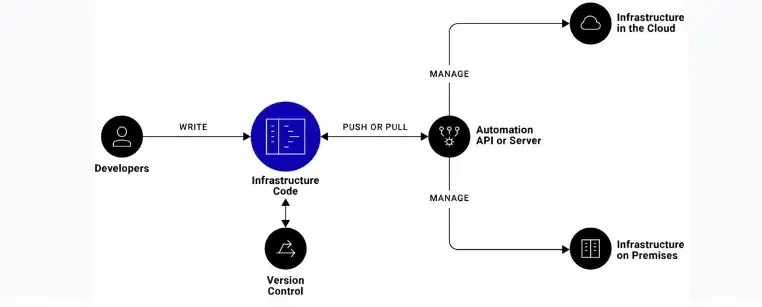
Source:StackpathInfrastructure as Code (IaaC) stands as a cornerstone in contemporary cloud computing, fundamentally altering the landscape of infrastructure provisioning, management, and scalability. It symbolizes a paradigmatic transition towards automated, repeatable, and scalable approaches within IT operations. In this exhaustive technical exposition, we explore Infrastructure as Code in-depth, delving into its nuanced concepts, multifaceted benefits, intricate implementation strategies, best practices, history, and future trajectories.Understanding Infrastructure as Code (IaaC)Infrastructure as Code (IaaC) represents a sophisticated software engineering solution methodology meticulously designed to streamline and automate the provisioning and management of infrastructure resources.At its core, IaaC relies on machine-readable definition files, meticulously crafted to encapsulate the intricacies of infrastructure configuration.By abstracting infrastructure elements into code, this approach enables developers and operations teams to transcend the limitations of manual intervention, empowering them to define, deploy, and manage infrastructure resources programmatically.Leveraging the power of code, organizations can achieve unprecedented efficiency, consistency, and scalability in their infrastructure operations, ushering in a new era of agility and innovation.Developers and operations teams collaborate seamlessly online, leveraging version control systems to track changes, perform code reviews, and ensure the integrity of infrastructure configurations. Moreover, the programmable nature of IaaC empowers organizations to adopt a DevOps mindset, fostering collaboration, automation, and continuous improvement across the software development lifecycle. As organizations embrace IaaC, they unlock the potential to accelerate deployment cycles, minimize operational overhead, and deliver value to customers with unprecedented speed and efficiency.Key Concepts of Infrastructure as Code (IaaC)Source: MediumAt the core of IaaC lie vital concepts that shape its implementation and efficacy. From understanding the distinction between declarative and imperative paradigms to embracing idempotency and versioning, grasping these fundamental concepts is essential for unlocking the full potential of Infrastructure as Code.Key Concepts of Infrastructure as Code (IaaC)In Infrastructure as Code (IaaC), understanding the distinction between declarative and imperative paradigms is essential. Declarative IaaC focuses on specifying the desired state of the infrastructure without prescribing the exact steps to achieve it. Instead, it describes the result, leaving the implementation details to the IaaC tool. On the other hand, imperative IaaC provides explicit instructions on providing and configuring infrastructure resources, delineating each step in the process. Deciding between these approaches hinges on complexity, maintainability, and team preferences, each offering advantages and trade-offs.Idempotency: Ensuring Consistency and ReliabilityIdempotency is a cornerstone principle in Infrastructure as Code (IaaC), underpinning the reliability and predictability of infrastructure provisioning and management. At its core, idempotency ensures that executing the same code multiple times yields the same desired state, regardless of the initial state of the infrastructure. This consistency mitigates unintended side effects or discrepancies caused by repeated executions, fostering reliability and reproducibility in infrastructure deployments. By adhering to idempotent coding practices, organizations can minimize errors, streamline operations, and enhance the overall stability of their infrastructure environments.Infrastructure as Versioned Code: Harnessing the Power of Version ControlTreating infrastructure configuration as code introduces the concept of versioning, enabling teams to track changes, collaborate effectively, and manage configuration drifts over time. Version control systems like Git play a pivotal role in managing infrastructure code, offering features such as branching, merging, and rollback capabilities. By creating and maintaining a centralized repository of infrastructure code, teams can gain visibility into changes, facilitate code reviews, and ensure auditability and compliance.Additionally, versioned infrastructure code empowers teams to experiment with new configurations, revert to known working states, and implement changes confidently, fostering a culture of continuous improvement and innovation within the organization.The Power of Events in IaaC OrchestrationIn Infrastructure as Code (IaaC), events play a pivotal role in orchestrating the deployment and management of infrastructure resources. Events represent triggers or notifications that initiate actions or change workflows within the infrastructure deployment process. These events can range from manual interventions, such as user-initiated changes or approvals, to automated triggers created based on predefined conditions, such as resource scaling thresholds or configuration changes. Organizations can implement dynamic and responsive infrastructure management workflows by leveraging events, enabling automatic scaling, fault remediation, and real-time configuration updates.Harnessing Environment in the IaaC JourneyIn Infrastructure as Code (IaaC), the environment serves as distinct configurations or contexts within which infrastructure resources are provisioned, managed, and operated. Environment typically corresponds to the software development lifecycle stages: development, testing, staging, and production. Each environment may have unique configurations, resource allocations, and access controls tailored to its specific purpose and requirements. Organizations can ensure consistency, reproducibility, and isolation across diverse infrastructure deployments by defining and managing environments programmatically.Benefits of Infrastructure as Code (IaaC)Source: VeritisIn the era of cloud computing and DevOps, Infrastructure as Code (IaaC) stands as a cornerstone technology, offering many benefits to organizations striving for agility, scalability, and efficiency in their IT operations. By abstracting infrastructure configuration into code, IaaC enables automation, repeatability, and consistency in the provisioning and managing of infrastructure resources. This section delves into the myriad benefits Infrastructure as Code brings, ranging from automation and consistency to scalability and DevOps integration.Maximizing Efficiency through AutomationIaaC revolutionizes infrastructure resource provisioning, configuration, and management through automation, drastically reducing manual intervention, human error, and time-to-market delays. Organizations can achieve unprecedented agility, scalability, and operational efficiency by automating repetitive tasks and workflows, empowering teams to focus on innovation and value-added activities.Ensuring Unwavering ConsistencyWith IaaC, infrastructure configuration becomes codified, ensuring uniformity and consistency across diverse environments. By eliminating the possibility of configuration drift and maintaining identical setups across development, testing, and production environments, IaaC enhances application deployments’ reliability, repeatability, and predictability. This meticulous consistency fosters confidence in the integrity of infrastructure configurations, mitigating the risk of discrepancies and errors.Unleashing Limitless ScalabilityIaaC empowers organizations to scale infrastructure resources dynamically in response to fluctuating workload demands. Organizations can use automated scaling policies and cloud-native services such as auto-scaling groups to optimize resource utilization and cost efficiency while seamlessly accommodating spikes in traffic or processing requirements. This inherent scalability ensures that infrastructure resources align precisely with business needs, enabling organizations to scale effortlessly as they grow.Bridging the Gap with DevOps IntegrationInfrastructure as Code is a linchpin in DevOps practices, facilitating seamless collaboration and integration between development and operations teams. Organizations can embrace DevOps principles such as collaboration, automation, and continuous delivery by treating infrastructure as code, accelerating the software development lifecycle. IaaC enables organizations to achieve shorter development cycles, faster time-to-market, and enhanced agility in responding to customer needs and market demands through automated testing, deployment pipelines, and infrastructure provisioning.Implementation Strategies for IaaCEmbarking on implementing Infrastructure as Code (IaaC) requires organizations to navigate a complex landscape of technical considerations, operational challenges, and organizational dynamics. From selecting the right tools and adopting modularization techniques to embracing testing and validation practices and integrating with CI/CD pipelines, implementing IaaC demands a strategic approach. This section explores critical implementation strategies that pave the way for the successful adoption of Infrastructure as Code.Crafting the Perfect ToolkitSelecting the optimal toolkit is paramount for a successful Infrastructure as Code (IaaC) implementation. Well-established IaaC tools such as Terraform, AWS CloudFormation, or Azure Resource Manager are pillars in this domain, offering robust capabilities for defining, provisioning, and managing infrastructure resources. Organizations can make informed decisions to align their tooling with specific requirements and objectives by evaluating functionality, compatibility, and community support.Embracing Modularization for Enhanced AgilityEmbracing a modular approach to infrastructure code fosters code reuse, maintainability, and scalability. Fragmenting infrastructure configurations into smaller, reusable, independent components or modules streamline development workflows, enhances code organization, and promotes consistency across diverse environments and applications. Through modularization, organizations can effectively manage complexity, expedite development cycles, and adapt swiftly to evolving business needs, ensuring agility and resilience in their infrastructure deployments.Testing and Validation: Ensuring Code IntegrityImplementing rigorous testing and validation practices is indispensable to uphold the reliability and correctness of infrastructure code. Leveraging automated testing frameworks such as KitchenCI or Terratest, organizations can validate infrastructure changes in isolated environments, meticulously scrutinizing their impact before deployment. By conducting comprehensive testing and validation procedures, organizations can mitigate the risk of errors, enhance code quality, and bolster the resilience of their infrastructure deployments, safeguarding against potential disruptions and vulnerabilities.Streamlining Deployment with CI/CD IntegrationIntegrating infrastructure code into Continuous Integration/Continuous Deployment (CI/CD) pipelines is instrumental in streamlining deployment workflows and ensuring rapid and reliable deployments. With tools like Jenkins, GitLab CI/CD, or AWS CodePipeline, organizations can automate testing, validation, and deployment processes, facilitating seamless integration of infrastructure changes into the software delivery pipeline. By embracing CI/CD practices, organizations can achieve faster time-to-market, reduce manual intervention, and enhance collaboration between development and operations teams, fostering a culture of continuous improvement and innovation.Best Practices for Infrastructure as Code (IaaC)From leveraging design patterns and implementing robust configuration management to prioritizing infrastructure security, understanding and implementing best practices is paramount. This section delves into a comprehensive overview of the best practices for Infrastructure as Code. We aim to provide insights and guidelines to help organizations optimize their IaaC implementations and reap the benefits of automated, programmable infrastructure management.Elevating Deployment Reliability with Infrastructure as Code Design PatternsHarnessing Infrastructure as Code (IaaC) design patterns, including immutable infrastructure, blue-green deployments, or canary releases, fortify infrastructure deployments’ reliability, scalability, and resilience. These design patterns offer reusable solutions to common infrastructure challenges, providing organizations with a framework to promote consistency and implement best practices. Organizations can streamline deployment processes, minimize downtime, and enhance overall infrastructure performance by leveraging design patterns.Mastering Configuration Management for Consistency and SecurityImplementing robust configuration management practices ensures consistency, security, and auditability of infrastructure configuration. With powerful configuration management tools such as Ansible, Puppet, or Chef, organizations can automate software and services’ installation, configuration, and maintenance across their infrastructure resources. By centralizing configuration management, organizations can enforce standardization, streamline operations, detect issues, and mitigate the risk of configuration drift, enhancing overall infrastructure stability and reliability.Bolstering Infrastructure Security from Design to DeploymentIntegrating security into every facet of infrastructure code, from design to deployment, is essential to safeguard against evolving threats and compliance risks. By implementing security best practices such as least privilege access, encryption, and vulnerability scanning, organizations can fortify their infrastructure resources against potential security vulnerabilities and compliance breaches. With a proactive security approach, organizations can bolster their defenses, protect sensitive data, and maintain regulatory compliance, fostering stakeholder trust and confidence.Future Trends and Outlook for IaaCAs organizations continue to embrace cloud-native technologies and DevOps practices, the adoption of Infrastructure as Code is expected to accelerate. Emerging trends such as GitOps, which emphasizes version-controlled workflows and declarative infrastructure management, are reshaping the landscape of IaaC. Moreover, the convergence of IaaC with other technologies, such as machine learning, artificial intelligence, and serverless computing, unlocks new possibilities in infrastructure automation and optimization. Organizations that embrace Infrastructure as Code are poised to gain a competitive edge in the digital economy, enabling them to innovate faster, scale efficiently, and deliver value to their customers with unparalleled agility.ConclusionThe topics under Infrastructure as Code (IaaC) represent a transformative approach to infrastructure provisioning, management, and automation. By treating infrastructure as code, organizations can achieve greater agility, scalability, and efficiency in their IT operations, paving the way for accelerated innovation, creativity, and competitive advantage. As IaaC continues to evolve and mature, organizations must be open-minded and embrace this paradigm shift, harnessing its full potential to thrive in the fast-paced world of cloud computing and DevOps.FAQs1. How can I register resources in Infrastructure as Code (IaaC) deployments?In IaaC, registering resources typically refers to defining and configuring infrastructure resources within the codebase. You usually write code to register resources using IaaC tools such as Terraform, AWS CloudFormation, or Azure Resource Manager templates.

Aziro Marketing
blogImage

One Site, Every Screen: Conquer Digital with Responsive Web Design Services

In this age of ubiquitous digital devices, responsive web design services are crucial for success on the web. By utilizing web design services that promote responsiveness, your website will effortlessly adjust to any screen, allowing you to unlock the full potential of your online presence. Businesses have a dilemma: how to make their online presence visible on all devices? Here we are with the game-changing Responsive Web Design (RWD). Responsive web design is more than a passing fad; it’s a movement toward a new way of thinking about how websites should work and how they can provide an excellent user experience across all devices. What is responsive web design? Responsive Design refers to a website that can adjust its appearance in response to changes in screen size and resolution, ranging from the largest screen on a desktop computer to the smallest screen on a mobile device. The excellent Ethan Marcotte was the one who initially presented this strategy in his post that was published on List Apart. The responsive web design approach, in contrast to other methods, makes use of CSS media queries and many cascading style sheets in order to modify the appearance of the website in accordance with the requirements. Furthermore, you can have varied displays and layouts based on the orientation of the device. For example, with a tablet, the user may adjust the screen mode from landscape to portrait at their discretion. The purpose of this approach to web design is to provide the user with the most satisfying experience possible when it comes to the visual display of material on the device or platform that they are using to see it. The following are the fundamental components of a responsive web design: Layouts that are grid-based and responsive Responsive Images Media Queries RESPONSIVE LAYOUTS Your page is no longer left to its own devices when you use responsive layouts. This method makes an effort to adapt the layout to a wide range of screen settings. A responsive layout adjusts to various viewing conditions and user requirements instead of relying just on the “most common” display size and an “average” user. The overall viewing experience may be improved by presenting alternative layouts that are optimized for each resolution range. RESPONSIVE IMAGES However, a responsive design goes beyond just altering the website layout. It makes sense that enabling photos to be adjusted is crucial, and there are two methods to do this: you can either dynamically crop the image or enlarge it proportionately. Responsive web design makes it possible for this to happen automatically. MEDIA QUERIES Media queries are a useful tool for creating incredibly mobile-friendly websites. With media queries, designers may create a variety of layouts using only HTML pages and select the appropriate style sheets according to various parameters, such as browser size and screen resolution. Thus, they take into account the device’s implemented capabilities rather than just its kind. However, this is only a cursory examination. By utilizing media queries, we are able to modify far more than just the positioning of an image. With the help of media queries, we can fine-tune our pages as they resize. For example, we can apply responsive typesetting to maximize the reading experience on the display that is supplying it, increase the target area for links on smaller screens, and show or hide elements to make the navigation more prominent. Responsive Web Design: Adapting to the Digital Ecosystem Responsive web design is a game-changer in the digital ecosystem. It involves creating websites that automatically adjust their layout and content based on the device accessing them. Whether viewed on a desktop, tablet, or smartphone, a responsive website ensures consistent functionality and aesthetics, providing users with a cohesive experience regardless of their chosen device. Why Choose Responsive Web Design Services? Mobile-First Approach: Catering to On-the-Go Audiences With the proliferation of mobile devices, a mobile-first approach is imperative. Responsive web design services prioritize creating websites with mobile users in mind. This approach acknowledges the prevalence of on-the-go audiences and ensures that your website delivers a seamless and optimized experience for users accessing it via smartphones and tablets. Enhanced SEO: Responsive Designs for Better Rankings Search engines favor responsive websites. Google, in particular, considers mobile-friendliness as a ranking factor. Responsive web design services contribute to better search engine optimization (SEO) by providing a consistent URL and HTML, making it easier for search engines to index and rank your site. Improved SEO leads to higher visibility and increased organic traffic. Cost-Efficiency: One Site for Every Screen Responsive web design services offer a cost-efficient solution. Instead of managing multiple versions of your website for different devices, a responsive design allows you to maintain a single site. This not only streamlines maintenance but also reduces development and operational costs, providing a practical and budget-friendly approach to achieving digital excellence. Our Responsive Web Design Services Expert Design & Development: Our team of talented designers and developers create stunning, responsive websites that are visually appealing and functionally intuitive on any device. Content Optimization: We ensure your content is optimized for readability and accessibility across different screen sizes and resolutions. Performance Optimization: We prioritize fast loading times and smooth navigation, resulting in a user experience that keeps visitors coming back for more. Cross-browser Compatibility: We test and ensure your website functions flawlessly across all popular browsers and devices. Ongoing Support & Maintenance: We’re here to help you maintain your website and adapt it to evolving trends and technologies. Don’t let your website be confined to desktops. Unleash the power of Responsive Web Design and conquer the digital world, one perfectly optimized screen at a time. Ready to take the plunge? Contact us today to learn how our Responsive Web Design services can help you build a website that truly delivers – on every screen, for every user.

Aziro Marketing

blogImage

Predictive Analytics Solutions for Business Growth in Georgia

Georgia’s business scene is flourishing. From established giants to burgeoning startups, a kaleidoscope of industries thrives thanks to a vibrant entrepreneurial spirit. But in today’s hypercompetitive climate, staying ahead requires embracing cutting-edge tools. Enter predictive analytics – a powerful weapon in Georgia businesses’ arsenal to unlock explosive growth potential.Predictive analytics isn’t just a buzzword; it’s a transformative force. By gleaning insights from historical data, these solutions forecast future trends, identify hidden opportunities, and mitigate potential risks. For Georgia businesses across all sectors, it’s a game-changer, offering a strategic edge that propels them forward. This blog delves into the world of predictive analytics, exploring its core concepts, benefits, and how Georgia companies can leverage it for sustainable growth. We’ll showcase practical applications and highlight the tangible benefits it brings to various industries within the state, from retail and manufacturing to healthcare and logistics.What is Predictive Analytics?Predictive analytics involves the use of statistical techniques, advanced analytics, machine learning algorithms, and data mining to analyze historical data and make predictions about future events. By identifying patterns and relationships within the data, predictive analytics provides businesses with actionable insights that can inform decision-making and strategy.What are Predictive Analytics Tools and Solutions?Predictive analytics is a branch of data analytics that employs statistical techniques and machine learning algorithms to uncover future trends and patterns from historical data. Unlike traditional data analysis that focuses on past performance, predictive analytics delves deeper, leveraging sophisticated statistical techniques and machine learning algorithms to uncover hidden patterns and trends within your historical data. Imagine possessing the ability to anticipate customer behavior, predict market fluctuations, and identify potential operational risks – that’s the transformative power predictive analytics offers.Predictive analytics software is essential for businesses across different industries to make data-driven decisions and achieve their critical key performance indicators (KPIs). This advanced form of data analysis goes beyond mere forecasting. It empowers you to make proactive decisions based on a data-driven understanding of what’s likely to happen next. Here’s how this translates into tangible benefits for Georgia businesses across various sectors:Enhanced Customer Acquisition and Retention: Predictive analytics helps you identify potential customers with high buying propensity. By analyzing past purchase behavior and demographics, you can tailor marketing campaigns to reach the right audience with the right message at the right time. Additionally, it can predict customer churn (when a customer stops using your service), enabling you to implement proactive retention strategies and personalized loyalty programs.Streamlined Operations and Increased Efficiency: Predictive analytics allows you to optimize resource allocation and identify areas for streamlining operations. By analyzing historical data on machine performance and maintenance schedules, you can predict equipment failures and schedule preventive maintenance, minimizing costly downtime. This proactive approach translates to improved production efficiency and cost savings.Informed Product Development and Innovation: Businesses can leverage predictive analytics to analyze customer preferences, identify emerging market trends, and forecast future demand. This data-driven approach allows you to develop new products and services that cater to evolving customer needs and market demands, keeping you ahead of the competition.Data-Driven Risk Management: Predictive analytics serves as a powerful tool for identifying and mitigating potential risks that could harm your business. By analyzing industry trends and historical data on fraud attempts or security breaches, you can develop a proactive risk management strategy to safeguard your assets and reputation.With predictive analytics, your Georgia business can unlock a world of possibilities. From anticipating customer behavior to mitigating risks and optimizing operations, this powerful tool empowers you to make data-driven decisions and achieve sustainable growth. It’s a future-proof investment that can propel your business to new heights in the competitive landscape.Here’s how predictive analytics worksSource: QualitricsData CollectionThe foundation lies in collecting relevant data from various sources like customer transactions, social media interactions, website analytics, and internal operational data.Data Cleaning and PreparationRaw data often contains inconsistencies and errors. Data cleaning ensures the quality and accuracy of data for analysis.Model BuildingData scientists choose appropriate algorithms and build statistical models using the cleaned data. These predictive analytics models identify relationships and patterns within the data.Model Testing and RefinementThe built models are rigorously tested on historical data to assess their accuracy in predicting future outcomes. Continuous refinement ensures the models remain effective.Predictions and InsightsOnce validated, the models generate predictions about future trends, allowing businesses to make data-driven decisions.Industry-wise Predictive Analytics Solutions in GeorgiaRetail and E-commerceThe retail sector in Georgia can greatly benefit from predictive analytics solutions. Utilizing the best predictive analytics tools can help retailers leverage the power of data to understand trends, forecast outcomes, and optimize various business activities. By analyzing sales data, customer preferences, and market trends, retailers can optimize pricing strategies, manage inventory efficiently, and plan promotional activities. For instance, predictive analytics can help retailers forecast the demand for seasonal products, ensuring they stock the right amount of inventory and avoid stockouts or overstock situations.HealthcarePredictive analytics has transformative potential in the healthcare sector. Healthcare providers in Georgia can use predictive analytics capabilities to predict patient admissions, manage hospital resources, and improve patient outcomes. For example, by analyzing patient data, hospitals can predict which patients are at risk of readmission and implement targeted interventions to prevent it. Additionally, predictive analytics can aid in early disease detection and personalized treatment plans.Source: RevealFinance and BankingFinancial institutions in Georgia can leverage predictive analytics for credit scoring, fraud detection, and customer segmentation. By utilizing machine learning models to analyze transaction data and customer profiles, banks can predict the likelihood of loan defaults, identify fraudulent transactions in real time, and offer personalized financial products to customers. This not only enhances customer satisfaction but also reduces financial risks.ManufacturingThe manufacturing sector can use predictive analytics to enhance production efficiency and reduce operational costs. By leveraging predictive modeling to analyze data from sensors and machinery, manufacturers in Georgia can predict equipment failures, schedule maintenance, and optimize production schedules. This leads to reduced downtime, improved product quality, and increased overall productivity.Tourism and HospitalityThe tourism and hospitality industry in Georgia can benefit from predictive analytics by forecasting tourist trends, optimizing pricing strategies, and improving customer experiences. Hotels can use predictive analytics to anticipate occupancy rates, plan staffing, and personalize guest services. By understanding tourist preferences and behaviors, businesses can tailor their offerings to attract more visitors and enhance their satisfaction.How to Implement Predictive Analytics Solutions in Your Georgia BusinessSource: QualitricsIdentify Business GoalsThe first step is charting a clear course. Ask yourself: what are your key objectives for utilizing predictive analytics? Is it boosting customer acquisition by 20% in the next year? Minimizing operational downtime by 10%?Clearly define your goals, as these will inform the specific data you need and the type of predictive models you’ll build. Targeting customer acquisition might involve analyzing past marketing campaigns and customer demographics to predict high-value leads. Conversely, aiming for operational efficiency might require historical data on machine performance and maintenance schedules to anticipate equipment failures.Gather Relevant DataIdentify and gather the data sources needed to fuel your predictive models.Data is the lifeblood of predictive analytics. Identify and gather relevant data sources that will fuel your models. Look within your organization – customer relationship management (CRM) systems, sales data, website analytics, and social media interactions are treasure troves of information. External data sources like market research reports and industry trends can also be valuable.Remember, data quality is paramount. Ensure your data is accurate, complete, and properly formatted. This might involve data cleaning and pre-processing steps to remove inconsistencies and errors.Invest in Technology, Data Scientists, and ExpertiseA predictive analytics platform can help evaluate tools for accuracy and performance, leveraging historical data to predict future customer needs. Building a robust predictive analytics system can be complex. Consider two approaches:Internal Data Science Team: If your resources allow, building an in-house data science team offers complete control and customization. However, this requires recruiting data scientists, data engineers, and other specialists, which can be a significant investment.Partnering with Data Analytics Companies: Georgia boasts a thriving data analytics ecosystem with numerous companies offering expertise and solutions. Partnering with a reputable firm allows you to leverage their expertise and technology infrastructure, making predictive analytics accessible even for smaller businesses.Data Security and PrivacyAs you gather and utilize customer data, ensuring its security and privacy is paramount. Familiarize yourself with relevant regulations like HIPAA for healthcare and GDPR for customer data in the European Union. Invest in robust data security measures like encryption and access controls to protect sensitive information. Transparency is key – clearly communicate your data privacy policies to your customers and gain their trust.Continuous Learning and ImprovementRegularly monitor your model’s performance and compare its predictions to actual outcomes. Analyze the results and refine your models as needed. Remember, market dynamics and customer behavior are constantly evolving, so your predictive models need to adapt as well.By following these steps and leveraging the wealth of resources available in Georgia, you can build a powerful predictive analytics engine that propels your business forward. Embrace the power of data and unlock the potential for sustainable growth in the competitive landscape.Benefits of Implementing Predictive Analytics SolutionsImplementing predictive analytics solutions offers a wealth of benefits, propelling them towards sustainable growth. Here’s how:1. Enhanced Customer Acquisition and Retention: Predictive analytics empowers you to identify potential customers most likely to convert into loyal patrons. By analyzing past purchase behavior, demographics, and online interactions, you can personalize marketing campaigns to reach the right audience with the right message at the right time. Additionally, it allows you to predict customer churn (when a customer stops using your service), enabling proactive strategies to retain them. This translates to increased customer acquisition rates and a more loyal customer base.2. Streamlined Operations and Boosted Efficiency: Predictive analytics helps you optimize resource allocation and identify areas for streamlining operations. Analyze historical data on equipment performance and maintenance schedules to predict equipment failures and schedule preventive maintenance, minimizing costly downtime. This proactive approach safeguards production efficiency and leads to significant cost savings. Predictive analytics can also optimize logistics, predict delivery delays, and ensure on-time fulfillment, enhancing customer satisfaction.3. Data-Driven Risk Management: Predictive analytics serves as a powerful shield against potential threats. By analyzing industry trends and historical data on fraud attempts or security breaches, you can develop proactive risk management strategies. This could involve pinpointing vulnerabilities in your systems or identifying suspicious patterns in financial transactions, allowing you to take preventive measures and safeguard your assets and reputation.4. Informed Product Development and Innovation: Understanding customer preferences is crucial for any business. Predictive analytics allows you to analyze past purchase behavior, identify emerging market trends, and forecast future demand. This data-driven approach enables you to develop innovative products and services that cater to evolving customer needs and market demands, keeping you ahead of the competition.5. Dynamic Pricing Strategies: Predictive analytics empowers you to set competitive pricing strategies that maximize profitability. Analyze factors like customer behavior, market demand, competitor pricing, and historical sales data to determine optimal pricing strategies across different product lines and market segments. This ensures you capture the full value proposition of your offerings while remaining competitive in the marketplace.The Georgia Advantage: Resources and SupportGeorgia offers a vibrant ecosystem for businesses exploring data analytics solutions:Universities: Georgia boasts top-ranked universities with strong data science programs, providing a talent pool of skilled data scientists and analysts.Most predictive analytics platforms struggle with integrating traditional employee management software, but Georgia’s resources help bridge this gap effectively.These institutions produce a steady stream of highly skilled data scientists and analysts, providing businesses with a readily available talent pool to staff their data analytics initiatives. Look to Georgia Institute of Technology, Emory University, and University of Georgia, all at the forefront of data science education.Tech Incubators and Accelerators: Several technology incubators and accelerators in Georgia support startups and businesses working with data analytics solutions.Georgia’s burgeoning startup scene is fueled by a network of tech incubators and accelerators. These organizations provide invaluable support to startups and businesses working with data analytics solutions. They offer resources like mentorship, co-working spaces, and access to funding, enabling businesses to develop and implement their data analytics strategies effectively. Examples include Atlanta Tech Village, Alpharetta Tech Incubator, and Savannah Startup Weekend.Government Initiatives: Recognizing the importance of data analytics in driving economic growth, the Georgia state and local governments actively promote innovation and provide resources to support businesses in this field. This might include grant programs, tax incentives, and workshops focused on data analytics implementation. Keep an eye on programs offered by organizations like the Georgia Department of Economic Development and the Georgia Technology Transfer Network (GTTN).Networking Opportunities: Georgia’s data analytics community is well-connected, hosting frequent industry events and conferences. These events provide excellent opportunities for businesses to network with data science experts, potential partners, and investors, fostering knowledge exchange and collaboration.Skilled Workforce Pipeline: With its strong educational institutions and focus on data science, Georgia boasts a growing pipeline of skilled data scientists and analysts. This ensures a readily available workforce for businesses seeking to build or expand their data analytics teams.By leveraging this comprehensive ecosystem, Georgia businesses gain a significant edge in the data analytics landscape. From accessing a pool of skilled professionals to securing funding and collaborating with other industry leaders, Georgia provides the ideal environment for businesses to harness the power of predictive analytics and unlock their full growth potential.Success Stories: Georgia Businesses Leveraging Predictive AnalyticsGeorgia businesses across various sectors are reaping the benefits of predictive analytics solutions. Let’s explore some inspiring examples:The Coca-Cola Company: Headquartered in Atlanta, Coca-Cola leverages predictive analytics to optimize their global supply chain. They analyze data on weather patterns, consumer behavior, and sales trends to forecast demand and ensure efficient product distribution across international markets.Home Depot: Georgia’s home improvement giant utilizes predictive analytics to personalize customer experiences. They analyze customer purchase history and website behavior to recommend relevant products and offer targeted promotions. This data-driven approach fosters customer engagement and drives sales growth.Delta Airlines: Delta, a major airline headquartered in Atlanta, employs predictive analytics to optimize flight schedules, pricing strategies, and maintenance schedules. By analyzing weather data, passenger booking trends, and aircraft performance data, Delta ensures operational efficiency and maximizes profitability.Wellstar Health System: This leading healthcare provider in Georgia utilizes predictive analytics to improve patient care. They analyze patient data to identify individuals at high risk of readmission or chronic disease complications. This allows healthcare professionals to intervene proactively and improve overall patient outcomes.The Future of Predictive Analytics in GeorgiaPredictive analytics is rapidly evolving, and Georgia is well-positioned to be at the forefront of this technological revolution. Here are some trends to watch:The Rise of Artificial Intelligence (AI)AI is increasingly being integrated with predictive analytics solutions, leading to more sophisticated models with enhanced prediction accuracy.An analytics tool can help businesses make strategic decisions, predict customer behaviors, generate machine learning models, automate analytics processes, and unlock hidden business insights.The Democratization of Data AnalyticsUser-friendly tools and cloud-based solutions are making predictive analytics more accessible to businesses of all sizes, leading to wider adoption across the Georgia business landscape.The Focus on Explainable AIThere’s a growing emphasis on ensuring that AI-powered predictive models are interpretable and transparent, allowing businesses to understand the reasoning behind predictions.The Integration of the Internet of Things (IoT)As more devices become connected to the internet, vast amounts of real-time data will be generated. Predictive analytics tools will integrate with IoT data to provide even more granular insights and enable real-time decision making.Wrapping UpThe world of business is increasingly data-driven. By embracing predictive analytics solutions, Georgia businesses can gain a competitive edge. From predicting customer behavior to mitigating risks and optimizing operations, predictive analytics empowers businesses to make data-driven decisions and achieve sustainable growth.

Aziro Marketing

blogImage

Top 10 Digital transformation Trends You Don’t Wanna Miss in 2024

Imagine this: the year is 2024, and your business is facing a crossroads. Traditional methods are still in place, but the competition is embracing the latest technologies and soaring ahead. Are you ready to join them?Advancements in AI, cloud computing, and other technologies are shattering the status quo and redefining what’s possible. But where do you begin? This article dives deep into 10 key trends of digital transformation to empower you to thrive in the digital-first world. From AI-powered efficiency to immersive experiences in the Metaverse, we’ll explore how these trends are revolutionizing the way businesses operate.At a CAGR of 16.5%, the world market for digital change will grow from $469.8 billion in 2020 to $1,009.8 billion by 2025.So, buckle up and get ready to discover the future. Let’s see which of these trends can help you propel your business growth towards unprecedented success.Understanding Digital TransformationBefore diving into the trends, let’s briefly discuss the concept of digital transformation. Digital transformation refers to the integration of digital technologies into all aspects of a business, fundamentally changing how companies operate and deliver value to their customers. It involves leveraging technology to streamline processes, enhance customer experiences, and drive innovation.Furthermore, digital transformation is not just about implementing new technologies; it also entails a cultural shift within organizations. It requires a mindset that embraces change, fosters collaboration, and values continuous learning. Successful digital transformation initiatives involve not only upgrading systems but also empowering employees to adapt to new ways of working and thinking.The Impact of Digital Transformation on BusinessesDigital transformation has a profound impact on businesses of all sizes and industries. It empowers organizations to optimize their operations, improve efficiency, and drive innovation. Companies that embrace digital transformation can better meet customer needs, unlock new revenue streams, and gain a strategic advantage over their competitors.Furthermore, digital transformation can lead to enhanced data-driven decision-making processes, enabling businesses to derive valuable insights from vast amounts of information. By harnessing the power of data analytics and artificial intelligence, companies can make informed strategic choices, personalize customer interactions, and forecast future trends with greater accuracy. This data-centric approach not only enhances operational efficiency but also fosters a deeper understanding of market dynamics and consumer behavior.Now that we have understood all about digital transformation, let’s dive straight into the trends that await us in 2024.The Top 10 Digital Transformation Trends for 20241. Artificial Intelligence and Machine LearningUp from just 1% in 2021, Gartner predicts that by 2024, about 60% of data used for AI will be automatically created to mimic reality, imagine what might happen in the future, and lower the risks that come with AI. Artificial Intelligence (AI) and Machine Learning (ML) have been gaining momentum in recent years, and their impact on businesses will only continue to grow. AI and ML technologies enable organizations to automate processes, gain insights from vast amounts of data, and deliver personalized experiences to customers.2. XaaS (Anything-as-a-Service)The projected increase in the adoption of “Anything-as-a-Service” (XaaS) by SMBs and midmarket firms will represent a significant transition from product-centric to service-centric technology acquisition. Scalability, operational efficiency, and immediate cost savings are all features of XaaS that make it especially appealing to SMBs. Additionally, it facilitates the shift from conventional fee-for-product frameworks to outcome-driven models, contracts attached to predetermined business objectives, and shared risk arrangements. However, for SMBs to fully capitalize on these advantages, they will require assistance in negotiating binding and equitable contracts with suppliers and navigating obstacles including data security concerns, over-reliance on single providers, and the complexities of integrating XaaS models. This model offers numerous advantages:Predictable costs: Businesses pay a fixed monthly fee, eliminating upfront costs and offering greater budgetary control.Increased agility and scalability: Resources are readily available and easily scaled, allowing businesses to adapt to changing needs.Improved security and compliance: Providers handle updates, ensuring systems stay protected and meet regulations.Focus on business value: Businesses can redirect resources from IT management to core activities, driving innovation and growth.Expect the XaaS market to soar, reaching $980 billion. We will see the emergence of industry-specific solutions and the convergence of XaaS with AI, leading to intelligent and automated service delivery.3. Cloud Computing and StorageBased on market research, the world’s cloud security market will grow at a rate of 9.1% per year, rising from USD 40.7 billion in 2023 to USD 62.9 billion by 2028. Cloud computing has revolutionized how businesses store and access data. According to Gartner, new technologies are driving spending in the cloud and making it mainstream. With cloud-based solutions, organizations can securely store and manage data, access applications and services remotely, and scale resources on-demand. Cloud computing enables businesses to be more agile, cost-effective, and globally connected.4. Low-Code/No-Code DevelopmentLow-code/no-code development empowers individuals with minimal coding experience to build business applications. Statista predicts that globally spending on digital change will hit $3.4 trillion by 2026.Democratization of innovation: Non-technical users can create solutions, fostering broader collaboration and ownership.Reduced time-to-market: Drag-and-drop interfaces and pre-built components streamline development.Increased IT agility: IT teams can focus on complex projects while business users handle simpler development tasks.5. The Internet of Things (IoT)The Internet of Things (IoT) is the interconnected network of devices that collect and exchange data. IoT technology has the potential to transform various industries, from healthcare to manufacturing. In 2024, businesses will continue to explore innovative ways to leverage IoT devices and harness the power of real-time data.6. Blockchain TechnologyBlockchain technology has gained significant attention in recent years, primarily due to its association with cryptocurrencies like Bitcoin. However, its potential extends far beyond digital currencies. Blockchain technology has the ability to enhance transparency, security, and trust in various industries, including supply chain management, healthcare, and finance.7. Enterprise Resource PlanningWhile technology might be the headline act in discussions of successful digital transformation, it actually plays a supporting role in a much greater play. Digital transformation service providers are orchestrating a symphony of people, processes, and technology to drive cultural change within organizations. Instead of solely focusing on building media arms or promotional channels, the true focus should be building an intelligent Enterprise Resource Planning (ERP) system. Effective ERPs offer a backstage revolution, streamlining operations, reducing spending, improving resource efficiency, and boosting productivity. While flashy technology may grab attention, don’t underestimate the power of refining your back-office operations for measurable results and sustainable profitability. So, shift your focus and ensure your organization’s core foundation is ready to support the digital transformation journey.8. Virtual and Augmented RealityVirtual Reality (VR) and Augmented Reality (AR) are poised for a significant commercial breakout in 2024. Imagine interactive virtual showrooms or immersive training simulations – VR and AR are revolutionizing how businesses engage with customers and streamline internal processes. From product development and testing to marketing and brand awareness, these technologies are blurring the lines between the physical and digital worlds. As hardware costs decrease and accessibility increases, 2024 is expected to be a pivotal year for VR and AR adoption, fundamentally altering how businesses operate and interact in the coming years.9. Automation and RoboticsAutomation and robotics have been transforming industries by streamlining processes, increasing productivity, and reducing costs. In 2024, businesses will continue to explore automation opportunities, including robotic process automation, autonomous vehicles, and intelligent automation solutions.10. Customer Experience PersonalizationProviding personalized customer experiences will be a key focus for businesses in 2024. It is expected that the market for customer experience management will grow from US$ 11,555.18 million in 2022 to US$ 29,780.95 million in 2028. With advances in technology, companies can gather and analyze customer data to deliver tailored experiences that resonate with individual preferences and needs. By personalizing customer interactions, businesses can build stronger relationships and foster loyalty.ConclusionAs we dive deeper into the top 10 digital transformation trends for 2024, it’s important to understand the implications and potential impact of these trends on various industries. Let’s take a closer look at how these trends are shaping specific sectors:In the healthcare industry, the integration of AI and ML technologies is revolutionizing patient care. From early disease detection to personalized treatment plans, these technologies are enabling healthcare providers to deliver more accurate and efficient care.In the manufacturing sector, the combination of IoT devices and automation is driving the concept of “smart factories.” These factories leverage real-time data from connected devices to optimize production processes, reduce downtime, and enhance overall operational efficiency.Furthermore, the financial industry is experiencing a significant transformation with the adoption of blockchain technology. Blockchain-based solutions are revolutionizing traditional banking processes, such as cross-border transactions and identity verification, by providing secure, transparent, and efficient alternatives.It’s important for businesses to stay informed and adapt to these trends to remain competitive in the digital landscape. Ready to take the first step on your digital transformation journey?Aziro (formerly MSys Technologies) is your trusted partner, offering cutting-edge solutions and expert guidance to navigate the ever-evolving digital landscape. Contact us today and discover how we can help you unlock the full potential of these transformative trends and propel your business towards a brighter future in 2024 and beyond!Don’t get left behind. Embrace the future, and let us guide you the way.

Aziro Marketing

blogImage

Digital Darwinism: Only the Adaptable Will Thrive in the Evolving Business Landscape

The year 2024 is shaping up to be a crucial turning point in the digital age. Just like Charles Darwin observed in the natural world, the business landscape is undergoing a rapid and relentless evolution known as Digital Darwinism. Just as species must adapt to survive in a changing environment, businesses today must embrace agility, innovation, and adaptability to thrive in the face of constant disruption. Those who embrace Digital Darwinism and adapt to the changing landscape will be the ones who thrive. Those who resist change will be left behind. What is Digital Darwinism? This idea is a more modern take on Charles Darwin’s idea that “it is not the strongest or smartest species that survives.” It is the one that can change the most,” refers to how businesses and people need to change to deal with new situations that come up because of digitization. The implication is that organizations that are unable to adjust to the new requirements that have been placed on them in order to survive in the information age are on the verge of extinction. The Driving Forces of Digital Darwinism Technological Advancements: Artificial intelligence, blockchain, big data analytics, and the Internet of Things (IoT) are rapidly changing the way we live and work. Businesses that fail to leverage these technologies risk falling behind. Shifting Consumer Expectations: Customers today demand personalized, omnichannel experiences. Businesses that cling to outdated models will struggle to meet these expectations. Increased Competition: The global marketplace is becoming increasingly crowded, with new entrants emerging from all corners of the world. Businesses need to differentiate themselves and find new ways to add value. Economic Uncertainty: The global economy is facing a number of challenges, including inflation, geopolitical tensions, and supply chain disruptions. Businesses need to be resilient and adaptable to weather these storms. Understanding the Five Pillars of Digital Darwinism Challenges Data Governance and Utilization In the digital era, data is equivalent to cash. Effective data governance is more than simply who has ownership over the data; it is also about how it is utilized to make choices. Organizations must address the leadership challenge by choosing data stewards who can assure data quality, compliance, and strategic use. Skepticism towards data ROI is sometimes attributed to a short-term perspective; firms must appreciate the long-term worth of data-driven insights. Resistance to strategic data usage may be overcome by proving clear advantages through small-scale, successful use cases that foster confidence and buy-in throughout the business. Technology Advancement and Legacy Integration The constant pace of technological innovation creates a twin challenge: remaining current with new technologies while integrating them with existing legacy systems. Businesses must strike a compromise between the necessity for cutting-edge solutions and the practicality of their existing technical foundation. This frequently necessitates a staged approach to technology adoption, in which outdated systems are progressively removed or modified to function smoothly with new digital tools, reducing disturbance while increasing productivity. Cultural Transformation and Skill Development Perhaps the most significant task is to alter the company culture into one that is flexible, inventive, and digitally aware. This change involves a fundamental shift in attitude and processes, not just the introduction of new technology. This cultural transformation includes retraining employees, changing processes, and closing the digital skills gap. Companies must create an environment in which experimentation is encouraged and failure is viewed as a stepping stone to innovation. Strategic Investment and Operational Agility To effectively traverse Digital Darwinism, firms must be willing to invest in innovative technologies that offer agility and a competitive advantage. However, such investments have inherent risks and opportunity costs. Strategic planning and risk assessment are essential for ensuring that investments in agility do not threaten the company’s financial stability. This also entails implementing operational models that are adaptable and can react swiftly to market changes and technology advances. Cooperation and Silo Breaking Digital silos create organizational hurdles that stifle innovation and cooperation. To address this, firms must develop an environment of open communication and cross-functional collaboration. Integrating different digital activities into a unified strategy necessitates a dedicated effort to align goals, exchange data, and work together on projects. This not only improves productivity, but also assures that the business progresses in lockstep toward its digital goals. As firms face these multiple difficulties, it becomes clear that old operating models are no longer sufficient. The digital world necessitates not just identification of these issues, but also a strong reaction that transforms potential vulnerabilities into strengths. It is not enough to just grasp the challenges; businesses must actively participate in developing strategies that are as dynamic and resilient as the digital environment. With the appropriate strategy, the challenges of Digital Darwinism may be turned into opportunities for innovation and expansion. Strategic responses to Digital Darwinism’s five pillars of challenges. In response to the requirement of Digital Darwinism, the following methods provide a roadmap for organizations to not only navigate but also profit from the digital revolution. By adopting these tactics, companies may go from just surviving to actively thriving in the digital era, transforming the previously described problems into stepping stones to success. Embracing Customer Centricity and Breaking Down Silos To overcome the challenges of Digital Darwinism, firms must prioritize the consumer in their strategy. A customer-centric mentality guarantees that choices are made with the customer’s requirements and preferences at the forefront, resulting in enhanced satisfaction and loyalty. Concurrently, breaking down digital barriers is critical to facilitating a fluid flow of information and communication across departments, which improves productivity and assures a consistent approach to customer support. Data-Driven Decision Making and Strategic Investment Effective measurement is critical to growth. Companies that track relevant metrics may make educated, data-driven decisions that support their strategic goals. Smart technology investments are also critical; they must be carefully chosen for their ability to give a long-term return on investment. This involves investing in digital infrastructure that promotes data growth and the analytical tools required to use it for business insights. Cultural Adaptation and Skill Development Overcoming Digital Darwinism necessitates a corporate culture that values digital transformation. This entails a complete makeover of workplace culture, retraining employees, and redesigning operations to line with digital needs. Hiring for digital talent is also crucial since it introduces new ideas and the skills required to promote innovation. Companies must create an atmosphere that supports adaptation and experimentation, while acknowledging that failure is an essential part of the innovation process. Operational Agility and Ethical Technology Adoption Agile technology and operating approaches enable the flexibility required to adapt quickly to market developments. This agility must be tempered with a commitment to ethics, sustainability, and inclusion to ensure that technological adoption does not jeopardize society values. Investing in digital transformation prepares organizations for changes in customer behavior and market conditions, allowing them to grab new possibilities while remaining relevant. Finally, a holistic approach to digital transformation is needed. This entails improving or redesigning processes and systems to not just handle current market trends, but also to capitalize on existing and unexpected possibilities. By incorporating these methods into their operations, organizations may successfully adapt to the challenges provided by Digital Darwinism, positioning themselves for long-term success in an ever-changing digital context. This transition prepares the reader for the change from issue discussion to solution exploration, emphasizing the narrative that Digital Darwinism’s obstacles are not insurmountable, but rather a call to action for strategic adaptation and creativity. Preparing for the Future If you want your business to survive and thrive in 2024, it’s time to start embracing Digital Darwinism. Here are a few tips to get you started: Conduct a digital audit: Assess your current strengths and weaknesses in terms of digital capabilities. Develop a digital strategy: Define your goals and how you will achieve them using digital technologies. Invest in your people: Train your employees on new technologies and ways of working. Embrace change: Don’t be afraid to experiment and try new things. Build a culture of innovation: Encourage creativity and risk-taking. Conclusion: Embracing Change for Future Success In conclusion, Digital Darwinism is not a threat, but an opportunity. By embracing change and adapting to the evolving business landscape, businesses can unlock new possibilities and achieve sustainable success in 2024 and beyond. The tour across the Digital Darwinism environment shows a startling reality: adaptation is the new currency of company success. The stories of BlackBerry’s demise and Amazon’s rise are more than just anecdotes; they foreshadow a new era in which flexibility, innovation, and customer-centricity determine market supremacy. As we negotiated the problems and tactics associated with this digital transition, it became evident that the capacity to foresee, adapt, and act is what will separate strong firms from the outdated. As we stand at this digital crossroads, the way forward for businesses is clear. It is a route that requires a never-ending pursuit of innovation, a strong commitment to data-driven decision-making, and a culture that accepts change as the one constant. The techniques proposed in this article are more than simply a reaction to the current challenges of Digital Darwinism; they represent the foundation for a future in which digital fluency is synonymous with business savvy. As a result, the call to action for firms is to integrate these strategies into the heart of their operations. Organizations must go from the reactive to the proactive, anticipating and shaping digital advances rather than simply responding to them. Businesses will not only maintain their relevance in the present, but will also establish their leadership in the future.The digital tide does not wait for anybody. It’s time to set sail or risk being stuck in obscurity. Allow the concepts of Digital Darwinism to guide your road to innovation, development, and long-term success.

Aziro Marketing

EXPLORE ALL TAGS
2019 dockercon
Advanced analytics
Agentic AI
agile
AI
AI ML
AIOps
Amazon Aws
Amazon EC2
Analytics
Analytics tools
AndroidThings
Anomaly Detection
Anomaly monitor
Ansible Test Automation
apache
apache8
Apache Spark RDD
app containerization
application containerization
applications
Application Security
application testing
artificial intelligence
asynchronous replication
automate
automation
automation testing
Autonomous Storage
AWS Lambda
Aziro
Aziro Technologies
big data
Big Data Analytics
big data pipeline
Big Data QA
Big Data Tester
Big Data Testing
bitcoin
blockchain
blog
bluetooth
buildroot
business intelligence
busybox
chef
ci/cd
CI/CD security
cloud
Cloud Analytics
cloud computing
Cloud Cost Optimization
cloud devops
Cloud Infrastructure
Cloud Interoperability
Cloud Native Solution
Cloud Security
cloudstack
cloud storage
Cloud Storage Data
Cloud Storage Security
Codeless Automation
Cognitive analytics
Configuration Management
connected homes
container
Containers
container world 2019
container world conference
continuous-delivery
continuous deployment
continuous integration
Coronavirus
Covid-19
cryptocurrency
cyber security
data-analytics
data backup and recovery
datacenter
data protection
data replication
data-security
data-storage
deep learning
demo
Descriptive analytics
Descriptive analytics tools
development
devops
devops agile
devops automation
DEVOPS CERTIFICATION
devops monitoring
DevOps QA
DevOps Security
DevOps testing
DevSecOps
Digital Transformation
disaster recovery
DMA
docker
dockercon
dockercon 2019
dockercon 2019 san francisco
dockercon usa 2019
docker swarm
DRaaS
edge computing
Embedded AI
embedded-systems
end-to-end-test-automation
FaaS
finance
fintech
FIrebase
flash memory
flash memory summit
FMS2017
GDPR faqs
Glass-Box AI
golang
GraphQL
graphql vs rest
gui testing
habitat
hadoop
hardware-providers
healthcare
Heartfullness
High Performance Computing
Holistic Life
HPC
Hybrid-Cloud
hyper-converged
hyper-v
IaaS
IaaS Security
icinga
icinga for monitoring
Image Recognition 2024
infographic
InSpec
internet-of-things
investing
iot
iot application
iot testing
java 8 streams
javascript
jenkins
KubeCon
kubernetes
kubernetesday
kubernetesday bangalore
libstorage
linux
litecoin
log analytics
Log mining
Low-Code
Low-Code No-Code Platforms
Loyalty
machine-learning
Meditation
Microservices
migration
Mindfulness
ML
mobile-application-testing
mobile-automation-testing
monitoring tools
Mutli-Cloud
network
network file storage
new features
NFS
NVMe
NVMEof
NVMes
Online Education
opensource
openstack
opscode-2
OSS
others
Paas
PDLC
Positivty
predictive analytics
Predictive analytics tools
prescriptive analysis
private-cloud
product sustenance
programming language
public cloud
qa
qa automation
quality-assurance
Rapid Application Development
raspberry pi
RDMA
real time analytics
realtime analytics platforms
Real-time data analytics
Recovery
Recovery as a service
recovery as service
rsa
rsa 2019
rsa 2019 san francisco
rsac 2018
rsa conference
rsa conference 2019
rsa usa 2019
SaaS Security
san francisco
SDC India 2019
SDDC
security
Security Monitoring
Selenium Test Automation
selenium testng
serverless
Serverless Computing
Site Reliability Engineering
smart homes
smart mirror
SNIA
snia india 2019
SNIA SDC 2019
SNIA SDC INDIA
SNIA SDC USA
software
software defined storage
software-testing
software testing trends
software testing trends 2019
SRE
STaaS
storage
storage events
storage replication
Storage Trends 2018
storage virtualization
support
Synchronous Replication
technology
tech support
test-automation
Testing
testing automation tools
thought leadership articles
trends
tutorials
ui automation testing
ui testing
ui testing automation
vCenter Operations Manager
vCOPS
virtualization
VMware
vmworld
VMworld 2019
vmworld 2019 san francisco
VMworld 2019 US
vROM
Web Automation Testing
web test automation
WFH

LET'S ENGINEER

Your Next Product Breakthrough

Book a Free 30-minute Meeting with our technology experts.

Aziro has been a true engineering partner in our digital transformation journey. Their AI-native approach and deep technical expertise helped us modernize our infrastructure and accelerate product delivery without compromising quality. The collaboration has been seamless, efficient, and outcome-driven.

Customer Placeholder
CTO

Fortune 500 company