Tag Archive

Below you'll find a list of all posts that have been tagged as "AIOps"
blogImage

AIOps and the Future of SRE 2022: How Modernized DevOps Automation Services Lead The Way for Site Reliability

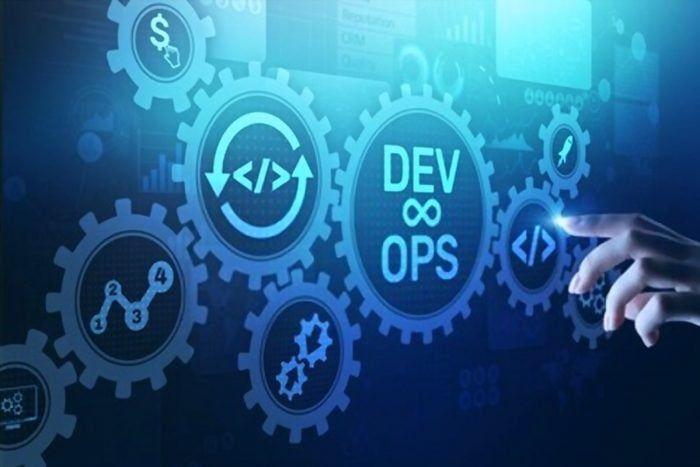
Right from its early days Site Reliability Engineering has been inseparable from DevOps automation services for automating IT operations tasks like production system management, change management, incident response, and even emergency response. Still, even the most experienced SRE teams have issues, particularly with the massive amounts of data generated by hybrid cloud and cloud-native technologies. This problem extends itself to DevOps performance because the challenge is to increase the stability, dependability, and availability of SRE models in real-time across different systems. This means that if the SRE-ship is sinking, the DevOps is coming along too. Unless there is something about DevOps that can change the waters altogether. SRE teams are looking toward more intelligent IT operations to assist them to solve the issues mentioned above. A possible candidate for this purpose can be AIOps. AI-based specialized DevOps can aid SRE with intelligent incident management and resolution. AI and machine learning (ML) have emerged to allow teams to focus on high-value work and innovation by reducing the manual work associated with the demanding SRE function. AIOps automates IT operations activities such as event correlation, anomaly detection, and causality determination by combining big data and machine learning. So it would be interesting to look at the possibility of AIOps and SRE coming together for a better DevOps performance. A Quick AIOps Overview Though the advances in AIOps constitute a separate discussion of their own. We, too, have talked about the role of AI in modern DevOps machinery. But for the sake of our existing discussion, we will focus on three crucial aspects of AIOps. Increased Service Levels: AIOps can improve service levels with the help of predictive insights and comprehensive orchestration. Teams can enhance the user experience by reducing the time spent evaluating and resolving issues. Boost In Operational Efficiency: Because manual activities are removed, procedures are optimized, and cooperation across the SDLC cycle is improved, operational efficiency gets a major push in AI-based DevOps Improved Scalability and Agility: By using AIOps to set up automation and visualization, you may gain insights into how to increase the scalability of your software and your SDLC team. It will also improve the agility and speed of your DevOps initiatives as a result. So how do these benefits work in favor of SRE Modernization? Automation is the most valuable aspect of AIOps. SRE can provide continuous and comprehensive service because of automation. It shortens the lifetime by reducing the number of stages in processes. Therefore, it is the automation part where SRE and AIOps can find their common grounds and help the DevOps save time and focus on more critical responsibilities. The Need for AIOps for SRE According to SRE, IT teams should always keep a check on IT outages, and crises are proactively resolved before they have an impact on the user. Even the most experienced SRE teams have issues; teams are accountable for dynamic and complex applications, often across multiple cloud environments. While executing these activities in real-time, SRE confronts obstacles such as lack of visibility and technological fragmentation. This is where AIOps fits into the puzzle. AIOps make proactive monitoring and issue management possible. If AIOps tools can warn SREs of developing concerns before they become actual incidents, AIOps can assist SREs in getting ahead of issues before they become real incidents. That benefits both SREs and end-users. There is also a case that AIOps may assist SREs in getting more done with less technical staff. You can keep the same levels of availability and performance with fewer human engineers on hand if you can utilize AI to automate some elements of monitoring and problem response. Understanding the Working of AIOps and SRE Many SRE teams have already begun using AI skills to find and analyze trends in data, remove noise, and derive valuable insights from current and historical data. As AIOps moves into the area of SRE, it has made issue management and resolution faster and more automated. SRE teams can now devote their attention to strategic projects and focus on delivering high value to consumers. Analyze Datasets Topology Analytics is used by AIOps to collect and correlate information. In general, underlying causes are difficult to locate. AIOps automatically detects and resolves the fundamental causes of problems. In comparison to this technique, manual identifying and correcting is inefficient. Delivery Chain Visibility The supply chain is visible, so teams can see what they’re doing and what they need to accomplish. AIOps depicts two aspects of an organization. The user experience is the first. SRE can improve the end-user experience by leveraging AIOps’ automation and predictive analytics. The network and application performance is the second factor to consider. Network and application performance is improved by eliminating manual chores, boosting cooperation, and automating processes. Categorized and Minimized Noises The goal of SRE is to increase user engagement with the app. The typical monitoring method is inefficient and prone to false alarms. Machine learning is used by AIOps to detect and prioritize alarms. AIOps auto-fixes issues in some circumstances. As a result, SRE teams may concentrate on tackling just the most significant issues. Conclusion: The SRE benefits from AIOps because it integrates autonomous diagnostics and metric-driven continuous improvement for development and operations throughout the SDLC. AIOps boost service levels and enhance teams’ efficiency, scalability, and agility. Continuous improvement builds confidence in SRE members. Adopting SRE and AIOps together allows organizations to achieve their goals smoothly. As a result, there are more chances and time to focus on excellent people and innovative projects that provide more value to users.

Aziro Marketing

EXPLORE ALL TAGS
2019 dockercon
Advanced analytics
Agentic AI
agile
AI
AI ML
AIOps
Amazon Aws
Amazon EC2
Analytics
Analytics tools
AndroidThings
Anomaly Detection
Anomaly monitor
Ansible Test Automation
apache
apache8
Apache Spark RDD
app containerization
application containerization
applications
Application Security
application testing
artificial intelligence
asynchronous replication
automate
automation
automation testing
Autonomous Storage
AWS Lambda
Aziro
Aziro Technologies
big data
Big Data Analytics
big data pipeline
Big Data QA
Big Data Tester
Big Data Testing
bitcoin
blockchain
blog
bluetooth
buildroot
business intelligence
busybox
chef
ci/cd
CI/CD security
cloud
Cloud Analytics
cloud computing
Cloud Cost Optimization
cloud devops
Cloud Infrastructure
Cloud Interoperability
Cloud Native Solution
Cloud Security
cloudstack
cloud storage
Cloud Storage Data
Cloud Storage Security
Codeless Automation
Cognitive analytics
Configuration Management
connected homes
container
Containers
container world 2019
container world conference
continuous-delivery
continuous deployment
continuous integration
Coronavirus
Covid-19
cryptocurrency
cyber security
data-analytics
data backup and recovery
datacenter
data protection
data replication
data-security
data-storage
deep learning
demo
Descriptive analytics
Descriptive analytics tools
development
devops
devops agile
devops automation
DEVOPS CERTIFICATION
devops monitoring
DevOps QA
DevOps Security
DevOps testing
DevSecOps
Digital Transformation
disaster recovery
DMA
docker
dockercon
dockercon 2019
dockercon 2019 san francisco
dockercon usa 2019
docker swarm
DRaaS
edge computing
Embedded AI
embedded-systems
end-to-end-test-automation
FaaS
finance
fintech
FIrebase
flash memory
flash memory summit
FMS2017
GDPR faqs
Glass-Box AI
golang
GraphQL
graphql vs rest
gui testing
habitat
hadoop
hardware-providers
healthcare
Heartfullness
High Performance Computing
Holistic Life
HPC
Hybrid-Cloud
hyper-converged
hyper-v
IaaS
IaaS Security
icinga
icinga for monitoring
Image Recognition 2024
infographic
InSpec
internet-of-things
investing
iot
iot application
iot testing
java 8 streams
javascript
jenkins
KubeCon
kubernetes
kubernetesday
kubernetesday bangalore
libstorage
linux
litecoin
log analytics
Log mining
Low-Code
Low-Code No-Code Platforms
Loyalty
machine-learning
Meditation
Microservices
migration
Mindfulness
ML
mobile-application-testing
mobile-automation-testing
monitoring tools
Mutli-Cloud
network
network file storage
new features
NFS
NVMe
NVMEof
NVMes
Online Education
opensource
openstack
opscode-2
OSS
others
Paas
PDLC
Positivty
predictive analytics
Predictive analytics tools
prescriptive analysis
private-cloud
product sustenance
programming language
public cloud
qa
qa automation
quality-assurance
Rapid Application Development
raspberry pi
RDMA
real time analytics
realtime analytics platforms
Real-time data analytics
Recovery
Recovery as a service
recovery as service
rsa
rsa 2019
rsa 2019 san francisco
rsac 2018
rsa conference
rsa conference 2019
rsa usa 2019
SaaS Security
san francisco
SDC India 2019
SDDC
security
Security Monitoring
Selenium Test Automation
selenium testng
serverless
Serverless Computing
Site Reliability Engineering
smart homes
smart mirror
SNIA
snia india 2019
SNIA SDC 2019
SNIA SDC INDIA
SNIA SDC USA
software
software defined storage
software-testing
software testing trends
software testing trends 2019
SRE
STaaS
storage
storage events
storage replication
Storage Trends 2018
storage virtualization
support
Synchronous Replication
technology
tech support
test-automation
Testing
testing automation tools
thought leadership articles
trends
tutorials
ui automation testing
ui testing
ui testing automation
vCenter Operations Manager
vCOPS
virtualization
VMware
vmworld
VMworld 2019
vmworld 2019 san francisco
VMworld 2019 US
vROM
Web Automation Testing
web test automation
WFH

LET'S ENGINEER

Your Next Product Breakthrough

Book a Free 30-minute Meeting with our technology experts.

Aziro has been a true engineering partner in our digital transformation journey. Their AI-native approach and deep technical expertise helped us modernize our infrastructure and accelerate product delivery without compromising quality. The collaboration has been seamless, efficient, and outcome-driven.

Customer Placeholder
CTO

Fortune 500 company