Cloud Computing Updates

Uncover our latest and greatest product updates
blogImage

What is Full Stack Observability? Understanding Its Importance in Today’s Digital Landscape

Ensuring application performance, reliability, and security has become paramount in the rapidly evolving digital landscape. As organizations invest in IT budgets to accelerate pandemic-era digital transformation, the need for full stack observability becomes increasingly relevant. This necessity has given rise to the concept of full stack observability. But what is full stack observability? In essence, it refers to the comprehensive monitoring and analysis of every component within an application’s stack—from the frontend user interface to the backend infrastructure and everything in between. This article delves into the critical aspects of full stack observability, its significance, and how it can be a game-changer for organizations.Defining Full Stack ObservabilityFull stack observability is an advanced approach that provides end-to-end visibility into the performance and health of an entire application stack. It encompasses monitoring all layers, including the application, database, server, network, and underlying infrastructure. By leveraging a blend of metrics, logs, and traces (often referred to as the three pillars of observability), organizations can gain a holistic view of their systems, enabling proactive detection and resolution of issues before they impact end users. A full stack observability solution ensures comprehensive monitoring and analysis of the entire application stack, facilitating real-time insights and shifting from a reactive to a proactive IT culture.Key Components of Full Stack ObservabilitySource: DynatraceMetrics are quantitative data points that track the performance of various system components over time. Common examples include CPU usage, memory consumption, and request latency. Metrics provide a quick snapshot of system health. They enable teams to monitor trends and detect anomalies that might indicate performance degradation. By analyzing metrics, organizations can make data-driven decisions to optimize system efficiency.Logs are detailed records of events that occur within an application. They are invaluable for debugging and troubleshooting specific issues. Logs can show errors, warnings, and informational messages. They offer contextual information that helps understand the sequence of events leading up to an issue. Proper log management can significantly reduce incidents’ mean time to resolution (MTTR).Tracing involves following a request’s journey through different parts of the system. It shows the interaction between components and helps identify bottlenecks or failures. Traces provide a granular view of requests propagating through various services and databases. This visibility is crucial for pinpointing where performance issues originate, enabling more effective troubleshooting and optimization efforts. Telemetry data is essential in providing in-depth insights into the performance and behavior of applications and infrastructure, especially in a distributed IT environment.The Importance of Full Stack Observability and End-to-End VisibilityUnderstanding what full stack observability entails is crucial, but recognizing its importance is even more vital. With the increasing complexity of modern applications, traditional monitoring tools often fall short of providing the necessary insights. Full stack observability helps correlate performance metrics with business outcomes, ensuring that every aspect of the tech stack contributes to the organization’s overall success. Here’s why full stack observability is indispensable in today’s digital age:Full stack observability provides a comprehensive view of your IT environment, from infrastructure to applications. It leverages data correlation to offer deeper insights, enabling proactive and predictive visibility across IT infrastructures and services. This holistic approach ensures that potential issues are identified and resolved before they impact end-users, maintaining the quality and reliability of software delivery.Enhanced Performance MonitoringModern applications use microservices architectures, distributed systems, and cloud-native technologies. Microservices architectures utilize application programming interfaces (APIs) to facilitate service communication. This complexity makes pinpointing performance issues challenging. Full stack observability allows teams to monitor the performance of every stack layer, ensuring that no part goes unchecked. For instance, slow database queries or inefficient code paths can be identified and optimized, improving overall application performance.Proactive Issue Resolution and Root Cause AnalysisOne of the primary benefits of full stack observability is its ability to detect potential issues before they escalate into major problems. By continuously monitoring metrics, logs, and traces, teams can spot anomalies and trends that indicate underlying issues. This proactive approach enables quicker resolution times, reducing downtime and improving user experience.Improved Collaboration and EfficiencyFull stack observability fosters collaboration among development, operations, and security teams. Aligning IT and business teams helps prioritize business goals and explore revenue-generating opportunities. With a unified view of the application stack, teams can collaborate more effectively to diagnose and resolve issues. Eliminating operational silos is crucial to improving cross-functional collaboration. This shared visibility breaks down silos and ensures that everyone is on the same page, leading to improved efficiency and faster incident response times.Implementing Full Stack ObservabilitySource: SimformOrganizations need to implement full stack observability to leverage the benefits fully. Here’s a step-by-step guide to get started:Step 1: Define Observability ObjectivesBefore diving into the technical implementation, it is crucial to define clear objectives. What do you want to achieve with full-stack observability? Common goals include reducing mean time to resolution (MTTR), improving application performance, and enhancing user experience. Having specific, measurable objectives will guide the implementation process.Step 2: Choose the Right ToolsSelecting the appropriate tools is critical for effective full stack observability. Traditional domain-centric monitoring tools often face strain on their capabilities, highlighting the need to minimize reliance on manual processes by using full-stack observability to empower teams and improve performance. Numerous tools specialize in different aspects of observability, such as Prometheus for metrics, ELK Stack for logs, and Jaeger for tracing. Many platforms offer integrated solutions that combine metrics, logs and traces into a single pane of glass, providing unified observability.Step 3: Instrument Your ApplicationsInstrumentation involves adding monitoring capabilities to your applications and infrastructure. This can be achieved through libraries, agents, or SDKs provided by observability tools. Ensure you instrument all stack layers, from the front to the back end, to capture comprehensive data.Step 4: Set Up Alerts and DashboardsConfiguring alerts is vital for proactive issue detection. Gathering and correlating system data is essential to provide fuller visibility and understanding. Define thresholds for key metrics and set up alerts to notify relevant teams when these thresholds are breached. Additionally, create dashboards that visualize the collected data, making monitoring and analyzing system health in real time easier.Step 5: Continuously ImproveFull stack observability is not a one-time effort. Continuously review and refine your observability practices based on the insights you gain. Update instrumentation regularly, revisit alert thresholds, and enhance dashboards to ensure they provide the most relevant information.Real-World Use Cases of Full Stack ObservabilityLet’s explore some real-world use cases to further understand full-stack observability and its impact. Automated root cause analysis, powered by AI and visual aids, is crucial in quickly identifying the source of issues, allowing teams to focus on higher-order tasks.E-commerce WebsitesE-commerce platforms experience high traffic volumes, especially during peak seasons like Black Friday. Full stack observability enables these platforms to monitor performance across the entire stack, from user interactions on the website to backend payment processing systems. By identifying and addressing performance bottlenecks, e-commerce companies can ensure a seamless customer shopping experience.Financial ServicesFinancial institutions rely heavily on the performance and reliability of their applications. Full stack observability helps these organizations adhere to strict regulatory requirements by providing detailed audit trails through logs and traces. Additionally, it aids in detecting fraudulent activities and minimizing downtime, which is critical for maintaining customer trust.Healthcare SystemsIn healthcare, application downtime can have severe consequences. Full stack observability empowers healthcare providers to monitor the performance and availability of critical systems, such as electronic health records (EHR) and telemedicine platforms. By ensuring the continuous operation of these systems, observability contributes to better patient care and outcomes.Challenges and Best PracticesWhile full stack observability offers numerous benefits, it also presents some challenges. IT teams are crucial in integrating runtime application security and querying telemetry data to ensure seamless observability. Here are common obstacles and best practices for addressing them:Data OverloadCollecting metrics, logs, and traces from every stack component can result in data overload. This data deluge can make it challenging for teams to parse through and find meaningful insights, potentially leading to missed critical issues or delays in identifying problems. Organizations should focus on collecting data that aligns with their specific observability objectives to manage this effectively. By prioritizing meaningful data, such as key performance indicators (KPIs) and business-critical metrics, teams can ensure they only monitor what truly matters.This approach reduces the volume of data and makes it easier to identify patterns and anomalies that may indicate underlying issues. In addition to prioritizing meaningful data, sampling techniques can significantly mitigate data overload. Sampling involves capturing a subset of data points representative of the overall dataset, reducing the total amount of data collected without sacrificing the ability to detect trends and outliers.Intelligent filtering further aids in managing data volume by automatically excluding redundant or non-essential information, allowing teams to concentrate on actionable insights. Combining these strategies with effective data aggregation and visualization tools can enhance the clarity and utility of the collected data, enabling quicker and more accurate decision-making.Tool IntegrationIntegrating multiple observability tools can be complex, mainly when dealing with a diverse technology stack that includes various programming languages, frameworks, and infrastructure components. The lack of interoperability between different tools can lead to fragmented data, making gaining a comprehensive view of the system’s health difficult. Organizations should choose observability tools that offer seamless integrations with other essential tools in their tech stack to address this complexity.Tools with built-in connectors and APIs can simplify the integration process, ensuring smooth data flow and reducing the manual effort required to correlate information from disparate sources. Moreover, opting for platforms that provide comprehensive observability solutions can further ease the burden of tool integration. These platforms typically combine metrics, logs, and traces into a unified interface, eliminating the need for multiple standalone tools.For instance, integrated observability platforms like Datadog, New Relic, and Splunk offer a single-pane-of-glass view, making monitoring and analyzing the entire application stack easier. Utilizing such platforms simplifies the operational workflow and enhances the ability to detect and resolve issues promptly by providing holistic visibility into the system’s performance and health.Security and ComplianceEnsuring the security and compliance of observability data is paramount, especially for industries with stringent regulatory requirements, such as finance and healthcare. Observability data often contains sensitive information, including user activity logs and transaction details, which can be targets for cyberattacks. Implementing robust access controls is crucial to protect this data. Role-based access controls (RBAC) ensure only authorized personnel can view and interact with sensitive information, minimizing the risk of unauthorized access and data breaches.Additionally, enforcing strict authentication mechanisms, such as multi-factor authentication (MFA), adds an extra layer of security. Data encryption is another critical aspect of maintaining security and compliance. Encrypting observability data in transit and at rest protects it from interception and unauthorized access. Organizations should use industry-standard encryption protocols to ensure the highest level of data protection. Regular audits of observability practices are also essential to maintain compliance with regulatory standards.Audits help identify potential security gaps and verify that observability processes align with organizational policies and regulations. Leveraging compliance-focused observability tools that offer features like audit logs, access tracking, and compliance reporting can facilitate easier management of regulatory requirements and ensure continuous adherence to security standards.Continuous TrainingObservability tools and practices evolve rapidly, and keeping your team updated on the latest advancements is crucial for maintaining effective observability. Regular training sessions and workshops can help team members stay abreast of new tools, features, and best practices, ensuring they are well-equipped to handle contemporary observability challenges. Hands-on training provides practical experience, allowing team members to apply new knowledge directly to their work.Offering access to certification programs related to observability tools and methodologies can further validate skills and knowledge, fostering a culture of continuous learning and professional development. Encouraging knowledge sharing within the organization is another vital component of constant training. Creating forums, internal wikis, or chat channels where team members can share insights, tips, and experiences promotes peer learning and collaboration.Participation in industry conferences, webinars, and meetups focused on observability also provides opportunities to learn from experts, network with peers, and stay informed about emerging trends. Adopting a mindset of continuous improvement by regularly reviewing and refining observability processes based on feedback and new learnings ensures that the organization remains agile and responsive to evolving observability needs.ConclusionIn conclusion, understanding and effectively implementing full stack observability can significantly enhance modern applications’ performance, reliability, and security. By providing end-to-end visibility into all application stack layers, full stack observability empowers organizations to proactively detect and resolve issues, improve collaboration, and deliver superior user experiences. As the digital landscape evolves, embracing full stack observability will be a crucial strategy for staying ahead in the competitive market.Do you need help with implementing full stack observability in your organization?

Aziro Marketing

blogImage

Top 5 Hybrid Cloud Security Solutions for 2024

In 2024, hybrid cloud strategies are gaining significant traction as businesses strive to balance flexibility and control. However, with this growth, security becomes a paramount concern. With numerous security solutions, selecting the right one is crucial for safeguarding your data and infrastructure. This blog, crafted from extensive research and expert consultations, highlights the top five hybrid cloud security solutions for 2024. But before we dive into the list, let’s first understand what hybrid cloud security entails. What Is Hybrid Cloud Security? Hybrid cloud security encompasses the technologies and practices designed to safeguard an organization’s sensitive data, applications, and resources across a hybrid cloud environment. This environment integrates on-premises, private cloud, and public cloud platforms. Ensuring robust security in such a setup requires unified protection and a strong security posture across these diverse deployments. It allows security teams to manage policies, permissions, and other security aspects seamlessly from a single, integrated interface. Understanding Hybrid Clouds Hybrid cloud models seamlessly orchestrate between different platforms, enabling workloads to shift between private and public clouds as computing needs and costs fluctuate. This unique setup offers organizations enhanced flexibility and diverse data deployment options. Public cloud services, provided by third parties like AWS, Microsoft Azure, or Google Cloud, offer resources such as storage and SaaS applications remotely, either for free or through various pricing models. These providers secure the infrastructure, while customers are responsible for their data security. Private clouds, on the other hand, are hosted on infrastructure accessible only to a single organization’s users. This infrastructure can be either third-party or proprietary (often referred to as a data center). Private clouds provide more control but are costlier and more complex to deploy. Data in hybrid clouds is typically categorized by sensitivity, influenced by data type and applicable industry or government regulations. Less sensitive data is often stored in public clouds, while highly sensitive data resides in private clouds. Components of Hybrid Cloud Security Security in hybrid environments isn’t reliant on a single technology but a network of solutions working together. Here are the key components: Authentication: Verifies user and entity identities, confirming access authorization. Vulnerability Scanning: Finds, analyzes, and reports security vulnerabilities across clouds. Visibility: Provides insight into who and what is accessing your clouds, including traffic sources and destinations. Microsegmentation: Creates subnetworks to minimize an attacker’s ability to move laterally within your environment. Workload Security: Protects applications, services, operations, and capabilities within your clouds. Configuration Management: Identifies, audits, remediates, and documents misconfigurations in cloud access or security policies. These components work together to secure your hybrid cloud, manage it effectively, and facilitate smoother operations for your organization. Top 5 Hybrid Cloud Security Solutions for 2024 Microsoft Azure Security Center Microsoft Azure Security Center is a unified security management system that provides advanced threat protection across your hybrid cloud environments. It delivers a comprehensive set of tools and features designed to enhance the security posture of your Azure resources, as well as on-premises and other cloud environments. Key features include: Threat Protection: Detects and mitigates threats with advanced analytics and intelligence. Security Posture Management: Provides continuous assessment of your environment to identify and remediate vulnerabilities. Compliance Management: Helps you ensure compliance with industry standards and regulatory requirements by providing actionable insights and recommendations. Security Alerts: Generates alerts for suspicious activities, helping you respond quickly to potential threats. Advanced Cloud Defense: Utilizes machine learning and behavioral analytics to identify and counter advanced attacks. Integration: Seamlessly integrates with other Azure services and third-party tools for a cohesive security strategy. Amazon AWS Security Hub Amazon AWS Security Hub is a comprehensive security service that centralizes and automates security management across your AWS environment. It provides a unified view of your security status, helping you to identify and address potential threats and vulnerabilities effectively. Key features include: Centralized Security View: Aggregates security findings from various AWS services like Amazon GuardDuty, AWS Inspector, and AWS Macie, as well as from third-party solutions, into a single dashboard. Compliance Monitoring: Continuously monitors your AWS resources against industry standards and best practices, such as CIS AWS Foundations Benchmark, to ensure compliance. Automated Security Checks:Performs automated checks against your AWS environment to identify misconfigurations and vulnerabilities. Integration with AWS and Third-Party Tools: Seamlessly integrates with other AWS services and third-party security tools, providing a cohesive security strategy. Customizable Insights: Allows enterprises to customize security insights and alerts based on your specific requirements and environment. Remediation Guidance: Provides actionable recommendations and remediation steps to help you address identified issues and improve your security posture. VMware Carbon Black Cloud VMware Carbon Black Cloud is a comprehensive, cloud-native endpoint and workload protection platform designed to protect against advanced cyber threats. It integrates with the broader VMware ecosystem and leverages a cloud-based architecture to provide scalable and robust security for modern hybrid cloud environments. Key features include: Endpoint Protection: Provides advanced threat detection and prevention for endpoints, leveraging behavioral analytics and machine learning to identify and block malicious activity. Workload Security: Secures workloads across on-premises, virtualized, and cloud environments, ensuring consistent protection regardless of where workloads are deployed. Threat Intelligence: Utilizes a combination of cloud-based analytics, threat intelligence feeds, and community-shared data to stay ahead of emerging threats. Incident Response: Offers tools for rapid incident response, including real-time detection, investigation, and remediation capabilities. Integration with VMware Tools: Seamlessly integrates with VMware’s suite of products, including vSphere, vCenter, and NSX, to provide a unified security strategy across the entire infrastructure. Scalability: Designed to scale effortlessly with growing cloud environments, ensuring that security measures can keep pace with the expansion of IT resources. Compliance: Helps organizations meet regulatory compliance requirements by providing visibility and control over security policies and configurations. IBM Cloud Pak for Security IBM Cloud Pak for Security is an open security platform designed to help organizations integrate and manage their security tools and data across hybrid cloud environments. It enables security teams to detect, investigate, and respond to threats more efficiently by providing a unified view of their security posture. Key features include: Unified Security Platform: Integrates disparate security tools and data sources to provide a comprehensive view of security across the entire organization. Threat Management:Offers advanced threat detection, investigation, and response capabilities to quickly identify and mitigate security incidents. Data Integration: Connects security data from various sources, including on-premises, private cloud, and public cloud environments, to enhance visibility and insights. Automation and Orchestration: Automates repetitive tasks and orchestrates complex workflows, allowing security teams to focus on higher-priority activities. AI and Machine Learning: Utilizes artificial intelligence and machine learning to analyze vast amounts of security data, identifying patterns and anomalies that may indicate threats. Compliance and Governance: Helps organizations maintain compliance with regulatory requirements and internal policies by providing detailed reporting and audit capabilities. Modular Architecture: Built on Red Hat OpenShift, it offers flexibility and scalability, allowing organizations to deploy only the components they need and expand as required. Google Cloud Security Command Center Google Cloud Security Command Center (SCC) is a centralized security and risk management platform designed to help organizations detect, assess, and manage security risks across their Google Cloud environments. It provides comprehensive visibility into an organization’s cloud assets, identifying potential vulnerabilities and threats to ensure robust security. Key features include: Centralized Visibility:Offers a single pane of glass to view and monitor all cloud assets, including virtual machines, storage buckets, and databases. Threat Detection: Leverages Google’s threat intelligence and machine learning to detect potential security threats and vulnerabilities in real time. Asset Inventory: Automatically discovers and inventories all assets within your Google Cloud environment, helping you understand your cloud footprint. Vulnerability Scanning: Continuously scans for vulnerabilities across your cloud resources, providing detailed reports and recommendations for remediation. Security Insights: Provides actionable insights and security alerts, enabling security teams to prioritize and address the most critical issues first. Compliance Monitoring: Helps ensure compliance with industry standards and regulatory requirements by continuously monitoring cloud configurations and providing compliance reports. Integration: Seamlessly integrates with other Google Cloud security services like Google Cloud Armor, Event Threat Detection, and Security Health Analytics, as well as third-party security tools. Automated Response: Supports automation of security operations, allowing for automated responses to specific security events and incidents. Conclusion The top hybrid cloud security solutions for 2024 provide robust features to protect your hybrid environments, including advanced threat detection, unified management, and compliance monitoring. Selecting the right solution is crucial for maintaining a strong security posture. For any technical assistance with these solutions, connect with Aziro (formerly MSys Technologies). Our experts are ready to help you secure and optimize your cloud infrastructure. Reach out for tailored support and expert guidance.

Aziro Marketing

blogImage

Top 5 Hybrid Cloud Management Solutions

In today’s fast-paced digital world, hybrid and multi-cloud strategies are becoming essential for businesses seeking flexibility, efficiency, and innovation. These approaches combine the strengths of public and private clouds, ensuring agile, scalable, and cost-effective IT infrastructure. Managing these diverse environments can be challenging, and that’s where hybrid cloud management solutions come in. They provide the tools to streamline operations, enhance security, and optimize performance across multiple cloud platforms. We’ve consulted with over 300 professionals implementing these strategies to curate a list of the top 10 hybrid cloud management solutions. This guide will help you navigate the best options for success in hybrid and multi-cloud endeavors. Top 5 Hybrid Cloud Management Solutions Here is the list of top 5 hybrid cloud management solutions to look for in 2024. 1. VMware Cloud Foundation VMware Cloud Foundation (VCF) is one the leading integrated hybrid cloud management solutions that combines VMware’s industry-leading compute, storage, and network virtualization products with VMware vSphere, VMware vSAN, and VMware NSX, along with VMware vRealize Suite into a single, comprehensive platform. This platform is designed to simplify the deployment and management of both private and hybrid cloud environments. VMware Cloud Foundation delivers a complete set of software-defined services for computing, storage, networking, security, and cloud management, allowing organizations to deploy and manage their IT infrastructure to maximize efficiency, scalability, and security. Key Features Industry-leading storage and Compute: VMware Cloud Foundation enhances operational efficiency and supercharges workload performance while reducing storage costs and complexities across private and hybrid clouds. Cloud-Scale Networking: VMware enables virtual cloud networks with L2-L7 network and security virtualization, unlocking cloud-scale networking and performance through micro-segmentation. Cloud Management: VMware provides consistent operations, automation, and management for infrastructure, boosting IT productivity and simplifying operations across hybrid environments. Cloud-Scale IaaS: VMware Cloud Foundation offers a scalable IaaS solution that helps organizations deploy hybrid cloud infrastructure to meet top business requirements and reduce costs. Scalable Edge Deployments: VMware offers flexibility to start small and scale deployments, delivering the full power of the stack at Remote Office/Branch Office (ROBO) and Edge locations. Modern Infrastructure: VMware delivers a software-defined infrastructure that provides a cloud consumption experience on-premises, supporting seamless integration and resource management. Cloud Experience for Developers: VMware enhances developer agility by providing an automated self-service infrastructure platform to efficiently deploy VMs and containerized applications. Security and Resilience: VMware ensures security and resilience with a hardened platform that offers built-in resilience, threat prevention, and rapid disaster recovery. 2. Microsoft Azure Arc Microsoft Azure Arc is a comprehensive solution that extends Azure management and services to any infrastructure, including on-premises environments, multi-cloud deployments, and edge devices. It enables organizations to manage complex seamlessly, distributed IT environments with a consistent approach, bringing the power of Azure to a wide range of resources. Key Features Unified Management: Azure Arc provides a single control plane for managing and governing resources across on-premises, multi-cloud, and edge environments. This unified management experience simplifies operations and improves visibility across all IT assets. Hybrid and Multi-Cloud Support: With Azure Arc, organizations can extend Azure services to any infrastructure. This includes running Azure data services and consistently applying Azure security, monitoring, and compliance policies across different environments. Azure Arc-Enabled Kubernetes: Azure Arc allows Kubernetes clusters to be managed consistently, regardless of where they run. This includes deploying applications and managing configuration and compliance across on-premises, multi-cloud, and edge environments. Azure Arc-Enabled Servers: Servers running on-premises or in other clouds can be projected into Azure to enable centralized management and governance. This includes capabilities like Azure Policy, Azure Monitor, and Azure Security Center. Azure Arc-Enabled Data Services: Azure Arc brings Azure data services, such as Azure SQL and PostgreSQL Hyperscale, to any infrastructure. This enables organizations to consistently deploy, manage, and update data services, leveraging Azure’s automation and security features. Governance and Security: Azure Arc extends Azure’s robust governance and security features to hybrid and multi-cloud environments. This includes applying policies, ensuring compliance, and leveraging Azure Security Center for unified security management. DevOps Integration: Azure Arc integrates with popular DevOps tools and practices, enabling continuous deployment and management of applications across hybrid environments. This supports modern development practices and accelerates the delivery of new features and updates. 3. Google Anthos Google Anthos is a modern application management platform developed by Google Cloud that allows organizations to run applications unmodified on existing on-premises hardware investments or in the public cloud. Anthos provides a unified platform for managing applications across diverse environments, including on-premises data centers, Google Cloud, and other public clouds. This flexibility makes it easier for organizations to adopt hybrid and multi-cloud strategies while maintaining consistency and control. Key Features Multi-Cloud and Hybrid Cloud Support: Google Anthos enables seamless management of applications across multiple cloud environments, including Google Cloud, AWS, Azure, and on-premises data centers. This ensures that organizations can leverage the best features of each environment while maintaining control and consistency. Kubernetes-Based Platform: Anthos is built on the industry-leading container orchestration platform. This provides a consistent and scalable environment for deploying, managing, and scaling containerized applications. Anthos Config Management: This feature allows for the centralized management of configurations across environments. It ensures that security and compliance policies are consistently enforced and that configurations can be updated across all clusters in a controlled and auditable manner. Anthos Service Mesh: Built on Istio, Anthos Service Mesh provides advanced networking capabilities for microservices, including traffic management, observability, and security. This helps organizations manage complex microservices architectures with greater ease and reliability. Migrate for Anthos: Google Anthos includes tools to migrate workloads from virtual machines (VMs) to containers, simplifying the transition to a containerized environment and enabling better resource utilization and scalability. Stackdriver Integration: Anthos integrates with Google Cloud’s Stackdriver for monitoring, logging, and diagnostics, providing comprehensive insights into application performance and health across environments. Security and Policy Management: Anthos provides built-in security features, including policy management, encryption, and identity and access management (IAM). This ensures that applications are secure and compliant with organizational policies and regulatory requirements. Anthos Clusters: Anthos supports creating and managing Kubernetes clusters on-premises (Anthos on-prem) and in the cloud, providing a consistent experience and simplifying hybrid deployments. IBM Cloud Pak for Multi-cloud Management 4. IBM Cloud Pak for Multicloud Management IBM Cloud Pak for Multicloud Management is a comprehensive solution designed to simplify applications’ management, monitoring, and optimization across hybrid and multi-cloud environments. It provides a unified platform that integrates various management tools to help organizations streamline their operations, ensure compliance, and optimize costs. Key Features Unified Management: Dashboard Provides a single interface for managing applications, infrastructure, and services across multiple clouds and on-premises environments, enhancing visibility and control. Application Lifecycle Management: The platform automates applications’ deployment, monitoring, and scaling, ensuring consistent performance and reducing manual effort throughout the lifecycle. Cost and Capacity Optimization: The platform Tracks and optimizes resource usage and cloud spending, offering insights and recommendations to reduce costs and improve efficiency. Advanced Monitoring and Analytics: IBM Cloud Pak delivers real-time monitoring, logging, and analytics to provide insights into application performance, health, and security. AI-Driven Operations: The platform utilizes artificial intelligence to automate repetitive tasks, predict potential issues, and provide actionable insights for proactive management. Multicloud Integration: Supports seamless integration with leading public cloud providers, such as AWS, Azure, and Google Cloud, as well as private cloud and on-premises environments. 5. Cisco CloudCenter Suite Cisco CloudCenter Suite is a comprehensive hybrid cloud management platform designed to simplify and automate application deployment, management, and optimization across on-premises and cloud environments. It enables organizations to modernize their IT infrastructure by providing tools to manage multi-cloud and hybrid-cloud strategies efficiently. Key Features Unified Management Console: Cisco CloudCenter Suite provides an intuitive interface for managing applications and infrastructure across multiple cloud environments, including public clouds (AWS, Azure, Google Cloud) and private data centers. This unified approach simplifies operations and enhances visibility. Application Lifecycle Management:The suite supports the entire application lifecycle, from initial deployment to ongoing management and scaling. It provides automated workflows for deploying and managing applications, ensuring consistency and reducing manual effort. Cost Optimization and Governance:Cisco CloudCenter Suite offers robust cost management features, including cost tracking, budgeting, and optimization recommendations. It helps organizations control cloud spending and enforce governance policies to prevent cost overruns and ensure compliance. Cloud-Agnostic Orchestration: The platform enables cloud-agnostic orchestration, allowing applications to be deployed and managed consistently across different cloud environments. This flexibility helps avoid vendor lock-in and ensures applications can run where they are most needed. Multi-Cloud and Hybrid Cloud Support: Cisco CloudCenter Suite is designed to support multi-cloud and hybrid cloud strategies. It provides seamless integration with leading public cloud providers and on-premises infrastructure, allowing for a cohesive hybrid cloud experience. Automated Policy Management: The suite includes features that ensure compliance with organizational policies and industry regulations. Policies can be defined and enforced across all environments, reducing non-compliance risk. Conclusion In today’s dynamic IT landscape, hybrid cloud management solutions like VMware Cloud Foundation, Azure Arc, Google Anthos, Cisco CloudCenter Suite, and Nutanix Prism are crucial for optimizing operations across diverse environments. These tools offer unified management, enhanced security, and improved agility, enabling organizations to manage and scale their hybrid and multi-cloud strategies effectively. For expert guidance and technical support in implementing these solutions, connect with Aziro (formerly MSys Technologies). We’re here to help you navigate your hybrid cloud journey.

Aziro Marketing

blogImage

What are Multi-cloud Networking Services?

In today’s fast-paced digital landscape, businesses increasingly adopt multi-cloud strategies to stay competitive and agile. Multi-Cloud Networking involves connecting and managing multiple public, private, or hybrid cloud environments, enabling organizations to leverage their combined strengths and maximize efficiency. However, this complex process requires specialized expertise and tools, and that’s where Multi-cloud networking services come into play. Multi-cloud networking services provide the necessary infrastructure and support to ensure seamless connectivity, robust security, and efficient management across diverse cloud platforms. Enterprises can overcome the challenges of integrating multiple clouds, avoid vendor lock-in, and achieve greater flexibility and resilience. This blog will explore multi-cloud networking services, their key components, their benefits, and why they are essential in today’s business environment. What is Multi-Cloud Networking? Multi-cloud networking connects and manages multiple cloud environments—public, private, or hybrid—to work together seamlessly. Integrating various cloud services and platforms to create a unified network infrastructure. This approach enables businesses to leverage the strengths of different cloud providers, such as performance, cost efficiency, and geographic reach, while avoiding the limitations of relying on a single provider. Multi-cloud networking ensures that data and applications can move fluidly between clouds, optimizing resource utilization and enhancing overall system resilience and flexibility. How Does Multi-Cloud Networking Work? Multi-cloud networking integrates multiple cloud environments—public, private, or hybrid—into a unified and cohesive network. Here’s how it works: Inter-Cloud Connectivity: Secure and reliable connections are established between different cloud platforms using technologies like Virtual Private Networks (VPNs), direct connect services (e.g., AWS Direct Connect, Azure ExpressRoute), and cloud exchange services. This ensures that data can move seamlessly between cloud environments. Unified Management: A centralized management interface or control plane monitors, controls, and optimizes resources across all cloud environments. This unified approach simplifies administration, allowing consistent policy enforcement and easier troubleshooting. Security: Consistent policies are applied across all cloud environments to protect data and applications. This includes implementing encryption for data in transit and at rest, deploying firewalls, and managing identities and access controls to ensure only authorized users can access resources. Automation and Orchestration: Automation tools streamline routine tasks, such as scaling resources up or down based on demand. Orchestration tools coordinate complex workflows, ensuring applications and services operate smoothly across different cloud platforms. Load Balancing and Optimization: Workloads are distributed efficiently across multiple clouds to balance the load, reduce latency, and optimize performance. This helps avoid over-reliance on a single cloud provider and ensures that applications remain responsive and resilient. Monitoring and Analytics: Advanced analytics tools continuously monitor network performance and cloud resource utilization. This helps identify potential issues, optimize resource usage, and ensure high availability and reliability. By combining these elements, multi-cloud networking ensures that businesses can leverage the strengths of various cloud providers while maintaining a flexible, secure, and efficient IT infrastructure. This approach enables seamless data and application movement, enhances redundancy, and provides the agility to adapt to changing business needs. Multi-Cloud Networking Use Cases Multi-cloud networking is utilized in various scenarios to leverage flexibility, resilience, and performance. Here are some common use cases: Disaster Recovery and Business Continuity: Ensures high availability and quick recovery by replicating data and applications across multiple cloud providers, minimizing downtime during outages. Global Application Deployment: Distributes applications across multiple cloud regions to reduce latency, improve performance, and provide a better user experience for global users. Regulatory Compliance: Meets diverse regulatory requirements by storing and processing data in specific geographic locations mandated by local laws. Cost Optimization: Balances workloads across different cloud providers to take advantage of cost differences and optimize overall spending. Data Analytics and Big Data: Leverages the best analytics tools and services from various cloud providers to handle large-scale data processing and gain actionable insights. Hybrid Cloud Integration: Seamlessly integrates on-premises infrastructure with multiple public clouds to extend existing capabilities and improve operational flexibility. Development and Testing: Provides a versatile environment for developers to test applications in different cloud settings, ensuring compatibility and performance before production deployment. Scalability for High Traffic Events: Dynamically scales resources across multiple clouds to handle traffic spikes during sales, launches, or seasonal peaks. Essential Multi-Cloud Networking Services Multi-cloud networking services encompass various tools and solutions to facilitate seamless integration, management, and optimization of multiple cloud environments. Here are some key services: Cloud Interconnect Services: AWS Direct Connect, Azure ExpressRoute, and Google Cloud Interconnect provide dedicated connections between on-premises data centers and cloud platforms, ensuring low latency and high reliability. Virtual Private Networks (VPNs): Secure VPN connections enable private communication between cloud environments and on-premises infrastructure. Cloud Exchange Services: Platforms like Equinix Cloud Exchange provide direct, secure interconnections between multiple cloud providers, enhancing performance and security. Unified Management Platforms: Tools like VMware Cloud on AWS and Microsoft Azure Arc offer centralized management interfaces for controlling and optimizing resources across multiple cloud environments. Network Security Services: Solutions like cloud-native firewalls, encryption services, and identity and access management (IAM) systems ensure consistent security policies across all clouds. Load Balancers: Multi-cloud load balancers distribute traffic efficiently across cloud services to enhance performance and reliability. Automation and Orchestration Tools: Services like Kubernetes and Terraform automate the application deployment, scaling, and management across multiple clouds. Monitoring and Analytics Tools: Platforms like Datadog and New Relic provide comprehensive monitoring and analytics to track performance, detect issues, and optimize cloud resource usage. Content Delivery Networks (CDNs): Cloudflare and Amazon CloudFront improve content delivery speed and reliability by caching data closer to users. Disaster Recovery Solutions: Multi-cloud disaster recovery services ensure data replication and quick recovery across different cloud environments to maintain business continuity. Why Your Company Should Choose a Multi-Cloud Networking Service Provider In the ever-evolving digital landscape, businesses must stay agile, secure, and efficient. Choosing a multi-cloud networking service provider can be a game-changer for your organization. Here’s why: 1. Enhanced Flexibility and Agility A multi-cloud approach allows your business to select the best services from different cloud providers, tailoring your IT infrastructure to meet specific needs. This flexibility ensures you can quickly adapt to market changes, scale resources efficiently, and deploy applications rapidly. 2. Improved Resilience and Redundancy Relying on a single cloud provider can expose your business to significant risks if that provider experiences downtime or service disruptions. Multi-cloud networking mitigates this risk by distributing workloads across multiple platforms, enhancing redundancy, and ensuring high availability. 3. Cost Optimization You can optimize your costs by leveraging various cloud providers’ pricing models and strengths. Multi-cloud strategies enable you to avoid vendor lock-in, take advantage of competitive pricing, and allocate resources more efficiently to reduce overall expenses. 4. Superior Performance Distributing workloads across multiple clouds can improve application performance by reducing latency and ensuring that resources are always available to meet demand. Load balancing and intelligent routing can enhance user experiences by ensuring optimal performance and reliability. 5. Advanced Security and Compliance Multi-cloud networking providers offer robust security measures, including encryption, firewalls, and identity management, ensuring consistent protection across all cloud environments. Additionally, multi-cloud strategies can help meet diverse regulatory requirements by storing and processing data in specific geographic locations as mandated by local laws. 6. Innovation and Technological Advancement Accessing a broader range of tools and services from multiple providers fosters innovation and allows your company to adopt new technologies rapidly. This can lead to developing new products, services, and solutions that keep your business competitive and forward-thinking. 7. Efficient Disaster Recovery and Business Continuity Multi-cloud networking ensures that your data and applications are replicated across different cloud environments, enabling quick recovery during a disaster. This setup minimizes downtime and ensures that your business operations can continue uninterrupted. 8. Comprehensive Management and Monitoring A multi-cloud networking service provider offers centralized management tools that simplify the oversight of your entire cloud infrastructure. These tools provide real-time monitoring, analytics, and automation, helping you optimize performance, detect issues early, and streamline operations. Aziro (formerly MSys Technologies) for All Your Multi-Cloud Networking Needs Choosing the right partner for your multi-cloud networking strategy is crucial. Aziro (formerly MSys Technologies) offers comprehensive solutions to meet all your multi-cloud networking needs. With deep expertise and tailored strategies, we ensure seamless integration, robust security, and scalable, flexible resources. Our advanced security measures and reliable 24/7 support guarantee your multi-cloud infrastructure runs smoothly and efficiently, driving your business forward with confidence. In conclusion, selecting a multi-cloud networking service provider like Aziro (formerly MSys Technologies) equips your business with the flexibility, resilience, and innovation needed to thrive in today’s competitive environment. By leveraging the strengths of multiple cloud platforms, you can optimize costs, enhance performance, and ensure robust security, positioning your company for sustained success and growth. Connect with us to know more.

Aziro Marketing

blogImage

Top 5 Hybrid Cloud Consulting Companies in the USA

In today’s rapidly evolving digital landscape, hybrid and multi-cloud strategies are gaining significant traction among organizations looking to enhance their IT infrastructure. These strategies offer the best of both worlds, combining the flexibility and scalability of public clouds with the security and control of private clouds. However, with the myriad hybrid cloud consulting companies available in the market, choosing the right partner to navigate this complex journey can be daunting. This blog aims to simplify your decision-making process by highlighting the USA’s top 5 hybrid cloud consulting companies. These companies have been selected based on their expertise, innovative solutions, and proven track record in helping organizations successfully implement and manage hybrid cloud environments. In this blog, you will learn: Top 5 Hybrid Cloud Consulting Companies in the USA Aziro (formerly MSys Technologies) as your Hybrid Cloud Consulting Partner Let’s get started! Top 5 Hybrid Cloud Consulting Companies in the USA Here is the list of key hybrid cloud consulting companies in the USA. 1. Accenture Accenture is the first company to come to the list of hybrid cloud consulting companies in the USA. Headquartered in Dublin, the company specializes in information technology (IT) services and consulting and offers comprehensive hybrid cloud services to its global clientele. As of 2022, Accenture is recognized as the largest consulting firm in the world by number of employees. Hybrid Cloud Services Provide a standard service catalog to automate infrastructure and reduce sprawl. Help adopt an agile cloud operating model using DevSecOps and SRE principles to drive operational efficiencies and enable agility. Upskill the organization and transform culture to better operate in the new cloud environment. Leverage Infrastructure as Code, AI, and modern automation concepts across all stack layers to continually optimize environments. To drive business outcomes, provide real-time cloud and infrastructure management platforms utilizing analytics, automation, and AI. Assist in defining the right cloud architecture for application and data needs to unleash business value. 2. Aziro (formerly MSys Technologies) Aziro (formerly MSys Technologies) is a trusted services partner driving cloud-native transformation with next-gen technologies and outcome-based pricing. The company operates in the Software Product Engineering Services and Digital Transformation sector with clients including Fortune 100, Silicon Valley-based ISV Unicorns, and Technology Enterprises clientele. MSys’ extensive services portfolio comprises a diverse array of offerings, including: Cloud-native Engineering: Designing and building applications specifically for cloud environments. SaaS/IaaS/PaaS Engineering: Developing and optimizing software, infrastructure, and platform services. Infrastructure Automation: Automating the deployment and management of IT infrastructure. Hybrid Cloud and Multi-Cloud Engineering: Creating and managing integrated cloud solutions across multiple environments. DevSecOps and Site Reliability (SRE): Integrating security practices and ensuring reliable system operations through development and operations collaboration. Observability and Optimization: Monitoring and enhancing cloud performance and resource utilization. Ecosystem Integration: Connecting and coordinating diverse cloud services and platforms. API Automation: Automating interactions between software applications through APIs. Cloud Migration: Transitioning applications and data to cloud environments. Cloud Governance: Implementing policies and controls to manage cloud resources and compliance. Zero Trust Security: Ensuring secure access and data protection by verifying every request. Quality Assurance: Maintaining high standards of performance and reliability in cloud services. 3. Capgemini Capgemini comes third in our list of trusted cloud consulting companies in the USA. The company is a global leader in consulting, technology services, and digital transformation, guiding businesses through their cloud journey with unparalleled expertise and comprehensive solutions. Services Leverage the latest cloud services from leading hyperscalers, SaaS providers, and Capgemini’s offerings. Transform your core business processes, streamline operations, and adopt agile methodologies like DevSecOps and FinOps. Utilize data to develop intelligent products and services, optimize your supply chain, and enhance manufacturing processes with cutting-edge technologies such as 5G, artificial intelligence, machine learning, the Internet of Things (IoT), and edge computing. 4. Infosys Infosys Limited, an Indian multinational information technology company, provides hybrid and multi-cloud services and business consulting, information technology, and outsourcing services. Founded in Pune and headquartered in Bangalore, the company has a huge client base in the USA for hybrid and multi-cloud services. Services Help semiconductor OEMs, ODMs, integrated device manufacturers, fabless designers, and ISVs adopt cloud computing. Migrate resource-intensive applications and engineering workflows to private, public, and hybrid cloud environments. Provide on-demand access to computing and storage resources from large data volumes and dynamic workloads. Enable multiple design teams to collaborate on exploration, compilation, synthesis, and place-and-route builds. Facilitate subscription-based CRM, ERP, product design, and AI software consumption. Support generative design algorithms, 3D printing, and big data engines for machine learning and deep learning. Implement ‘digital twinning’ to identify bottlenecks, predict failures, and improve process efficiency. Enable data scientists to prepare data for building, training, and deploying cognitive automation models. Offer Infrastructure-as-a-Service (IaaS), Platform-as-a-Service (PaaS), Software-as-a-Service (SaaS), Enterprise-as-a-Service (EaaS), Database-as-a-Service (DBaaS), and Disaster Recovery-as-a-Service (DRaaS) Employ data encryption methods, secure transfer tools, industry-specific control mechanisms, and audit services. Develop custom APIs for cloud-to-cloud migration and integration of as-a-service models from AWS, Microsoft Azure, and Google Cloud Platform. Integrate DevOps automation tools and open-source technologies like Spark, Hadoop, and Hive. Provide real-time monitoring dashboards to eliminate over-provisioning of computing resources. 5. HCL Technologies Since its inception, HCL Technologies has been at the forefront of implementing cloud and virtualization technologies, envisioning modern IT data centers with service-oriented and secure Digital Foundations. The company’s global consulting, operations, and services, including enterprise applications, ensure smooth data center and cloud transitions. Having assisted over 100 enterprises in migrating to international data centers and managing over half a million servers globally, HCLTech is a trusted partner for hybrid and multi-cloud journeys. Services Hybrid Data Center Management: HCLTech leverages next-generation hybrid data center management architecture to enhance agility and deliver secure data center services with automation and service orchestration at the core. VeloclTy Framework: HCLTech’s comprehensive framework for end-to-end service delivery tailored for Hybrid Cloud Solutions, ensuring seamless integration and management. ContainerizIT: A fully managed container consulting service that allows you to run any application anywhere. This includes end-to-end solutions for building, migrating, and operating containers. Infonomics: An integrated information lifecycle management solution designed to streamline data sprawl and centralize data protection, leveraging hybrid cloud and multi-cloud deployments. Conclusion After extensive research, we’ve identified the USA’s top hybrid cloud consulting companies. These firms were selected based on various criteria, including customer base, expertise, and office locations. If you’re interested in connecting with Aziro (formerly MSys Technologies) for hybrid and multi-cloud solutions, don’t hesitate to reach out.

Aziro Marketing

blogImage

AWS Infrastructure Automation: Streamlining Cloud Management

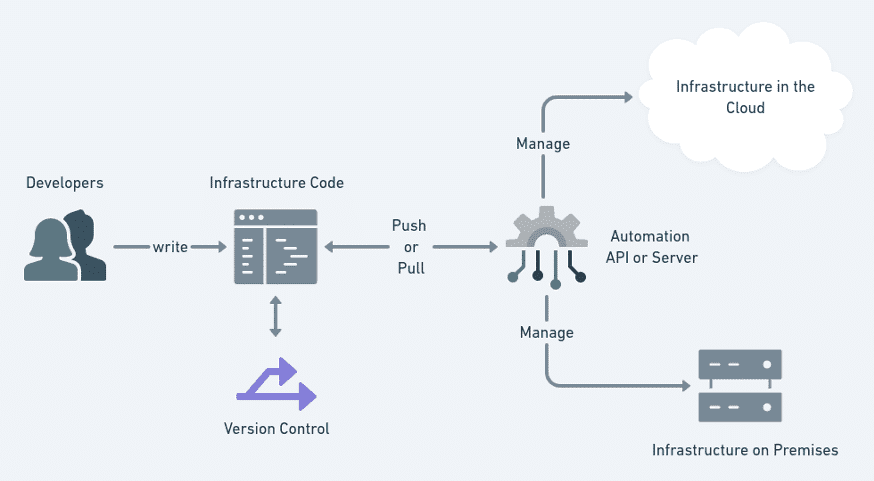
I’ve always been fascinated by cloud computing’s potential to transform businesses. Amazon Web Services (AWS) stands out as a leader among the many cloud service providers, offering a robust platform for building and managing applications. However, managing infrastructure on AWS can be complex and time-consuming. This is where AWS infrastructure automation comes into play, simplifying cloud management and enhancing efficiency.Source: SpectralThe Need for Automation in Cloud ManagementManual management of cloud infrastructure is labor-intensive and highly prone to errors. Manual configuration is particularly error-prone and can lead to configuration drift. As businesses scale, the complexity of their infrastructure grows exponentially, making manual oversight increasingly untenable. Manual processes, such as manual configuration, deployment, and support, are unreliable and inefficient, further underscoring the need for automation. This is where AWS infrastructure automation becomes essential.Automation significantly reduces human error and ensures consistency across deployments. Using tools like AWS CloudFormation, Elastic Beanstalk, and Systems Manager, businesses can automate routine tasks such as provisioning, configuring, and scaling resources, thereby maintaining a stable environment with minimal intervention.Defining AWS Infrastructure AutomationAWS infrastructure automation leverages various tools and scripts to manage and orchestrate AWS resources automatically, simplifying the complex and often error-prone tasks associated with cloud management. By utilizing services such as AWS CloudFormation, Elastic Beanstalk, and OpsWorks, we can define our infrastructure as code and automate infrastructure provisioning, configuration, and scaling. Infrastructure deployment automation tools facilitate the adoption of Infrastructure as Code practices, making the setup and monitoring of AWS infrastructure more efficient.Moreover, automation ensures that our infrastructure remains desired without requiring manual intervention. Tools like AWS Systems Manager provide ongoing maintenance and compliance capabilities, automatically applying updates, patches, and security configurations as needed. Additionally, services such as Auto Scaling can dynamically adjust resource allocation based on real-time demand, optimizing performance and cost-efficiency.Key Benefits of AWS Infrastructure Automation1. Enhanced Efficiency and ProductivityApplication deployment significantly accelerates resource deployment and management, transforming processes that once took hours or even days into tasks that are completed in minutes. This drastic reduction in time requirements enables teams to minimize downtime and effectively meet project deadlines. With routine operations handled automatically, teams can redirect their focus toward more strategic and innovative initiatives.2. Consistency and ReliabilityUtilizing automation scripts ensures that resources are consistently provisioned and configured uniformly every single time. This consistency is critical for maintaining the integrity of your infrastructure, as it virtually eliminates the risk of configuration drift, where systems gradually diverge from their intended state. By maintaining uniformity across all deployments, we enhance the reliability of our systems, ensuring that they perform predictably and meet compliance standards.3. Cost ManagementAutomation is pivotal in optimizing cost management by dynamically adjusting resource allocation based on real-time demand. Through services like AWS Auto Scaling, resources can be scaled up during peak usage periods and scaled-down during low-demand times, ensuring optimal utilization. This dynamic scaling mechanism ensures that we only pay for the resources we need at any moment, avoiding unnecessary expenditures.Core AWS Services for Infrastructure Automation1. AWS CloudFormationAWS CloudFormation allows us to define our infrastructure as code (IaC), offering a powerful approach to managing AWS resources. By creating templates in JSON or YAML, we can describe and provision all the infrastructure resources of our cloud environment—from EC2 instances and S3 buckets to IAM roles and VPC configurations. This infrastructure-as-code methodology simplifies the setup process, enabling us to easily deploy consistent environments across multiple stages (development, testing, production).2. AWS Elastic BeanstalkElastic Beanstalk is a versatile, user-friendly service designed to deploy and scale web applications and services. The beauty of Elastic Beanstalk lies in its simplicity: after uploading our code, the service takes over the heavy lifting of deployment. It automatically handles capacity provisioning, load balancing, and auto-scaling, ensuring the application remains responsive under varying traffic loads. Additionally, it supports a wide range of platforms, including Java, .NET, PHP, Node.js, Python, Ruby, Go, and Docker, making it a flexible choice for diverse development needs by leveraging familiar programming languages.3. AWS OpsWorksOpsWorks offers a robust configuration management service that utilizes Chef and Puppet, two popular automation platforms. These tools allow us to define our infrastructure’s desired state and configuration in a declarative and repeatable way. Through OpsWorks, we can automate application deployments, manage server configurations, and manage infrastructure, ensuring that our infrastructure remains consistent and compliant with predefined policies. OpsWorks Stacks and OpsWorks for Chef Automate provide different layers of abstraction and control, catering to high-level and granular management needs.4. AWS CodePipelineAWS CodePipeline is a dynamic continuous integration and continuous delivery (CI/CD) service that automates the entire release process. It orchestrates the build, test, and deploy phases, ensuring that every change is rapidly and reliably propagated through all application lifecycle stages. CodePipeline integrates seamlessly with other AWS services and third-party tools, providing flexibility and customization to meet specific workflow requirements.Best Practices for AWS Infrastructure AutomationVersion Control Everything: Our infrastructure code should be stored in a version control system like application code. This allows us to track changes, collaborate with team members, and roll back to previous states if necessary.Modularize Your Infrastructure Code: Breaking down our infrastructure code into reusable modules makes it easier to manage and scale. Tools like Terraform support this modular approach, allowing us to create small, reusable components that can be combined to form complete environments.Use Tags and Naming Conventions: Consistent tagging and naming conventions make managing and organizing resources easier. Tags can identify resources by environment, owner, or project, simplifying monitoring and cost allocation.Implement Continuous Integration and Continuous Deployment (CI/CD): By integrating infrastructure code into our CI/CD pipeline, we can automatically test and deploy changes, reducing the risk of errors and ensuring that our environments are always up-to-date.Monitor and Log Everything: Monitoring and logging are essential for maintaining visibility into our automated infrastructure. AWS provides services like CloudWatch and CloudTrail to monitor performance, log activity, and alert us to any issues.Real-World Use Cases of AWS Infrastructure AutomationAuto-Scaling Web ApplicationsOne of the most common use cases for AWS infrastructure automation is auto-scaling web applications. By utilizing services like Elastic Load Balancing (ELB) and Auto Scaling, we can automatically adjust the number of instances based on real-time traffic patterns, ensuring that our applications maintain optimal performance during peak usage and efficiently scale down during off-peak times to save costs. ELB distributes incoming application traffic across multiple targets, such as EC2 instances, containers, and IP addresses, enhancing fault tolerance and availability.When combined with Auto Scaling, we can set predefined scaling policies that trigger adding or removing instances based on metrics such as CPU utilization or request rate. This dynamic adjustment ensures that users experience consistent and responsive applications and optimizes resource utilization, reducing operational costs.Disaster RecoveryAutomation is critical in disaster recovery, enabling swift and reliable responses to unforeseen events. Through tools like AWS CloudFormation and AWS Backup, we can automate creating and managing backup copies for our critical data and infrastructure components. AWS CloudFormation allows us to define and deploy infrastructure templates that can be quickly replicated in different regions, ensuring business continuity.In a disaster, the failover process can be automated to minimize downtime, seamlessly shifting workloads to backup instances. AWS Backup simplifies and centralizes backup management by creating and managing backups across various AWS services, ensuring that data is regularly saved and easily recoverable. Automating these processes ensures that our systems are resilient and can recover rapidly from disruptions, protecting data integrity and service availability.DevOps and Continuous DeliveryDevOps practices rely heavily on automation to streamline the development, testing, and deployment processes, enhancing collaboration and efficiency. AWS CodePipeline and AWS CodeDeploy are key services facilitating continuous integration and delivery (CI/CD). AWS CodePipeline automates the end-to-end release process, orchestrating the building, testing, and deploying code changes seamlessly across various environments.AWS CodeDeploy automates the deployment of applications to various compute services such as EC2 instances, Lambda functions, and on-premises servers. It supports blue/green and rolling updates, minimizing downtime and reducing the risk of deploying changes. By integrating these tools into our DevOps workflows, we can accelerate the delivery of high-quality software, respond more quickly to market demands, and foster a culture of continuous improvement.Challenges and Considerations in AWS Infrastructure Automation1. Complexity and Learning CurveWhile automation offers many benefits, it also introduces complexity. Learning to use AWS automation tools effectively requires time and effort, and implementing automation at scale can be challenging.2. Managing State and DependenciesManaging the state of our infrastructure and its dependencies can be complex, especially in dynamic environments. It is crucial to ensure that our automation scripts accurately reflect the desired state and handle dependencies correctly.3. Balancing Automation and ControlFinding the right balance between automation and manual control is essential. Over-automation can lead to a loss of visibility and control, while under-automation can limit efficiency and scalability.Future Trends in AWS Infrastructure Automation1. Increased Adoption of AI and Machine LearningArtificial intelligence (AI) and machine learning (ML) are revolutionizing infrastructure automation by enabling more intelligent and efficient management of cloud environments. AWS offers services integrating AI and ML capabilities, such as AWS SageMaker and AWS AI. These services can automate complex tasks like predictive scaling, where the system anticipates future resource needs based on historical data and usage patterns.This proactive approach ensures optimal performance and cost-efficiency without manual intervention. Additionally, AI and ML can be used for anomaly detection, identifying unusual behavior or potential security threats in real time. By leveraging these advanced technologies, we can create a more resilient and adaptive infrastructure that can respond to changes dynamically, reducing downtime and enhancing overall reliability.2. Serverless ComputingServerless computing fundamentally transforms how we approach infrastructure management by abstracting away the underlying server infrastructure. Services like AWS Lambda allow us to execute code in response to events without provisioning or managing servers. This simplifies the development and deployment process and enhances scalability and cost-efficiency.Furthermore, serverless computing integrates seamlessly with other AWS services, enabling the creation of highly modular and event-driven applications. This paradigm shift towards serverless architecture empowers developers to innovate faster and operate more efficiently in a cloud-native environment.3. Infrastructure as Code 2.0Infrastructure as Code (IaC) is evolving, bringing forth a new generation of tools and frameworks that offer enhanced automation capabilities and greater flexibility. Tools like Pulumi and the AWS Cloud Development Kit (CDK) are at the forefront of this evolution. Unlike traditional IaC tools that rely primarily on domain-specific languages (DSLs) such as JSON or YAML, these new tools support higher-level programming languages like TypeScript, Python, and Go.Pulumi, for example, provides a unified programming model for configuring cloud resources across multiple providers, enabling more sophisticated and cross-platform automation. Similarly, AWS CDK offers high-level abstractions and reusable components, making it easier to build and maintain complex cloud architectures. The emergence of these advanced IaC tools marks a significant step forward in infrastructure automation, allowing for more powerful, flexible, and maintainable solutions.Conclusion: Embracing the Future of Cloud ManagementAs we navigate the complexities of modern cloud environments, AWS infrastructure automation stands out as a critical enabler of efficiency, scalability, and reliability. By leveraging the power of AWS automation tools, we can streamline cloud management, reduce costs, and drive innovation. This automation enhances our ability to deploy and manage resources rapidly and ensures that our infrastructure remains secure and compliant with industry standards. Ultimately, embracing AWS infrastructure automation positions us to meet the demands of an ever-evolving digital landscape with agility and confidence.

Aziro Marketing

blogImage

Hybrid Cloud Consulting Services from Aziro (formerly MSys Technologies)

Did you know that approximately 80% of companies incorporate multiple public clouds, and around 60% report using multiple private clouds? It’s a significant number! And it’s not just big enterprises moving towards it; SMEs are making this shift, too. The answer to these questions came when I recently met 20 cloud C-suite executives at the HPE Discover 2024 event. These interactions gave me some insightful information about hybrid cloud strategies, which I will share today. In this context, we’ll learn: 1. How Hybrid Cloud Consulting Services Helps Enterprises for Cloud Success 2. Hybrid Cloud Consulting Services From Aziro (formerly MSys Technologies) Hybrid Cloud Consulting Services for Cloud Success Hybrid cloud consulting services provide expert guidance and strategic planning for businesses leveraging public and private cloud environments. These services help organizations design, implement, and manage hybrid cloud infrastructures, ensuring seamless integration and optimized performance. Hybrid cloud consulting services help enterprises in the following ways. Flexibility and Risk Mitigation Adopting a hybrid multi-cloud strategy enhances flexibility, reduces reliance on a single vendor, and mitigates vendor lock-in risks. Optimized Storage and Agility Integrating public and private cloud environments optimizes storage resource allocation, enhances disaster recovery, and promotes agility in adapting to changing business needs. Enhanced Security Hybrid cloud solutions offer improved control over IT infrastructure, employ expert security professionals and adhere to strict protocols and compliance measures for superior data protection. Why Your Organization Need Hybrid Cloud Consulting Services Below are some reasons enterprises need cloud consulting services from established service providers. Complexity When dealing with hybrid cloud solutions, the primary consideration is managing complexity. Successfully designing, setting up, and maintaining an efficient hybrid cloud requires significant skill and experience. Many organizations wisely partner with cloud consulting service provider, benefiting from their expertise. This strategy allows organizations to focus on their core activities while ensuring a robust and well-managed hybrid cloud infrastructure. Monitoring Effectively monitoring hybrid clouds can be challenging due to the diverse infrastructure components, each with its monitoring tools and processes. This often results in a fragmented stack of siloed tools that must work seamlessly to ensure a secure and robust hybrid cloud infrastructure. A cloud consulting partner can help by centralizing logging and monitoring processes, using tools that store and visualize data from public and private cloud environments, and providing a cohesive and comprehensive monitoring solution. Security Security is a significant concern for hybrid clouds, as their public cloud components create a larger attack surface, making them more vulnerable to malicious exploits. Additionally, hybrid clouds’ flexibility often involves frequent data shifts across the network. A cloud consulting partner can address these issues by implementing robust security measures, ensuring that data in motion is properly secured, and enhancing the overall security posture of the hybrid cloud environment. Hybrid Cloud Consulting Services from Aziro (formerly MSys Technologies) Aziro (formerly MSys Technologies) provides solutions for integrating on-premises infrastructure with public and private clouds. Our experts ensure seamless migration, enhanced security, and optimized performance, enabling businesses to achieve scalability, flexibility, and cost efficiency while maintaining control over their IT environment. Multi-Cloud Services Aziro (formerly MSys Technologies) ensures your digital transformation is seamless and efficient by crafting tailored multi-cloud services suited to your business needs. Our approach carefully transitions your environment and workloads to the cloud, optimizing costs and time through proofs-of-concept, critical discoveries, and automated provisioning and synchronization processes. We use infrastructure automation to replicate virtual and physical assets across various cloud environments, ensuring optimal performance. Our Cloud Architects conduct detailed analyses based on price, security, and performance to determine the best cloud platforms for your workloads. We are proficient with all major cloud service providers, including Azure, AWS, IBM Cloud, and Google Cloud. Additionally, we leverage automation to orchestrate and provision the multi-cloud infrastructure, ensuring a robust and flexible cloud environment. Hybrid–cloud Services Using VMWare vCloud Connector Aziro (formerly MSys Technologies) experts have hands-on expertise with the VMware Center suite. Our engineers are skilled at understanding both the functional and physical requirements for successfully installing Cloud Connector, ensuring your business maximizes the benefits of a hybrid cloud infrastructure. Our hybrid cloud services are especially beneficial for cloud vendors seeking to manage a unified content catalog across the entire cloud environment. Cloud Migration Aziro (formerly MSys Technologies)’ Cloud Migration services bridge your legacy practices with modern business solutions. Our Cloud Engineering team implements a phased, risk-averse cloud migration strategy, refreshing hardware, and IT networks without disrupting your data workflows. Leveraging leading automation tools and following policy-driven, precision-first methodologies, our Cloud Engineers ensure a smooth transition. Our Cloud Migration services enable organizations to maximize the value of their legacy systems while introducing scalability, efficiency, and high performance. Data Migration and Backup Services Aziro (formerly MSys Technologies)’ Data Migration and Backup Services ensure seamless data transition, robust protection, and quick recovery. Our experts use advanced automation and best practices to migrate data from legacy systems to modern environments efficiently and securely. We offer scalable, automated backup solutions to protect against data loss, and our comprehensive disaster recovery plans ensure rapid restoration with minimal downtime. By optimizing data management processes, we enhance efficiency and performance, supporting your digital transformation journey with confidence. Cloud-native Software Development Services Aziro (formerly MSys Technologies) offers comprehensive Cloud-native Software Development Services to help businesses leverage the full potential of cloud computing. Our experts design and develop scalable, resilient, and efficient cloud-native applications tailored to your needs. We ensure seamless integration, continuous delivery, and automated deployment by utilizing modern cloud technologies and best practices. Our services enhance your software’s performance, security, and scalability, enabling you to innovate faster and confidently achieve your digital transformation goals. Private Cloud Enablement Services Aziro (formerly MSys Technologies) provides Private Cloud Enablement Services to help businesses create secure, scalable, and efficient private cloud environments. Our experts design and implement customized private cloud solutions tailored to your unique requirements, ensuring optimal performance and security. By leveraging advanced automation and best practices, we enable seamless integration, management, and scalability of your private cloud infrastructure. Our services empower your organization to achieve greater control, flexibility, and efficiency, supporting your digital transformation with a robust private cloud foundation.\ Cloud-Infrastructure As a Services Aziro (formerly MSys Technologies) offers Cloud Infrastructure as a Service (IaaS) to provide businesses with scalable, flexible, and cost-effective cloud solutions. Our IaaS services include designing, deploying, and managing cloud infrastructure tailored to your needs. We utilize leading cloud platforms like Azure, AWS, IBM Cloud, and Google Cloud to ensure optimal performance, security, and reliability. Our team of experts handles all aspects of infrastructure management, from automated provisioning to continuous monitoring and maintenance, enabling your organization to focus on core business activities while benefiting from a robust and efficient cloud infrastructure. Cloud Governance As A Services Aziro (formerly MSys Technologies) offers Cloud Governance as a Service (GaaS) to help businesses manage and optimize their cloud environments. Our GaaS solutions ensure compliance, security, and cost management by implementing robust policies and best practices. We provide continuous monitoring, auditing, and reporting to maintain governance across your cloud infrastructure. By leveraging our expertise, your organization can achieve greater control, transparency, and efficiency in cloud operations, ensuring alignment with business objectives and regulatory requirements. Benefits of Hybrid Cloud Consulting from Aziro (formerly MSys Technologies) Below are reasons you should go for Hybrid Cloud Consulting Services from Aziro (formerly MSys Technologies). Global Capability Centers(GCCs) Aziro (formerly MSys Technologies) boasts Global Capability Centers (GCCs) in the USA, India, and APAC regions, serving as our R&D hubs and Innovation Centers. These centers enable us to leverage a global talent pool, foster innovation, and provide cutting-edge hybrid cloud solutions to our clients. Our presence in multiple regions ensures that we can deliver localized support and services, catering to the unique needs of businesses worldwide. Cost Our strategic locations worldwide allow Aziro (formerly MSys Technologies) to offer cost-efficient services without compromising quality. Operating in regions with varying economic conditions allows us to optimize our resources and pass on the savings to our clients. This approach ensures that businesses receive top-notch hybrid cloud consulting services at competitive prices, maximizing their return on investment. Expertise With a team of over 1800 engineers across various countries, Aziro (formerly MSys Technologies) brings extensive expertise across various technologies. Our engineers are proficient in everything from traditional IT infrastructures to the latest cloud innovations. This comprehensive expertise allows us to address any challenge in hybrid cloud implementation, ensuring our clients benefit from the most advanced and effective solutions. Aziro (formerly MSys Technologies) for Hybrid Cloud Consulting Services In today’s fast-paced digital landscape, leveraging the right hybrid cloud strategy is crucial for business success. Aziro (formerly MSys Technologies) is a trusted partner, offering comprehensive cloud consulting services tailored to your unique needs. With our global presence, cost-efficient solutions, and a team of highly skilled engineers, we are equipped to help your business achieve seamless cloud integration and optimization. Connect with Aziro (formerly MSys Technologies) to explore how our cloud consulting services can transform your hybrid cloud infrastructure, drive innovation, and position your business for future growth. Discover the benefits of partnering with us and take the first step towards a more agile and resilient cloud environment.

Aziro Marketing

blogImage

The Ultimate Guide to Hybrid Cloud Managed Services

Managing complex cloud IT infrastructure has become daunting in today’s fast-paced digital landscape. 86% of technology leaders admit that cloud-native technology stacks generate overwhelming data far beyond human management capacity. Relying solely on internal IT teams or traditional service providers can tremendously pressure organizations, stifling operations and diminishing customer experience. This reality highlights the need for a more flexible and agile approach to handle the intricacies of modern IT systems, and that’s where hybrid cloud-managed services come into the picture. In this blog, we’ll delve into the essentials of hybrid cloud managed services and learn: 1. What are hybrid cloud-managed services? 2. Key definitions, features, and benefits of hybrid cloud managed services. 3. How do you choose the right provider? Let’s get started! What Are Hybrid Cloud Managed Services? Hybrid cloud managed services help enterprises manage and optimize the use of both public and private cloud environments. This approach allows organizations to benefit from the scalability and cost-efficiency of public clouds while maintaining the security and control of private clouds. Managed cloud service providers handle these hybrid environments’ setup, integration, and ongoing management. They ensure seamless interoperability, continuous monitoring, and proactive maintenance, addressing potential issues quickly to ensure high availability and reliability. Businesses can enhance disaster recovery, improve regulatory compliance, and scale resources according to demand. Hybrid cloud-managed services allow organizations to focus on core operations and innovation while relying on expert providers to maintain a robust and agile IT infrastructure. Guide to Hybrid Cloud Managed Services Types Below are some of the hybrid cloud-managed services that help enterprises to optimize hybrid and multi-cloud strategies to ensure seamless integration, robust security, and efficient operations across all cloud platforms. Hybrid and Multi-Cloud Strategies and Planning: This includes developing and managing comprehensive hybrid cloud strategies that align with business goals and IT requirements. Hybrid and Multi-Cloud Integration and Migration: Facilitating the seamless integration and migration of applications, data, and workloads between public and private clouds, ensuring minimal disruption and maximum efficiency. Unified Management and Orchestration: Implementing centralized management tools and practices to orchestrate and manage workloads across multiple cloud environments, ensuring consistency and efficiency. Security and Compliance Management: Providing advanced security measures, continuous monitoring, and regular audits to protect data and ensure compliance with industry regulations across the hybrid cloud environment. Disaster Recovery and Backup Solutions: Offering robust disaster recovery plans and backup solutions to safeguard data and ensure business continuity during disruptions. Performance Monitoring and Optimization: Utilizing advanced tools to monitor and optimize the performance of hybrid cloud environments, identifying and resolving bottlenecks, and ensuring optimal resource utilization. Managed DevOps for Hybrid Cloud: Streamlining development and operations processes across hybrid cloud environments, fostering continuous integration, delivery, and improved collaboration. Cost Management and Optimization: Providing tools and strategies to monitor and control cloud spending, ensuring cost-effectiveness while maximizing the value of cloud investments. Automated Workload Management: Implementing automation tools to manage and optimize workloads dynamically across public and private clouds, improving efficiency and reducing manual intervention. 24/7 Support and Maintenance: Ensuring round-the-clock assistance and proactive maintenance to keep the hybrid cloud infrastructure running smoothly and efficiently. Benefits of Hybrid Cloud Managed Services Here are some key benefits of hybrid cloud-managed services for organizations around the globe. Improved Flexibility and Scalability Hybrid cloud-managed services from an external provider help businesses dynamically allocate resources based on current demands. This enables handling peak loads efficiently without overprovisioning, combining the strengths of both public and private clouds for seamless scaling and optimal resource utilization. Enhanced Security and Compliance An external provider ensures that sensitive data and critical workloads remain secure on private clouds, complying with industry regulations and stringent security measures. The provider manages public clouds that handle less sensitive tasks, offering a balanced and secure infrastructure. Cost Efficiency Utilizing hybrid cloud-managed services from an external provider optimizes IT spending by employing the most cost-effective solutions for different workloads. This reduces capital expenditure on hardware, maintenance, and operational costs, allowing businesses to allocate resources more effectively and achieve significant cost savings. Expertise and Continuous Support With hybrid cloud managed services provided by a specialized team, businesses gain access to continuous support and expert management. This ensures that cloud environments are optimized, secure, and running efficiently, allowing internal IT teams to focus on strategic projects. Advanced Management and Automation External providers offer advanced management tools and automation capabilities, streamlining operations and reducing human error. Automated processes and centralized management improve efficiency, allowing IT team to focus on strategic innovation. Business Continuity and Disaster Recovery External providers of hybrid cloud-managed services offer robust disaster recovery and business continuity options by distributing workloads across multiple environments. This redundancy ensures critical operations can continue smoothly during a failure or outage, minimizing downtime and protecting valuable data. How to Choose a Hybrid Cloud Managed Service Provider Choosing the right hybrid cloud-managed service provider (MCSP) involves evaluating various critical factors to ensure they align with your business goals as well as technical requirements. Key considerations include the provider’s expertise, range of services, security measures, and compliance certifications. It is essential to assess their experience, customer references, and ability to tailor solutions to your needs. Additionally, the provider’s support services, pricing structure, and flexibility in resource scaling are crucial to making an informed decision. In our next blog, we’ll explore these factors in more detail and provide a guide to help you navigate the selection process. We’ll discuss how to evaluate performance metrics, ensure seamless integration with existing systems, and avoid vendor lock-in, ensuring you choose an MCSP that offers the best value and supports your long-term business objectives. Aziro (formerly MSys Technologies) As your Trusted Hybrid Cloud Managed Service Provider Hybrid cloud-managed services enable enterprises to fully utilize cloud technology by outsourcing critical tasks like configuration, migration, optimization, maintenance, and security to specialized providers. This allows enterprises to focus on core activities, enhance efficiency, and reduce costs associated with internal IT management. By combining the strengths of public and private clouds, organizations can achieve better scalability, security, and cost-effectiveness, driving innovation and operational excellence. Aziro (formerly MSys Technologies) is your go-to partner for hybrid cloud managed services. Our expertise and comprehensive service offerings ensure your cloud environments are optimized, secure, and running efficiently. Connect with us today to learn how we can help you achieve your business goals and support your long-term success in the digital landscape.

Aziro Marketing

blogImage

IT Infrastructure Automation: Transforming Your Operations

As someone deeply entrenched in IT, I’ve witnessed firsthand the transformative power of IT infrastructure automation. This technology has revolutionized how we manage and operate IT environments by automating infrastructure and repetitive tasks, improving scalability, and ensuring consistency. In this blog, I’ll delve into ten key points highlighting the importance of IT infrastructure automation and its impact on modern organizations.1. Streamlining Operations with Infrastructure Automation and Automated WorkflowsThe first and perhaps most compelling benefit of IT infrastructure automation is the ability to streamline operations through automated workflows. Manual processes are not only time-consuming but also prone to human error. Infrastructure tasks, including server provisioning, software deployment, network configuration, operating systems, and data storage tools, can be automated, reducing the need for constant human intervention.By leveraging scripting languages like Python or tools like Ansible, Puppet, and Chef, we can create scripts and playbooks that precisely handle these repetitive tasks. This automation ensures that configurations are applied consistently across the environment, minimizing the risk of errors that could lead to downtime or security vulnerabilities.Moreover, automated workflows allow IT staff to focus on more strategic tasks, such as architecture design and performance optimization, rather than getting bogged down in routine maintenance.2. Scaling Effortlessly with Dynamic Resource ManagementAs organizations grow, their IT needs change. Infrastructure provisioning, which involves automating the management and deployment of IT infrastructure resources, is crucial in this context. One of the biggest challenges is scaling infrastructure to meet varying demands without over-provisioning resources, which can be costly. IT infrastructure automation provides a solution through dynamic resource management.a. Leveraging Kubernetes for Container OrchestrationWith tools like Kubernetes for container orchestration, we can automate the provisioning and decommissioning of resources based on real-time demand. Kubernetes manages containerized applications and infrastructure components across a cluster of machines, ensuring that additional resources are automatically deployed during peak usage to handle the load. When demand decreases, Kubernetes scales back the resources, saving costs while maintaining optimal performance.b. Implementing Infrastructure as Code (IaC) with TerraformTerraform is another powerful tool that facilitates dynamic resource management through infrastructure as code (IaC). By defining infrastructure resources in a declarative configuration file, we can automate the entire lifecycle of resources—from provisioning and scaling to decommissioning. Terraform ensures that our IT infrastructure adapts to changing business needs without manual intervention, optimizing resource use and minimizing costs.c. Achieving Elasticity and EfficiencyThis elasticity ensures we use our IT resources efficiently, avoiding underutilization and overprovisioning. Automated scaling allows organizations to respond quickly to business needs, ensuring that IT infrastructure always aligns with current requirements. This dynamic approach improves operational efficiency and supports cost-effective growth, enabling organizations to scale effortlessly and sustainably.3. Ensuring Consistency and Compliance Across the BoardMaintaining consistency and compliance in an IT environment is crucial, especially in industries with stringent regulatory requirements. Infrastructure management plays a key role in overseeing and controlling automated infrastructure processes. IT infrastructure automation enforces standard configurations and policies across all systems.By using configuration management tools like Ansible or Chef, we can define desired states for our infrastructure and automatically enforce these states. This ensures that all systems are configured uniformly, reducing the risk of configuration drift—a common issue where systems gradually diverge from their intended states over time.Furthermore, automated compliance checks can be integrated into the workflow to regularly verify that systems adhere to security policies and regulatory standards. If any deviations are detected, remedial actions can be triggered automatically, ensuring continuous compliance without manual audits.4. Accelerating Deployment and Reducing Time-to-MarketIn today’s competitive landscape, speed is a critical factor. The ability to rapidly deploy new applications and services can be a significant differentiator for businesses. Popular infrastructure automation solutions play a crucial role in this process. IT infrastructure automation accelerates deployment processes, reducing time-to-market for new solutions.Continuous Integration and Continuous Deployment (CI/CD) pipelines are prime examples of how automation can speed up the development lifecycle. By automating the build, test, and deployment phases, we can ensure that code changes are quickly and reliably pushed to production.Tools like Jenkins, GitLab CI, and CircleCI facilitate the creation of these pipelines. They integrate with source control systems and deployment platforms to automate every step of the process. This speeds up delivery and improves the overall quality of the software, as automated testing ensures that defects are caught early in the development cycle.5. Optimizing Resource Utilization and Cost EfficiencyEfficient resource utilization is a key objective for any IT organization. Lifecycle management plays a crucial role in optimizing resource allocation and cost efficiency. Over-provisioning leads to wasted resources and higher costs, while under-provisioning can result in performance bottlenecks and user dissatisfaction. IT infrastructure automation offers a solution by optimizing resource allocation based on usage patterns.a. Real-Time Monitoring with Prometheus and GrafanaWith monitoring tools like Prometheus and Grafana, we can gather real-time metrics on resource usage and performance. Prometheus collects and stores metrics data, while Grafana provides powerful visualizations and dashboards. This combination allows us to monitor our infrastructure’s health and performance continuously.The insights gained from these tools enable us to make informed decisions about resource allocation. Additionally, Grafana’s alerting capabilities can notify us of potential issues before they escalate, allowing for proactive management and quick resolution of performance problems. This level of visibility and responsiveness ensures that our infrastructure remains efficient and reliable.b. Dynamic Resource AllocationThe data collected from monitoring tools can be fed into automation frameworks to adjust resource allocation dynamically. For example, if a particular application experiences a sudden spike in traffic, additional instances can be automatically provisioned to handle the load. Conversely, unnecessary instances can be terminated when traffic decreases to save costs.This dynamic scaling ensures that resource utilization always aligns with current demand, optimizing performance and cost efficiency. Moreover, this approach allows for predictive scaling, where historical data trends help forecast future demand and preemptively adjust resources. This enhances performance during peak times, reduces latency, and improves user experience.c. Reclaiming Unused ResourcesAutomation can also help identify and reclaim unused resources, such as orphaned virtual machines or idle containers. Automated processes can decommission or repurpose by regularly scanning the infrastructure for underutilized or abandoned resources. This proactive approach reduces waste and enhances overall cost efficiency, ensuring that every resource in the IT environment is used effectively.Furthermore, implementing policies for the automatic cleanup of stale resources can prevent resource sprawl, keeping the infrastructure lean and manageable. Regular audits facilitated by automation tools ensure optimal resource allocation, contributing to significant cost savings and operational efficiency.6. Enhancing Disaster Recovery and Business ContinuityDisaster recovery is a critical component of IT strategy, ensuring that systems and data can be quickly restored during a failure. IT infrastructure automation tools significantly enhance disaster recovery capabilities through automated backup and recovery processes.We can automatically backup critical data and systems regularly using tools like AWS Backup or Azure Site Recovery. These backups can be stored in geographically diverse locations to ensure redundancy. In the event of a failure, automated recovery workflows can quickly restore systems to their last known good state, minimizing downtime and data loss.Moreover, automation allows for regular testing of disaster recovery plans. By simulating failures and running automated recovery drills, we can validate the effectiveness of the recovery processes and make necessary adjustments to improve resilience.7. Mitigating Security Risks Through Automated Threat DetectionCybersecurity threats are a constant concern for IT organizations. Automating infrastructure processes can enhance security by enabling rapid detection and response to threats. Manual threat detection and response are often slow and inadequate against sophisticated attacks. IT infrastructure automation can mitigate security risks by automating threat detection and response.Security Information and Event Management (SIEM) systems like Splunk and IBM QRadar can collect and analyze security logs from across the IT environment. These systems can detect anomalies and potential threats in real time using pre-defined rules and machine learning algorithms. When a threat is detected, automated response actions, such as isolating affected systems or blocking malicious IP addresses, can be triggered immediately.Additionally, automation can enforce security best practices, such as regular patching and vulnerability scanning, ensuring that systems are always protected against known threats.8. Future-Proofing Your IT InfrastructureFinally, IT infrastructure automation is an investment in the future. Automation can facilitate the migration and management of operating systems, applications, and data within IT infrastructure. As technology evolves, automation provides the flexibility and agility to adapt to new challenges and opportunities.a. Adopting Infrastructure as Code (IaC) PrinciplesBy adopting Infrastructure as Code (IaC) principles, we can build efficient, scalable, and resilient infrastructure. IaC tools like Terraform and CloudFormation allow us to define infrastructure configurations in code, enabling version control and repeatable deployments. This approach ensures that environments are consistent and easily replicable, simplifying management and reducing the likelihood of configuration drift.b. Leveraging Cloud-Native TechnologiesCloud-native technologies, such as Kubernetes, further enhance our ability to manage and scale infrastructure dynamically. Kubernetes orchestrates containerized applications, ensuring optimal resource utilization and high availability. By integrating IaC with cloud-native tools, we can create a robust and adaptable infrastructure that can quickly respond to changing business needs and technological advancements.c. Facilitating the Adoption of Emerging TechnologiesMoreover, automation facilitates the adoption of emerging technologies, such as artificial intelligence (AI) and machine learning (ML), by providing the foundational infrastructure required to support these advanced workloads. Automated provisioning and scaling ensure that AI and ML models have the necessary computing resources to operate efficiently. Additionally, automated data pipelines can streamline collecting, processing, and analyzing large datasets, enabling faster development and deployment of AI and ML solutions.9. Improving Operational Visibility and AnalyticsAnother significant advantage of IT infrastructure automation is the enhancement of operational visibility and analytics. Automating data centers can improve this visibility by providing detailed insights into resource provisioning, disaster recovery, and infrastructure health.With automated monitoring and logging systems, we can gain comprehensive insights into our infrastructure’s performance and health.Tools like ELK Stack (Elasticsearch, Logstash, Kibana) or Prometheus and Grafana enable us to collect, visualize, and analyze data from various components of the IT environment. Automated dashboards can provide real-time status updates, alerting us to potential issues before they escalate into critical problems.This enhanced visibility allows us to proactively manage the infrastructure, identify trends, and make data-driven decisions to optimize performance. Historical data analysis can also help plan capacity and predict future resource requirements.10. Facilitating DevOps and Agile PracticesIT infrastructure automation is a cornerstone of DevOps and Agile practices, enabling faster and more reliable software development and delivery. By automating the provisioning of development, testing, and production environments, we can eliminate bottlenecks and streamline the workflow.Infrastructure as Code (IaC) principles ensure that environments are consistent and reproducible, reducing the “it works on my machine” problem. Automated testing and deployment pipelines further enhance the development process, allowing teams to integrate and deliver code changes with confidence continuously.This automation fosters collaboration between development and operations teams, breaking down silos and creating a culture of shared responsibility. As a result, organizations can iterate quickly, deliver value to customers faster, and respond more effectively to changing market demands.ConclusionIT infrastructure automation is no longer a luxury—it’s necessary for organizations looking to stay competitive in today’s fast-paced digital landscape. By streamlining operations, enhancing scalability, ensuring consistency and compliance, accelerating deployments, optimizing resource utilization, improving disaster recovery, mitigating security risks, improving operational visibility, facilitating DevOps practices, and future-proofing infrastructure, automation transforms IT operations and drives significant efficiencies.It is time to start if you haven’t yet embraced IT infrastructure automation. The benefits are clear, and the technology is more accessible than ever. Investing in automation will enhance your current operations and position your organization for long-term success in an increasingly complex and dynamic IT environment.Thank you for joining me on this deep dive into IT infrastructure automation. As always, I’m excited to see how this technology continues to evolve and shape the future of IT.

Aziro Marketing

EXPLORE ALL TAGS
2019 dockercon
Advanced analytics
Agentic AI
agile
AI
AI ML
AIOps
Amazon Aws
Amazon EC2
Analytics
Analytics tools
AndroidThings
Anomaly Detection
Anomaly monitor
Ansible Test Automation
apache
apache8
Apache Spark RDD
app containerization
application containerization
applications
Application Security
application testing
artificial intelligence
asynchronous replication
automate
automation
automation testing
Autonomous Storage
AWS Lambda
Aziro
Aziro Technologies
big data
Big Data Analytics
big data pipeline
Big Data QA
Big Data Tester
Big Data Testing
bitcoin
blockchain
blog
bluetooth
buildroot
business intelligence
busybox
chef
ci/cd
CI/CD security
cloud
Cloud Analytics
cloud computing
Cloud Cost Optimization
cloud devops
Cloud Infrastructure
Cloud Interoperability
Cloud Native Solution
Cloud Security
cloudstack
cloud storage
Cloud Storage Data
Cloud Storage Security
Codeless Automation
Cognitive analytics
Configuration Management
connected homes
container
Containers
container world 2019
container world conference
continuous-delivery
continuous deployment
continuous integration
Coronavirus
Covid-19
cryptocurrency
cyber security
data-analytics
data backup and recovery
datacenter
data protection
data replication
data-security
data-storage
deep learning
demo
Descriptive analytics
Descriptive analytics tools
development
devops
devops agile
devops automation
DEVOPS CERTIFICATION
devops monitoring
DevOps QA
DevOps Security
DevOps testing
DevSecOps
Digital Transformation
disaster recovery
DMA
docker
dockercon
dockercon 2019
dockercon 2019 san francisco
dockercon usa 2019
docker swarm
DRaaS
edge computing
Embedded AI
embedded-systems
end-to-end-test-automation
FaaS
finance
fintech
FIrebase
flash memory
flash memory summit
FMS2017
GDPR faqs
Glass-Box AI
golang
GraphQL
graphql vs rest
gui testing
habitat
hadoop
hardware-providers
healthcare
Heartfullness
High Performance Computing
Holistic Life
HPC
Hybrid-Cloud
hyper-converged
hyper-v
IaaS
IaaS Security
icinga
icinga for monitoring
Image Recognition 2024
infographic
InSpec
internet-of-things
investing
iot
iot application
iot testing
java 8 streams
javascript
jenkins
KubeCon
kubernetes
kubernetesday
kubernetesday bangalore
libstorage
linux
litecoin
log analytics
Log mining
Low-Code
Low-Code No-Code Platforms
Loyalty
machine-learning
Meditation
Microservices
migration
Mindfulness
ML
mobile-application-testing
mobile-automation-testing
monitoring tools
Mutli-Cloud
network
network file storage
new features
NFS
NVMe
NVMEof
NVMes
Online Education
opensource
openstack
opscode-2
OSS
others
Paas
PDLC
Positivty
predictive analytics
Predictive analytics tools
prescriptive analysis
private-cloud
product sustenance
programming language
public cloud
qa
qa automation
quality-assurance
Rapid Application Development
raspberry pi
RDMA
real time analytics
realtime analytics platforms
Real-time data analytics
Recovery
Recovery as a service
recovery as service
Retail
rsa
rsa 2019
rsa 2019 san francisco
rsac 2018
rsa conference
rsa conference 2019
rsa usa 2019
SaaS Security
san francisco
SDC India 2019
SDDC
security
Security Monitoring
Selenium Test Automation
selenium testng
serverless
Serverless Computing
Site Reliability Engineering
smart homes
smart mirror
SNIA
snia india 2019
SNIA SDC 2019
SNIA SDC INDIA
SNIA SDC USA
software
software defined storage
software-testing
software testing trends
software testing trends 2019
SRE
STaaS
storage
storage events
storage replication
Storage Trends 2018
storage virtualization
support
Synchronous Replication
technology
tech support
test-automation
Testing
testing automation tools
thought leadership articles
trends
tutorials
ui automation testing
ui testing
ui testing automation
vCenter Operations Manager
vCOPS
virtualization
VMware
vmworld
VMworld 2019
vmworld 2019 san francisco
VMworld 2019 US
vROM
Web Automation Testing
web test automation
WFH

Real People, Real Replies.
No Bots, No Black Holes.

Big things at Aziro often start small - a message, an idea, a quick hello. A real human reads every enquiry, and a simple conversation can turn into a real opportunity.
Start yours with us.

Phone

Talk to us

+1 844 415 0777

Email

Drop us a line at

info@aziro.com

Got a Tech Challenge? Let’s Talk