Tag Archive

Below you'll find a list of all posts that have been tagged as "artificial intelligence"
blogImage

How to build an AI app using Tensorflow and Android

Abstract:This article describes a case study on building a mobile app that recognizes objects using machine learning. We have used Tensorflow Lite. Tensorflow Lite machine learning (ML) is an open source library provided by Google. This article mentions a brief on Tensorflow Lite.Object Identification in Mobile app (Creative visualization)Tensorflow Lite:Using Tensorflow, Implement the Machine Learning (ML) or Artificial Intelligence(AI)-powered applications running on mobile phones. ML adds great power to our mobile application. TensorFlow Lite is a lightweight ML library for mobile and embedded devices. TensorFlow works well on large devices and TensorFlow Lite works really well on small devices, as that it’s easier, faster and smaller to work on mobile devices.Machine Learning:Artificial Intelligence  is the  science for making smart things like building an autonomous driving car or having a computer drawing conclusions based on historical data. It is important to understand that the vision of AI is in ML. ML is a technology where computer can train itself.Neural Network:Neural network is one of the algorithms in Machine learning. One of the use cases of neural networks is, if we have a bunch of images, we can train the neural network to classify which one is the image of a cat or the image of a dog. There are many possible use cases for the combination between ML and mobile applications, starting from image recognition.Machine Learning Model Inside our Mobile Applications:Instead of sending all raw images to the server, we can extract the meaning from the raw data, then send it to the server, so we can get much faster responses from cloud services.This ML model runs inside our mobile application so that mobile application can recognize what kind of object is in each image. So that we can just send the label, such as a cat, dog or human face, to the server. That can reduce the traffic to server. We are going to use Tensorflow Lite in mobile app.TensorFlow Lite Architecture:DEMO: Build an application that is powered by machine learning — Tensorflow Lite in Androidhttps://www.youtube.com/watch?v=olQNKvMbpRgGithub link:Pull below source code, import into Android Studio.https://github.com/Chokkar-G/machinelearningapp.git(Screencast)Tensorflow Lite object detectionThis post contains an example application using TensorFlow Lite for Android App. The app is a simple camera app that classifies images continuously using a pretrained quantized MobileNets model.Workflow :Step 1: Add TensorFlow Lite Android AAR:Android apps need to be written in Java, and core TensorFlow is in C++, a JNI library is provided to interface between the twoThe following lines in the app’s build.gradle file, includes the newest version of the AARbuild.gradle:repositories { maven {url ‘https://google.bintray.com/tensorflow'} } dependencies { // 
compile ‘org.tensorflow:tensorflow-lite:+’ }Android Asset Packaging Tool should not compress .lite or .tflite in asset folder, so add following block.android { aaptOptions {noCompress “tflite”noCompress “lite”} }Step 2: Add pretrained model files to the projecta. Download the pretrained quantized Mobilenet TensorFlow Lite model from herehttps://storage.googleapis.com/download.tensorflow.org/models/tflite/mobilenet_v1_224_android_quant_2017_11_08.zipb. unzip and copy mobilenet_quant_v1_224.tflite and label.txt to the assets directory: src/main/assets(Screencast) Placing model file in assets folderStep 3: Load TensorFlow Lite Model:The Interpreter.java class drives model inference with TensorFlow Lite.tflite = new Interpreter(loadModelFile(activity));Step 4: Run the app in device.Conclusion:Detection of objects like a human eye has not been achieved with high accuracy using cameras, i.e., cameras cannot replace a human eye. Detection refers to identification of an object or a person by training a model by itself. However, we do have great potential in MI. This was just a simple demonstration for MI. We could create a robot that changes its behavior and its way of talking according to who’s in front of it (a child/ an adult). We can use deep learning algorithm to identify skin cancer, or detect defective pieces and automatically stop a production line as soon as possible.References:https://www.tensorflow.org/mobile/tflite/https://www.tensorflow.org/mobile/

Aziro Marketing

blogImage

How to build a student-centered Feedback system using AI

With the advent of machine learning and Artificial Intelligence every industry be it Healthcare, Education, or Finance, etc. has been disrupted. Technology can be seen as both, Yin and Yang, it can be beneficent and can be malignant and machine learning gives us enormous power to solve complex problems that cannot be possible with writing rule for every specific case.Machine learning has been disrupting Education Technology and has been prolific across most of the EdTech startup. Be it provision of recommendation to students about the courses or assisting students with feedback or summarizing the content so reader can comprehend the useful part of the content rather than getting into nitty gritty details of every text.We thought of building an application in a similar domain, assisting students with feedback and self-evaluation. In the age of information and technology where data is available in abundance, it’s difficult as well as imperative for a student to learn and understand the concept behind the content; regular assessment and keeping the user progress can be a better way to improvise the learning.Let’s start our Journey – Building a student-centered Feedback systemThere are couple of entities a person needs to keep in mind while building Text processing and Natural language system. A complex Natural language system contains a substantial number of algorithm depending on the use case, be it a key phrase extraction using Tf-idf , Text-rank for Text summarization, Bayes Theorem for Sentiment analysis, POS tagging, NER extraction using Naïve Bayes etc. these are some of the simple algorithms which can be useful while building a simple text processing engine. With the advent of deep learning, it is feasible to replenish the area of Natural language understanding which opens a broader scope of understanding the emotion behind the text the user conveyed, such as sarcasm, humor, disgust, excitement etc.This technology can help us build a complex natural language system and general-purpose AI.The components we need for our purpose are:1. Crawler service that crawls each section of the document, create a token of each term, and create a snippet or tag and save it in the database.2. A Reverse indexer that maps document-id to the term found within the content.3. To measure the similarity of the answer with the actual answer while taking the assessment we’ll be using consine similarity matrix. For complex systems you can use deep-learning RNN to measure the similarity.4. We will be using Watson API to understand the confidence of the students while answering the question.The Query EngineThe user answers to the question asked by the system through Quey API, which will be parsed and decomposed into tokens of N vector. Here we split the answer into token and match each with the actual answer token of M vector and find the cosine similarity between both the answers. Consine similarity doesn’t take into account the magnitude between both the answers but the angle between them.If the given answer is above the given threshold we assume that the answer is correct and try to find the confidence/emotion behind the answer using Watson cognitive API.If the answer is incorrect we will decompose the actual answer which is mapped to the question asked to the student into tokens of N vectors and find the document/ section id of the question from which answers are prepared from. To find the section id we will use Parsed Query and Standard Query where we take the intersection of matched token and use Text rank algorithm to rank the matching document/section.Intricacy of NLP system:There are couple of intricacies while building a Text processing system. Scaling a system, avoiding stops words, navigating to correct section of the document, technique and heuristics of parsed queries to recommend actual section id and finally the confidence of the student on answering the questions. We’ll not build the entire system from scratch but we’ll use some of existing library available.Some of the important libraries and API’s we have used are:1. Tensor flow2. Scikit learn3. NLTK to text processing4. Whoosh / Elastic search for reverse indexer5. Watson cognitive APIThis is a general purpose solution for building a feedback system. It can be used in organization to get feedback from employees and it can also be used to get feedback from the customer and get the emotion out of it and avoid the need of manual evaluation of each feedback response.Here I come to an end of the brief overview of building a student feedback system, we have already gone through few of the algorithm necessary to build an NLP system. I suggest readers to search some of the material related to Natural Language Processing to get a better understanding of the subject.

Aziro Marketing

blogImage

Top Predictive Analytics Tools in 2024

Predictive analytics has revolutionized how businesses make decisions, enabling them to leverage data to forecast trends, optimize operations, and enhance customer experiences. Predictive analysis tools play a crucial role in this process by utilizing statistics, data science, machine learning, and artificial intelligence techniques to improve business functions and predict future events. As we navigate through 2024, the tools available for predictive analytics are more advanced, user-friendly, and powerful than ever. This blog explores the top predictive analytics tools of 2024 that are transforming data-driven decision-making for businesses of all sizes. Understanding Predictive Analytics Predictive analytics involves using historical data, statistical algorithms, and machine learning techniques to predict future outcomes. By leveraging predictive analytics capabilities, businesses can make informed decisions, mitigate risks, and uncover opportunities. The primary benefits of predictive analytics include: Better Decision-Making: Provides insights that guide strategic planning. Efficiency Improvement: Optimizes business processes to reduce waste. Customer Experience Enhancement: Anticipates customer needs and behaviors. Risk Management: Predicts and mitigates potential risks. Innovation: Identifies new market opportunities and trends. What are Predictive Analytics Tools? Predictive analytics tools are software applications that leverage statistical modeling, machine learning, and data mining techniques to identify patterns and relationships within historical data. These tools often include predictive analytics features such as data visualizations, reports, and dashboards. These patterns are then used to make predictions about future events or outcomes. Benefits of Using Predictive Analytics Tools: Competitive Advantage: In today’s data-driven world, businesses that leverage predictive analytics gain a significant edge over competitors. They can make quicker, more informed decisions, identify market opportunities faster, and optimize their operations for maximum efficiency. Predictive analytics models, such as regression, classification, and neural networks, contribute to better decision-making by simplifying development, feature engineering, and model selection. Increased Revenue: Predictive analytics can help businesses optimize pricing strategies, personalize marketing efforts, and identify new sales opportunities. Reduced Costs: By proactively identifying potential issues, businesses can take steps to prevent them, leading to cost savings. Boost Innovation: By uncovering hidden patterns and trends, predictive analytics can spark new ideas and lead to innovative products and services. Improve Operational Efficiency: By streamlining processes and optimizing resource allocation, predictive analytics can help businesses operate more efficiently and productively. Top Predictive Analytics Tools in 2024 The landscape of predictive analytics platforms is constantly evolving. Here are some of the top contenders in 2024, catering to different needs and budgets: 1. IBM Watson Studio Overview: IBM Watson Studio is a leading data science and machine learning platform that allows businesses to build, train, and deploy models at scale. It integrates various tools and technologies to facilitate comprehensive data analysis. IBM Watson Studio also enhances the development and deployment of predictive models, making it easier for businesses to create responsible and explainable predictive analytics. Key Features: Automated Data Preparation: Streamlines the data cleaning and preparation process. AI Model Lifecycle Management: Supports the entire lifecycle of AI models from development to deployment. Integration with Open Source Tools: Compatible with Python, R, and Jupyter notebooks. Collaboration: Enhances teamwork with shared projects and workflows. Use Cases: Healthcare: Predicting patient outcomes. Finance: Fraud detection and risk assessment. Retail: Demand forecasting and inventory management. 2. SAS Predictive Analytics Overview: SAS provides a robust suite of predictive analytics tools known for their advanced data mining, machine learning, and statistical analysis capabilities. SAS supports the development and optimization of analytics models, including predictive modeling, feature engineering, and model selection. Key Features: Advanced Analytics: Offers powerful statistical and machine learning techniques. Data Visualization: Intuitive visualizations to easily interpret data. Real-Time Analytics: Enables real-time data analysis and predictions. Scalability: Efficiently handles large datasets. Use Cases: Marketing: Personalized marketing and customer segmentation. Manufacturing: Predictive maintenance and quality control. Telecommunications: Customer churn prediction and network optimization. 3. Google Cloud AI Platform Overview: Google Cloud AI Platform provides a comprehensive suite of machine learning tools that allow developers and data scientists to build, train, and deploy models on Google’s cloud infrastructure. Additionally, it supports the entire machine learning workflow with its robust predictive analytics software, which integrates ML and AI to enhance predictive focus and data sourcing. Key Features: End-to-End ML Pipeline: Supports the entire machine learning workflow. AutoML: Enables non-experts to create high-quality machine learning models. Scalability: Utilizes Google’s robust cloud infrastructure. BigQuery Integration: Seamlessly integrates with Google’s data warehouse for large-scale data analysis. Use Cases: Retail: Personalizing shopping experiences and improving customer retention. Finance: Risk management and fraud detection. Healthcare: Enhancing diagnostic accuracy and treatment plans. 4. Microsoft Azure Machine Learning Overview: Microsoft Azure Machine Learning is a cloud-based environment designed for building, training, and deploying machine learning models. It supports the entire lifecycle of predictive analytics, making it a comprehensive predictive analytics solution. Key Features: Automated Machine Learning: Simplifies model building and deployment. ML Ops: Facilitates the operationalization and management of models. Integration with Azure Services: Deep integration with other Microsoft Azure services. Interactive Workspaces: Collaborative environment for data scientists and developers. Use Cases: Finance: Credit scoring and risk assessment. Retail: Sales forecasting and inventory optimization. Manufacturing: Predictive maintenance and production optimization. 5. Tableau Overview: Tableau is a leading data visualization tool that also offers advanced analytics capabilities, making it a powerful platform for predictive analytics. As a comprehensive data analytics platform, Tableau supports advanced analytics and data visualization, enabling users to execute complex data processing tasks with ease. Key Features: Interactive Dashboards: User-friendly dashboards for data exploration. Integration with R and Python: Supports advanced analytics with integration to popular programming languages. Real-Time Data Analysis: Processes and analyzes data in real-time. Visual Analytics: Strong focus on creating intuitive visualizations for better data insights. Use Cases: Sales: Performance analysis and forecasting. Marketing: Customer segmentation and targeting. Finance: Financial forecasting and analysis. 6. RapidMiner Overview: RapidMiner is an open-source data science platform that provides a range of tools for data preparation, machine learning, and model deployment. It supports the entire data science workflow with robust predictive analytics capabilities. Key Features: Visual Workflow Designer: Intuitive drag-and-drop interface for creating workflows. Automated Machine Learning: Facilitates the creation of machine learning models with minimal manual intervention. Scalability: Efficiently handles large datasets and complex workflows. Big Data Integration: Supports integration with Hadoop and Spark for big data analytics. Use Cases: Retail: Customer behavior prediction and segmentation. Telecommunications: Network optimization and customer churn prediction. Healthcare: Predictive diagnostics and patient management. 7. H2O.ai Overview: H2O.ai offers an open-source machine learning platform known for its speed and scalability, providing tools for building, training, and deploying machine learning models. The platform supports the development and deployment of various predictive analytics models, including regression, classification, time series, clustering, neural network, decision trees, and ensemble models. Key Features: AutoML: Automates the process of building machine learning models. Scalability: Efficiently handles large-scale data processing. Integration with R and Python: Supports integration with popular programming languages for advanced analytics. Visualization Tools: Provides robust tools for creating intuitive data visualizations. Use Cases: Finance: Predictive modeling for investment strategies and risk assessment. Healthcare: Predicting patient outcomes and improving treatment plans. Insurance: Risk assessment and fraud detection. 8. TIBCO Statistica Overview: TIBCO Statistica is an advanced analytics platform offering a comprehensive suite of tools for data analysis, machine learning, and data visualization. It integrates seamlessly with other analytics tools, including SAP Analytics Cloud, to enhance predictive analytics, data visualizations, and business insights. Key Features: Data Preparation: Powerful tools for data cleaning and preparation. Machine Learning: Supports a wide range of machine learning algorithms. Real-Time Analytics: Enables real-time data processing and analysis. Integration: Seamless integration with other TIBCO analytics tools. Use Cases: Manufacturing: Predictive maintenance and quality control. Healthcare: Patient risk stratification and management. Retail: Customer behavior analysis and demand forecasting. Conclusion In 2024, predictive analytics tools are more advanced and accessible than ever before, enabling businesses to harness the power of their data for strategic decision-making. By leveraging these tools, organizations can improve efficiency, enhance customer experiences, mitigate risks, and drive innovation. Each tool listed here offers unique strengths and features, making it essential to choose the one that best fits your organization’s specific needs and goals. Whether you’re looking to optimize operations, predict customer behavior, or uncover new business opportunities, there is a predictive analytics tool tailored to your needs. For more insights on Predictive Analytics and its applications, read our blogs: AI in Predictive Analytics Solutions: Unlocking Future Trends and Patterns in the USA (2024 & Beyond) Future Outlook: Evolving Trends in Predictive Analytics From Reactive to Proactive: Futureproof Your Business with Predictive Cognitive Insights

Aziro Marketing

blogImage

Understanding AI Services: An Overview of Capabilities and Applications

In the digital age, artificial intelligence (AI) has become an integral part of our lives, revolutionizing how we work, communicate, and make decisions. AI services are diverse and encompass various applications that enhance efficiency, accuracy, and innovation across different industries. As we move into 2024, understanding AI services and their capabilities becomes crucial for businesses and individuals alike. This article aims to provide a comprehensive overview of AI services, their capabilities, and their applications, highlighting how they are shaping the future.What Are AI Services?AI services refer to a wide range of tools and platforms that use artificial intelligence to perform tasks that typically require human intelligence. These tasks include learning from data, recognizing patterns, making decisions, and understanding natural language. AI services, such as Azure AI, offer a comprehensive AI solution aimed at developers and data scientists, encouraging users to explore and integrate these advanced tools into their projects. AI services can be cloud-based or on-premises solutions that help businesses and developers integrate AI capabilities into their applications and operations.Core Capabilities of AI ServicesMachine Learning (ML)Source: Research GateMachine learning is a subset of AI that involves training algorithms to learn from data and make predictions or decisions. It is the backbone of many AI services. ML models can be trained to perform various tasks, such as image recognition, language translation, and predictive analytics. With minimal effort and machine learning expertise, users can create custom models tailored to their specific business needs.Supervised Learning: In supervised learning, models are trained using labeled data. For example, an email spam filter is trained on a dataset of emails labeled as “spam” or “not spam.”Unsupervised Learning: Unsupervised learning models identify patterns in unlabeled data. Clustering algorithms, such as those used in customer segmentation, are examples of unsupervised learning.Reinforcement Learning: In reinforcement learning, models learn by interacting with their environment and receiving feedback. This approach is often used in robotics and game-playing AI.Natural Language Processing(NLP)NLP is the branch of AI that focuses on the interaction between computers and human language. AI-powered NLP tools enable machines to understand, interpret, and generate human language.Text Analysis: NLP can analyze text to extract meaningful information. This includes sentiment analysis, where the tone of a piece of text is determined, and topic modeling, which identifies the main themes in a document.Language Translation: Services like Google Translate use NLP to translate text from one language to another.Chatbots and Virtual Assistants: NLP powers chatbots and virtual assistants like Siri and Alexa, allowing them to understand and respond to user queries.Computer VisionFoundation models are powerful, pre-trained models that can be customized for various computer vision tasks, enabling machines to interpret and make decisions based on visual data from the world.Image Recognition: This involves identifying objects, people, or scenes in images. Applications include facial recognition systems and automated tagging of photos on social media.Object Detection: Beyond recognizing what is in an image, object detection locates the presence of multiple objects within an image. It is used in applications such as self-driving cars and surveillance systems.Image Segmentation: This technique divides an image into segments to simplify or change the representation of an image, making it more meaningful and easier to analyze.Predictive Analytics and Generative AIPredictive analytics uses statistical techniques and machine learning to analyze current and historical data, leveraging unique data sets to make predictions about future events.Demand Forecasting: Retailers use predictive analytics to forecast product demand, helping them manage inventory levels more effectively.Risk Management: Financial institutions use predictive models to assess the risk of loan defaults and to detect fraudulent activities.Customer Behavior Prediction: Businesses analyze customer data to predict future buying behaviors, enabling them to tailor marketing strategies accordingly.Applications of AI ServicesHealthcareAI services are transforming healthcare by improving diagnostics, treatment plans, and patient care through effectively managed AI projects that connect with skilled talent.Medical ImagingAI algorithms analyze medical images, such as X-rays and MRIs, to detect diseases like cancer at an early stage.Predictive HealthcarePredictive analytics help in identifying patients at risk of developing certain conditions, enabling early intervention.Personalized MedicineAI analyzes patient data to recommend personalized treatment plans, improving outcomes and reducing side effects.FinanceIn the financial sector, AI skills are crucial for leveraging AI services to enhance security, efficiency, and customer experience.Fraud DetectionMachine learning models detect unusual patterns in transactions, helping to prevent fraud.Algorithmic TradingAI algorithms analyze market data in real-time to execute trades at optimal times, maximizing profits.AI-Powered Customer ServiceChatbots powered by NLP provide instant customer support, handling queries and resolving issues efficiently.RetailRetailers use generative AI to create personalized recommendations, enhance customer experience, optimize operations, and drive sales.Personalized RecommendationsAI analyzes customer behavior to suggest products tailored to individual preferences, increasing sales.Inventory ManagementPredictive analytics forecast demand, helping retailers maintain optimal inventory levels and reduce waste.Customer InsightsAI services analyze customer feedback and social media interactions to provide insights into customer preferences and trends.ManufacturingAI services, leveraging data science, are revolutionizing manufacturing by improving efficiency, quality, and safety.Predictive MaintenanceAI analyzes data from machinery to predict when maintenance is needed, reducing downtime and costs.Quality ControlComputer vision systems inspect products for defects, ensuring high quality and reducing waste.Supply Chain OptimizationAI models optimize supply chain operations, from demand forecasting to logistics, improving efficiency and reducing costs.TransportationAI services, driven by skilled AI talent, are enhancing transportation by improving safety, efficiency, and customer experience.Autonomous VehiclesAI powers self-driving cars, enabling them to navigate safely and efficiently.Traffic ManagementPredictive analytics optimize traffic flow, reducing congestion and improving travel times.Fleet ManagementAI services analyze data from vehicles to optimize routes, reduce fuel consumption, and improve maintenance schedules.The Future of AIAs we look ahead to 2024, AI services are expected to continue evolving, driven by advances in technology and increasing adoption across industries. Here are some trends and developments to watch:AI DemocratizationAI services are becoming more accessible to businesses of all sizes, thanks to cloud-based platforms and tools. This democratization of AI allows even small businesses to leverage AI capabilities without significant upfront investments in infrastructure and talent.Enhanced PersonalizationAI services will continue to improve personalization in various domains, from healthcare to retail. Advances in NLP and machine learning will enable even more accurate and relevant recommendations and insights, enhancing customer experiences.Ethical AI and GovernanceAs AI becomes more pervasive, ethical considerations and governance will play a crucial role. Businesses and regulators will need to address issues such as bias, transparency, and accountability to ensure that AI services are used responsibly and ethically.Integration with Emerging TechnologiesData scientists will play a crucial role as AI services increasingly integrate with other emerging technologies such as the Internet of Things (IoT) and blockchain. This integration will create new opportunities for innovation and efficiency, from smart cities to secure and transparent supply chains.Challenges and ConsiderationsDespite the immense potential of AI services, there are several challenges and considerations that businesses and developers must address:Data Privacy, Protection, and SecurityWith the increasing use of AI services, data privacy and security have become paramount. Businesses must ensure that they comply with data protection regulations and implement robust security measures to protect sensitive information.Talent ShortageThere is a growing demand for skilled professionals who can develop and manage AI services, particularly in enhancing contact center operations. Businesses need to invest in training and development programs to build a workforce capable of leveraging AI technologies effectively.Ethical ConsiderationsAI services must be designed and deployed ethically. This includes ensuring that AI models are free from bias, transparent in their decision-making processes, and accountable for their actions.Implementation CostsWhile AI services are becoming more accessible, implementing them can still be costly, particularly for small businesses. Companies need to carefully consider the return on investment and develop strategies to minimize costs while maximizing benefits.ConclusionAI services are transforming the way we live and work, offering unprecedented capabilities and applications across various industries. As we move into 2024, understanding these services and their potential is crucial for businesses and individuals looking to stay competitive and innovative. By leveraging AI services, companies can improve efficiency, enhance customer experiences, and drive growth, while also addressing challenges related to data privacy, ethical considerations, and implementation costs.In summary, AI services are not just a technological trend but a fundamental shift in how we approach problem-solving and decision-making. By embracing this shift, businesses can unlock new opportunities and navigate the digital landscape with confidence. As AI continues to evolve, staying informed and adapting to these changes will be key to success in the years ahead.

Aziro Marketing

blogImage

Using Predictive Artificial Intelligence for the future of Healthcare

Artificial Intelligence (A.I) is used in all the sectors for improvement and better outcome. For example NASA used Google AI to find new planets in the galaxy. This has become a news for the world. Would like to give you a brief introduction on AI on healthcare. Using AI in healthcare will reduce the complications which come into existence when a person goes through an surgery and also can give him best possible information depending or diet to not have a surgery. We could balance the ethics and efficiency of the healthcare industry. By using AI, points which are overlooked or missed in urgency can be taken care at the primary level than at a critical level. Since I came across an health emergency in my family, so thought how I can use AI to contribute in healthcare. I determined the best possible match of Kidney Transplantation, started reading the information present around me to find out the information related to these organs. In my findings I found out that each have many complications can also lead to death of an individual. Transplant option would be thought of when the kidneys stop functioning entirely. This condition is called end-stage renal disease (ESRD) or end-stage kidney disease (ESKD). If you reach this point, your doctor is likely to recommend dialysis. In addition to the dialysis, your doctor will inform you whether you are a good candidate for kidney transplant. You will need to be healthy enough to have major surgery and go through a strict, lifelong medication after surgery to be a good candidate for a transplant. You must also be willing and able to follow all instructions from your doctor and take your medications regularly. If your doctor thinks you’re good candidate for a transplant, and you’re interested in the procedure, you’ll need to be evaluated at a transplant center. This examination usually involves several visits to the hospital to assess your physical, psychological and familial condition. The doctors will run tests on your blood and urine and give you a complete information to ensure you’re healthy enough for surgery. The Matching Process At the time of evaluation for transplant, blood tests would be conducted to determine your blood type (A, B, AB, or O) and your human leukocyte antigen (HLA). HLA is a group of antigens which is located on the surface of your white blood cells, they are responsible for your body’s immune response. If donor and your HLA type matches, then your body will not reject the kidney. Each person has six antigens, three from each biological parent. The more antigens matches you have with the donor, the greater the chance of a successful transplant. Once a best possible donor has been identified, another test has to be take up to ensure sure that your antibodies won’t attack the donor’s organ. This is done by mixing a small amount of your blood with the donor’s blood. The transplant can’t be taken up if your blood forms any antibodies in response to the donor’s blood. If the blood shows no antibody reaction which is called “negative crossmatch”, i.e. transplant can proceed. Algorithm Process During this process, we take the old data related to this and train our engine. So how does the engine work? Engine works but connecting all the hospital present around that town/city/country, it will recognise the best possible chances of the success. We get to know this from the data present with us from the old cases. Our engine reads the information and gets best possible procedure to go ahead. For a simple example, a person in a certain city will be in need to transplantation and he does get suitable match. There is one more person in another city with the same problem. The donor who is ready for that person matches with this person1 and donor of person1 matches with person2. We can plan the best possible match and provide the information to concerned person such that a best possible help will be provided to patients who are in the hospital. The algo helps doctors to get to know the complication which many come to a person while undergoing the procedure such that a solution can be ready while the process is going on. This will reduced the risk of the patients who undergo major operations. So we are looking forward to work on this and make it a best scenario for showing the capabilities of the AI engine which will increase the life expectancy of a human being.

Aziro Marketing

blogImage

Prescriptive Analytics: Definition, Tools, and Techniques for Better Decision Making

In today’s data-driven world, businesses constantly seek ways to enhance their decision-making processes. Understanding how prescriptive analytics works is crucial; it involves analyzing data to provide specific recommendations that improve business outcomes and support decision-making. Prescriptive analytics stands out as a powerful tool, helping organizations not only understand what has happened and why but also providing recommendations on what should be done next. This blog will delve into prescriptive analytics, exploring its definition, tools, techniques, and how it can be leveraged for better decision-making in 2024. What is Prescriptive Analytics? Prescriptive analytics is the third phase of business analytics, following descriptive and predictive analytics. While descriptive analytics focuses on what happened and predictive analytics forecasts what might happen, prescriptive analytics goes a step further. It uses current and historical data to make recommendations. It suggests actions to take for optimal outcomes based on the data. Key Characteristics of Prescriptive Analytics: Action-Oriented: Unlike other forms of analytics, prescriptive analytics provides actionable recommendations. Optimization-Focused: It aims to find the best possible solution or decision among various alternatives. Utilizes Predictive Models: It often incorporates predictive analytics to forecast outcomes and then recommends actions based on those predictions. Incorporates Business Rules: It considers organizational rules, constraints, and goals to provide feasible solutions. Improves Decision-Making: Prescriptive analytics techniques improve decision-making by suggesting the best possible business outcomes. Synthesizes Insights: Prescriptive analytics work by synthesizing insights from descriptive, diagnostic, and predictive analytics, using advanced algorithms and machine learning to answer the question ‘What should we do about it?’ Prescriptive Analytics Software Tools Several tools are available to help businesses implement prescriptive analytics. Scalability is crucial in prescriptive analytics software, especially in handling increasing data loads as businesses grow, such as during sale seasons for ecommerce companies. These tools range from software solutions to more complex platforms, offering a variety of functionalities. Here are some notable prescriptive analytics tools: 1. IBM Decision Optimization IBM Decision Optimization uses advanced algorithms and machine learning to provide precise recommendations. It integrates well with IBM’s data science products, making it a robust tool for large enterprises. 2. Google Cloud AI Google Cloud AI offers tools for building and deploying machine learning models, and its optimization solutions can help businesses make data-driven decisions. Google’s AI platform is known for its scalability and reliability. 3. Microsoft Azure Machine Learning Azure’s machine learning suite includes prescriptive analytics capabilities. It provides a comprehensive environment for data preparation, model training, and deployment, and integrates seamlessly with other Azure services. 4. SAP Analytics Cloud SAP Analytics Cloud combines business intelligence, predictive analytics, and planning capabilities in one platform. Its prescriptive analytics tools are designed to help businesses make well-informed decisions. 5. TIBCO Spotfire TIBCO Spotfire is an analytics platform that offers prescriptive analytics features. It supports advanced data visualization, predictive analytics, and integrates with various data sources. Techniques in Prescriptive Analytics Prescriptive analytics involves various techniques to derive actionable insights from data. These techniques are used to analyze data and provide recommendations on the optimal course of action or strategy moving forward. Prescriptive analytics also involves the analysis of raw data about past trends and performance to determine possible courses of action or new strategies. Here are some key techniques: 1. Optimization Algorithms Optimization algorithms are at the heart of prescriptive analytics. They help find the best possible solution for a given problem by considering constraints and objectives. Common optimization algorithms include: Linear Programming: Solves problems with linear constraints and objectives. Integer Programming: Similar to linear programming but involves integer variables. Nonlinear Programming: Deals with problems where the objective or constraints are nonlinear. 2. Simulation Simulation involves creating a model of a real-world process and experimenting with different scenarios to see their outcomes. This technique helps in understanding the potential impact of different decisions. 3. Heuristics Heuristics are rule-of-thumb strategies used to make decisions quickly when an exhaustive search is impractical. They provide good enough solutions that are found in a reasonable time frame. 4. Machine Learning Machine learning models, particularly those that predict future outcomes, play a crucial role in prescriptive analytics. These models help forecast scenarios, which are then used to recommend actions. Data analytics is essential in this process, as it involves using machine learning to process quality data for accurate prescriptive analytics. 5. Monte Carlo Simulation Monte Carlo simulation is a technique that uses randomness to solve problems that might be deterministic in principle. It’s used to model the probability of different outcomes in a process that cannot easily be predicted. Applications of Prescriptive Analytics in 2024 Prescriptive analytics can be applied across various industries to enhance decision-making processes. By simulating a range of approaches to a given business problem, prescriptive analytics can determine future performance based on interdependencies and modeling the entire business. It is important to understand the relationship between predictive and prescriptive analytics; while predictive analytics forecasts future trends and outcomes based on historical data, prescriptive analytics offers actionable recommendations and specific steps for achieving desired outcomes. Here are some examples: 1. Supply Chain Management Prescriptive analytics helps optimize supply chain operations by recommending actions to reduce costs, improve efficiency, and ensure timely delivery. It can suggest the best routes for transportation, optimal inventory levels, and efficient production schedules. 2. Healthcare In healthcare, prescriptive analytics can recommend treatment plans for patients, optimize resource allocation, and improve operational efficiency. It can also help in managing patient flow and reducing waiting times in hospitals. 3. Finance Financial institutions use prescriptive analytics to manage risk, optimize investment portfolios, and detect fraudulent activities. It can recommend strategies for maximizing returns while minimizing risk. 4. Retail Retailers leverage prescriptive analytics to optimize pricing strategies, manage inventory, and enhance customer experience. It can suggest personalized product recommendations and promotional offers. 5. Manufacturing In manufacturing, prescriptive analytics can optimize production schedules, reduce downtime, and improve quality control. It can recommend maintenance schedules to prevent equipment failure and minimize disruptions. Challenges in Implementing Prescriptive Analytics Despite its benefits, implementing prescriptive analytics comes with challenges. Historical data is crucial in prescriptive analytics as it helps make accurate predictions and offers specific recommendations for strategic decisions. Additionally, diagnostic analytics plays a vital role in understanding data by delving into the root causes of past events, which enhances the depth of insights for prescriptive analytics. 1. Historical Data Quality and Integration High-quality data is crucial for effective prescriptive analytics. Organizations often struggle with data silos and inconsistencies, making it challenging to integrate and prepare data for analysis. 2. Complexity Prescriptive analytics involves complex algorithms and models, requiring specialized skills to implement and interpret. Organizations may face difficulties in finding and retaining skilled professionals. 3. Scalability Scaling prescriptive analytics solutions to handle large datasets and complex problems can be challenging. It requires robust infrastructure and computational power. 4. Cost Implementing prescriptive analytics solutions can be costly. Organizations need to invest in technology, infrastructure, and skilled personnel. 5. Change Management Adopting prescriptive analytics requires a cultural shift within the organization. Employees need to trust and rely on data-driven recommendations, which can be a significant change from traditional decision-making processes. The Future of Prescriptive Analytics As we move into 2024, several trends are shaping the future of prescriptive analytics: 1. Explainable AI (XAI) Explainable AI is becoming increasingly important as organizations seek transparency in their decision-making processes. XAI helps build trust by making it easier to understand how and why specific recommendations are made. 2. Integration with IoT The Internet of Things (IoT) generates vast amounts of data that can be used in prescriptive analytics. Integrating IoT data can provide real-time insights and enhance decision-making processes. 3. Cloud Computing Cloud computing is making prescriptive analytics more accessible by providing scalable infrastructure and tools. It allows organizations to process and analyze large datasets without significant upfront investment in hardware. 4. AI and Machine Learning Advances Advances in AI and machine learning are continuously improving the capabilities of prescriptive analytics. New algorithms and models are making it possible to solve more complex problems and provide more accurate recommendations. 5. Ethical Considerations As the use of prescriptive analytics grows, so do concerns about ethics and fairness. Organizations must ensure their analytics processes are transparent, unbiased, and respect privacy. Wrapping Up Prescriptive analytics is a powerful tool that helps businesses make better decisions by providing actionable recommendations. By leveraging tools like IBM Decision Optimization, Google Cloud AI, Microsoft Azure Machine Learning, SAP Analytics Cloud, and TIBCO Spotfire, organizations can harness the power of prescriptive analytics to optimize operations, enhance efficiency, and drive growth. However, implementing prescriptive analytics comes with challenges, including data quality, complexity, scalability, cost, and change management. As we move into 2024, trends like explainable AI, IoT integration, cloud computing, advances in AI, and ethical considerations will shape the future of prescriptive analytics. By embracing these trends and overcoming challenges, businesses can fully realize the potential of prescriptive analytics and make smarter, data-driven decisions. For more insights on Analytics and its applications, read our blogs: AI in Predictive Analytics Solutions: Unlocking Future Trends and Patters in the USA (2024 & Beyond) Predictive Analytics Solutions for Business Growth in Georgia

Aziro Marketing

What Sets Aziro Apart in AI-Powered Digital Transformation?

What Sets Aziro Apart in AI-Powered Digital Transformation?

Digital transformation is redefining the world, and Artificial Intelligence (AI) is leading this change. As companies strive to innovate, automate, and make informed decisions, selecting the right AI partner is crucial for staying competitive. Aziro, a pioneer in AI-based product engineering, is making a significant impact by offering solutions that exceed the norm. Formerly MSys Technologies, Aziro has transformed itself with an AI-first strategy that combines technical expertise with innovative solutions, created to address the real issues businesses encounter in today’s world. In this blog, we will discuss why Aziro’s AI-driven transformation stands apart. We will learn how they differentiate themselves through several innovative business solutions, how businesses integrate AI into automation, and how it enables them to make decisions based on data-driven insights. Ultimately, we will describe how they enable companies to unlock their full potential in a continually evolving digital world. What makes Aziro’s Solutions Unique? When it comes to AI-based solutions, Aziro is leading the way rather than just following the trends. The company takes a distinct approach by incorporating AI from the outset, rather than merely layering it on top of existing systems. This AI-first approach guarantees businesses don’t merely cope with digital transformation; they excel within it. What really differentiates this enterprise is its capacity to realize that each industry presents a different set of challenges and opportunities. They do not follow a one-size-fits-all policy. Rather, it creates tailored solutions for each industry based on its particular requirements and adapts its AI solutions to provide tangible, meaningful outcomes. Another differentiator is Aziro’s focus on scalability. With growth comes changes in technology needs. Their AI solutions take that into consideration, created to scale and keep pace as companies get bigger. Subsequently, by utilizing AI for automation, this company can scale businesses without a fear of outgrowing their AI systems, making their solutions profitable and future aligned. How does Aziro use AI for Automation? Automation is fundamental to Aziro’s AI solutions. In today’s dynamic business world, automation has appeared as a significant element for improving efficiency, minimizing costs, and maintaining a competitive edge. They do not just go with basic task management; it merges AI with the process of automation, allowing enterprises not just to carry out redundant tasks with no human involvement but also to adjust and transform according to changing circumstances. One of Aziro’s main products in automation is the combination of AI with Robotic Process Automation (RPA). When RPA is combined with AI, it becomes a highly effective tool for automating numerous business processes. The company utilizes AI-based RPA to automate tasks like data entry, transaction processing, and customer support. Moreover, by utilizing AI for automation, Aziro Technologies allows companies to refine their operations and make quick decisions. How does Aziro support AI-driven decision-making? Decision-making is extremely crucial in all small and large enterprises in today’s data-centric circumstances, and AI is gradually becoming an essential support for making strategic decisions. Aziro enhances decision-making by presenting AI-based insights that enable numerous businesses to make better, research-based decisions. With its sophisticated machine learning algorithms and data analysis functionality, it allows businesses to extract valuable insights from vast amounts of data, enabling all the decision-makers to act confidently. One of the primary ways this company facilitates AI-informed decision-making is through enhanced predictive analytics. By examining past data and recognizing trends, their AI frameworks are able to forecast future conditions and trends. This is especially valuable in fields like sales forecasting, inventory control, and market trend observation. In addition, Aziro’s AI solutions enable companies to predict future requirements based on previous purchase patterns, empowering enterprises to make informed decisions accordingly. Yet another crucial feature of their decision-support systems is their ability to process both structured and unstructured data. Most traditional data analysis techniques are often unable to provide meaning to unstructured data, such as customer feedback, social media messages, or emails. However, with the aid of natural language processing (NLP) and other advanced AI methods, Aziro analyzes this data, providing a more comprehensive view of customer sentiment, market conditions, and future trends. Additionally, the enterprise provides transparency and explainability in its AI models. In sectors like finance and healthcare, where accountability is the centerpiece, it is critical that decision-makers comprehend how AI-generated recommendations are created. Aziro prioritizes giving transparent, understandable explanations of its AI algorithms, promoting trust and confidence in users. Transparency is essential for organizations that must justify AI-driven decisions to customers, regulators, or stakeholders. By enabling AI-informed decision-making, Aziro Technologies also equips companies to make quicker and better decisions, therefore resulting in enhanced and faster business results. To Wrap Up In an era where digital transformation is imperative to remain competitive, Aziro Technologies is at the forefront of AI-based solutions. With its AI-native experience and automation and decision-making power, the company empowers businesses to revolutionize their operations, foster innovation, and maximize efficiency. Whether through the automation of routine tasks, data-driven decision-making, or the industrial-scale deployment of AI solutions across various industries, this enterprise enables multiple businesses to harness the full potential of their digital transformation journey. Now, as more and more companies adopt AI, Aziro Technologies is at the forefront of the curve by offering tailored, scalable, and effective AI solutions. Through them, companies are not only able to address their immediate needs but also future-proof their operations in a speedily AI-driven world.

Aziro Marketing

blogImage

Agentic AI Action Layer: Tools, APIs Execution Engines for True Autonomy

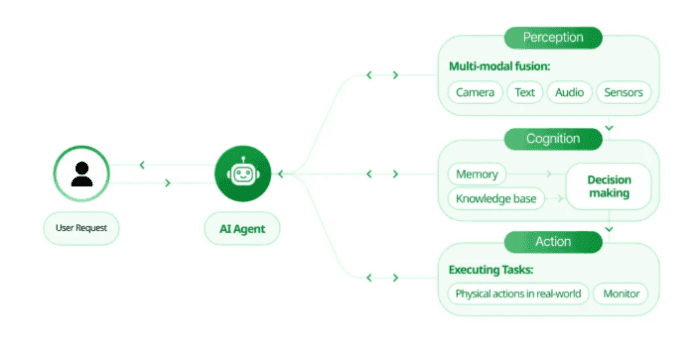
Agentic Artificial Intelligence (AI) isn’t just about language processing or prediction—it’s about taking action. The agentic AI framework emphasizes the distinction between agentic AI as a broader framework and AI agents as specific components within that framework. While traditional AI responds to queries, Agentic AI sets goals, executes tasks, and adapts its strategies in real time. Agentic AI operates by discussing its architecture and the functionality of autonomous software components called ‘agents.’ These agents integrate advanced technologies, such as machine learning and natural language processing, enabling them to learn from data and collaborate effectively to complete complex tasks across different industries. The powerhouse behind this functionality is the Action Layer.Image Source: k21academyThis blog breaks down the Action Layer into its core working parts—tools, APIs, and execution engines—and explains how they combine to create truly autonomous systems.Introduction to Agentic AISource: NVIDIAAgentic AI represents a shift from passive automation to systems that can autonomously perceive, decide, and act. These intelligent agents use real-time data and user input to understand context and execute specific tasks aligned with customer needs. By streamlining software development and enabling dynamic workflows, agentic AI redefines how we build and interact with modern digital systems.What Is the Agentic AI Action Layer?The Action Layer enables Agentic AI to move from thinking to doing. It executes commands, initiates workflows, and interacts with external environments. As an agentic AI system, it allows AI to manage complex tasks autonomously, such as optimizing logistics and supply chain operations. Whether it’s updating a database or sending a message, the Action Layer ensures the agent completes tasks that drive outcomes. Without it, the AI is just a passive observer. With it, the AI becomes an autonomous operator capable of handling real-world tasks.Key ConceptsAgentic AI is built on several key concepts, including autonomous agents, natural language processing, and machine learning. AI agents gather data, operate independently, and perform complex tasks, making them ideal for tackling complex challenges. Generative AI, a type of AI that generates original content, is also a crucial component of agentic AI. Agentic AI systems can interact with external tools and software development platforms, enabling them to execute tasks and make decisions without human oversight. This technology can revolutionize business processes, from customer service inquiries to creative work.Tools: Purpose-Built Functions for Autonomous AgentsTools are specialized functions designed to help autonomous agents carry out specific tasks efficiently and accurately. They enable agentic AI systems to respond to user input precisely, aligning actions with customer needs in real time.Small Components, Big ResultsAgentic AI tools are highly specialized components built to perform one function well, like retrieving customer data or summarizing a document. Their limited scope makes them easy to maintain, test, and reuse across different workflows. Tools are often packaged as lightweight scripts or modules that can be executed independently when required. This modularity allows developers to combine tools in various sequences to create complex agent workflows. The result is a flexible system where tasks can be rapidly built and iterated.Stateless and Functionally Pure by DesignStateless tools don’t store information between tasks, which means their behavior is predictable and repeatable. AI agents learn and improve over time by utilizing a feedback loop known as a data flywheel, which enhances their functionality and effectiveness. This makes them ideal for scalable systems where multiple tasks are run in parallel. Functional purity ensures tools behave consistently, producing the same output for the same input, eliminating hidden side effects. This also simplifies debugging and enables safe reuse across environments. These principles keep agent workflows clean, reliable, and easy to scale.APIs: External Access That Extends Agent ReachAPIs provide external access points that allow intelligent agents to interact with third-party services, extending their capabilities beyond internal systems. This connectivity enables agentic AI to perform more complex, customer-centric tasks by leveraging diverse data sources and functionalities.Connecting to the Outside WorldAPIs serve as the interface between Agentic AI and external software systems. These could be third-party tools, internal platforms, or public web services. APIs let agents pull real-time data, trigger actions in SaaS platforms, or interact with internal enterprise applications. For example, an agent could pull financial data from Stripe, create tasks in Jira, or send updates via Slack—all through API calls. This connection to live systems and integration with existing systems makes Agentic AI solutions operationally powerful.Enterprise-Grade Integrations in ActionPractical use cases for APIs are growing fast. AI agents enhance customer interactions by improving response times and increasing customer satisfaction through automating routine communications and facilitating more dynamic self-service options. Agents might use Slack APIs to send task updates or receive human-in-the-loop approvals. Stripe APIs enable autonomous billing and payment validation workflows. GitHub APIs allow code agents to create PRs, manage issues, or deploy builds. Even legacy systems can be integrated with custom REST APIs, expanding the agent’s role in enterprise ecosystems. These integrations make agents functionally valuable across departments.Security Can’t Be an AfterthoughtEvery API integration introduces potential security risks, especially in autonomous environments. Early chatbots, for example, relied heavily on pre-defined rules and scripted responses, which limited their ability to manage complex interactions and adapt to unexpected inputs. However, modern AI technologies have advanced beyond these limitations, allowing for more flexible, autonomous, and intelligent interactions. Agents must be authenticated using secure tokens or OAuth protocols, with strict permissions on what they can access or modify.Input validation is also key to preventing injection attacks or data corruption. Rate limiting protects systems from overload due to poorly configured loops or retries. Visibility into every API call ensures traceability and auditability for compliance.Use OpenAPI Specs for Predictable IntegrationsOpenAPI (Swagger) specifications help make APIs machine-readable and agent-friendly. These specs define endpoints, input/output formats, and authentication methods in a consistent structure. Developers can auto-generate client libraries, and agents can dynamically adapt to new APIs without manual configuration. This speeds up development and standardizes how agents communicate across services. OpenAPI is a vital tool in building scalable Agentic AI architectures.Execution Engines: The Control Center of Agent WorkflowsExecution engines act as the control center of agent workflows, coordinating actions based on real-time data, user input, and predefined logic. They translate high-level decisions made by intelligent agents into precise, automated steps that fulfill specific tasks aligned with customer needs. By managing task execution, error handling, and resource allocation, execution engines are key to ensuring reliable and efficient agentic AI work.Orchestrating Task Sequences for Complex TasksExecution engines manage how agents plan, prioritize, and perform actions within complex workflows. They decide task order based on logic, context, and state. This allows agents to complete multi-step workflows like “gather data → analyze → report.” These engines also handle branching logic, such as retrying a task or switching to a fallback plan. Without this orchestration layer, agents would behave linearly and brittlely.Built-In Error Handling and RecoveryAgents operating in dynamic environments will fail. Agents must be adaptable and responsive in complex and dynamic environments, making robust error handling crucial. Execution engines provide structured error handling, allowing for retries, timeouts, or switching to alternate workflows. This reduces system fragility and improves reliability in production use cases. Well-managed error handling also helps maintain user trust, especially in customer-facing applications. It’s essential for building agents that can operate unsupervised.Maintaining State and ContextTo act intelligently, agents need memory—both short-term and long-term. Execution engines manage this state, updating internal knowledge as each task completes or changes. This state processes data for goal tracking, replanning, and improving accuracy. Without effective state management, agents lose context and repeat mistakes. For long-lived agents, memory is not optional—it’s foundational.Open-Source Execution Engines to KnowSeveral emerging execution frameworks power agent workflows. LangGraph uses a graph-based routing model, supporting loops, conditions, and memory tracking. AutoGPT uses a TaskManager to decompose complex goals and assign subtasks to sub-agents. CrewAI and MetaGPT introduce multi-agent orchestration, where different roles handle tasks concurrently. These engines offer flexible control layers, from simple agents to autonomous multi-agent systems.Key Features and BenefitsThe key features of agentic AI include its ability to handle complex tasks, operate in dynamic environments, and make decisions based on data-driven insights. Agentic AI systems can also learn from past interactions and adapt to new situations, making them highly effective in performing repetitive tasks. The benefits of agentic AI are numerous, including improved employee productivity, enhanced customer engagement, and increased efficiency in software development.Agentic AI-powered agents can also analyze vast amounts of data, providing valuable insights and informing strategic initiatives. By leveraging agentic AI, organizations can gain a competitive edge and stay ahead of the curve in today’s fast-paced business landscape.Decision Making and AI ModelsAgentic AI systems use advanced AI models, including machine learning algorithms and knowledge representation, to make decisions and perform tasks. These models enable agentic AI systems to analyze data, identify patterns, and make predictions, allowing them to operate independently and make decisions with minimal human intervention. The decision-making process in agentic AI is based on a combination of data-driven insights, past interactions, and specialized models, ensuring that AI agents can handle complex scenarios and make informed decisions.By leveraging these advanced AI models, agentic AI systems can optimize processes, improve performance metrics, and drive business success.Agentic AI ApplicationsAgentic AI has many applications, from customer service and software development to healthcare and finance. AI agents can perform complex tasks, such as analyzing patient data and providing personalized recommendations, or streamline administrative tasks, such as scheduling appointments and managing records. Agentic AI can also enhance the creative process, generate new ideas and content, and improve customer engagement, providing personalized experiences and support.Implementing agentic AI can unlock new opportunities, drive innovation, and keep organizations ahead of the competition. Whether used to tackle complex challenges or perform simple tasks, agentic AI is revolutionizing how businesses operate and interact with customers, employees, and partners.Key Considerations for Building the Action LayerWhen building the Action Layer, it’s essential to define clear interfaces between tools, APIs, and execution engines to enable intelligent agents to perform specific tasks effectively. Modularity and extensibility should be prioritized to adapt to evolving customer needs and support diverse user input across agentic AI systems. Equally important is implementing strong security and orchestration controls to ensure reliable, autonomous operations at scale.Lock Down Security FirstAgents can trigger decisive actions, so security must be built into every component. Agentic AI can significantly enhance business operations by automating workflow management and customer service tasks, ultimately alleviating the burden on human employees. Use secrets managers, encrypted token stores, and tight access scopes to control what agents can do. Validate every input and sanitize output to prevent malicious behavior or data leaks. Log all actions for traceability, especially in regulated industries. Without these measures, an agent becomes a vulnerability instead of an asset.Instrument Everything for ObservabilityYou can’t fix what you can’t see. Observability tools should track every step the agent takes—tool use, API response times, error rates, and decision points. By providing real-time insights, these tools empower companies to make smarter, data-driven decisions by leveraging a comprehensive view of their operations. Real-time dashboards make it easier to identify failures or inefficiencies. Logs should show what the agent did and why it made those decisions. Full observability is critical for debugging and improving agent behavior.Design for Scale from Day One in AI SystemsAgentic systems need to scale with demand. Agentic AI impacts various job functions by enhancing efficiency and automating tasks, turning data into actionable knowledge. Stateless tools and microservices allow easy containerization and load balancing. APIs should be ready for high concurrency and include retry/backoff logic. Execution engines should support distributed task queues and sharding if needed. Building with scale in mind avoids painful rewrites later.Build Feedback Loops Into the SystemAutonomous agents need the ability to self-correct. Tools and execution flows should support validation checks, self-assessment, and replanning steps. If an outcome isn’t what was expected, the agent should adapt—not just fail silently. These feedback loops enable learning and long-term accuracy improvements. Feedback loops are crucial for ai innovation by enabling continuous improvement and adaptation. This is where Agentic AI begins to move beyond automation into self-optimization.Why the Action Layer Is the Backbone of Agentic AIWithout a functional Action Layer, even the smartest Agentic AI is just a glorified chatbot. A key characteristic of agentic AI is its ability to think and act autonomously, which the Action Layer enables. The Action Layer gives it the ability to perform tasks, adapt to context, and deliver results. It transforms knowledge into action across tools, APIs, and systems. This is where the AI moves from reactive to proactive. Building this layer right determines whether your agents stay as assistants—or become true operators.Final Take: Start With the Layer That Delivers ResultsAgentic AI systems are only as good as their ability to act. These systems transform how humans interact with technology using real-time data to understand user goals and preferences, facilitating more autonomous and insightful interactions. By analyzing user input in context, intelligent agents can align more closely with customer needs, automatically executing specific tasks without constant human oversight.This capability is central to how agentic AI works and changes the game—it helps streamline software development by reducing repetitive coding, automating testing, and enabling continuous deployment. The Action Layer—built from tools, APIs, and execution engines—is where reasoning meets reality. If you’re serious about deploying autonomous agents, this is where your architecture should start. Prioritize modular design, robust security, and dynamic orchestration. That’s how you build agents that don’t just think—they deliver.

Aziro Marketing

EXPLORE ALL TAGS
2019 dockercon
Advanced analytics
Agentic AI
agile
AI
AI ML
AIOps
Amazon Aws
Amazon EC2
Analytics
Analytics tools
AndroidThings
Anomaly Detection
Anomaly monitor
Ansible Test Automation
apache
apache8
Apache Spark RDD
app containerization
application containerization
applications
Application Security
application testing
artificial intelligence
asynchronous replication
automate
automation
automation testing
Autonomous Storage
AWS Lambda
Aziro
Aziro Technologies
big data
Big Data Analytics
big data pipeline
Big Data QA
Big Data Tester
Big Data Testing
bitcoin
blockchain
blog
bluetooth
buildroot
business intelligence
busybox
chef
ci/cd
CI/CD security
cloud
Cloud Analytics
cloud computing
Cloud Cost Optimization
cloud devops
Cloud Infrastructure
Cloud Interoperability
Cloud Native Solution
Cloud Security
cloudstack
cloud storage
Cloud Storage Data
Cloud Storage Security
Codeless Automation
Cognitive analytics
Configuration Management
connected homes
container
Containers
container world 2019
container world conference
continuous-delivery
continuous deployment
continuous integration
Coronavirus
Covid-19
cryptocurrency
cyber security
data-analytics
data backup and recovery
datacenter
data protection
data replication
data-security
data-storage
deep learning
demo
Descriptive analytics
Descriptive analytics tools
development
devops
devops agile
devops automation
DEVOPS CERTIFICATION
devops monitoring
DevOps QA
DevOps Security
DevOps testing
DevSecOps
Digital Transformation
disaster recovery
DMA
docker
dockercon
dockercon 2019
dockercon 2019 san francisco
dockercon usa 2019
docker swarm
DRaaS
edge computing
Embedded AI
embedded-systems
end-to-end-test-automation
FaaS
finance
fintech
FIrebase
flash memory
flash memory summit
FMS2017
GDPR faqs
Glass-Box AI
golang
GraphQL
graphql vs rest
gui testing
habitat
hadoop
hardware-providers
healthcare
Heartfullness
High Performance Computing
Holistic Life
HPC
Hybrid-Cloud
hyper-converged
hyper-v
IaaS
IaaS Security
icinga
icinga for monitoring
Image Recognition 2024
infographic
InSpec
internet-of-things
investing
iot
iot application
iot testing
java 8 streams
javascript
jenkins
KubeCon
kubernetes
kubernetesday
kubernetesday bangalore
libstorage
linux
litecoin
log analytics
Log mining
Low-Code
Low-Code No-Code Platforms
Loyalty
machine-learning
Meditation
Microservices
migration
Mindfulness
ML
mobile-application-testing
mobile-automation-testing
monitoring tools
Mutli-Cloud
network
network file storage
new features
NFS
NVMe
NVMEof
NVMes
Online Education
opensource
openstack
opscode-2
OSS
others
Paas
PDLC
Positivty
predictive analytics
Predictive analytics tools
prescriptive analysis
private-cloud
product sustenance
programming language
public cloud
qa
qa automation
quality-assurance
Rapid Application Development
raspberry pi
RDMA
real time analytics
realtime analytics platforms
Real-time data analytics
Recovery
Recovery as a service
recovery as service
rsa
rsa 2019
rsa 2019 san francisco
rsac 2018
rsa conference
rsa conference 2019
rsa usa 2019
SaaS Security
san francisco
SDC India 2019
SDDC
security
Security Monitoring
Selenium Test Automation
selenium testng
serverless
Serverless Computing
Site Reliability Engineering
smart homes
smart mirror
SNIA
snia india 2019
SNIA SDC 2019
SNIA SDC INDIA
SNIA SDC USA
software
software defined storage
software-testing
software testing trends
software testing trends 2019
SRE
STaaS
storage
storage events
storage replication
Storage Trends 2018
storage virtualization
support
Synchronous Replication
technology
tech support
test-automation
Testing
testing automation tools
thought leadership articles
trends
tutorials
ui automation testing
ui testing
ui testing automation
vCenter Operations Manager
vCOPS
virtualization
VMware
vmworld
VMworld 2019
vmworld 2019 san francisco
VMworld 2019 US
vROM
Web Automation Testing
web test automation
WFH

LET'S ENGINEER

Your Next Product Breakthrough

Book a Free 30-minute Meeting with our technology experts.

Aziro has been a true engineering partner in our digital transformation journey. Their AI-native approach and deep technical expertise helped us modernize our infrastructure and accelerate product delivery without compromising quality. The collaboration has been seamless, efficient, and outcome-driven.

Customer Placeholder
CTO

Fortune 500 company