Tag Archive

Below you'll find a list of all posts that have been tagged as "Agentic AI"
blogImage

How Agentic AI Transforms Cybersecurity with Autonomous Threat Detection?

Cybersecurity teams are inundated with billions of log events every day and attackers are evolving faster than human analysts can respond. Traditional rule‑based tools provide some automation but lack adaptability, generating false positives and slow responses. To keep pace with threats that operate at machine speed, organizations are turning to Agentic AI, an emerging class of artificial intelligence that combines autonomous decision making with large language models (LLMs) to perceive, reason, and act on cybersecurity tasks with minimal human intervention.Agentic systems are composed of multiple interacting agents and have been used to solve complex problems for years. With recent advances in LLMs, these systems can now operate at scale, performing complex workflows, making contextual decisions and learning from experience. In cybersecurity, Agentic AI promises to transform how we detect and respond to threats by continuously monitoring data streams, triaging alerts, and executing mitigations autonomously.Why Is Agentic AI Essential for Modern Cybersecurity?The adoption of AI is rising rapidly and Agentic AI is expected to be the next evolutionary step in AI. Cyber threats are growing in sophistication, volume and speed. Traditional signature‑based and static rule‑based systems struggle to detect zero‑day exploits and generate overwhelming false alerts. Agentic AI offers a proactive approach by leveraging machine learning, deep learning and reinforcement learning to study large datasets, recognize emerging threat patterns and make autonomous decisions.By automating threat detection and incident response, agentic systems reduce alert fatigue and accelerate mean time to detect (MTTD) and respond (MTTR). For instance, agentic AI cybersecurity solutions can continuously monitor networks, endpoints and applications, identifying suspicious patterns without human intervention. When threats are confirmed, the system can isolate compromised endpoints, block malicious connections and trigger authentication challenges within seconds. This ability to respond at machine speed is crucial for stopping fast‑moving attacks like ransomware or advanced persistent threats (APTs).According to the cybersecurity vendor Gurucul, the global market for Agentic AI in cybersecurity is projected to grow from $738 million in 2024 to $173.47 billion by 2034, reflecting an expected compound annual growth rate of 39.7%. The urgency is clear: forecasts suggest that 93% of security leaders anticipate daily AI‑driven attacks by 2025.How Does Agentic AI Functions?Agentic AI cybersecurity systems typically operate through four phases: perception, reasoning, action and learning. In the perception phase, the system collects data from multiple sources, network traffic, endpoint activity, user behavior and application logs. This broad collection provides the context needed for accurate threat analysis.In the reasoning phase, advanced analytics engines use large language models for decision orchestration, specialized security models for pattern recognition and behavioral algorithms to identify anomalies. This multi‑layered analysis distinguishes between normal operations and malicious activity with high precision.Next is the action phase where the system executes appropriate responses through integrations with security tools. Actions may include isolating infected endpoints, blocking suspicious network connections, initiating multi‑factor authentication challenges, or creating incident tickets. All actions are bound by defined policies to ensure compliance.Finally, in the learning phase, feedback loops refine detection models and response strategies, enabling the agent to adapt to new attack techniques. Continuous learning transforms the system into a self‑improving defender that gets better with each incident.What are the Key Benefits for Security Operations Centers?Integrating agentic AI into security operations centers offers several benefits such as:Minimized Alert Fatigue: By intelligently filtering and prioritizing alerts, agentic systems cut false positives and allow analysts to focus on real threats.Faster Response: Automated actions contain and mitigate threats within seconds, which is essential for stopping ransomware and zero‑day attacks.Adaptive Defense: These systems continuously learn and adapt to grow threats, develop new detection methods without any sort of manual rule updates.Resource Optimization: Automating routine tasks allows human analysts to concentrate only on proactive threat hunting, strategic planning and investigations.Enhanced Coverage: Agentic AI provides 360° visibility across endpoints, networks, cloud environments and IoT devices which enables comprehensive monitoring.To Wrap UpCybersecurity threats continue to grow in scale and sophistication, outpacing traditional tools and human analysts. Agentic AI introduces a paradigm shift: autonomous agents that perceive, reason, decide and act to protect digital systems in real time. By combining LLMs, machine learning and software integrations, these agents can monitor, detect and respond to threats without constant human supervision. The benefits, reduced alert fatigue, accelerated response, adaptive defense and comprehensive visibility, make agentic AI an essential component of future SOCs.However, organizations must address challenges such as model updates, bias, explainability and AI‑specific security risks. Responsible implementation requires governance frameworks, human oversight and continuous learning. With careful deployment, agentic AI can empower security teams to move from reactive defense to proactive resilience, transforming cybersecurity for the age of autonomous threats.Frequently Asked Questions (FAQs)Q. What is Agentic AI in cybersecurity?Ans: Agentic AI is an autonomous form of AI that can monitor, detect, and respond to cyber threats without human intervention, making it more adaptive than traditional AI models.Q. How does Agentic AI improve threat detection?Ans: It uses behavioral analytics, real-time monitoring, and continuous learning to detect anomalies and take immediate action, reducing response times significantly.Q. Can Agentic AI replace human analysts?Ans: No, it complements them. While Agentic AI automates detection and first response, human oversight is essential for governance, ethical decisions, and complex investigations.Q. Is Agentic AI suitable for small businesses?Ans: Yes, the Cloud-based cybersecurity solutions powered by Agentic AI are scalable and can protect both SMEs and large enterprises cost-effectively.Q. What are the risks of Agentic AI?Ans: The main risks include over-automation, ethical dilemmas in autonomous actions, and the challenge of explainability in AI decision-making. 

Aziro Marketing

blogImage

11 Leading Agentic AI Tools for Businesses

Modern enterprises are moving from task‑automation to systems that perceive context, plan ahead and act without constant supervision. Agentic AI is central to this transition. Unlike basic chatbots or scripts, agentic systems continuously monitor data, reason about priorities and then execute tasks within defined boundaries. Companies are adopting these agents to help employees, speed up decision‑making and reduce repetitive work. This blog answers common questions about these technologies and introduces a numbered list of the top tools available today.What Qualities Make a Platform Worth Adopting?A successful platform must go beyond flashy features. It should make independent decisions, handle multiple steps and learn from past interactions. Ease of use is important: pre‑built workflows and straightforward interfaces enable employees to adopt the tool quickly. Compatibility with existing systems through APIs or connectors ensures that agents can take actions rather than only generate suggestions. Transparency is vital so stakeholders understand how conclusions are reached and can audit the agent’s trail. Finally, strong security and compliance features protect data and meet regulatory requirements. Keeping these qualities in mind helps organizations evaluate solutions before jumping into deployment.What are the Top 11 Agentic Tools for Businesses?When thinking about modern automation platforms, Agentic AI tools fall into several categories, employee support, developer productivity, conversational assistants, process automation and advanced language models. The following numbered list describes eleven leading options and highlights why organizations use them. Each entry includes references to recent research and case studies.Moveworks: This enterprise assistant interprets employee requests in natural language and orchestrates actions across IT, HR, facilities and finance. It leverages pre‑built integrations to reset passwords, provision software and handle routine queries. Its strength is context: it adapts responses based on the user’s role and previous interactions, resolving common tickets without human involvement.Microsoft Copilot Agents:  Embedded in Microsoft 365 tools like Teams and Outlook, these agents allow non‑technical users to build custom assistants. They connect natively with calendars, emails and documents, letting people schedule meetings, draft communications and summarize discussions. The no‑code interface and granular permissions make it easy for businesses to adopt.OpenAI Operator: A developer‑centric framework that uses advanced language models to call APIs, interact with external tools and break down complex tasks into sequential steps. It supports reasoning and validation to ensure reliable execution. Developers can embed its logic into existing applications to automate research, drafting and data manipulation.Adept: This platform teaches agents to navigate software the way humans do, by clicking through user interfaces rather than calling APIs. As a result, Adept automates data entry, report generation and cross‑application workflows across multiple systems. Businesses value its ability to work with legacy tools and unstructured processes.CrewAI: An open‑source framework designed for collaboration among multiple agents. It organizes agents into roles (such as researcher or writer) and enables them to plan, communicate and exchange intermediate results. Human‑in‑the‑loop features allow teams to oversee complex tasks like market research or creative brainstorming.Beam: This operating system integrates several agents into one workspace. Organizations use it to coordinate complicated processes across departments, with each agent specializing in tasks like data analysis, scheduling and compliance. It is particularly helpful at scale because it reduces operational costs and simplifies oversight.Aisera: A conversational platform that blends semantic search, domain knowledge and automation to resolve IT, HR, customer service and sales requests. It connects with hundreds of enterprise systems so that it can answer questions, execute transactions and route complex cases to human experts.Kore.ai: Focused on domain‑specific virtual assistants, this tool embeds conversational interfaces into messaging apps, voice assistants and enterprise systems. It integrates with business process management software to automate customer and employee interactions. Kore.ai is known for its customization options and its ability to unify voice and text channels.UiPath: A long‑standing leader in robotic process automation that has added AI for decision‑making and process mining. UiPath excels at document‑heavy tasks, combining structured and unstructured data to automate workflows such as invoice processing and compliance checks.Orby: A generative process automation platform that uses multimodal models and neuro‑symbolic programming. It understands complex instructions, writes automation scripts and shortens development time. Organizations choose it for scaling automation across varied tasks while maintaining flexibility.Anthropic Claude: A large language model evolving into a task‑orchestrating agent. Claude can answer questions, summarize content and manage multi‑step workflows. It provides dynamic task management, performance monitoring and integrations with existing systems.Some prototypes even control computer desktops to complete tasks across applications.How do These Platforms Boost Developer Productivity and Teamwork?Developers and collaborative teams use these tools to build more robust applications and coordinate complex projects. Solutions like OpenAI Operator and Adept allow engineers to combine reasoning with API calls or UI navigation, automating research, data manipulation and software testing. Frameworks such as CrewAI encourage multi‑agent cooperation by defining roles and communication channels. Beam and similar orchestrators help large organizations standardize interactions among several specialized agents, reducing friction when different departments need to share information. These platforms illustrate how automation frameworks can become collaboration hubs, enabling teams to focus on creative problem‑solving while agents handle repetitive coordination.What Role do Advanced Language Models Play and How Should Organizations Prepare?Large language models like Claude point to the future of autonomous assistance. By managing dynamic tasks, monitoring performance and integrating with enterprise systems, Claude acts as both a content generator and an orchestrator. Its emerging ability to control computer desktops hints at agents that can navigate multiple applications seamlessly. While these advances are promising, organizations must plan carefully. Leaders should assess their technical environments, define clear use cases and ensure data governance before adopting these tools. Building a culture that embraces human–agent collaboration will maximize benefits while mitigating risks. Adopting Agentic AI is not just a software purchase; it requires investment in training, oversight and trust.To Wrap UpThe shift toward autonomous assistants is accelerating, and the eleven tools listed here illustrate the diversity of options for modern businesses. Whether focused on employee support, developer enablement, conversation‑driven automation or advanced language modeling, each platform offers a pathway to delegate complex tasks and free people to focus on strategic work. By evaluating core capabilities, understanding organizational needs and embracing responsible adoption practices, companies can harness these technologies to build more responsive and resilient operations. 

Aziro Marketing

blogImage

Designing with Empathy: Personas & Journeys

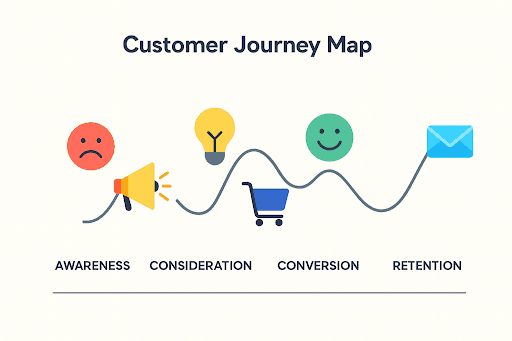
IntroductionImagine building a bridge without knowing who will cross it. That’s what happens when teams design products without understanding users. Empathy turns assumptions into alignment, it ensures we build for people, not for profiles. In modern IT-driven products, empathy isn’t a “soft skill theater.” It’s the foundation of business performance. According to Forrester and Gartner (2025), organizations embedding empathy into design achieve up to 60% higher financial performance, 1.4× better retention, and significantly faster onboarding compared to feature-led peers. Empathy mapping isn’t optional anymore—it’s a growth strategy.Why Empathy Is a Business Competency—Not a HobbyThink about buying a new phone purely by reading its spec sheet. On paper it looks perfect—but once you use it, the camera frustrates you, the charger doesn’t fit your adapter, and the interface feels alien. Technically sound, emotionally wrong. That’s what building products without empathy looks like.Empathy bridges the gap between functionality and fulfilment.In market-structure analysis terms (as discussed in ISB M3), empathy ensures we match perceived value with delivered experience. By mapping user frustrations and aspirations, product managers reduce “experience leakage”—the drop-off between a promised value proposition and what customers actually feel.Example:Nintendo Wii succeeded not by out-teching Sony or Microsoft but by understanding that families wanted fun, inclusive play, not graphic intensity.LEGO’s turnaround came when it studied how children combined digital and physical creativity, leading to LEGO Mindstorms and LEGO Ideas.Empathy isn’t “being nice.” It’s being precise about what really matters.Building Personas That Reflect RealityPersonas aren’t glossy posters; they’re evidence-based hypotheses. A good persona blends demographic data (who), psychographic context (why), and behavioral patterns (how).The Three Layers of Effective PersonasPrimary Persona: Core revenue or usage driver.Example: “Priya, 38, utility-app user who values simplicity over rewards.”Secondary Persona: Influencer or occasional user.Example: “Arjun, 65, depends on assisted payments but values trust and security.”Anti-Persona: Who you shouldn’t design for—helps prevent scope creep.Fact Check:According to Salesforce State of the Connected Customer (2024), 73 % of customers expect companies to understand their needs before they explain them. Personas operationalize that expectation.Journey Mapping—The Heartbeat of EmpathyA customer journey map is empathy made visible.It plots how users feel, think, and act at every touchpoint—from discovery to renewal.Phases of a Journey Map:Awareness: Where users first hear of you.Consideration: How they evaluate your promise.Conversion: The trigger to act.Adoption: The first success moment.Retention: What keeps them returning.By capturing emotions at each stage, product teams expose friction points.Nielsen Norman Group calls this the “Pain → Gain” curve—each dip is an opportunity to design delight.Case Study (C-Study):(A hypothetical example mirroring real decision-making conflicts in product teams)A utility platform serving senior citizens mapped their bill-payment journey.Discovery showed users struggled with small fonts and too many clicks.By simplifying screens and enabling one-tap payments, adoption rose by 22 %.Practical Study (P-Study):(A hypothetical example mirroring real decision-making conflicts in product teams)When teams design for an “average user,” they design for no one.Edge cases dominate, mainstream users churn.Empathy prevents this by anchoring design decisions to real user diversity, not imaginary averages.AI as an Empathy AmplifierAI can’t feel, but it can reveal.Today’s product managers use AI tools to scale empathy:AreaHow AI HelpsExample ToolPersona DiscoveryCluster users based on behavior & sentimentAmplitude PersonasJourney MappingHeat-map frustration points via clickstream + NLPFullStory, HotjarVoice of Customer MiningExtract pain themes from tickets & reviewsChatGPT + Zendesk integrationAccessibility TestingSimulate usage for differently-abled personasFable, Microsoft Accessibility Insights     According to Gartner (2024), organizations using AI-assisted journey analytics see 27 % faster issue detection and 19 % higher retention from UX improvements.AI doesn’t replace human empathy—it scales it. It helps product teams listen better, faster, and at scale.Key TakeawaysEmpathy isn’t emotion—it’s precision in understanding real pain points.Personas guide who to build for; journey maps reveal where to focus first.AI turns qualitative insight into quantifiable action.When empathy drives design, retention replaces re-acquisition.As IDEO’s Tim Brown says:“Empathy is the world’s most powerful design tool—because it reminds us that our users are human first.”Next in the SeriesOnce you truly understand your user, the next step is transforming empathy into solutions.Stay tuned for Post 5 – “Design Thinking, but Make It Real.”By Deep Verma | Exploring product management beyond the backlog

Aziro Marketing

What Is Agentic AI and How Can It Be Used in Healthcare

What Is Agentic AI and How Can It Be Used in Healthcare?

Healthcare is moving beyond simple automation. Hospitals, clinics and research labs now deploy intelligent systems that can sense their surroundings, interpret complex data and carry out multistep tasks that once required human intervention. These systems are not just tools that follow rules; they plan and act in dynamic environments, working alongside clinicians and patients rather than replacing them. From early triage in emergency rooms to routine administrative paperwork, new systems are emerging across all corners of healthcare. Understanding what sets these agents apart and how they can improve care is essential for organizations preparing for the next wave of artificial intelligence.What Makes an AI System Agentic in Healthcare?Unlike traditional models, agentic systems have a degree of autonomy. They combine large language models, machine learning and reasoning engines to interpret data and decide what to do next. Instead of producing a static output and waiting for further instructions, these systems analyze incoming information, evaluate options and execute tasks on behalf of users. Agentic AI systems operate within guardrails set by clinicians and engineers but adapt to new data without constant human prompts. This makes them well suited for healthcare, where conditions change moment to moment. Examples include virtual assistants that review patient histories and recommend tests, diagnostic agents that triage cases and alert physicians, and research tools that sift through literature to prioritize promising compounds.How Do These Agents Transform Diagnosis and Treatment?When autonomous systems handle tasks that previously demanded hours of manual work, clinicians can focus on high‑value decision‑making. In drug discovery, intelligent agents screen large libraries of molecules, predict how they might behave in the body and rank candidates for further study. In day‑to‑day practice, these systems can serve as co‑pilots for clinicians. An agent gathers relevant images, analyzes trends in vitals and cross-references a patient’s history to suggest possible diagnoses and treatment plans. The doctor reviews these suggestions, asks questions and approves or modifies the plan. This partnership reduces cognitive load and improves diagnostic accuracy by surfacing details that may otherwise be overlooked. These systems also support personalized medicine by tailoring therapies to genetic and lifestyle factors.How Do Autonomous Agents Enhance Patient Engagement and Continuity of Care?Engaging patients in their own care is vital for outcomes. Agentic AI systems excel at delivering timely information, coordinating follow‑ups and providing empathetic support. A virtual health assistant can answer questions, explain discharge instructions and schedule appointments. After surgery, generative AI might draft instructions, while the agent ensures that patients read them, sends reminders about medication and arranges telehealth consultations when needed. Continuous monitoring is another area where these intelligent agents are valuable. Wearable sensors and remote devices stream data to an agent that watches for subtle changes in vital signs or behavior. When thresholds are crossed, it alerts clinicians or caregivers. For chronic disease management, agents remind patients to take medication, encourage lifestyle adjustments and connect them with specialists as needed. To maintain trust, systems must adhere to strict data governance policies and offer transparent explanations of how decisions are made.How Can Agentic Technology Improve Hospital Operations and Administrative Workflows?Behind the scenes, much of healthcare involves scheduling, billing and record management. Administrative burdens contribute to staff burnout and divert resources from patient care. Agentic AI can simplify these tasks while adapting to changing circumstances. Appointment scheduling agents predict no‑show risks, adjust availability in real time and send reminders. Documentation assistants transcribe clinician dictation into standardized records and learn individual preferences to improve note quality. Claims processing agents review billing codes, detect errors or potential fraud and prepare appeals, freeing staff to focus on patient interactions. By automating routine chores, these agents allow healthcare workers to focus on direct care and help hospitals operate more efficiently.What Challenges and Ethical Considerations Must Be Addressed?The promise of autonomous agents comes with important caveats. Data quality and bias are central concerns. Poor or unrepresentative data can lead to flawed recommendations and widen disparities. Developers and healthcare providers must ensure that datasets are diverse, validated and governed by ethical frameworks. Transparency is equally important: clinicians should understand how a recommendation was generated and retain authority to override it. Explain ability fosters trust and allows humans to catch errors. Privacy and security also remain vital. Agents should access only the information necessary to perform their tasks. Clear lines of accountability are required when machines take action. Institutions must also assess cultural readiness. Clinicians and patients need training and clear communication about the capabilities and limitations of these systems so that trust and collaboration can flourish.How Can Healthcare Leaders Prepare for This Technology?As health systems begin to experiment with new Agentic AI platforms, leadership must ensure that oversight and policy keep pace. Preparing for the agentic era is as much about people and process as it is about technology. Leaders should start by investing in high‑quality data infrastructure and establishing governance frameworks that respect privacy and comply with regulations. Workforce development is critical: clinicians need training to work alongside AI co‑pilots and apply human judgment to machine‑generated insights, while informatics and engineering teams must understand clinical workflows. Collaboration with technology vendors and regulators is also essential. Many platform providers are incorporating agentic capabilities into their products. Healthcare organizations should evaluate these solutions carefully and advocate for policies that balance innovation with patient safety. Clear explanations of how agents operate and open channels for feedback will help build trust among staff and patients.To Wrap UpAgentic AI marks a step change in how healthcare organizations can harness intelligent tools. By combining sensing, reasoning and acting in a cohesive framework, these agents assist clinicians with diagnosis, streamline research, engage patients and optimize operations. They help transform data into action while leaving critical decision‑making in human hands. Ethical concerns, data governance and cultural readiness must not be overlooked. As healthcare leaders prepare to adopt this technology, a balanced approach that couples innovation with responsibility will be essential. When thoughtfully implemented, agentic systems can enhance patient outcomes, reduce inefficiencies and pave the way for a more responsive and resilient healthcare system. 

Aziro Marketing

How Enterprises Use Agentic AI for Intelligent Automation

How Enterprises Use Agentic AI for Intelligent Automation

Enterprises are entering a new era of automation where systems do more than run scripts; they observe, interpret, and act. Instead of operating in isolated silos, these agents weave together data from applications, sensors, and services to orchestrate whole workflows. In this blog, I’ll explain how this shift changes the way organizations think about automation, drawing on my experience designing workflow platforms. Each section answers a common question leaders ask when evaluating intelligent automation strategies. Agentic AI is not a distant dream but a practical approach to building systems that perceive, reason, and act within defined boundaries today.What Are Agentic Systems in Intelligent Automation?When people talk about intelligent automation, they often picture scripts or bots that execute predefined steps. Agentic systems go further. They interact with their environment, learn from changing conditions, and make decisions on their own. They operate within policy constraints and maintain context across tasks so each action is informed by previous steps. In manufacturing, an agent might monitor inventory levels, consult supplier calendars and schedule orders. In customer service, it might collect details from CRM records, knowledge bases and past interactions to resolve an inquiry without escalation.These capabilities rest on three layers: perception, reasoning and execution. Perception ingests signals from devices, logs and user interactions; reasoning synthesizes that information; execution performs the actions, updating records, sending notifications or invoking APIs. When these layers operate together, Agentic AI turns static processes into adaptive services that respond to real‑time events rather than waiting for human intervention.How Do Enterprises Use Agentic Platforms to Improve Efficiency?Many organizations begin automation with discrete bots that handle specific tasks. Over time these accumulate, forming a patchwork of point solutions that operate in isolation. Agentic platforms tie those pieces together and handle exceptions by combining rules with context. A supply chain agent might reschedule shipments after detecting a delay and inform downstream teams. A facilities agent could reorder consumables when sensors detect low stock, schedule maintenance visits and coordinate technicians. Enterprises also offer benefit in multiple ways:Dynamic integration: Connect ERP, IoT and partners for seamless information exchange.Adaptive workflows: Adjust tasks automatically when conditions change.Human oversight: Provide dashboards that show agent decisions and allow overrides.By weaving these capabilities into core operations, enterprises create a flexible foundation that scales across departments and geographies. This shift marks a move from rigid scripts to responsive goal‑driven systems built on Agentic AI.How Do These Systems Strengthen Governance and Compliance?Automated processes often intersect with regulated activities, from personal data handling to financial reporting. Governance is therefore central to adoption. This is exactly where Agentic AI demonstrates its value by embedding policies and accountability into the automation fabric. Agentic platforms embed compliance rules and maintain auditable logs of every action. In vendor onboarding, for example, an agent can check certifications, record each step and, if an exception arises, raise it to a manager. Continuous monitoring is also important: agents watch for deviations, unusual transactions, repeated access failures or policy violations, and intervene quickly. They generate documentation for audits automatically. From my experience implementing policy workflows, clear boundaries, explainability and auditability are indispensable.How Do They Transform Decisioning and User Engagement?Beyond efficiency and compliance, intelligent agents enable faster decisions and more responsive interactions. Traditional analytics might identify anomalies or opportunities, but they still rely on human action to follow through. Agents close that loop by executing the next steps. Consider a marketing agent that monitors campaigns. When it detects underperformance, it might adjust targeting or shift budget and inform the team. In customer service, an agent could predict when a client might churn based on usage patterns and proactively offer support or incentives.These agents act as collaborators, not replacements. They provide recommendations, take action within approved boundaries and hand off complex scenarios when nuance is required. The result is a more personalized experience and faster resolution of issues. Decision latency drops because the system doesn’t need to wait for manual intervention. By integrating with CRM tools, analytics platforms and messaging services, agents orchestrate engagements across teams. Success depends on clearly defining when an agent can act autonomously and when it must seek human approval. This section highlights how Agentic AI empowers enterprises to move from insight to action, enhancing both internal decisioning and external engagement.What Challenges Should Enterprises Address and How Should They Prepare?Transformative technologies come with risks and hurdles. Organizational culture is one: teams must shift from sequential handoffs to collaboration with autonomous systems. This requires trust in the technology and a willingness to adapt roles. Skill gaps are another concern. Developers and domain experts need to learn how to train, monitor and refine agents. Ethical questions arise: decisions made by machines must be explainable, and responsibility for outcomes must be clear.Integration can be complex. Agents rely on clean data and well‑defined interfaces, but legacy systems may lack structured inputs. Governance frameworks, encryption and authentication must be integrated at the start. Regulatory uncertainty persists as laws evolve. Leaders should adopt a phased approach: identify processes that can benefit from autonomous decision loops, pilot in contained domains, invest in skills and collaborate with regulators. By tackling these challenges with a robust strategy, organizations can harness the promise of Agentic AI safely and effectively.Wrapping UpEnterprises stand at the cusp of a new automation era. Intelligent agents integrate perception, reasoning and execution to manage complex workflows. They provide real‑time responses, maintain compliance and personalise engagements. Success hinges on governance, skills and cultural readiness. When systems are designed thoughtfully and integrated with clear standards, they become trusted partners rather than opaque black boxes. With thoughtful adoption, leaders can build adaptive processes that drive efficiency and innovation. The ultimate promise is a collaborative future where humans and autonomous systems work together, unlocking possibilities that traditional automation could never achieve. That collaborative future is the essence of Agentic AI in intelligent automation.

Aziro Marketing

CEO Strategies for Leading in the Age of Agentic AI

CEO Strategies for Leading in the Age of Agentic AI

The transition from automated tools to intelligent agents is reshaping executive leadership. Traditional software waited for humans to provide instructions, while new agentic systems plan and act on behalf of an organisation. These agents make decisions and adapt across workflows. Chief executives must now guide enterprises where part of the workforce is synthetic and continuously evolving. This article uses a Q&A format to explore strategies for Agentic AI.What Does the Age of Autonomous Agents Mean for CEOs?Understanding the technology’s nature is the first step. Autonomous agents are active operators rather than passive tools; they interpret context, update their knowledge and execute tasks independently. They orchestrate multi‑step workflows, accelerating delivery and lowering costs. Applications span tasks like trading and marketing. This shift challenges leaders to rethink work design: AI is no longer just an optimisation tool but a collaborator that needs direction and review. Tsedal Neeley likens these systems to “very fast, eager junior team” members whose outputs require human judgement. Executives must set clear goals, communicate context and supervise outputs to ensure alignment.Active operators: Agents plan, act and learn without waiting for commands.New partnership: Treat autonomous systems like junior colleagues that need clear briefs and feedback.How Should CEOs Develop a Vision and Value Thesis for Agentic Transformation?A clear vision anchors every transformation. BCG cautions that organisations that see agents only as cost‑cutting tools miss their broader potential as engines for learning and innovation. Leaders need to define a value thesis by asking what outcomes an autonomous workforce should optimise. Rather than sprinkling AI into isolated tasks, they should identify high‑value, end‑to‑end processes where rapid decisions and cross‑functional coordination deliver outsized benefit. Planning a multi‑year roadmap and building a central “agentic factory” to set standards and coordinate investments helps scale adoption. With a vision and roadmap, organisations can invest in the right initiatives and talent to unlock long‑term value from Agentic AI.Define outcomes: Decide whether agents should drive efficiency, innovation, growth or a mix.Select end‑to‑end processes: Focus initial efforts on workflows where speed and learning are most valuable.What Governance and Ethical Frameworks Do CEOs Need?Autonomy introduces new responsibilities. Because agents can initiate actions, leaders must establish boundaries and oversight. The World Economic Forum warns that trust deficits arise when non‑deterministic models behave unpredictably or expose vulnerabilities; building trust requires embedding security throughout the stack and validating models continuously. By grounding governance in these principles, CEOs can ensure that Agentic AI operates within ethical and legal constraints.Governance and ethics: Tailor decision rights to the level of agent autonomy and develop policies for behaviour, data usage and transparency.Trust and oversight: Embed safety, validate models, communicate clearly and assign supervisors to review agent actions.How Can CEOs Lead Organisational Change and Culture in an Agentic Era?Adopting autonomous systems requires more than technology; it calls for new roles and mindsets. Agentic platforms widen spans of control and favour flatter hierarchies. Managers become orchestrators of hybrid human–AI teams with dual career paths. The CIO Expert Network outlines archetypes for designing, orchestrating and supervising agents. By investing in human capability alongside Agentic AI, CEOs can build organisations that adapt and thrive.Roles and learning: Create positions like agent orchestrators and AI‑augmented specialists, flatten hierarchies and train employees to design, supervise and refine agentic workflows.Leadership archetypes and culture: Prepare leaders to act as agent architects, innovation orchestrators and ethical stewards and reward human–AI collaboration.What Challenges and Obstacles Do CEOs Face?Realising the promise of autonomous agents comes with hurdles. The World Economic Forum identifies three barriers: infrastructure, trust and data. These systems require AI‑ready data centres with scalable computing, secure networks and low‑latency communications. Trust deficits arise from unpredictability and vulnerabilities; addressing them demands robust security and transparent validation. Data remains the fuel for AI, yet organisations must unlock machine‑generated and synthetic data while respecting privacy and regulation. Beyond technical challenges, leaders must navigate tensions between scalability and adaptability, experience and speed, supervision and autonomy and retrofitting and reimagining. CEOs must confront these tensions deliberately to ensure Agentic AI enables innovation rather than reinforces outdated processes.Infrastructure and data: Invest in scalable, secure compute and networking for multi‑agent workloads and use machine‑generated and synthetic data responsiblyTrust and tensions: Address unpredictability through safety, validation and transparency and balance efficiency with adaptability, supervision with autonomy and retrofitting with redesign.How Should CEOs Foster Continuous Learning and Human‑Agent Collaboration?Long‑term success depends on people and machines learning together. Training should cover supervising agents and freeing humans for strategic tasks. Neeley’s analogy reminds us that agents need clear briefs, regular reviews and adjustments. Continuous improvement means fine‑tuning and retraining models. Sharing knowledge across the organisation builds competence and resilience. By embedding learning loops into every workflow, CEOs can ensure that their teams and technologies evolve together.Supervision and improvement: Train employees to guide, critique and direct autonomous systems and continually retrain models to keep agents aligned and effective.Human talent and focus: Use agents to handle execution so people can concentrate on strategy and creativity and circulate successful practices to build organisational competence.SummaryAgentic platforms are transforming how work is designed, decisions are made and value is created. For CEOs, leadership now means crafting a vision, building adaptive governance, reshaping culture and investing in continuous learning. It also requires overcoming infrastructure constraints, building trust, unlocking new data sources and navigating organisational tensions. Executives who embrace these principles can deploy autonomous agents responsibly and creatively. With thoughtful strategy and human‑centric oversight, the Agentic AI era promises to unleash innovation and growth across industries.

Aziro Marketing

Customer Loyalty Programs

5 Best Customer Loyalty Programs That Drive Sales

Many companies know that relationships matter as much as transactions. A loyalty program is a structured system of rewards designed to thank customers for choosing your brand over the competition. By recognising repeat purchases, these programs nurture trust and encourage people to return. Loyal customers spend more and are more likely to recommend you to friends. The following guide explores loyalty programs and presents five inspiring examples across industries. From local boutiques to global chains, investing in Loyalty services fosters a sense of belonging and creates a win‑win for businesses and their customers.What are customer loyalty programs?Customer loyalty programs are organised strategies that reward customers for consistent engagement with a brand. They can take many forms, including points that can be redeemed for goods, tiered memberships offering different levels of perks, or subscription clubs that provide exclusive benefits. The purpose is to encourage continued patronage by offering value beyond the product itself. Businesses track customer behaviour through these programs and use the insights to tailor offers and improve the experience. A good program makes customers feel recognised while gathering data that helps companies serve them better.Why are customer loyalty programs important?A well‑designed loyalty program benefits both the customer and the business. It encourages repeat purchases, which increases revenue and stabilises cash flow. Customers appreciate being rewarded for their loyalty and often feel an emotional connection to the brand. Loyalty programs can also differentiate a company in a crowded marketplace. Key benefits include improved customer retention, increased lifetime value, opportunities to upsell and cross‑sell, and valuable data on customer preferences. These insights can be used to personalise marketing and product recommendations. In short, a thoughtful program built with insights from reliable Loyalty services can turn one‑time buyers into long‑term advocates.Types of customer loyalty programsThere are several types of loyalty programs:Points‑based: Points programs allow customers to collect points and redeem them for rewards.Tiered: Tiered programs offer ascending levels of perks as spending increases.Mission‑driven: Mission‑driven programs align purchases with causes or values.Gamified: Gamified programs use challenges and badges to make earning rewards fun.Cashback: Cashback programs return a percentage of each purchase.Choosing the right type depends on your audience and business goals.Best customer loyalty program examples1. Marriott Bonvoy: A flexible points programIn the world of Loyalty services, Marriott Bonvoy stands out as a flexible points program for travellers. Members earn points not only on hotel stays but also when dining, renting cars, booking tours or buying merchandise. Points can be exchanged for free nights, room upgrades or experiences, and higher tiers come with lounge access and welcome gifts. The simple sign‑up and wide range of earning opportunities make the program attractive and encourage repeat bookings.2. Sephora Beauty Insider: A tier‑based beauty experienceSephora’s Beauty Insider program shows how tiers can motivate customers. Shoppers start at the entry level and can move up to VIB and Rouge status by spending more. Each tier unlocks new benefits such as birthday gifts, early access to products and exclusive events. By making progress feel like an achievement, Sephora turns occasional shoppers into committed fans.3. Ben & Jerry’s: Mission‑driven loyaltyAmong Loyalty services focused on purpose‑driven experiences, Ben & Jerry’s takes a mission‑driven approach. The brand donates a portion of profits to environmental and social causes and partners with nonprofits that align with its values. Customers know their purchases support ethical sourcing and community initiatives, creating an emotional bond. By aligning loyalty with values, Ben & Jerry’s attracts fans who are passionate about the company’s purpose.4. Starbucks Rewards: Gamification in actionStarbucks Rewards demonstrates how gamification can enhance loyalty. Members earn Stars when they use the mobile app, one Star per dollar spent and two Stars if they pay with preloaded funds. The program includes Double Star Days and personalised challenges. Game‑like elements, along with badges and surprise rewards, make purchases fun and keep customers returning to the brand.5. Cashback programs: Immediate rewardsCashback programs appeal to budget‑conscious shoppers by offering an immediate return on spending. Instead of points, customers receive a percentage of the purchase back as cash or credit. Bank of America’s Preferred Rewards program is a good example: customers can earn cashback in categories they choose, with higher bonuses for larger account balances. This simple, transparent structure encourages continued use and makes rewards feel tangible.How to create a customer loyalty program?Here are some steps by which you can create a customer loyalty program: Know your audience: Use surveys and data to understand what customers value.Set clear goals: Create tiers or badges that motivate continued engagement.Provide real value: Offer rewards that feel meaningful so customers feel appreciated.Personalise the experience: Use customer data to tailor offers and recommendations.Leverage technology: Use mobile apps, email or SMS for seamless earning and redemption.Stay agile: Adjust your program based on feedback and market conditions.Measure results: Track incremental sales and lifetime value to gauge effectiveness.Appeal to emotions: Tap into the emotional side of Loyalty services to build lasting bonds.SummaryLoyalty programs are a powerful way to turn customers into long‑term supporters. Whether you choose a points system, a tiered structure, a mission‑driven initiative, gamification or cashback, the key is to align rewards with what your customers value. The examples from Marriott, Sephora, Ben & Jerry’s, Starbucks and Bank of America show how different approaches can work across industries. A successful program deepens relationships, provides benefits and encourages advocacy. focus on authenticity, personalisation and continuous improvement. When customers feel genuinely valued and see tangible benefits, they are more likely to stay loyal. Thoughtful Loyalty services can drive sales while strengthening brand trust. Take the time to analyse your competitors’ programs, conduct trials, and iterate based on feedback. A thoughtful approach will ensure your program remains relevant and compelling for your audience. Keep testing, learning and evolving to meet customer needs.

Aziro Marketing

GenAI vs. Agentic AI What Developers Need to Know

GenAI vs. Agentic AI: What Developers Need to Know

Artificial intelligence is transforming software development. Generative AI (often known as GenAI) gives us tools that can draft code snippets, write documentation or create images. On the other hand, systems with agency can plan and carry out multi‑step tasks. Understanding the distinction between these approaches helps developers choose the right technique, architecture and workflow for their projects. This blog answers common questions developers ask when they are comparing GenAI and Agentic AI.What is Generative AI and How Does it Work?Generative AI is a class of models designed to produce new content. When developers provide a prompt, a generative model finds patterns in its training data and produces text, code, image or other outputs that match the intent of the prompt. The outputs are reactive: they depend entirely on the input provided at the moment of interaction. Large language models (LLMs) fall into this category because they generate sentences based on statistical relationships between words. GenAI typically functions in a request‑and‑response pattern:Prompt‑driven: The system waits for a specific user prompt before acting.Content Creation: It outputs a draft, summary, translation or code fragment.Statistical Inference: The model predicts the most likely next tokens based on learned patterns, not real‑time sensing.These capabilities make GenAI valuable for creative tasks, drafting first versions and summarizing large amounts of information. However, GenAI does not independently decide what steps to take next; it relies on the human to guide each action. For developers, this means generative models are a component in a workflow rather than the entire workflow itself. The model can speed up coding or documentation, but it does not orchestrate tasks, handle exceptions or integrate with tools autonomously.What Defines Systems with Agency and Why Do They Matter?Systems with agency are designed to perceive, decide, and act. They are not limited to generating content; they coordinate tasks across applications and services to achieve a goal. When given an objective such as “monitor a support mailbox, respond to simple tickets and assign complex tickets to engineers,” a system with agency will sense new emails, classify them, draft responses or route them, and learn from outcomes. The autonomy level is high: once configured, the system continues working with minimal human intervention. These agentic systems combine several components:Goal Definition: The developer or user sets a clear objective, not a specific prompt.Sensing and Context: The system continually monitors data streams (files, APIs, messages) to detect events or changes.Decision Logic: It chooses which tools or APIs to call, sequences actions and adapts when conditions change.Execution: The system performs actions on behalf of the user, such as invoking APIs, updating databases or sending notifications.Unlike simple bots, these agents do not just follow preset rules. They maintain state, remember past interactions and adjust future actions accordingly. For developers, this opens the door to building applications that operate in dynamic environments, coordinate multiple microservices and free users from constant decision‑making. It also raises questions about error handling, safety and oversight. Getting these right is crucial for building trust in Agentic AI solutions.How do GenAI and Agentic Systems Differ in Architecture and Capabilities?The core distinction lies in autonomy and scope of work. GenAI is designed to generate content in response to prompts, whereas agentic systems manage and execute workflows autonomously. Below are some of the crucial differences:Core Function: Generative models specialize in creating content such as text, images or code. Agentic systems specialize in orchestrating tasks, making decisions and executing actions across services.Task Complexity: GenAI excels at discrete, well‑bounded tasks like drafting an article or summarizing a document. An agent handles complex, chained tasks such as research, analysis, decision‑making and reporting.Autonomy: Generative models require human direction for each output. Agents operate independently toward a goal and only request human input for ambiguous or high‑stakes decisions.Benefits: GenAI accelerates creative work and supports tasks like summarization. Agentic systems automate multi‑step processes, maintain consistency across rules and integrate data from many sources.Considerations: Generative models must be carefully prompted to reduce hallucinations, and their outputs need verification. Agentic systems require clear goal definition, robust oversight and validation checkpoints to prevent unintended actions.From a developer’s perspective, building with generative models means focusing on prompt engineering, output evaluation and integration into existing tools. Building with agentic architecture involves designing stateful flows, defining goals, integrating multiple APIs and ensuring safe fallback mechanisms. Recognizing these differences allows teams to choose the right pattern and avoid treating one technology as a drop‑in replacement for the other. With that distinction in mind, developers can leverage the strengths of both GenAI and agentic systems.When Should Developers Choose Generative AI vs Agentic Systems?Choosing between generative and agentic approaches depends on the problem you are solving:Use generative AI when the primary requirement is content creation. If you need a first draft of code, documentation, marketing copy, or a summary of meeting notes, a generative model can save time. You remain in control of when and how the model is invoked, reviewing and refining its output.Use an agentic approach when you need a system to manage workflows, make decisions and act across tools. If your goal is to monitor user feedback, triage issues, schedule follow-ups and update a CRM without manual intervention, an agent is appropriate. The agent monitors events, maintains state, interacts with APIs and escalates only when necessary.Consider the following scenarios:Document Drafting: GenAI drafts a contract, the legal team edits and finalizes itTicket Resolution: An agent senses incoming support tickets, categorizes them, drafts responses using a generative model, sends them, updates the ticket status and schedules follow‑ups.System Monitoring: An agent watches server logs, identifies anomalies, runs diagnostic scripts and notifies an engineer only when unusual patterns persist.By matching technology to task, developers can avoid misusing generative models for autonomous workflows or deploying heavy agentic infrastructure for simple content generation. Recognizing the boundary between generating and acting ensures that each system is used where it provides the greatest value.What are Best Practices for Building and Deploying Agentic Systems?Developing an agentic system requires careful planning beyond prompt engineering. To build effective and trustworthy agents:Define the Goal Clearly: Agents need a well‑scoped objective. Define what success looks like, the boundaries of the agent’s authority and the conditions that trigger escalation to a human.Design a Monitoring Loop: Continually capture contextual data (logs, user feedback, state) so the agent can adapt. This loop also helps identify errors early.Incorporate Human‑in‑the‑loop Steps: Even autonomous systems must defer to humans for complex or sensitive decisions. Specify checkpoints where the agent must seek approval.Validate and Test: Run agents in sandbox environments to observe their behavior. Simulate edge cases to ensure they handle unexpected inputs gracefully.Maintain Explainability: Log actions, decisions and the reasoning behind them. This helps users understand why the agent acted and facilitates audits.Secure Integrations: Agents interact with APIs, databases and user data. Secure credentials and follow least‑privilege principles to prevent unintended access.By following these practices, developers create systems that act responsibly and transparently. A well‑designed agent can streamline operations, reduce manual work and improve consistency. Skipping these steps can lead to systems that make poor decisions or erode trust. Careful attention to design and oversight is the foundation of reliable Agentic AI applications.What Challenges and Risks Accompany Adoption of Autonomous Agents?The promise of agentic systems comes with technical and organizational challenges. Software developers need to address the following issues:Complexity: Orchestrating multi‑step tasks across multiple services increases the chance of failure. Agents must handle retries, timeouts and partial successes.Data Quality and Bias: Agents make decisions based on data streams. Poor data quality can lead to flawed actions, while biases embedded in data can propagate unfair outcomes.Unintended Actions: Agents must avoid executing harmful or irreversible tasks. Robust permission models and explicit approval steps reduce risk.Oversight and Accountability: Assigning responsibility when an agent makes a decision is critical. Teams need processes for auditing actions and intervening when necessary.Cultural Readiness: Introducing agents can change workflows and job roles. Organizations must prepare teams to collaborate with autonomous systems, ensuring trust and clarity.These challenges mirror concerns developers faced when adopting cloud services and continuous deployment. The difference is that agents operate on behalf of humans, so the stakes are higher. By acknowledging risks upfront, developers can design safeguards, build user trust and ensure that agentic systems augment rather than replace human judgment. With proper governance, Agentic AI becomes a valuable partner rather than a black box.How can Developers Prepare For the Future of AI?As AI technologies evolve, developers can position themselves to build robust solutions by:Learning the Fundamentals: Understanding the underlying principles of machine learning, reinforcement learning and decision‑making frameworks helps you choose the right tools.Exploring Frameworks and Platforms: Many emerging platforms support agentic architecture. Experiment with open‑source or commercial frameworks to learn how to define goals, integrate tools and manage state.Emphasizing Ethical Design: Consider fairness, transparency and user trust in every project. Build logs, provide explanations and allow users to override automated decisions.Collaborating with Stakeholders: Work closely with product managers, domain experts and end users to define agent goals, constraints and escalation paths.Continuing Experimentation: Start with constrained domains, monitor performance and expand to more complex tasks as confidence grows.By combining these practices, developers can harness both generative and agentic capabilities. The key is to see these as complementary layers: generative models excel at crafting content, while agentic systems excel at executing and coordinating tasks. Integrating them thoughtfully will unlock new applications and user experiences.To Sum UpArtificial intelligence offers multiple paradigms for developers. Generative AI helps create text, code and images quickly, while agentic systems manage processes autonomously. Recognizing the distinction between content generation and workflow orchestration is essential for building effective applications. When you align technology with the problem at hand, you can leverage the power of GenAI for creative tasks and harness the autonomy of Agentic AI for complex processes. By designing thoughtful architectures, incorporating human oversight and addressing risks, developers can craft applications that are both powerful and trustworthy.

Aziro Marketing

Aziro Takes a Deliberate Step into Japan

Aziro Takes a Deliberate Step into Japan

There are moments in a company’s journey when expansion isn’t about growth charts or market size. It’s about timing. About responsibility. About listening carefully to what a market is quietly, and sometimes urgently, asking for. Japan has been one of those moments for me. For a long time, Japan sat on our internal maps as a place of deep respect. Technologically advanced, operationally disciplined, and uncompromising when it comes to quality. Not a market you “enter.” A market you prepare for. Slowly. Thoughtfully. Almost humbly.So when we finally decided to establish the Aziro Japan Preparation Office in Tokyo, it didn’t feel like a launch. It felt like showing up when you’re actually ready. And ready matters.An Inflection Point for Japanese EnterprisesIf you’ve spent any time speaking with Japanese CIOs or system integrators lately, the conversation turns serious very quickly. Legacy systems that once powered decades of success have become frozen. Reliable, yes. Adaptable, no. METI’s warning about the “2025 Cliff” wasn’t theoretical. Aging core systems, shrinking pools of high-end engineering talent, and mounting pressure to modernize without disrupting business continuity. It’s not just a technology challenge. It’s an operational and cultural one. I’ve heard leaders ask, almost quietly, “How do we change the engine while the plane is still flying?”That question stayed with me.Why Aziro, and Why Now?At Aziro, we’ve spent years working with global enterprises, ISVs, and fast-growing unicorns across the US, India, Singapore, and Australia. Different markets. Different constraints. Same underlying truth. Modernization isn’t about ripping and replacing systems. It’s about respecting what exists while preparing for what’s next. Japan is at an inflection point where that balance matters more than ever.Our decision to enter Japan wasn’t driven by opportunity alone. It was driven by alignment. Alignment between what Japanese enterprises need and what we’ve spent years quietly getting good at. AI-native engineering, scalable global delivery, and a very strong bias toward responsible transformation, not reckless disruption.Reimagining Systems, Not Replacing ThemOne thing I’ve learned is that calling legacy systems “outdated” is unfair. Many of them are marvels of engineering. They just weren’t built for the world we live in today. At Aziro, modernization means opening up black-boxed systems, reducing technical debt, and layering intelligence into the architecture. Not just migrating to the cloud, but rethinking how systems learn, adapt, and respond to change.We’ve seen firsthand how generative AI, when applied carefully, can unlock flexibility in systems that were once considered immovable. That’s powerful. And when done wrong, it’s dangerous. Which brings me to trust.Reactive Operations to Thinking InfrastructureInfrastructure teams everywhere are under pressure. Fewer people. More complexity. Always-on expectations. In Japan, that pressure is amplified. This is where cognitive infrastructure and AIOps stop being buzzwords and start being practical. AI that monitors systems continuously. Predicts incidents before they happen. Responds automatically, but transparently. I’ve always believed that the real test of AI in operations is simple. Does it reduce anxiety, or does it create new ones?Our focus has been on building “thinking infrastructure” that gives teams confidence. Systems that operate 24/7, reduce operational load, and still leave humans firmly in control. Because automation without accountability isn’t progress.Local Roots, Long-Term VisionIn Japan, we place strong importance on proximity, local expertise, and long-term relationships. Our approach goes beyond setting up an office. It is about becoming part of the local ecosystem, working closely with Japanese professionals, nurturing talent thoughtfully, and contributing steadily to the communities in which we operate. We believe trust is built over time through consistent actions, not quick announcements. Our intent is to listen first, learn continuously, and grow in a way that respects local practices and expectations.Why a Preparation Office, Not a Flag PlantingWe’ve appointed Mitsutaka Inamine as Country Manager for Japan, someone who understands the nuance of doing business here. That choice mattered deeply to me. Some people asked why we didn’t immediately set up a full legal entity. The answer is simple. We believe relationships come before structure. The Aziro Japan Preparation Office allows us to work closely with domestic SIers, Japanese subsidiaries of global companies, and enterprises facing urgent DX challenges. To learn. To adapt. To listen more than we speak.This Isn’t About Expansion, It’s About CommitmentI’ve said this internally, and I’ll say it here. Japan is not a short-term play for us. It’s a long-term commitment to helping enterprises modernize core systems, apply AI responsibly, and build technology foundations that will still matter ten years from now. If we do this right, we won’t be remembered as another foreign technology vendor.We’ll be remembered as a partner who showed up when things were hard, stayed when things got complicated, and helped quietly move the needle. And honestly, that’s the only kind of expansion that’s worth doing.

Aziro Marketing

EXPLORE ALL TAGS
2019 dockercon
Advanced analytics
Agentic AI
agile
AI
AI ML
AIOps
Amazon Aws
Amazon EC2
Analytics
Analytics tools
AndroidThings
Anomaly Detection
Anomaly monitor
Ansible Test Automation
apache
apache8
Apache Spark RDD
app containerization
application containerization
applications
Application Security
application testing
artificial intelligence
asynchronous replication
automate
automation
automation testing
Autonomous Storage
AWS Lambda
Aziro
Aziro Technologies
big data
Big Data Analytics
big data pipeline
Big Data QA
Big Data Tester
Big Data Testing
bitcoin
blockchain
blog
bluetooth
buildroot
business intelligence
busybox
chef
ci/cd
CI/CD security
cloud
Cloud Analytics
cloud computing
Cloud Cost Optimization
cloud devops
Cloud Infrastructure
Cloud Interoperability
Cloud Native Solution
Cloud Security
cloudstack
cloud storage
Cloud Storage Data
Cloud Storage Security
Codeless Automation
Cognitive analytics
Configuration Management
connected homes
container
Containers
container world 2019
container world conference
continuous-delivery
continuous deployment
continuous integration
Coronavirus
Covid-19
cryptocurrency
cyber security
data-analytics
data backup and recovery
datacenter
data protection
data replication
data-security
data-storage
deep learning
demo
Descriptive analytics
Descriptive analytics tools
development
devops
devops agile
devops automation
DEVOPS CERTIFICATION
devops monitoring
DevOps QA
DevOps Security
DevOps testing
DevSecOps
Digital Transformation
disaster recovery
DMA
docker
dockercon
dockercon 2019
dockercon 2019 san francisco
dockercon usa 2019
docker swarm
DRaaS
edge computing
Embedded AI
embedded-systems
end-to-end-test-automation
FaaS
finance
fintech
FIrebase
flash memory
flash memory summit
FMS2017
GDPR faqs
Glass-Box AI
golang
GraphQL
graphql vs rest
gui testing
habitat
hadoop
hardware-providers
healthcare
Heartfullness
High Performance Computing
Holistic Life
HPC
Hybrid-Cloud
hyper-converged
hyper-v
IaaS
IaaS Security
icinga
icinga for monitoring
Image Recognition 2024
infographic
InSpec
internet-of-things
investing
iot
iot application
iot testing
java 8 streams
javascript
jenkins
KubeCon
kubernetes
kubernetesday
kubernetesday bangalore
libstorage
linux
litecoin
log analytics
Log mining
Low-Code
Low-Code No-Code Platforms
Loyalty
machine-learning
Meditation
Microservices
migration
Mindfulness
ML
mobile-application-testing
mobile-automation-testing
monitoring tools
Mutli-Cloud
network
network file storage
new features
NFS
NVMe
NVMEof
NVMes
Online Education
opensource
openstack
opscode-2
OSS
others
Paas
PDLC
Positivty
predictive analytics
Predictive analytics tools
prescriptive analysis
private-cloud
product sustenance
programming language
public cloud
qa
qa automation
quality-assurance
Rapid Application Development
raspberry pi
RDMA
real time analytics
realtime analytics platforms
Real-time data analytics
Recovery
Recovery as a service
recovery as service
Retail
rsa
rsa 2019
rsa 2019 san francisco
rsac 2018
rsa conference
rsa conference 2019
rsa usa 2019
SaaS Security
san francisco
SDC India 2019
SDDC
security
Security Monitoring
Selenium Test Automation
selenium testng
serverless
Serverless Computing
Site Reliability Engineering
smart homes
smart mirror
SNIA
snia india 2019
SNIA SDC 2019
SNIA SDC INDIA
SNIA SDC USA
software
software defined storage
software-testing
software testing trends
software testing trends 2019
SRE
STaaS
storage
storage events
storage replication
Storage Trends 2018
storage virtualization
support
Synchronous Replication
technology
tech support
test-automation
Testing
testing automation tools
thought leadership articles
trends
tutorials
ui automation testing
ui testing
ui testing automation
vCenter Operations Manager
vCOPS
virtualization
VMware
vmworld
VMworld 2019
vmworld 2019 san francisco
VMworld 2019 US
vROM
Web Automation Testing
web test automation
WFH

LET'S ENGINEER

Your Next Product Breakthrough

Book a Free 30-minute Meeting with our technology experts.

Aziro has been a true engineering partner in our digital transformation journey. Their AI-native approach and deep technical expertise helped us modernize our infrastructure and accelerate product delivery without compromising quality. The collaboration has been seamless, efficient, and outcome-driven.

Customer Placeholder
CTO

Fortune 500 company