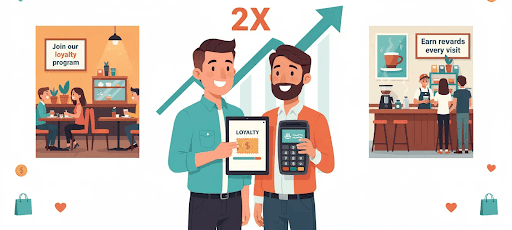
How Restaurants and Coffee Owners Can Integrate Loyalty Programs for 2X Revenue Growth
A complete guide for restaurants and coffee chains to turn repeat visits into long-term revenue.Running a restaurant or coffee shop today is not only about good food, ambience, or location. Guests are spoilt for choice. Competition is intense, and restaurants and coffee shops operate in a highly competitive market where standing out is essential. Delivery platforms dilute brand visibility. And in-store footfall is unpredictable.There is only one proven lever that gives business owners control over repeat visits, average order value, and customer lifetime value, and that is a well-designed loyalty program. For the business owner, integrating loyalty programs provides a strategic advantage in a competitive market by enabling easier rewards management, real-time data access, and improved decision-making.But the real value is unlocked only when these programs are integrated directly into your daily operations — your POS, payments, customer journeys, and digital touchpoints, ensuring you can segment customers effectively while offering seamless earn–redeem experiences along with exclusive rewards that make them feel truly valued. This blog breaks down how restaurant and coffee shop owners can integrate loyalty programs in a simple, effective, and scalable way using modern loyalty services, loyalty solutions, and loyalty program software development services.Why Loyalty Programs Matter More Than EverGuests return not only because they liked the food but because they feel recognised. A loyalty program helps customers feel valued and fosters an emotional connection, turning an occasional visitor into a predictable customer, and a predictable customer into a brand advocate.For restaurants and coffee chains, loyalty is no longer a nice-to-have. It is a business stabilizer.Here is why integrating a loyalty program is essential.You own your customer relationships instead of leaving it to aggregators.You earn directly from repeat visits without paying commissions.You can personalise offers based on preferences and behaviors.You make guests feel valued, leading to higher engagement.Customer loyalty programs are designed to create both transactional and emotional bonds, which are essential for long-term business growth. Modern loyalty solutions today are built to fit into your existing systems without disrupting operations. They work quietly in the background while creating visible business impact.Understanding Integrated Loyalty ProgramsAn integrated loyalty program connects your:Point-of-sale systemBilling and paymentsDigital menu and orderingMobile app or websiteCRM or customer databaseE-receipts and notificationsLoyalty platformUnlike a standalone punch-card or basic rewards system, integrated programs sync customer activity instantly. This makes earning and redeeming rewards effortless — for both staff and customers. Loyalty accounts play a key role by tracking and managing customer rewards across all channels, ensuring a seamless experience and better engagement.With loyalty management services, you can automate:Points earning rulesRechargeable loyalty walletsReferral journeysTier upgradesDigital stamp cardsPromo codes and offersBirthday rewardsSubscription perksThe smoother the experience, the more customers engage, and the more revenue flows back to the business. When all touchpoints and systems are seamlessly integrated, you achieve a unified customer journey.Step-by-Step Guide to Integrating Loyalty Programs in Restaurants and Coffee ShopsStep 1: Choose the Right Loyalty Program StructureYour rewards program must match your restaurant style and can be customized to fit different concepts. Some common formats include:Points system: Guests earn points on every transaction which can be redeemed later. Works best for quick-service restaurants and coffee chains.Tiered rewards: Customers unlock increasing benefits as they reach higher spending or visit more frequently, making this ideal for chains that want to gamify retention and boost engagement.Digital stamp or punch cards: Perfect for cafés where guests return for beverages and snacks regularly.Prepaid loyalty wallets: Guests pay upfront for credits and receive bonus value. This gives an immediate cash flow boost.Subscription programs: Monthly or yearly subscriptions with exclusive perks. Works well for premium cafés.Each rewards program structure can be automated and reward management streamlined through loyalty program software development services, ensuring smooth set-up and ongoing management.Step 2: Integrate Loyalty with Your POS and PaymentsThe biggest frustration for restaurant teams is switching screens or manually entering data.An integrated loyalty as a service model makes sure:Points get added the moment a bill is closedRewards apply automatically at checkoutDiscounts do not require staff to remember codesCustomer information gets updated in real timeRefunds adjust loyalty balances accuratelyMultiple payment methods, such as debit cards, ACH, A2A payments, and BNPL, are supported to enhance customer convenience and improve data collection for personalized marketing.This removes friction, errors, and delay.Restaurants that adopt integrated payment and loyalty solutions create a fast and delightful earning–redeeming experience. Integrating digital payments with loyalty programs also provides a seamless checkout experience, meeting the expectations of today’s customers.Step 3: Build a Seamless Digital Loyalty ExperienceCustomers love convenience. Your loyalty program must appear everywhere they interact:QR on the tableScan at the cash counterApp or web orderingPayment pageDelivery integrationFeedback formFor online shoppers, the loyalty program should be designed so they can easily access and redeem their rewards during the online shopping process, ensuring a smooth and integrated experience.When loyalty is embedded across all touchpoints, customers don’t need to “remember” to use it. It becomes a natural part of their visit. A well-designed loyalty rewards platform helps unify all these channels so customers experience your brand consistently.Step 4: Personalize Offers Based on Customer Data and BehaviourThis is where “2X revenue growth” becomes realistic. Modern loyalty programs powered by loyalty consulting and intelligent workflows help you: • Identify regulars, weekend visitors, and drop-offs by analyzing customer data and past purchases • Segment high-value customers • Track favourite items, ordering patterns, and loyalty behavior to further refine segmentation and recommendations • Send personalised recommendations • Create limited-time offers that drive urgency • Offer personalized incentives based on customer data to drive loyalty and repeat businessExamples:Coffee chain identifies early morning regulars and gives a “Breakfast Combo Reward” by analyzing past purchases.Restaurant notices high order of family meals on Sundays and sends a “Weekend Family Reward” as a personalized incentive.Café encourages trial of a new beverage through targeted bonus points, offering personalized incentives based on loyalty behavior.Personalization removes guesswork and brings predictable lift in orders by leveraging customer data to offer personalized incentives.Step 5: Turn Payment Receipts Into Loyalty Points MomentsWith loyalty program as a service, even your receipts become powerful customer engagement tools.Each bill can carry:Updated points balanceTier statusLoyalty statusLoyalty data (such as reward history and segmentation)Expiring rewardsRecommendationsQR to reorder or give feedbackScan to join the program instantlyThis keeps the customer connected with your brand long after they leave the outlet, and provides an opportunity to reward customers directly through their receipts, reinforcing engagement and loyalty.Step 6: Make Redemption Instant and DelightfulNo guest enjoys complicated redemption steps.Redemption should be as simple as:ScanRedeem pointsEnjoyInstant gratification is the secret behind sustainable customer loyalty in hospitality services.Your system must support:Earning rewards through purchases or specific activitiesItem-level redemptionPercentage discountsCashback into loyalty walletFree add-onsBonus treats for tiersOffering a variety of customer rewards keeps your program attractive and encourages ongoing participation. Fast and transparent redemption builds trust and boosts repeat visits.Step 7: Introduce Micro-Rewards to Encourage Everyday BehaviourSmall nudges, when automated properly, increase engagement drastically by encouraging customers to engage in desired behaviors.Examples:Reward for rating their visitReward for visiting twice a weekReward for trying new menu itemsReward for scanning QR to check balanceReward for referring a friendReward for participating in referral programsMicro-rewards keep the program exciting and dynamic without heavy discounts.Step 8: Use Loyalty Wallets for Instant Cash FlowThis is one of the most effective revenue-growth strategies.A loyalty wallet allows customers to:Load money upfrontReceive bonus creditsSpend it whenever they visitOffering valuable rewards through loyalty wallets increases customer motivation and engagement, encouraging more frequent use and higher wallet loads.For business owners, this acts like advance revenue and improves cash stability. Many restaurants use wallets during festive seasons, special events, or new store launches to generate upfront sales.How Loyalty Programs Lead to 2X Revenue GrowthWhen loyalty is integrated deeply into operations, these revenue drivers kick in:Higher repeat visits: Guests choose you over competitors because they are invested in your brand.Increased average order value: Rewards nudge customers to add more items or upgrade to combos, leading to a higher average order value.Improved customer retention: Integrated loyalty programs help retain customers by providing a seamless and engaging experience that reduces friction at checkout and fosters loyalty.Attracting new customers: Loyalty initiatives can draw in new customers through referrals and targeted promotions, helping you grow your customer base alongside retention efforts.Lower marketing cost: You grow through your existing customers instead of paying aggregators.Better customer experience: Faster checkout, personalised rewards, and consistent engagement increase satisfaction.Stronger brand identity: Your program becomes part of your culture and guest story.Data-driven decisions: Customer insights guide menu improvements, pricing, promotions, and new launches.These combined effects help restaurants and coffee chains achieve sustained growth — without aggressive discounting.Measuring Success: Tracking and Optimizing Your Loyalty ProgramMeasuring the success of your loyalty program is essential for maximizing its impact on customer retention, repeat purchases, and overall revenue growth. By closely monitoring key metrics, you can ensure your loyalty program integration is delivering real value to both your business and your customers.Start by tracking customer engagement—how often customers interact with your loyalty program, enroll as loyalty members, and participate in promotions. Monitor the rate at which loyalty points are earned and redeemed, as this indicates how compelling your rewards are and how effectively you’re encouraging repeat purchases.Customer lifetime value (CLV) is another critical metric. By analyzing how loyalty program members’ spending compares to non-members, you can quantify the program’s effect on customer lifetime and overall profitability. Additionally, keep an eye on customer retention rates to see how well your program is keeping existing customers coming back.Integrating your loyalty program with your point of sale (POS) and CRM systems streamlines data collection, making it easier to analyze purchase history, redemption patterns, and customer satisfaction. This unified view allows you to identify your most loyal customers, segment your audience, and tailor offers to boost customer satisfaction and loyalty.Why Restaurants and Coffee Chains Should Choose Professional Loyalty ServicesBuilding loyalty in-house can be complex. This is where loyalty program service providers make a difference.A specialised partner offers: • End-to-end design and deployment • Integrated POS + payment + CRM loyalty sync • Customisable reward mechanics • AI-powered recommendations • Scalable loyalty program solutions for multiple outlets • Complete UX, design, and branding • Security and compliance support, including protection of sensitive customer data • Reward management to structure, monitor, and optimize rewards efficiently • Assistance with loyalty engagement by tracking and analyzing customer loyalty behavior within CRM systems • Continuous optimisation and performance trackingThese capabilities ensure your loyalty program is not just running but performing at its best every day. Additionally, loyalty software development services ensure your solution grows with your business — whether you expand from one store to ten or scale across cities.Common Mistakes Restaurants Make with Loyalty ProgramsAvoiding these pitfalls will save time and effort.Too many rules: Confusion kills engagement. Keep rewards simple.Delayed points: Slow crediting breaks trust. Integrate for instant updates.No differentiation: Giving the same rewards to everyone feels boring. Use tiers and personalised offers.Heavy discounts: Loyalty is about behaviour building, not margin cutting.No visibility: If customers can’t see their rewards, they forget to use them.Only focusing on dine-in: Include delivery, takeaways, pre-orders, and online ordering.Not tracking loyalty behavior: Failing to combine purchase data with loyalty engagement means missed opportunities for targeted marketing and personalization.An integrated system prevents these mistakes and keeps your program healthy.Future Trends in Restaurant and Coffee Shop Loyalty ProgramsThe global loyalty management market is rapidly evolving, and restaurants and coffee shops are at the forefront of this transformation. As competition intensifies, loyalty programs will become even more critical for driving customer retention, repeat purchases, and sustainable revenue growth.Rise of Personalized and Omnichannel Loyalty ExperiencesOne major trend is the shift toward personalized, omnichannel loyalty experiences, and this transformation is becoming increasingly important for modern food and beverage businesses. Modern loyalty programs are moving beyond simple punch cards to offer tailored rewards and exclusive discounts based on individual customer behavior and purchase history, making the entire engagement journey more meaningful. This approach not only increases customer engagement but also helps businesses build stronger customer relationships and boost customer retention, ultimately creating a more loyal and emotionally connected customer base that returns more frequently.Mobile Payments, Digital Wallets, and Effortless Customer InteractionsMobile payments and digital wallets are also reshaping how customers interact with loyalty programs, introducing a level of convenience that customers have now come to expect. Seamless integration with mobile apps and digital payment systems allows customers to earn and redeem rewards effortlessly, whether they’re ordering in-store, online, or via delivery platforms, ensuring the loyalty experience stays smooth across every touchpoint. This frictionless process not only enhances the customer journey but also encourages more frequent participation in loyalty initiatives.AI-Powered Loyalty, Social Media Integration, and the Future of Customer RetentionArtificial intelligence-powered loyalty platforms are enabling smarter segmentation and more relevant offers, while social media integration is making it easier to engage customers and encourage referrals, creating a dynamic ecosystem of digital interactions. As the global loyalty management market grows, expect to see more restaurants and coffee shops adopting these advanced loyalty systems to stay competitive and meet the rising expectations of today’s digital-savvy consumers, who now demand personalization and speed in every interaction. By staying ahead of these trends and investing in modern loyalty programs, business owners can ensure their loyalty scheme remains a powerful driver of repeat business, customer loyalty, and long-term growth, positioning their brand for sustained success in an evolving marketplace.How to Get Started: A Simple 30-Day RoadmapWeek 1Define loyalty goalsChoose program modelIdentify customer segmentsWeek 2Integrate POSConnect payment journeyDesign earning and redeeming rulesWeek 3Set up digital touchpointsCreate communication templatesPrepare staff trainingAdd early access benefits for loyal members (e.g., early access to new menu items or promotions)Week 4Launch programPromote in-store and onlineTrack performance and refineThis approach allows even small businesses to launch quickly and scale intelligently.Final ThoughtsThe future of restaurant and café growth will be shaped by how well they build relationships with their customers. Food may bring them in, but loyalty keeps them coming back. The best loyalty programs and a successful loyalty program are key to sustainable, predictable, and repeatable revenue. An integrated loyalty program supported by modern loyalty services, loyalty program solutions, and customer loyalty platforms gives business owners a direct path to this growth.Whether you manage a single café or a growing chain, loyalty is your most dependable competitive advantage. If you are looking to integrate loyalty programs that are simple for staff, seamless for guests, and strong enough to drive 2X revenue growth, now is the best time to begin.
Aziro Marketing