FinTech Updates

Uncover our latest and greatest product updates
blogImage

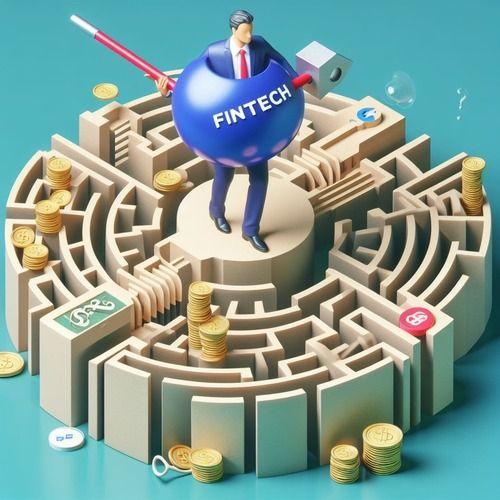
Juggling the Maze to Discover the Best FinTech Software Development Services in the Bay Area? You’ve Arrived!

Let’s Spark Collaboration and Ignite Innovation to Roll Out State-of-the-Art Solutions from Use Cases of Your Choice at Aziro FinTech CoEsIntroduction:In the bustling ecosystem of FinTech, selecting the right software development services can feel like navigating a labyrinth. Amidst a sea of options, it’s crucial to pinpoint a partner that not only shares your vision but also possesses the technical prowess to bring it to fruition. In this blog, we’ll delve into the myriad use cases of FinTech software development and illuminate how Aziro emerges as your beacon, guiding you towards unparalleled success in the Bay Area’s competitive FinTech arena.Why Do We Need FinTech Software Development Services And What Problems Can They Help C-Suite Executives Solve?Fintech software development services are crucial for C-suite executives in the financial industry as they help address various challenges and provide innovative solutions.Streamlining Operations: Fintech software development services revolutionize operations by automating processes, minimizing manual errors, and boosting operational efficiency in financial institutions. This optimization translates into accelerated transaction processing, enhanced data management, and significant cost savings.Enhancing Security: These services play a pivotal role in fortifying cybersecurity measures through the implementation of cutting-edge encryption techniques, multi-factor authentication, and real-time monitoring systems. By bolstering security protocols, fintech solutions safeguard sensitive financial data and thwart cyber threats effectively.Improving Customer Experiences: Fintech software development services prioritize the creation of user-friendly interfaces, tailored services, and seamless digital experiences for customers. Innovative solutions such as mobile banking apps, online payment platforms, and robo-advisors elevate customer satisfaction and foster long-term loyalty.Ecosystem Integration: Fintech services facilitate the seamless integration of diverse financial systems and third-party applications using APIs (Application Programming Interfaces). This integration promotes data sharing, interoperability across platforms, and the development of comprehensive financial ecosystems offering a myriad of services to customers.API-Based Services: Leveraging APIs, fintech software development fosters connectivity between disparate systems and applications. By providing API-based services, companies can effortlessly incorporate new functionalities, collaborate with external partners, and swiftly adapt to evolving market demands.In essence, fintech software development services are indispensable for C-suite executives as they address critical challenges in the financial sector while nurturing innovation and competitiveness in an increasingly digital landscape.Source: FinTech GlobalUnveiling the Diversity of FinTech Software Development & How Aziro Helps Customers Elevate their FinTech GameAt the helm of FinTech innovation stands Aziro , a distinguished provider of FinTech software development services in the Bay Area.Source: FinancesOnlineWith a keen understanding of industry dynamics and a track record of excellence, Aziro offers bespoke solutions across a spectrum of FinTech domains:Download Our Case Studies Here.FinTech COEs Help Clients Elevate their GameFinTech Use CasesDescriptionAziro  ApproachDeployment of Aziro’s Engineering StackPersonal Finance ManagementStreamlining the management of finances, empowering individuals to track income, expenses, and savings effortlessly while strategizing for future financial endeavors.Empowers individuals with user-friendly software solutions that streamline financial tracking and offer tailored advice, ensuring effortless management and fostering financial empowerment.Utilizes Aziro’s “MoneyMaster” framework, incorporating customizable modules and AI-driven algorithms, to d personalized finance management software with “WealthNavigator” solution accelerators for easy tracking and advice provision.Investment ManagementEquipping investors with robust software tools for portfolio management, facilitating informed decision-making, and enabling real-time tracking of market trends.Provides intuitive software tools for portfolio management and market analysis, offering real-time insights to investors for informed decision-making and optimized investment strategies.Leverages Aziro  “InvestPro” framework, integrating advanced analytics and visualization tools, to create portfolio management solutions with “MarketSense” solution accelerators for real-time insights and decision support.Trading PlatformsCrafting secure and intuitive platforms that cater to traders’ diverse needs, facilitating seamless transactions of financial instruments with utmost efficiency.Creates secure and efficient trading platforms, catering to traders of all levels and ensuring optimal user experience, thereby bolstering confidence in trading endeavors.Deploys Aziro “TradeTech” framework, fortified with blockchain integration and real-time monitoring features, to deploy trading platforms with “SecureTrade” solution accelerators ensuring secure transactions and intuitive user experience.Payment ProcessingEnsuring the seamless flow of transactions through the development of resilient payment processing software, adhering to the highest standards of security and reliability.Guarantees secure and efficient payment transactions through robust payment processing software, maintaining the highest industry standards and fostering trust and reliability in financial transactions.Utilizes Aziro “PayGenius” framework, incorporating encryption protocols and fraud detection algorithms, to build payment processing solutions with “SecurePay” solution accelerators ensuring seamless transactions and adherence to security standards.Credit Risk ManagementMitigating risks for financial institutions with comprehensive credit risk management software, enabling accurate assessment of borrower creditworthiness.Provides financial institutions with comprehensive credit risk management software, facilitating accurate assessment of borrower creditworthiness and enabling informed decision-making to mitigate risks effectively.Leverages Aziro  “CreditGuard” framework, utilizing machine learning models and data analytics, to deploy credit risk management software integrated with “RiskAssess” solution accelerators for accurate assessment and informed decision-making.Fraud DetectionLeveraging cutting-edge machine learning algorithms to detect and prevent fraudulent activities, safeguarding businesses against potential financial losses.Utilizes advanced machine learning algorithms to detect and prevent fraudulent activities, fortifying businesses against financial losses and ensuring proactive mitigation of fraudulent threats.Deploys Aziro  “FraudShield” framework, powered by neural networks and anomaly detection algorithms, to implement fraud detection systems with “SafeGuard” solution accelerators for proactive threat mitigation.Compliance ManagementSimplifying regulatory compliance processes through automation, minimizing the risk of non-compliance penalties while ensuring adherence to industry standards.Automates compliance processes to ensure regulatory adherence and minimize the risk of non-compliance penalties, upholding industry standards and fostering trust and credibility for businesses.Implements compliance management solutions using Aziro “CompliTech” framework, with robotic process automation and audit trail features, integrated with “ReguSure” solution accelerators for automated processes ensuring regulatory adherence and risk mitigation.Wealth ManagementTailoring personalized wealth management solutions to cater to the unique needs of high-net-worth individuals, providing them with invaluable investment insights.Offers personalized wealth management solutions tailored to the unique needs of high-net-worth individuals, providing invaluable investment insights and strategies for wealth optimization.Develops wealth management software leveraging Aziro “WealthPro” framework and predictive analytics, with “InvestEdge” solution accelerators for customized solutions catering to high-net-worth individuals’ needs.Insurance ManagementOptimizing policy administration, claims processing, and risk assessment for insurance companies through streamlined software solutions.Streamlines insurance operations with software solutions for policy administration, claims processing, and risk assessment, enhancing operational efficiency and customer satisfaction for insurance companies.Utilizes Aziro “InsureTech” framework, featuring claims automation and predictive modeling, to build insurance management software with “ClaimEase” solution accelerators for streamlined policy administration, claims processing, and risk assessment, ensuring operational efficiency and customer satisfaction.Lending PlatformsRevolutionizing the lending landscape by connecting borrowers with lenders seamlessly, automating loan processes to enhance accessibility and efficiency.Innovates lending platforms, facilitating seamless borrower-lender interactions and automating loan processes to enhance accessibility and efficiency, thereby mitigating risks and fostering a conducive lending environment.Deploys Aziro “LendTech” framework, integrating smart contracts and digital identity verification, to deploy lending platforms with “LoanEase” solution accelerators ensuring seamless interactions, automated loan processes, and risk mitigation, thereby fostering a conducive lending environment.Aziro Value Add: Value AddDescriptionUser-Centric ApproachAziro prioritizes user experience by incorporating usability testing, intuitive design, feedback mechanisms, and customization options into their solutions. This ensures that end-users can navigate financial tools seamlessly.Strategic Partnership BenefitsPartnering with Aziro offers a multitude of benefits including industry expertise, innovative solutions, tailored services, cost-effectiveness, scalability, and a steadfast commitment to excellence.Distinctive OfferingsAziro stands out in the FinTech landscape due to its deep understanding of the industry, proven track record of excellence, and ability to deliver bespoke solutions tailored to diverse FinTech domains.Tailored Software Development ApproachesPersonal Finance Management: Aziro empowers users with solutions like “MoneyMaster” and “WealthNavigator” for streamlined financial tracking and personalized advice.Investment Management: Tools such as “InvestPro” and “MarketSense” facilitate portfolio management and informed decision-making.Trading Platforms: Aziro crafts secure platforms using “TradeTech” and “SecureTrade” frameworks with blockchain integration for enhanced security.Payment Processing: Secure transactions are ensured through the “PayGenius” framework and robust encryption protocols.Technological ExpertiseAziro leverages AI for predictive analytics, fraud detection, personalized recommendations, and process automation, enhancing the efficiency and accuracy of financial operations.Secure transactions are facilitated through blockchain integration in trading platforms, ensuring transparency and trust in financial transactions.ConclusionIn the ever-evolving landscape of FinTech, partnering with the right software development services provider is paramount to success. With Aziro as your trusted ally, you can navigate the intricacies of FinTech innovation with confidence and clarity. From personal finance management to lending platforms and beyond, Aziro offers tailored solutions that empower businesses to thrive in the dynamic Bay Area FinTech ecosystem. Embrace collaboration, ignite innovation, and embark on a journey towards unparalleled FinTech excellence with Aziro by your side.FAQs: A Homing Beacon for FinTech Software Development Service Seekers in the Bay Area1. What is FinTech software development, and how does it impact the financial industry?FinTech software development refers to the creation of financial technologies that aim to improve and innovate various aspects of the financial industry, such as payments, investments, and lending. It impacts the financial industry by enhancing efficiency, reducing costs, and providing better services to customers.2. What are the key use cases of FinTech software development?Some key use cases of FinTech software development include personal finance management, investment management, trading platforms, payment processing, credit risk management, fraud detection, compliance management, wealth management, insurance management, and lending platforms.3. What are some of the top FinTech Software Development Services Companies?Here’s the list of some of the top FinTech Software Development Services Companies in the USA, and beyond:Aziro : Leading the digital revolution in the financial sector, Aziro is at the forefront of transforming traditional banking and finance operations with cutting-edge technology. With 15+ Fortune 500 clients and 250+ FinTech engineers we are breaking barriers and forging excellence. We bring to you a FinTech odyssey like no other. Join us as we decode the language of innovation, elevate financial services, and set sail toward a limitless horizon.100+ Projects250+ Full-Stack FinTech Engineers DeployedAziro Lab-as-a-Service Integrating cutting-edge EcosystemsUnifying Global Engineering Symphony Across Multiple GCCsSeamlessly Accelerate From Prototype to Profitability in Record TimeAdaptive Development Services (ADS) & Product SustenanceUnleash the Financial Future: #1 Fintech Services that Wow!A3logics: A leading provider of fintech solutions, A3logics specializes in digital payments, banking accounts, investments, and insurance products. Their expertise lies in producing cost-efficient, innovative services with enhanced security features.DianApps: DianApps excels in providing customized fintech solutions, committed to swift, reliable, and technical debt-free practices. They facilitate seamless technology for scalable business growth.Kony (now Temenos): Kony, now part of Temenos, powers a world of banking for various players in the industry, including banks, non-banks, and fintechs. Their ambition is to be everyone’s banking platform.Multishoring: Multishoring specializes in offshore and nearshore IT development in Poland, making them a significant player in the fintech software development landscape.Andersen Inc.: An international custom medical software development company, Andersen focuses on technology-intensive industries. They’ve completed over 1000 projects and received positive reviews from customers worldwide.4. How does Aziro approach FinTech software development?Aziro focuses on understanding industry dynamics and providing bespoke solutions across a spectrum of FinTech domains. They deploy their engineering stack and leverage advanced technologies like AI, machine learning, and blockchain to develop innovative solutions for clients.5. What are the benefits of partnering with Aziro for FinTech software development?Partnering with Aziro offers benefits such as industry expertise, innovative solutions, tailored services, cost-effectiveness, scalability, and a commitment to excellence in every project.6. How does Aziro ensure data security in their FinTech software solutions?Aziro prioritizes data security by implementing encryption protocols, robust authentication mechanisms, and continuous monitoring to safeguard sensitive financial information.7. What role does AI play in Aziro's  approach to FinTech software development?AI is integrated into Aziro solutions for predictive analytics, fraud detection, personalized recommendations, and process automation, enhancing efficiency and accuracy.8. Can Aziro FinTech software solutions be customized to suit specific business requirements?Yes, Aziro offers customizable solutions tailored to meet the unique needs and objectives of each client, ensuring optimal functionality and alignment with business goals.9. How does Aziro stay abreast of the latest trends and technologies in the FinTech industry?Aziro invests in continuous research, training programs, and partnerships to stay updated on emerging trends like blockchain, AI, and Web3, ensuring cutting-edge solutions for clients.10. What support and maintenance services does Aziro provide post-implementation of FinTech software solutions?Aziro offers comprehensive support and maintenance services post-implementation, including troubleshooting, updates, security patches, and performance optimization to ensure seamless operation.11. How does Aziro ensure regulatory compliance in their FinTech software development projects?Aziro adheres to strict regulatory standards by incorporating compliance features, audit trails, and automated processes in their software solutions to help clients meet regulatory requirements.12. What measures does Aziro take to ensure user-friendly interfaces in their FinTech software solutions?Aziro prioritizes user experience by conducting usability testing, incorporating intuitive design principles, feedback mechanisms, and customization options to enhance user satisfaction and engagement.13. What are the key benefits of partnering with Aziro for FinTech software development services?Partnering with Aziro offers benefits such as industry expertise, innovative solutions, tailored services, cost-effectiveness, scalability, and a commitment to excellence in every project.14. What sets Aziro apart in the FinTech software development landscape?Aziro stands out for its deep industry understanding, track record of excellence, and bespoke solutions tailored to diverse FinTech domains.15. How does Aziro approach Personal Finance Management software development?Aziro empowers individuals with user-friendly solutions like “MoneyMaster” and “WealthNavigator” to streamline financial tracking and offer personalized advice for effortless management.16. In what way does Aziro assist in Investment Management software development?Aziro provides intuitive tools like “InvestPro” and “MarketSense” for portfolio management, real-time market insights, and informed decision-making for investors.17. What expertise does Aziro bring to Trading Platforms development?Aziro crafts secure platforms using “TradeTech” and “SecureTrade” frameworks, integrating blockchain for secure transactions and real-time monitoring.18. How does Aziro ensure secure Payment Processing software development?Aziro guarantees secure transactions with the “PayGenius” framework, incorporating encryption protocols and fraud detection algorithms through “SecurePay” accelerators.19. What approach does Aziro take in Credit Risk Management software development?Aziro mitigates risks with the “CreditGuard” framework, utilizing machine learning models and data analytics integrated with “RiskAssess” accelerators for accurate risk assessment.20. How does Aziro tackle Fraud Detection in financial transactions?Leveraging advanced algorithms like “FraudShield,” Aziro detects and prevents fraudulent activities using neural networks and anomaly detection for proactive threat mitigation.21. What solutions does Aziro offer for Compliance Management in FinTech?Aziro automates compliance processes with the “CompliTech” framework, ensuring regulatory adherence through robotic process automation and audit trail features with “ReguSure” accelerators.22. How does Aziro cater to Wealth Management needs for high-net-worth individuals?Aziro tailors personalized wealth management solutions using the “WealthPro” framework, predictive analytics, and “InvestEdge” accelerators for customized investment strategies.23. In what ways does Aziro optimize Insurance Management operations for insurance companies?Streamlining policy administration, claims processing, and risk assessment with the “InsureTech” framework and “ClaimEase” accelerators to enhance operational efficiency and customer satisfaction.24. How is Lending Platforms revolutionized by Aziro solutions?By connecting borrowers with lenders seamlessly through the “LendTech” framework, smart contracts, and digital identity verification, automating loan processes for enhanced accessibility and efficiency.25. What benefits can businesses expect from collaborating with Aziro in the FinTech sector?Businesses partnering with Aziro can expect tailored solutions, innovative technologies, industry expertise, and a track record of excellence to thrive in the dynamic Bay Area FinTech ecosystem.26. How does collaboration with Aziro drive innovation in FinTech software development services?Collaborating with Aziro sparks innovation by leveraging cutting-edge technologies, personalized solutions, and a commitment to excellence to achieve unparalleled success in the competitive FinTech arena.27. What role does collaboration play in achieving FinTech excellence with Aziro as a partner?Collaboration with Aziro fosters a culture of innovation, knowledge sharing, and strategic alignment to drive businesses towards achieving FinTech excellence in the Bay Area’s competitive landscape.28. How can businesses leverage the expertise of Aziro to navigate the complexities of the FinTech industry successfully?By partnering with Aziro, businesses gain access to tailored solutions, industry insights, technical prowess, and collaborative partnerships that empower them to navigate the intricate FinTech landscape effectively.29. How does Msys Technologies approach personal finance management software development?Aziro approaches personal finance management software development by focusing on new financial tools, application programming interfaces (APIs), and transactional data to create revenue-sharing ecosystems. They also emphasize the integration of financial services into non-financial applications and platforms, known as embedded finance. This integration requires the development of secure and efficient systems that can handle complex financial transactions and data.The company’s services in digital asset management further demonstrate their commitment to secure and efficient technology solutions. By merging AI-driven tech with secure cloud services, they help businesses transform their digital asset management processes, ensuring the safety and accessibility of financial data.In summary, Aziro approach to personal finance management software development involves creating innovative financial tools and integrating financial services into various applications, while maintaining a strong focus on security and efficiency.30. What is the difference between digital solutions and traditional financial management tools?Digital solutions refer to the use of technology-based tools and platforms for managing personal finances. These tools can include mobile apps, online banking, and other digital platforms that allow users to manage their money from anywhere at any time. Traditional financial management tools, on the other hand, are paper-based or manual methods of managing finances, such as using a checkbook or a spreadsheet.31. How can digital solutions help with cash flow management?Digital solutions can help with cash flow management by providing real-time insights into income and expenses. Users can track their spending and income using mobile apps or online platforms, allowing them to identify areas where they may be overspending or under-earning. This information can be used to make more informed decisions about how to manage their money and improve their cash flow.32. What role does retirement planning play in digital solutions for personal finance management?Retirement planning is an essential aspect of personal finance management, and digital solutions can help users plan for their future. These tools can help users estimate their retirement income, calculate how much they need to save, and set up automatic savings plans. By using digital solutions for retirement planning, users can ensure that they are on track to achieve their financial goals and have a comfortable retirement.33. How can digital solutions help users achieve their financial goals?Digital solutions can help users achieve their financial goals by providing them with the tools and resources they need to manage their money effectively. These tools can include budgeting apps, investment platforms, and other financial management tools that allow users to track their progress and make informed decisions about their money. By using digital solutions, users can take control of their finances and work towards achieving their financial goals.Related Image GallerySource: N-iXSource: CisionSource: N-iXSource: Medium Source: AppinventivSource: StartUs insightsSource: AiloitteSource: AcropoliumDifferent IT Integration Models: Source: MultishoringModern-Day FinTech Powered by Digital Transformation: Source: KPMGSource: NYTGenAI’s ‘Imaginotive’ FinTech RealmReady to bring the future of FinTech to life? Contact Aziro today and let’s transform your vision into reality. Reach out to us now to explore how our innovative solutions can propel your business into the digital frontier.    

Aziro Marketing

blogImage

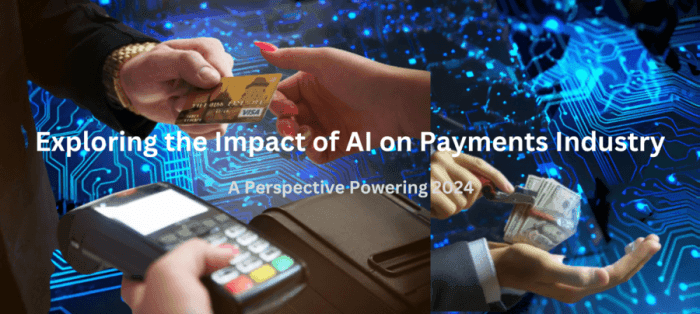
Exploring the Impact of AI on Payments Industry: An Outlook for 2024

In the ever-evolving digital economy, the demand for faster, more robust, and secure payment solutions is paramount, highlighting the crucial role of payment technology. With the landscape continuously evolving, it’s imperative to understand the changing dynamics of the payments industry and anticipate emerging trends for 2024. Additionally, exploring the potential of AI in shaping the future of digital transactions provides valuable insights into the trajectory of the industry. The purpose of the blog “Exploring the Impact of AI on Payments Industry: An Outlook for 2024” is to analyze the evolving role of AI in shaping the future of digital transactions and navigating key trends in the payments industry. Key Learnings: Understanding Digital Payment Trends: The digital economy demands faster, more robust, and secure payment solutions. Key trends include the projected growth of global digital payments revenue to $14.79 trillion by 2027 and the widespread adoption of digital payments worldwide. Role of AI in Shaping the Future: AI holds immense potential in revolutionizing digital transactions. Its ability to enhance security, streamline processes, and offer personalized experiences makes it a critical area for exploration in the payments industry. Innovations in Payment Technology: From blockchain for cross-border payments to AI-driven fraud detection and biometric authentication, various technological advancements are reshaping the payments landscape. Technology providers play a crucial role in driving innovation, security, and efficiency across the financial ecosystem. Implications of Regulatory Scrutiny: While AI promises significant benefits, its implementation raises concerns about data privacy and regulatory compliance. Financial institutions must navigate these challenges while harnessing the potential of AI to drive business growth and innovation. Opportunities for Growth and Collaboration: With the evolving landscape of banking and FinTech in 2024, organizations have opportunities to explore new markets, expand partnerships, and embrace innovative solutions. Understanding and adapting to emerging trends will be key to staying competitive in the dynamic payments industry. Navigating Digital Payments: Key Statistics and Trends Digital payments are reshaping the financial landscape, and understanding these trends is essential for businesses, consumers, and policymakers alike. The potential of AI in shaping the future of digital transactions holds exciting possibilities, making it a critical area to explore. Let’s delve into some key statistics and trends related to digital payments in the ever-evolving landscape (Source: https://ecommercetips.org/digital-payments/): Global Digital Payments Revenue: By 2027, the global digital payments revenue is projected to reach an impressive $14.79 trillion. The market is expected to grow at an annual rate of 11.79% from 2023 to 2027. In 2023, the total global digital payments transaction value is estimated to be $9.47 trillion. Global Adoption of Digital Payments: Two-thirds (2/3) of adults worldwide are now using digital payments, with 89% adoption in the United States. Developed countries have a higher adoption rate (95%) compared to developing countries (57%). Approximately 84% of financial services account owners globally engage in digital transactions. Ecommerce and Digital Wallets: Ecommerce is projected to account for 24% of global consumer spend by 2026. Digital wallets play a significant role, accounting for 49% of global ecommerce sales, while credit cards contribute 21%. Top digital wallets in the U.S. include PayPal (36%), Apple Pay (20%), and Venmo (16%). Central Bank Digital Currencies (CBDCs): Nine in 10 central banks are exploring the concept of central bank digital currencies (CBDCs). CBDCs could revolutionize the way we conduct transactions and enhance financial inclusion. Unbanked Population: While 76% of adults worldwide have a bank account or use a mobile money provider, approximately 1.4 billion adults remain unbanked. Efforts to bridge this gap are crucial for financial inclusion and economic growth. Analyzing the Current State of Innovation in the Payments Industry The payments industry is widely perceived to be approaching a saturation point concerning technological interventions, according to numerous financial experts. Over the past few years, the FinTech revolution has gained considerable momentum, significantly simplifying customer experiences. Despite these advancements, there remains ample opportunity for enhancement across various facets of the industry. One lens through which to examine innovation is by considering market drivers. For instance, the macroeconomic landscape of 2023 compelled many companies to prioritize operational efficiency over expansion. Managing costs, mitigating risks, and ensuring service quality became paramount for maintaining market share. Additionally, heightened consumer awareness emerged as a significant catalyst for this paradigm shift. Present-day consumers are more cognizant of the time value of money, checkout experiences, and safety considerations, all of which are poised to influence the trajectory of innovation in the industry. A Recap of Payment Innovation in 2023 The year 2023 witnessed significant developments across various fronts in the payments industry. One notable highlight was the rebranding of several companies, indicative of their strategic positioning within the sector. These rebrandings often aimed to align with evolving market dynamics and underscore their commitment to serving as strategic partners for banking and financial institutions. In terms of technological advancements, there was a notable focus on adopting AI-first solutions to enhance payment operations, reduce costs, and improve overall customer satisfaction. Companies showcased a range of innovative solutions leveraging cutting-edge technologies such as FedNow, blockchain, and omnichannel commerce. Partnership ecosystems also saw expansion, with collaborations formed with leading tech companies like Google Cloud, AWS, Microsoft, Databricks, Stripe, Salesforce, and Checkmarx. Such alliances were aimed at fostering innovation and delivering value-added services to clients. Looking ahead, there are plans for workforce growth and exploration of new markets, indicating a continued drive for expansion and innovation within the industry. Overall, 2023 was characterized by significant strides in technological innovation, partnership development, and strategic positioning within the payments landscape. Exploring the Role of Technology Providers in the Evolving Payments Landscape At the forefront of the banking and payments revolution are technology solution providers, working in tandem with both banking and non-banking financial institutions. For banking institutions, the focus lies on modernizing legacy infrastructure to address scalability, agility, and performance limitations. Digital transformation initiatives enable banks to offer contemporary payment experiences, integrating emerging technologies like instant payments and buy-now-pay-later for enhanced convenience and flexibility. Adoption of advanced technologies such as APIs, serverless architecture, microservices, cloud-native frameworks, and data services further bolsters performance and security measures. Successful modernization empowers banks to develop tailored solutions, enhancing customer value and competitiveness. Support in infrastructural upgrades, operational efficiency, and service excellence aids institutions in aligning with evolving customer expectations and thriving in a competitive landscape. Non-banking institutions and FinTechs leverage technology partners to explore distinctive use cases and business models. Collaborative efforts result in innovative solutions tailored to meet customer needs and preferences. Leveraging industry expertise, creative problem-solving, product engineering, and technological proficiency, these partners deliver value-added services that differentiate entities from competitors. Integration of cutting-edge technologies such as blockchain, AI, and deep analytics diversifies payment channels while ensuring regulatory compliance and robust security measures. Exploring Innovations in the Payments Landscape: Use Cases and Providers Let’s delve into some key use cases and some prominent PayTech companies or technology providers that are reshaping the evolving payments landscape: Blockchain for Cross-Border Payments: Use Case: Blockchain technology enables secure, transparent, and real-time cross-border transactions. Technology Providers: Companies like Ripple and Stellar offer blockchain-based solutions for seamless international payments. AI-Powered Fraud Detection: Use Case: AI algorithms analyze transaction patterns, detect anomalies, and prevent fraudulent activities in real time. Technology Providers: Feedzai, Forter, and Kount specialize in AI-driven fraud prevention for payment processors and merchants. Biometric Authentication: Use Case: Biometrics (such as fingerprint or facial recognition) enhance security and streamline user authentication during payments. Technology Providers: IDEMIA, BioCatch, and Veridium offer biometric authentication solutions. Embedded Finance and APIs: Use Case: Technology providers enable businesses to embed financial services directly into their platforms. Technology Providers: Plaid, Adyen, and Stripe facilitate API-driven financial integrations. Contactless Payments and NFC: Use Case: Near Field Communication (NFC) technology allows users to make secure payments by tapping their smartphones or cards. Technology Providers: Apple Pay, Google Pay, and Samsung Pay lead in contactless payment adoption. Real-Time Payments Infrastructure: Use Case: Technology providers build and maintain real-time payment rails for instant fund transfers. Technology Providers: Volante Technologies, Jack Henry, and Finzly actively participate in the FedNow Pilot Program. Buy Now, Pay Later (BNPL): Use Case: BNPL services allow consumers to split payments into installments, enhancing affordability and flexibility. Technology Providers: Affirm, Afterpay, and Klarna are popular BNPL providers. AI-Driven Personalization: Use Case: AI analyzes customer behavior to offer personalized payment options and targeted promotions. Technology Providers: Personetics, ZestFinance, and DataRobot specialize in AI-driven personalization. Open Banking and PSD2 Compliance: Use Case: Technology providers facilitate secure data sharing between banks and third-party apps. Technology Providers: Tink, Plaid, and Yodlee offer open banking solutions. Automated Invoice Processing: Use Case: AI automates invoice reconciliation, reducing manual effort and improving accuracy. Technology Providers: Blue Prism, UiPath, and ABBYY provide intelligent automation for payment processing. These technology providers or PayTech companies play a pivotal role in shaping the future of payments, driving innovation, security, and efficiency across the financial ecosystem. Analyzing the Implications of the FedNow Service Launch on the U.S. Payments Landscape The launch of the FedNow Service marks a significant milestone in the evolution of the U.S. payments landscape. Positioned to revolutionize payment processes, FedNow promises to facilitate instant peer-to-peer payments, bill pay, and e-commerce transactions, catering to customer-centric use cases. Additionally, the FedNow framework prioritizes crucial aspects such as fraud prevention, liquidity management, and message standardization, all of which are integral to modernizing the U.S. payments system. Various entities such as J.P. Morgan, Citi, Goldman Sachs, Wells Fargo, Volante Technologies, Jack Henry, Finzly, are actively engaged in the FedNow Pilot Program, showcasing early participation and expertise in providing end-to-end FedNow integration services. These services encompass gap analysis, identification of use cases, and the development of implementation roadmaps aimed at expediting development timelines, reducing costs, and mitigating risks associated with FedNow integration. Preparing for the AI Revolution in Payments: Strategies for Industry Leaders As the belief in AI’s pivotal role in shaping the future of payments gains momentum, organizations across the financial sector are gearing up for this transformative shift. Aziro (formerly MSys Technologies), recognized for its leadership in AI-first, Cloud-first solutions tailored to the financial industry, stands poised to assist financial institutions in accelerating their AI adoption journey. Addressing common early adoption challenges, such as tool inadequacy, data complexity, and scalability concerns, Aziro (formerly MSys Technologies) offers comprehensive support to clients. By conducting thorough assessments and providing actionable implementation roadmaps, Aziro (formerly MSys Technologies) helps organizations navigate the complexities of AI integration. This encompasses various stages, including data preparation, model development, and deployment, ensuring a seamless transition towards AI-driven decision-making. Central to this endeavor is the establishment of a resilient, flexible, and modern data ecosystem. Aziro (formerly MSys Technologies) assists clients in building a unified data marketplace and implementing data-as-a-service capabilities to streamline data management processes. Moreover, integrated data governance policies are put in place to uphold security standards and ensure compliance with industry regulations. In aligning with the AI revolution, Aziro (formerly MSys Technologies) empowers financial institutions to harness the power of data and drive critical business decisions effectively. Navigating the Future of Banking and FinTech in 2024: Insights and Opportunities As we step into 2024, the banking and FinTech sectors are poised for continued evolution and innovation. With ISO 20022 emerging as a global standard for payment messages, financial institutions are prioritizing its adoption to facilitate seamless cross-border transactions. The integration of contextual data flow not only reduces friction points but also presents an opportunity for delivering enhanced payment experiences to both retail and business customers. Looking ahead, blockchain and distributed ledger technologies are anticipated to play a significant role in easing cross-border payments, offering promising solutions to existing challenges in the payment landscape. However, as AI assumes a more prominent role, it brings along genuine concerns regarding its implementation and impact. Regulatory scrutiny is expected to intensify, with governments monitoring AI-related activities for potential unfair or harmful implications. In this context, adherence to existing federal laws and the development of comprehensive regulatory frameworks will be paramount. Navigating this evolving landscape necessitates a nuanced understanding of AI usage, data collection, and risk mitigation strategies. Data privacy emerges as a central concern, underscoring the importance of robust controls and regular model testing to ensure compliance and safeguard consumer interests. In embracing innovation with AI while adhering to regulatory requirements, organizations position themselves favorably to navigate the evolving landscape of banking and FinTech in 2024. Let’s Take Action: Co-Exploring the Future of Banking and Payments Interested in staying ahead of the curve in the dynamic landscape of banking and payments? Explore how Aziro (formerly MSys Technologies) can help your organization navigate the evolving trends and seize opportunities for growth and innovation. Frequently Asked Questions (FAQs) What are the key trends shaping the payments industry in 2024? The payments industry in 2024 is witnessing a shift towards faster, more secure digital transactions, with a focus on AI-driven innovations and regulatory compliance. How is AI revolutionizing digital transactions in the payments sector? AI is enhancing security, streamlining processes, and offering personalized experiences, making it a critical area for exploration in the payments industry. What role do technology providers play in the evolving payments landscape? Technology providers are driving innovation, security, and efficiency across the financial ecosystem by modernizing legacy infrastructure and offering tailored solutions for banks and FinTechs. What is the significance of the FedNow Service launch in the U.S. payments landscape? The FedNow Service promises instant peer-to-peer payments, bill pay, and e-commerce transactions, prioritizing fraud prevention and liquidity management to modernize the U.S. payments system. How can organizations prepare for the AI revolution in payments? Organizations can accelerate their AI adoption journey by partnering with leaders like Aziro (formerly MSys Technologies) to address challenges like tool inadequacy, data complexity, and scalability concerns. What are some key use cases reshaping the payments landscape today? Use cases like blockchain for cross-border payments, AI-powered fraud detection, biometric authentication, and real-time payment infrastructure are transforming digital transactions. Why is data privacy crucial in the context of AI adoption in payments? Data privacy is essential to ensure compliance with regulations and safeguard consumer interests when leveraging AI for personalized payment options and targeted promotions. How are central bank digital currencies (CBDCs) impacting financial inclusion globally? CBDCs have the potential to revolutionize transactions, enhance financial inclusion, and bridge the gap for approximately 1.4 billion unbanked adults worldwide. What opportunities does embedded finance through APIs offer businesses in the payments sector? Embedded finance enables businesses to integrate financial services directly into their platforms using APIs provided by companies like Plaid, Adyen, and Stripe. How can organizations navigate regulatory scrutiny while harnessing AI for business growth in payments? Adherence to existing federal laws and development of comprehensive regulatory frameworks are crucial to ensure fair and compliant AI usage within the payments industry. In what ways can technology providers enhance customer value and competitiveness for banking institutions? Technology providers assist banks in modernizing legacy infrastructure with advanced technologies like APIs, cloud-native frameworks, and data services to offer contemporary payment experiences. What are some strategies for industry leaders to drive critical business decisions effectively through AI integration? Establishing a resilient data ecosystem with unified data marketplace capabilities and integrated data governance policies is essential for leveraging AI-driven decision-making effectively. How is ecommerce influencing global consumer spend and digital wallet adoption in the payments sector? Ecommerce is projected to account for 24% of global consumer spend by 2026, with digital wallets like PayPal, Apple Pay, and Venmo playing a significant role in online transactions. Why are partnerships with leading tech companies crucial for fostering innovation in the payments industry? Collaborations with tech giants like Google Cloud, AWS, Microsoft, Stripe, Salesforce facilitate innovation delivery of value-added services that differentiate entities from competitors. What insights can ISO 20022 adoption provide for seamless cross-border transactions in banking and FinTech sectors? ISO 20022 adoption facilitates contextual data flow reducing friction points while offering enhanced payment experiences to retail and business customers amidst evolving global standards.

Aziro Marketing

blogImage

Best FinTech Engineering Services in USA: How to Choose a Reliable Partner for Your FinTech Software Solutions

IntroductionThe FinTech landscape is rapidly evolving, driven by technological advancements and changing consumer preferences.As financial institutions and companies seek to enhance their services, fintech engineering services play a pivotal role in transforming traditional financial processes.Whether it’s optimizing financial transactions, automating banking services, or creating innovative financial products, finding the right partner is crucial.Img.: The Current State of the USA FinTech MarketIf you’re looking for nothing but the best Fintech Engineering Services in USA and are looking to onboard a reliable partner for your FinTech software solutions then this blog is for you.Learning OutcomesA) Understanding the FinTech landscape: Familiarize with the key areas of FinTech, such as loyalty programs, payment processing, digital wallets, asset management, and risk analysis.B) Navigating multisided partnerships: Gain insights into the collaborative alliances in outsourcing and their role in reshaping traditional financial processes.C) Aziro (formerly MSys Technologies)’ value proposition: Learn about Aziro (formerly MSys Technologies)’ expertise in fostering collaboration, innovation, and client success in the FaaS market in the USA.D) Agility and adaptability: Understand the importance of agility and adaptability in adapting to changing business processes and ensuring acceptable cost and speed.E) Robust risk management: Learn about Aziro (formerly MSys Technologies)’ risk management solutions and their ability to mitigate risks associated with market fluctuations or unforeseen events.F) Technological ingenuity: Discover Aziro (formerly MSys Technologies)’ relentless pursuit of technological innovation and how it enables revolutionary changes at the organizational level.G) Customer-centric approach: Understand Aziro (formerly MSys Technologies)’ ‘Customer Intimacy’ model and how it places customers’ needs at the forefront of business goals.H) Full-stack FinTech expertise: Learn about Aziro (formerly MSys Technologies)’ unwavering commitment to collaboration, innovation, and customer success in navigating the complexities of multisided partnerships within the USA FaaS market.Img.: Aziro (formerly MSys Technologies) Full-Stack FinTech SpectrumImg: Aziro (formerly MSys Technologies) Optimizing FinTech for a winning EdgeImg: Aziro (formerly MSys Technologies) FinTech CoE’s a Commitment to Excellence: Let’s Start Co- Building a PoC Now!Navigating the Dynamic Landscape of US FinTech: Trends, Insights, and Future ProspectsThe United States’ financial technology (FinTech) arena is experiencing a rapid metamorphosis, propelled by technological innovations and shifting consumer preferences, positioning the nation as a pivotal hub for financial transformation.Embracing diverse solutions spanning from cryptocurrencies to digital payments, robo-advisors to neobanks, FinTech is revolutionizing financial dynamics, shaping the trajectory of global finance.Img.: Source: CB InsightsUnveiling the Latest TrendsHere are a few burgeoning trends from –Img.: Burgeoning FinTech TrendsThese can further be classified into:A) General Trends: Notable advancements like microservices, Fintech-as-a-Service (FaaS), embedded finance, and cryptocurrencies are driving industry growth.B) Customer Trends: The forefront sees digital payments and fintech disrupting traditional banking models.C) Technology Trends: Artificial intelligence, machine learning, and biometrics are pivotal in reshaping the fintech landscape.Key Market InsightsA) The US FinTech market boasts a robust CAGR of 11%, with digital payments reigning supreme.B) Venture capital influx into digital banking drives significant growth annually.C) Diverse services like digital payments, investments, neo-banking, and online insurance are reshaping the financial landscape.Img.: FinTech Unicorns in the USAImg.: Market Valuation of FinTech Unicorns in USAImg. Source: F’primeEnvisioning the FutureThe future of US FinTech promises sustained growth, underpinned by mobile adoption, digital banking proliferation, and substantial investments.Img. Source: PRNewswireSpecializations span payment processing, digital banking, investment management, and insurtech, ensuring innovative solutions tailored to evolving consumer needs.In essence, the US FinTech landscape is dynamic, poised for continual evolution through innovation and disruption across various financial domains.Staying abreast of emerging trends and technologies will be paramount for navigating this ever-changing terrain successfully.Img.: Continuous Deployment, Scaling, Delivery and Sustenance at Aziro (formerly MSys Technologies)’s FinTech CoEsUnveiling the Flourishing Landscape of FinTech as a Service (FaaS) Market in the USAThe current landscape of the FinTech as a Service (FaaS) market in the United States is undergoing a remarkable evolution, brimming with growth prospects and boundless potential.As illuminated by a comprehensive report from Markets and Markets, projections suggest an impressive surge, with the market poised to ascend from USD 310.5 billion in 2023 to a staggering USD 676.9 billion by 2028, propelled by a compelling compound annual growth rate (CAGR) of 16.9% throughout the forecasted period.Img. Source: LipaPaymentsThis remarkable trajectory owes its momentum to several pivotal factors, notably the advent of cloud computing technology, heralding a new era of operational flexibility and scalability.Img: Cloud-Computing Powering FinTechFurthermore, relentless innovation in artificial intelligence (AI) and blockchain technologies stands as a cornerstone, actively shaping the expansive horizons of the FaaS landscape.Img.: Blockchain Powering FinTechAt the forefront of this burgeoning sector, prominent entities such as PayPal, Mastercard, and Fiserv, among a constellation of others, assert their dominance.This market sphere is intricately segmented by type, encompassing banking, payment, insurance, and investment services, as well as by technological innovations, spanning AI, blockchain, robotic process automation (RPA), and application programming interfaces (APIs).Img.: RPA powering FinTechImg.: RPA for FinTechs – Let’s Co-Deploy Your Use CaseMoreover, the diverse array of applications, including fraud monitoring, KYC verification, and regulatory compliance, underscore the multifaceted nature of FaaS offerings, tailored to meet diverse end-user requirements across different regions.Central to the thriving FaaS milieu in the USA is the symbiotic relationship with robust regulatory frameworks and a sophisticated financial services ecosystem.Build Your FinTech Products While Complying with Regulatory Requirements with Aziro (formerly MSys Technologies)North America’s preeminence in this realm is further bolstered by the paradigm shift within financial institutions towards customer-centric models, amplifying the demand for FaaS solutions.For example, Insurtech is the use of technology designed to maximize savings and gain efficiency from the insurance industry models.InsurTechs are redefining the insurance customer experience by innovating lengthy processes including underwriting, claims processing and immediate activation.Img.: Tap into USA InsurTech Market Map with Aziro (formerly MSys Technologies)FinTech companies are starting to partner with traditional insurance companies to automate processes and enable the insurance companies to expand coverage.Trading and investing has improved with the adoption of FinTech.Information from big data is often unstructured and unreadable without the help of AI.In essence, the flourishing FaaS market in the USA is a testament to the harmonious convergence of technological innovation, regulatory stewardship, and the imperative for seamless compliance and regulatory adherence.Amidst intensifying competition, industry leaders continue to unveil innovative solutions, catering to the evolving needs of both financial institutions and discerning consumers, thus charting an exciting trajectory of growth and innovation.Why Fintech Engineering Services MatterInnovation: Fintech companies leverage cutting-edge technology, including artificial intelligence, machine learning, and blockchain, to revolutionize financial services.They offer solutions that improve efficiency, enhance security, and provide personalized experiences.Mobile Banking: With the rise of mobile devices, mobile banking has become a preferred way for customers to manage their finances.Fintech solutions enable seamless mobile payments, account management, and access to financial data.Financial Inclusion: Fintech bridges gaps by reaching underserved populations, providing access to banking services, and promoting financial literacy.It empowers small business owners, facilitates peer-to-peer payments, and supports emerging markets.Digital Wallets: Fintech companies develop user-friendly digital wallets, allowing users to store digital assets, make payments, and transfer money securely.Exploring Some Popular FinTech Software Solutions in the USA and Their Real-Time Use CasesThe dynamic landscape of FinTech (Financial Technology) is reshaping the way we manage money, conduct transactions, and interact with financial services.Let’s delve into some real-world examples where FinTech solutions are making a significant impact:Mobile Banking and Payment Apps:Img.: Digital Payment Ecosystem in the USAa) Chime: A digital bank that offers no-fee banking services, early direct deposit, and a user-friendly mobile app.b) Venmo: A peer-to-peer payment platform that simplifies splitting bills, paying friends, and managing expenses.c) Cash App: Allows users to send money, invest in stocks, and even buy Bitcoin via their mobile devices.Automated Financial Advisors:a) Betterment: An automated investment platform that uses algorithms to create personalized portfolios for users.b) Wealthfront: Offers automated investment management, tax-loss harvesting, and financial planning tools.Blockchain and Cryptocurrency:a) Coinbase: A popular cryptocurrency exchange that allows users to buy, sell, and store digital assets like Bitcoin and Ethereum.b) Gemini: A regulated crypto exchange that emphasizes security and compliance.Lending and Borrowing Platforms:a) LendingClub: A peer-to-peer lending platform connecting borrowers with investors.b) SoFi: Provides student loan refinancing, personal loans, and mortgage services.Financial Data Aggregators:Plaid: Enables secure access to financial data from various banks and institutions, powering apps like Venmo and Robinhood.Yodlee: Yodlee provides secure access to financial data from various sources, enabling apps and services to offer personalized financial insights and solutions based on user data.Quovo: Quovo is another financial data aggregator that allows secure access to financial information, empowering applications to offer tailored financial services and products to users based on their financial data.Robo-Advisors:Acorns: Rounds up everyday purchases and invests the spare change in diversified portfolios.Stash: Helps users invest in fractional shares of stocks and ETFs based on their interests.AI-Driven Financial Insights:Personal Capital: Combines financial tracking, investment management, and retirement planning.Mint: Aggregates accounts, tracks spending, and provides budgeting insights.Digital Wallets and Payment Solutions:Apple Pay: Allows contactless payments using iPhones and Apple Watches.Google Pay: Offers seamless in-store and online payments.Small Business Financial Tools:Square: Provides point-of-sale systems, invoicing, and business loans.QuickBooks: Streamlines accounting, payroll, and financial management for small businesses.Fraud Detection and Prevention:Forter: Uses machine learning to identify and prevent fraudulent transactions.Feedzai: Offers real-time fraud detection for financial institutions.Remember, these examples represent just a fraction of the diverse FinTech landscape.As technology continues to evolve, FinTech solutions will play an increasingly vital role in shaping our financial lives and improving financial outcomes for individuals, businesses, and institutionsKey Considerations When Choosing a Fintech PartnerExpertise: Look for a partner with a strong track record in fintech software development.Consider their experience in building solutions for financial institutions, fintech companies, and other players in the industry.Many FinTech companies might just be looking for legacy modernization while venture capital firms might want to opt for API integrations like cash app, for example.Digital lending platform integrations might be ideally suited for a payment processing company that offers financial services, and optimizing traditional banking services.Traditional banks must improve financial services provided by them and opt for mobile device based POS services, facilitate online banking, portfolio management and electronic bank transfers.Today, with the rise of the FinTech industry, global financial markets require dynamic players.Regulatory Compliance: Fintech operates within a complex regulatory environment. Ensure your partner understands and complies with relevant laws, such as Anti-Money Laundering (AML) regulations.Risk and Fraud Management: A reliable partner should have a robust risk and fraud management plan. This includes forecasting and preventing risks related to financial operations.User-Centric Design: An intuitive and contemporary design is essential for fintech solutions.It attracts users and sets your app apart from competitors.Scalability: As your business grows, scalability becomes critical.Choose a partner capable of handling increased demand and adapting to changing requirements.Financial Goals: Align with a partner who shares your financial goals.Whether it’s improving financial outcomes or expanding services, mutual objectives are essential.Remember, the right fintech partner can propel your business forward, enhance financial services, and contribute to your success in the dynamic world of finance.Navigating Multisided Partnerships in FaaS: Insights and Aziro (formerly MSys Technologies)’ Value PropositionIn the ever-evolving landscape of FinTech as a Service (FaaS) within the USA, the collaborative alliances in outsourcing play a pivotal role in reshaping traditional financial processes and fostering enduring cooperation.Delving into key aspects, including flexibility, trust-building, governance, risk management, peace of mind, and innovation, reveals the quintessence of successful partnerships in this dynamic domain.Img.: Strategic Partnerships to Elevate InnovationUnderstanding Multisided Partnerships for FinTech CompaniesMultisided partnerships thrive on collaboration, flexibility, and innovation, vital for navigating the complexities of the FaaS market.Effective communication, robust governance models, and shared objectives underpin mutual success, making such partnerships instrumental in driving industry transformation.Aziro (formerly MSys Technologies)’ Value Add:As an industry leader in FinTech software solutions, Aziro (formerly MSys Technologies) stands poised to address the nuanced challenges within the FaaS market, emerging as an ideal partner for navigating multisided partnerships in outsourcing.Here’s how Aziro (formerly MSys Technologies) adds value to such collaborations:Flexibility: Aziro (formerly MSys Technologies) excels in maintaining a delicate balance between contractual clarity and adaptability, fostering an environment conducive to innovation and seamless adjustment to evolving needs.Trust Building: With a commitment to trust and reliability, Aziro (formerly MSys Technologies) empowers outsourcing partners to exceed expectations, fostering stable and enduring collaborations through clear task assignments and freedom in execution.Governance Model: Implementing agile governance models, Aziro (formerly MSys Technologies) ensures swift decision-making and alignment of priorities, fostering effective communication and collaboration across strategic, tactical, and operational levels.Risk Management: Offering proactive risk management solutions, Aziro (formerly MSys Technologies) provides access to scalable resources, mitigating risks associated with market fluctuations or unforeseen events, instilling confidence and peace of mind in clients.Innovation: At the forefront of innovation, Aziro (formerly MSys Technologies) integrates emerging technologies like RPA, AI, and analytics, driving continuous improvement and ensuring clients stay ahead of the curve in the ever-evolving FaaS landscape.These can be used for automating financial services, lending process automation, accessing financial health for the clients of any financial institution.Img. 4: A Peek Into Tech Stack at Aziro (formerly MSys Technologies)In essence, Aziro (formerly MSys Technologies)’ expertise in fostering collaboration, innovation, and client success positions them as a leading provider of FinTech software solutions tailored to meet the evolving needs of the FaaS market in the USA.Their commitment to flexibility, trust-building, governance, risk management, peace of mind, integrating ecosystems and platforms for digital wallets, DLT-based solution accelerators and exchange traded funds.Our innovation makes us an invaluable partner for any financial technology company or the financial services industry at large, navigating multisided partnerships and driving industry transformation.Elevating FinTech Partnerships: Aziro (formerly MSys Technologies)’ Value PropositionIn the dynamic realm of FinTech as a Service (FaaS), where collaborative alliances drive innovation and transformation, Aziro (formerly MSys Technologies) emerges as an indispensable partner, steering clients towards success with a blend of technological prowess and customer-centric strategies.Here’s how Aziro (formerly MSys Technologies) adds substantial value to multisided partnerships in the evolving USA FaaS market:Leveraging FinTech Expertise:Aziro (formerly MSys Technologies) boasts a deep understanding of the FinTech landscape, encompassing a spectrum of critical areas such as loyalty programs, payment processing, digital wallets, asset management, and risk analysis.With a team of 250+ skilled engineers, Aziro (formerly MSys Technologies) offers a comprehensive suite of FinTech solutions tailored to optimize business endeavors and drive cost efficiencies, reducing total cost of ownership (TCO) by up to 45%.Agility and Adaptability:Embracing the ethos of agility, Aziro (formerly MSys Technologies) excels in swiftly adapting to changing business processes, ensuring acceptable cost and speed.Through flexible deployment models and rapid team deployment within 15 days (scaling up in 90 days), Aziro (formerly MSys Technologies) empowers clients to scale rapidly and introduce new products and services without compromising performance or availability.Robust Risk Management:In an era fraught with uncertainties, Aziro (formerly MSys Technologies) offers invaluable risk management solutions, providing access to scalable resources to mitigate risks associated with market fluctuations or unforeseen events.With fault tolerance mechanisms and round-the-clock support from dedicated teams, Aziro (formerly MSys Technologies) ensures business continuity, prevents costly downtime, and maintains customer trust and loyalty.Technological Ingenuity:At the core of Aziro (formerly MSys Technologies)’ ethos lies a relentless pursuit of technological innovation.Aggressively investing in technical proficiencies and leveraging cutting-edge solutions, Aziro (formerly MSys Technologies) doesn’t merely facilitate business objectives but enables revolutionary changes at the organizational level.With complete testing services, CI/CD powered QA automation, and a robust QA automation framework, Aziro (formerly MSys Technologies) ensures faster time-to-market with uncompromising quality.Customer-Centric Approach:Aziro (formerly MSys Technologies) embraces a ‘Customer Intimacy’ model, placing customers’ needs at the forefront of business goals. By forging deeper, sentiment-based relationships, Aziro (formerly MSys Technologies) delivers personalized experiences, reinforcing trust and loyalty.With a 360-degree, end-to-end full-stack FinTech expertise, Aziro (formerly MSys Technologies) transforms business processes, acting as knights in shining armor to conquer financial services hiccups.Amongst numerous FinTech services companies clouding the USA market, Aziro (formerly MSys Technologies)’ unwavering commitment to collaboration, innovation, and customer success makes us an unparalleled partner in navigating the complexities of multisided partnerships within the USA FaaS market.Join forces with Aziro (formerly MSys Technologies) and embark on a journey towards transformative FinTech solutions, underpinned by state-of-the-art technology and unwavering support.In the fast-paced world of FinTech, selecting the right partner is akin to navigating a labyrinth of opportunities and challenges.The search results underscore the significance of this decision, as the right partner can make or break a business’s success in the dynamic landscape of FinTech as a Service (FaaS) in the USA.Closing the Drapes: Finding the Needle in the Haystack of FinTech PartnershipsA reliable partner should possess a robust risk and fraud management plan, a user-centric design, scalability, and financial goals that align with the client’s objectives.This is where Aziro (formerly MSys Technologies) comes into play.our value proposition emphasizes flexibility, trust-building, governance, risk management, peace of mind, and innovation, making them an ideal partner for navigating multisided partnerships in outsourcing.By leveraging their expertise in FinTech, Aziro (formerly MSys Technologies) helps clients optimize their business endeavors and drive cost efficiencies, ultimately contributing to their success in the dynamic world of finance.In essence, choosing Aziro (formerly MSys Technologies) as a fintech partner is like striking gold in a sea of options, ensuring a smoother journey through the ever-evolving FinTech landscape.FAQsA) What is Financial Technology (FinTech)?FinTech refers to the innovative use of technology in financial services.It encompasses interesting ecosystem integrations elevating a bank account holder’s facilitations, enabling capabilities such as digital lending, blockchain, and more.Img. 5: How Technology Impacts the Financial Services IndustryB) How do FinTech Companies Enhance Financial Services?FinTech companies introduce efficiency and innovation.Contrary to financial services companies that offer traditional financial products with established methods, FinTech companies use technology for innovative, efficient financial solutions.In today’s financial industry, fintech companies pioneer technological advancements to transform traditional financial practices.A fintech company revolutionizes the way clients accept payments, automate financial services, open a bank account, and revolutionize the financial industry at large.Examples include mobile banking apps, robo-advisors, and blockchain-based solutions.C) What Real-Life Examples Illustrate the Impact of FinTech?Cryptocurrency Exchanges: Platforms like Coinbase and Binance enable secure trading.Decentralized Finance (DeFi): DeFi protocols run on blockchain, offering lending and yield farming.Supply Chain Management: Blockchain ensures transparency in supply chains.D) Why Should You Choose Aziro (formerly MSys Technologies) as Your FinTech Engineering Partner?Aziro (formerly MSys Technologies) combines fintech expertise with emerging technologies.We empower financial companies to innovate, enhance security, and improve customer experiences.E) How Does Blockchain Benefit Fintech Companies?Blockchain enhances security, reduces fraud, and streamlines processes.Fintech companies can leverage it for faster cross-border payments, smart contracts, and identity verification.F) What Are Some Real-Life Examples of Blockchain in FinTech?Cryptocurrency Exchanges: Platforms like Coinbase and Binance use blockchain for secure trading.Decentralized Finance (DeFi): DeFi protocols run on blockchain, enabling lending, borrowing, and yield farming without intermediaries.Supply Chain Management: Blockchain ensures transparency and traceability in supply chains.G) Why Should Aziro (formerly MSys Technologies) Be Your Fintech Engineering Partner?Aziro (formerly MSys Technologies) combines expertise in fintech software development with a deep understanding of blockchain.Our solutions empower financial companies to innovate, improve security, and enhance customer experiences.H) What services do FinTech engineering companies offer?FinTech engineering companies provide a wide range of services, including developing bank account management systems, enabling businesses to accept payments, and creating innovative solutions for managing financial accounts and paying bills.I) How can FinTech engineering services benefit my business?By leveraging FinTech engineering services, businesses can streamline their operations, enhance customer experience through user-friendly bank accounts and payment acceptance systems, and gain access to cutting-edge financial products tailored to their needs.J) What distinguishes a reliable FinTech company in the USA?A reliable FinTech company should have a proven track record of delivering high-quality solutions for managing savings accounts, providing financial advisory services, and offering employee benefits solutions.Look for a company with expertise in private equity and a strong reputation in the financial industry.K) What should I consider when choosing a FinTech engineering partner?When selecting a FinTech engineering partner, consider factors such as their experience in developing financial products, their ability to integrate seamlessly with existing systems of many financial institutions, and their parent company’s reputation and financial stability.L) Can FinTech engineering services help my business scale?Yes, engaging with a reputable FinTech engineering company can facilitate scalability for your business by providing scalable solutions such as those to pay bills, integrating with a variety of bank accounts with your parent company, and enabling efficient management of financial transactions for employee benefit.M) Are there any notable examples of successful FinTech projects?Yes, several big FinTech companies have executed successful projects, such as developing innovative solutions for managing bank accounts, providing financial advisory services, and facilitating private equity transactions.These companies have made significant contributions to the financial industry.N) Who are the biggest fintech companies of 2024?The most prominent fintech companies of 2024, according to reputable sources, include:Visa: Leading the PayTech sector with a market capitalization of $559.6 billion.Mastercard: Close behind Visa, with a market capitalization of $436.7 billion, solidifying its presence in PayTech.Ant Group: A significant player valued at $78.5 billion, showcasing its influence in the fintech industry.Stripe, Inc.: Valued at $50 billion, particularly known for its payment solutions expertise.Revolut: Holding a valuation of $33 billion, showcasing its impact in the fintech landscape.Chime Financial, Inc.: Valued at $25 billion, positioning itself as a major player in fintech.Rapyd: With a valuation of $15 billion, offering innovative financial solutions.Plaid: Valued at $13.4 billion, crucial in enabling financial technology services.Brex, Inc.: Valued at $12.3 billion, demonstrating significant influence and growth.GoodLeap: Holding a valuation of $12 billion, cementing its place among the top fintech companies.These are some of the largest FinTech companies and are key players, shaping the fintech industry and customer behavior in 2024, evident from their market capitalizations and contributions to financial technology innovation and services.These technology companies also support many sustainability endeavors supporting small private companies and MSMEs along with small businesses globally, promoting financial inclusion, alleviating financial stress.O) Name some of the biggest FinTech startups in USA and some of their unique online platforms?Some of the biggest FinTech startups in the USA and their unique online platforms include:Stripe, Inc.: Stripe is a payment processing company that provides secure and user-friendly payment processing tools for businesses.Their online platform enables finance teams to delight customers easily through an array of payment services.Chime Financial, Inc.: Chime is a digital banking platform that offers checking and savings accounts, debit cards, and investment opportunities to its users.Their online platform provides a comprehensive suite of financial services for individuals.Brex, Inc.: Brex is a financial technology company that offers corporate cards and cash management solutions for businesses.Their online platform streamlines the process of managing business expenses and cash flow.Rapyd: Rapyd is a global payments platform that facilitates businesses to accept and make payments in over 100 countries.Their online platform offers a seamless and efficient way for companies to manage their international payments and financial systems.Plaid: Plaid is a financial technology company that provides APIs for banks and financial institutions to connect with other financial applications.Their online platform enables developers to build financial applications that integrate with various financial institutions.GoodLeap: GoodLeap is a platform that allows individuals to invest in sustainable projects and properties.Their online platform provides a way for investors to support environmentally friendly projects while earning returns.Wealthfront: Wealthfront is a robo-advisor that offers automated investment management services.Their online platform utilizes algorithms to construct and manage investment portfolios for users.Betterment: Betterment is another robo-advisor that provides automated investment management services.Their online platform employs algorithms to construct and manage investment portfolios for users benefiting from their financial system.Lemonade: Lemonade is an insurance technology and a financial advisor genre company that offers home and renters insurance through a mobile app.Their online platform provides a simple and user-friendly way for customers to manage their insurance policies and financial systems.Root: Root is an insurance technology company and another financial advisor genre company that provides car insurance through a mobile app.Their online platform utilizes data and technology to offer personalized insurance quotes and manage policies for customers and the company’s platform.

Aziro Marketing

blogImage

Navigating the Complexities of PayTech Services in the USA: A Comprehensive Guide for Financial Institutions

IntroductionIn today’s rapidly evolving financial landscape, the United States stands at the forefront of a technological revolution that is redefining the payments industry.PayTech, short for payment technology, encompasses a dynamic sector that includes real-time payments, digital wallets, open banking, and other groundbreaking innovations.This blog aims to provide a comprehensive guide for financial institutions seeking to navigate the intricate world of PayTech services in the USA.PayTech services in the USA encompass a dynamic ecosystem of software components, API initiatives, and security measures that enable businesses to manage sensitive data, enhance customer engagement, and comply with regulatory requirements for financial data processing within banking industry while sharing account balances and implementing loyalty programs with other third parties.The evolution of PayTech in the USA is reshaping the payments landscape. PayTechs, leveraging banking APIs, are capitalizing on this opportunity by revolutionizing how consumers and merchants transact and pay. With a focus on new financial tools, application programming interfaces, and transactional data, they create revenue-sharing ecosystems.Source: EYThese ecosystems involve private data, savings accounts, payment initiation, and the exploration of new business models within the digital economy.Additionally, digital currencies and API platforms play a pivotal role, allowing third-party services to seamlessly share data and empower customers’ control over their financial transactions.According to a recent report by EY, the payments sector presents significant opportunities for value-added services, with digital payments fundamentally reshaping customer expectations.Source: TotalfinanceIn fact, the global PayTech market is projected to surge from $1.7 trillion in 2021 to an impressive $3.6 trillion by 2028, with North America playing a pivotal role in this growth.To thrive in this rapidly evolving landscape, financial institutions must focus on four key enablers: customer experience design, risk management, technology adoption, and data analytics.Leveraging data and analytics becomes a strategic imperative, allowing institutions to mitigate risk, enhance customer experiences, and even monetize data assets.However, navigating the complexities of PayTech services presents challenges, encompassing banking services, bank accounts, open banking, the banking industry, banking as a service, open banking APIs, initiating payments, banking data, payment service providers, application programming interfaces, customer account data, business models, personal financial management, the financial services industry, revenue streams, the API development process, third-party providers, payment processing, third-party developed services, financial services, payment transactions, financial information, open banking strategy, payment services, digital services, transaction history, various financial services, and bank accounts.PayTech finds a lot of use cases within the realm of embedded finance and banking as a service.With an impetus on banking services, beyond developing revenue streams, application programming interfaces, and third-party providers, as well as third-party developed services jumping into the game, we aim to create revenue-sharing ecosystems.These ecosystems involve account to account payments, open banking facilitations powering payment services, banking institutions, financial tools, FinTech companies, customer data, incumbent banks, new revenue streams, seamless integration, financial apps, open banking APIs, and credit card accounts. Let’s explore some critical aspects:Interoperability and ISO 20022 AdoptionInteroperability—the seamless exchange of information across systems—is crucial.Adopting the ISO 20022 messaging standard as the foundation enables PayTech to scale efficiently.Source: CompactThis standard facilitates consistent data formats, enhancing communication between financial institutions, payment processors, and other stakeholders.Data Handling and Customer ExperienceData is king: Financial institutions must maintain a relentless focus on data. Whether it’s proprietary or third-party data, harnessing it effectively is essential.Superior customer experiences: PayTech services rely on personalized interactions.Via: Nickolas BelesisUnderstanding customer behavior, preferences, and transaction patterns allows institutions to tailor services and drive engagement.Regulatory Landscape and FlexibilityRegulatory pivot: As regulations catch up to innovation, financial institutions must be prepared to adapt swiftly. Compliance with evolving guidelines ensures long-term viability.Flexible technology platforms: Institutions need agile technology stacks that accommodate new requirements, security enhancements, and more stringent expectations.Source: ResearchGateLet’s delve into the intricacies of PayTech services, exploring topics such as real-time payments, open banking APIs, revenue models, and the delicate balance between innovation and compliance. Buckle up—we’re about to decode the future of payments!Revolutionizing PayTech: How Open Banking Transformed the LandscapeThe evolution of Open Banking has been a game-changer for the PayTech industry, ushering in new possibilities and challenges.Source: PayCECThe open banking ecosystem is undergoing a transformative shift, and PayTech (payment technology) plays a pivotal role in addressing several inherent challenges. By leveraging financial data, open banking APIs, and innovative solutions, PayTech companies are reshaping the landscape.Source: FortunesoftHere’s how:1. Unlocking Financial Data:Open banking facilitates seamless access to financial data across institutions. PayTech companies utilize this wealth of information to create personalized services, such as budgeting tools, investment recommendations, and credit scoring models. By analyzing transaction histories and account balances, they empower users with actionable insights.Source: FinTech Futures2. Enabling Banking Services:Through open banking APIs, PayTech firms integrate with banks to offer a wide range of banking services. These services include balance inquiries, fund transfers, and account management. Users can initiate payments directly from their preferred apps, streamlining their financial interactions. Source: The Paypers3. Enhancing Payment Processing:PayTech companies optimize payment processing by leveraging real-time data from open banking APIs. They ensure faster, more secure transactions, reducing friction for consumers and businesses alike. This efficiency benefits e-commerce, peer-to-peer payments, and cross-border remittances.4. Empowering Third Party Providers: Third party providers (TPPs) thrive in the open banking ecosystem. PayTech firms collaborate with TPPs to create innovative solutions. For instance, payment initiation services allow users to authorize payments directly from their bank accounts, bypassing traditional card networks. 5. Leveraging Transaction History:PayTech leverages transaction history to build predictive models. By analyzing spending patterns, they offer personalized financial advice, recommend suitable products, and even detect potential fraud. This data-driven approach enhances user experiences.6. Safeguarding Financial Information:Security measures are paramount in open banking. PayTech companies implement robust authentication protocols, encryption, and tokenization to protect sensitive data. Users can trust that their financial information remains secure during transactions. 7. Challenging Traditional Banks:PayTech disrupts the status quo by challenging traditional banks. As more banks open up their APIs, PayTech firms collaborate to create innovative solutions. This collaborative spirit drives competition, fosters innovation, and ultimately benefits consumers. 8. Bridging Incumbent Institutions:PayTech acts as a bridge between incumbent institutions and the digital age. By integrating legacy systems with modern APIs, they enable banks to offer cutting-edge services without compromising security or compliance.In summary, PayTech’s strategic use of open banking and its focus on data sharing revolutionize the financial industry, making it more accessible, efficient, and user-centric.Let’s delve into how this transformation unfolded:Challenges:Data Security and Privacy Concerns: As financial institutions share transactional data and customer information, safeguarding privacy becomes paramount. Striking a balance between openness and security is crucial. Compliance and Regulatory Hurdles: Meeting PSD2 and other regulations demands adherence to strict technical and operational requirements. Strong customer authentication and transaction monitoring are essential. Legacy Systems Integration: Incumbent institutions grapple with integrating open banking APIs into their existing infrastructure. Ensuring seamless compatibility is a challenge. Third-Party Provider Reliability: Relying on other third parties for data sharing requires trust. Ensuring their reliability and adherence to standards is vital. Solutions:Robust API Platforms: Develop and maintain robust API platforms that facilitate secure data exchange while adhering to regulatory guidelines. Collaboration and Partnerships: Foster collaboration between banking services, FinTech companies, and third-party providers. Joint efforts can drive innovation and address challenges. Education and Awareness: Educate consumers, businesses, and institutions about the benefits and risks of Open Banking. Transparency builds trust. Continuous Monitoring and Adaptation: Regularly assess and adapt to changing regulations and technological advancements. Stay agile to overcome challenges. In this dynamic landscape, Open Banking continues to shape the future of payments, creating opportunities and driving innovation .Shattering Barriers in Payment Innovation: Tackling RegTech Evolvement, AML Rules, and Real-Time Payments SurgeThe realm of real-time payments and FedNow transactions continues to expand exponentially. While facilitating seamless account-to-account (A2A) transactions at checkout, PayTech now confronts formidable obstacles – chief among them being strict Anti-Money Laundering (AML) guidelines, robust security measures, and efficient fraud prevention techniques.Real-Time Payment Processing: Source: ACIworldwideAmidst this tumultuous environment, Aziro (formerly MSys Technologies), the preeminent PayTech service provider in the United States, stands tall, offering a multifaceted solution set designed to overcome these hurdles.Their arsenal includes AI-empowered fraud detection, machine learning for credit risk evaluation, personalized financial guidance powered by AI, generative AI for enhanced fraud detection, customized client interactions utilizing GenAI, optimized chatbots with GenAI technology, GenAI-infused risk assessments in PayTech, continuous integration for payment platforms, automation of financial application deployment, agile development methodology for secure financial apps, continuous delivery (CD) for PayTech applications, GitHub Actions for streamlined deployments, Kubernetes clusters for scalable PayTech environments, cloud-native architecture for PayTech, high availability for payment systems, dependable financial infrastructure, Site Reliability Engineering (SRE) principles applied to FinTech, and comprehensive compliance solutions tailored to meet the needs of financial institutions.By leveraging these state-of-the-art FinTech and PayTech services and methodologies, Aziro (formerly MSys Technologies) ensures that our clients are equipped to navigate the complexities inherent in modern PayTech, ultimately fostering innovation and driving progress within the rapidly changing financial ecosystemMastering PayTech Services in the USA with Aziro (formerly MSys Technologies)The financial technology (FinTech) landscape in the United States is rapidly evolving, and PayTech (Payment Technology) services play a pivotal role in shaping the future of financial transactions. PayTech (Payment Technology) services are at the forefront of innovation. As businesses and consumers increasingly rely on digital transactions, understanding the intricacies of next-gen PayTech components and deploying them becomes quintessential for financial institutions for a winning-edge and to win over customers’ expectations.Aziro (formerly MSys Technologies) is an end-to-end FinTech engineering and consultancy service provider that offers a range of PayTech solutions in the USA, including API integration for payment processing, secure RESTful APIs for financial transactions, open banking APIs, AI-powered fraud detection, machine learning for credit risk assessment, robo-advisors using AI algorithms, personalized financial recommendations with AI, generative AI in fraud detection, personalized customer engagement with GenAI, chatbot optimization with GenAI, GenAI-driven risk assessment in PayTech, continuous integration for payment platforms, automated deployment of financial software, DevOps practices for secure financial applications, continuous delivery (CD) for PayTech applications, GitHub Actions for automated deployments, Kubernetes clusters for scalable PayTech environments, cloud-native architectures for PayTech, high availability for payment systems, reliable financial services infrastructure, SRE practices in FinTech, site reliability engineering (SRE) in FinTech, blockchain-based payment solutions, cryptocurrency wallets and exchanges, decentralized finance (DeFi) platforms, online banking services, neobank account setup, mobile banking apps, digital insurance platforms, automated claims processing, insurtech startups, microloans for underserved communities, financial inclusion initiatives, compliance solutions for financial institutions, AML (Anti-Money Laundering) software, KYC (Know Your Customer) automation, secure payment gateways, fraud detection tools, PCI DSS compliance assurance, PayTech solutions for Bay Area businesses, local PayTech expertise, consultancy for Bay Area payment technology providers, RTP integration services, instant payment solutions, real-time fund transfers, ACH payment processing, direct deposit services, and electronic fund transfers.Below are a few facets of operationalizing excellence that enables businesses in FinTech and PayTech realms with latest augmentative capabilities like real-time payment services and allied api usage and integration. We help in developing cutting-edge software components, best-in-class FinTech solutions and beyond to power-up 360-degree payment ecosystem development, sustenance and integration.1. Microservices Architecture for PayTechIndependent Development and Deployment: Microservices allow individual services to be developed, tested, and deployed independently, accelerating the development cycle. Small Focused Teams: Smaller teams can focus on specific services, leading to better code quality and faster onboarding for new team members. Small Codebase: Each microservice has its own codebase, reducing complexity and enabling easier feature additions. Statistics: According to recent data, 75% of PayTech companies have adopted microservices architecture for their payment platforms.2. AI-Powered Fraud DetectionRole of AI: Artificial Intelligence (AI) algorithms play a crucial role in detecting and preventing fraudulent activities in financial transactions. Anomaly Detection: AI algorithms identify abnormal patterns, such as unusually high transaction amounts or frequent purchases in unusual locations. Machine Learning Models: Machine learning models outperform traditional rule-based systems, adapting to evolving fraud patterns in real time. Statistics: Merchant losses due to fraud were approximately $38 billion by 2023.3. Machine Learning for Credit Risk Assessment Credit Risk Estimation: Machine learning algorithms analyze historical data to estimate credit risk for debtors. Modern Portfolio Theory (MPT): Algorithms leverage MPT principles to optimize investment portfolios while managing risk. Performance: Deep learning models consistently outperform classic machine learning and statistical algorithms in credit risk estimation. Statistics: Over the past eight years, machine learning-driven credit risk models have gained significant attention, transforming the industry.4. Robo-Advisors Using AI AlgorithmsAutomated Investment Platforms: Robo-advisors utilize AI algorithms to create and manage investment portfolios. Behavioral Analytics: Algorithms identify abnormal patterns, adjusting portfolios based on risk levels (conservative to aggressive). Advantages: Robo-advisors remove emotional biases and provide personalized investment recommendations. Statistics: Robo-advisors across the globe were managing over $1 trillion in assets by 2023. 5. Personalized Financial Recommendations with AICustomized Advice: AI-driven algorithms analyze user data to offer tailored financial recommendations. Behavioral Insights: AI considers spending habits, risk tolerance, and financial goals to provide relevant advice. Benefits: Personalized recommendations enhance user engagement and financial literacy. Statistics: AI-powered financial advice platforms have seen a 30% increase in user satisfaction.6. Generative AI in Fraud DetectionGenerative Adversarial Networks (GANs): AI models generate synthetic data to improve fraud detection accuracy. Unsupervised Learning: GANs learn from real and fake data, enhancing anomaly detection capabilities. Applications: GANs can identify previously unseen fraud patterns. Statistics: GAN-based fraud detection systems achieve up to 95% accuracy.7. Personalized Customer Engagement with GenAIChatbots and Virtual Assistants: GenAI-powered chatbots engage users, answer queries, and provide personalized assistance. Natural Language Processing (NLP): GenAI understands user intent and tailors responses accordingly.Benefits: Improved customer satisfaction and efficient support.Statistics: Companies using AI chatbots experience a 70% reduction in customer service costs.8. Cloud Native Architectures for PayTechScalability and Resilience: Cloud-native solutions enable PayTech platforms to handle increasing transaction volumes. Kubernetes Clusters: Container orchestration ensures scalability, high availability, and efficient resource utilization. Statistics: 87% of financial institutions use cloud-native technologies for their payment systems.9. FinTech Consultancy ServicesExpert Guidance: FinTech consultancy firms like Aziro (formerly MSys Technologies) provide strategic advice, regulatory insights, and technology roadmaps for businesses venturing into PayTech.Custom Solutions: Consultants tailor solutions to meet specific business needs, whether it’s API integration, compliance, or risk management.10. API Integration for Payment ProcessingSeamless Transactions: APIs (Application Programming Interfaces) enable smooth communication between systems. Integrating payment APIs ensures efficient and secure transaction processing.Secure RESTful APIs: RESTful APIs (Representational State Transfer) adhere to industry standards, allowing financial institutions to exchange data securely.11. Open Banking APIsUnlocking Data: Open banking APIs facilitate access to financial data across institutions. They empower third-party providers (TPPs) to offer innovative services.Payment Initiation: APIs allow TPPs to initiate payments directly from users’ bank accounts, bypassing traditional channels.12. AI-Powered InnovationsFraud Detection Enhancement: Generative AI generates synthetic data for better fraud detection accuracy.Personalized Customer Engagement: GenAI-powered chatbots offer tailored assistance, improving user experiences..Robo-Advisors: AI-driven robo-advisors provide personalized investment recommendations based on user profiles.13. Generative AI and PersonalizationFraud Detection: AI algorithms analyze transaction data to detect anomalies and prevent fraudulent activities.Personalized Customer Engagement: GenAI-powered chatbots offer tailored assistance, improving user experiences.14. DevOps and Cloud-Native ArchitecturesContinuous Integration and Deployment: DevOps practices ensure secure and efficient software releases.Kubernetes Clusters: Scalable, cloud-native architectures enhance availability and resource utilization.15. Blockchain and Decentralized Finance (DeFi) Blockchain Payments: Decentralized, secure payment solutions using blockchain technology.Cryptocurrency Wallets and Exchanges: Enabling seamless crypto transactions.DeFi Platforms: Democratizing financial services through decentralized protocols.16. InsurTech and Financial InclusionDigital Insurance: Automated claims processing and personalized policies.Microloans: Bridging gaps for underserved communities.AML and KYC Solutions: Compliance tools for financial institutions.Unraveling the Labyrinth of PayTech: Essential Pillars for Modern Financial SuccessNavigating the complexities of PayTech services requires a blend of technological expertise, data-driven insights, and a customer-centric approach.As you traverse the winding path of PayTech services in the United States, it becomes abundantly clear that a strategic union of cutting-edge technology, intelligent analytics, and unwavering dedication to customer satisfaction is indispensable.This comprehensive guide highlights the critical role played by microservices architecture, AI-powered fraud detection, machine learning for credit risk assessment, robo-advisors leveraging AI algorithms, and personalized financial recommendations powered by AI.The advent of generative AI in fraud detection, personalized customer engagement, chatbot optimization, and genetically driven risk assessment emphasizes the significance of remaining one step ahead in our fast-paced era.To stay competitive, financial institutions must adopt continuous integration, automate financial software deployment, implement DevOps best practices for secure financial applications, employ continuous delivery methodologies for PayTech applications, utilize GitHub Actions for seamless automation, harness Kubernetes clusters for scalable PayTech environments, embrace cloud native architectures, prioritize high availability for payment systems, establish robust financial service infrastructures, practice Site Reliability Engineering (SRE), and explore blockchain-based payment solutions.Beyond these core competencies, decentralized finance (DeFi) platforms, online banking services, neobank account setups, mobile banking apps, digital insurance platforms, and automated claims processing present lucrative avenues for growth.Partnering with industry leaders such as Aziro (formerly MSys Technologies) allows financial institutions to capitalize on these emerging technologies, thereby enhancing operational efficiency, improving agility, bolstering security, increasing accuracy, achieving fault tolerance, and expediting time-to-market.Ultimately, embracing the latest trends and collaborating with seasoned allies like Aziro (formerly MSys Technologies) empowers financial organizations to excel in the dynamic realms of payments and financial technology.The harmonious fusion of technological prowess and customer empathy nurtured by Aziro (formerly MSys Technologies) equips financial entities with the requisite tools to surmount obstacles and seize opportunities in the evolving landscape of PayTech services.FAQsWhat is PayTech?PayTech refers to the technology and services used to facilitate payments, including payment processing, payment gateways, and other financial services.Source: IBMSource: MDPiWhat are some of the challenges facing PayTech services in the USA?Some of the challenges facing PayTech services in the USA include compliance with AML rules and regulations, ensuring secure payment gateways, and fraud detection.How can Aziro (formerly MSys Technologies) help financial institutions navigate the complexities of PayTech services?Aziro (formerly MSys Technologies) offers a range of solutions to address the challenges of PayTech services, including AI-powered fraud detection, machine learning for credit risk assessment, robo-advisors using AI algorithms, personalized financial recommendations with AI, generative AI in fraud detection, personalized customer engagement with GenAI, chatbot optimization with GenAI, GenAI-driven risk assessment in PayTech, continuous integration for payment platforms, automated deployment of financial software, DevOps practices for secure financial applications, continuous delivery (CD) for PayTech applications, GitHub Actions for automated deployments, Kubernetes clusters for scalable PayTech environments, cloud-native architectures for PayTech, high availability for payment systems, reliable financial services infrastructure, SRE practices in FinTech, site reliability engineering (SRE) in FinTech, blockchain-based payment solutions, and compliance solutions for financial institutions.What is microservices architecture for PayTech?Microservices architecture for PayTech refers to the use of small, independent services that work together to provide a complete payment solution. This approach allows for greater flexibility and scalability in PayTech services.How can AI-powered fraud detection help financial institutions?AI-powered fraud detection can help financial institutions detect and prevent fraudulent transactions in real-time, reducing the risk of financial losses and reputational damage.What is machine learning for credit risk assessment?Machine learning for credit risk assessment refers to the use of machine learning algorithms to analyze credit risk factors and predict the likelihood of default or delinquency.What are robo-advisors using AI algorithms?Robo-advisors using AI algorithms are automated investment platforms that use artificial intelligence to provide personalized investment advice and portfolio management.How can personalized financial recommendations with AI benefit financial institutions?Personalized financial recommendations with AI can help financial institutions provide tailored financial advice to their customers, improving customer satisfaction and loyalty.What is generative AI in fraud detection?Generative AI in fraud detection refers to the use of generative models to detect and prevent fraudulent transactions in real-time.How can personalized customer engagement with GenAI benefit financial institutions?Personalized customer engagement with GenAI can help financial institutions improve customer satisfaction and loyalty by providing personalized recommendations and support.What is chatbot optimization with GenAI?Chatbot optimization with GenAI refers to the use of artificial intelligence to optimize chatbot interactions with customers, improving the quality and efficiency of customer support.

Aziro Marketing

blogImage

Navigating Down Rounds in US Venture Capital

Venture capital (VC) financing is a common way for startups to get funding. However, not all startups are successful in securing funding through VC financing. Some startups face what is known as a down round, which is when the valuation of the company in a financing round is lower than in the previous round. This could potentially harm startups by eroding investor confidence and reducing the overall value of the company.The US venture capital market for 2024 is experiencing a rise in down rounds despite the continued prevalence of artificial intelligence. Key statistics show that 20% of VC deals in 2023 were down rounds, up from 8% in 2022. In Q2 2023, 15% of VC rounds were down rounds, which is the highest it has been since Q4 2017. The decline in valuations is more pronounced for late-stage companies than early-stage ones. The median change in valuation for early-stage follow-on financing rounds was 1.7x in 2023, which is the lowest since 2016.Prepare to set sail on a venture capitalist odyssey in our blog,”Navigating Down Rounds in US Venture Capital!” Uncover the mysteries of down rounds, ride the waves of DeFi, and navigate the uncharted territories of AI with Aziro (formerly MSys Technologies) as your ingenious crew. Anchors aweigh, it’s time to chart a course for venture success like never before!Learning Outcomes:Understanding Down Rounds: Gain insights into the challenges faced by startups, particularly in late-stage companies, and comprehend the concept of down rounds in US venture capital financing.Navigational Strategies: Explore effective strategies to navigate down rounds, including emphasis on core business, revenue generation, and providing a clear path to profitability. Learn from successful companies like PharmEasy and Titan Global Capital Management.Trends in the Venture Capital Landscape: Stay informed about key trends in the 2024 US venture capital landscape, such as the rise of down rounds, the influence of AI, and the increasing focus on sustainability and social responsibility.Strategic Prioritization: Understand the importance of prioritizing sustainability, exploring DeFi, embracing AI advancements, promoting diversity in investment portfolios, and supporting emerging VC managers globally for long-term success in the evolving venture capital ecosystem. Image Credits: Cambridge Associates The US VC market is expected to be a mixed bag in 2024, with a rise in down rounds despite the continuing influence of artificial intelligence. Late-stage companies are under pressure for liquidity, leading to down rounds, recaps, and tough choices. The number of unicorn companies and their valuations are expected to decline, indicating that down rounds will be a significant trend. To avoid down rounds, investors should prioritize companies with strong potential for growth and a clear path to profitability. Providing additional support, such as strategic guidance and network access, becomes crucial to navigating these challenges. Successful examples like health tech startup PharmEasy highlight the importance of staying focused on core business, revenue generation, and proactive steps to address issues. Image Credits: WOLFSTREET The startup ecosystem in Silicon Valley has been facing significant challenges lately, with many unicorn companies experiencing downturns in their valuations. A recent report by Startup Grind highlights this trend, which has made it increasingly difficult for these startups to pursue their long-term goals.Despite the ongoing slowdown in unicorn companies, a report by CB Insights suggests that billion-dollar valuations are still achievable. However, in the current venture capital landscape, investors are prioritizing startups that are profitable and can use capital efficiently. As a result, it will be a matter of which companies can reach that milestone under increased investor scrutiny.According to a report by PYMNTS.com, nearly 90% of the 128 companies that achieved valuations of $1 billion or more in 2021 are now estimated to be valued lower. This decline in valuations is more pronounced for late-stage companies than early-stage ones, though both still exceed pre-2021 levels. The fintech sector is the most affected by this trend, while digital health has remained resilient.Investors should prioritize companies with clear paths to profitability and strong growth potential. Providing additional support, such as strategic guidance and network access, will be essential for navigating these challenges. These strategies are particularly important in the current venture capital landscape, as the examples and statistics from various reports illustrate.The Future of Venture Capital: Key Takeaways for EnterprisesAs we move into 2024, the venture capital landscape in the US is expected to undergo significant changes, with an emphasis on sustainability, DeFi, and AI. In order to remain competitive, businesses should prioritize the following:Prioritize Sustainability and Social Responsibility Ventures Investors are increasingly interested in eco-friendly and socially responsible companies, with a focus on sustainability expected to drive funding in the coming years. As a result, enterprises should consider investing in startups that prioritize sustainability and social responsibility.Explore Decentralized Finance (DeFi) for Substantial Capital InvestmentDeFi is emerging as a revolutionary concept within the blockchain, offering a decentralized alternative to traditional financial systems. As such, investing in startups working on DeFi solutions is expected to attract substantial capital in the years to come.Embrace Artificial Intelligence and Machine Learning AdvancementsArtificial intelligence and machine learning startups are expected to continue attracting substantial capital in 2024. Enterprises should keep up with the latest developments. In the world of AI and machine learning, the development and investment will be driven by these technologies.Promote Diversity and Inclusion in Investment PortfoliosInvestment portfolios are increasingly prioritizing diversity and inclusion, reflecting a broader commitment to creating a more representative and equitable startup ecosystem. Enterprises should ensure that their investment portfolio reflects a commitment to diversity and inclusion.Support Emerging VC Managers Globally for New OpportunitiesSmaller Limited Partners are increasingly supporting emerging VC managers on a global scale, signaling a shift towards diversification and a willingness to explore new and promising investment opportunities. Enterprises should consider partnering with smaller Limited Partners to support emerging VC managers on a global scale.Identify Favorable Entry Points in Early-Stage Startup ValuationsInvestors are finding favorable entry points in the valuations of early-stage startups, emphasizing a focus on identifying ventures with strong growth potential at an opportune stage. Enterprises should also consider identifying these favorable entry points for early-stage startup valuations.Be Prepared for Down Rounds and Strategies to Mitigate Decreased ValuationsDown rounds are expected to increase in 2024, prompting companies to explore options to mitigate the adverse consequences. Enterprises should be aware of the potential for down rounds in US venture capital financings and consider strategies to mitigate the impact of decreased valuations.Monitor Secondary Transaction Volume for Investment or Consolidation IndicationsInvestors should keep an eye on the secondary transaction volume, as this can indicate opportunities for investment or consolidation in the venture capital market.In conclusion, enterprises that prioritize sustainability, DeFi, and AI while promoting diversity and inclusion in their investment portfolios will succeed in the rapidly evolving venture capital landscape in 2024.Unveiling the Future of DeFi and 2024 Venture Capital Landscapenvestors are now placing a greater emphasis on sustainability and social responsibility. Investors are willing to accept lower returns for investments in sustainable companies.A recent paper titled “Sustainable Investing in Equilibrium” by finance professors Lubos Pastor, Robert F. Stambaugh, and Luke Taylor, indicates that investors are willing to sacrifice returns for sustainable investments. The paper suggests that green assets typically have lower expected returns due to the satisfaction investors derive from holding them and their ability to hedge against climate risk. However, these assets tend to outperform the market during unexpected shifts in customers’ preferences for green products and investors’ preferences for green holdings.Additionally, a report by PWL Capital notes that investors inclined towards sustainable investments would demand higher expected returns for unsustainable companies, thereby increasing their expected returns. Conversely, these investors are willing to accept lower expected returns for investments in sustainable companies, thereby driving down their expected returns.This shift in focus is expected to drive funding towards blockchain and cryptocurrency-related ventures, which are gaining prominence due to the growing influence of decentralized finance (DeFi). While DeFi has primarily facilitated the financing and trading of crypto-assets, it is expected to expand its scope in the future.The number of insider-led deals by US VCs is expected to rise in 2024, as they look to capitalize on their privileged information. However, late-stage companies nearing initial public offerings, as well as their early- and mid-stage counterparts, are feeling the impact of a surge in down rounds, which has been fueled by the uncertainty in equity markets. With the negative impact on valuations, venture-backed companies planning to raise capital in 2024 are already considering alternatives to issuing stock at a lower valuation, commonly known as a “down round.” To avoid this outcome, companies may offer enhanced rights to investors or extend the exercise period for stock options.Venture Capital Landscape in 2024: Trends and StatisticsThe 2024 venture capital landscape in the US is characterized by a focus on sustainability, DeFi, and AI, as well as a notable emphasis on diversity and inclusion within investment portfolios.Here are some key trends and statistics to keep in mind:Sustainability and Social ResponsibilityInvestors these days are increasingly interested in businesses that prioritize sustainability and social responsibility. The following points highlight this trend and explain how investors can make socially responsible investments to generate financial returns while also contributing positively to society and the environment:– Socially responsible investing aims to invest in companies that make a positive, sustainable, or social impact while excluding those that make a negative impact. This approach can be called values-based investing, sustainable investing, or ethical investing.– According to a 2019 Morgan Stanley survey, 85% of individual investors are interested in sustainable investing. Additionally, a report by NerdWallet highlights that socially responsible investing can go by many names and is gaining popularity.– ESG (Environmental, Social, and Governance) investing provides a broader framework for looking at social impact beyond simply excluding companies. Socially responsible investing, on the other hand, involves conducting positive and negative screens for investing in companies that are deemed socially responsible.– A report by S&P Global notes that ESG investing is considered the contemporary and exemplary choice, while socially responsible investors engage in decision-making primarily on principle.– Socially responsible investing aims to foster positive social and environmental outcomes while generating financial returns. Investors who prioritize social responsibility are less concerned with minimizing the financial risks of immoral investments and prioritize doing good.– Combining ESG research with traditional financial considerations can give a more holistic view of ESG/sustainability, as highlighted by a report by Forbes. Integrating ESG factors into the investment process does not guarantee positive ESG outcomes, but it does bring additional considerations into the security selection process.– Investors can invest in socially responsible funds that prioritize sustainability and social responsibility. Some of the best socially responsible funds available in the market include the iShares ESG Aware MSCI USA ETF (ESGU), Vanguard ESG U.S. Stock ETF (ESGV), and Nuveen ESG Large-Cap Growth ETF.Examples of companies that prioritize sustainability and social responsibility in their business models include Patagonia, Tesla, and Beyond Meat.Decentralized Finance (DeFi)– Decentralized finance (DeFi) is an emerging financial technology that uses cryptocurrency and blockchain technology to manage financial transactions.– DeFi aims to democratize finance by replacing legacy, centralized institutions with peer-to-peer relationships that can provide a full spectrum of financial services.– The total value locked in DeFi protocols reached an all-time high of $157.8 billion in May 2022, up from $1 billion in June 2020, according to a report by CoinMarketCap.– The growth of DeFi protocols has been driven by the increasing demand for decentralized financial services, which offer greater transparency, security, and accessibility.– DeFi protocols have enabled the creation of new financial products and services, such as decentralized exchanges, lending platforms, and stablecoins.– Uniswap and Aave are examples of popular DeFi protocols that have attracted significant amounts of capital.– DeFi has enabled the creation of new investment opportunities, such as yield farming and liquidity mining.– Yield farming involves staking cryptocurrencies in DeFi protocols to earn rewards, while liquidity mining involves providing liquidity to DeFi protocols in exchange for rewards.DeFi is expected to drive funding towards blockchain and cryptocurrency-related ventures.Thus, the growth of DeFi has become a significant trend in the US venture capital market for 2024.Artificial Intelligence (AI)Venture capitalists are focusing on AI as a significant trend in the US market for 2024.– A report by VentureBeat predicts that 2024 will be a defining year for AI, with the rise of multimodal models and the fall of generative AI startups.– According to a report by Business Insider, VCs predict that 2024 will continue to be a major investing year for AI startups.– The global AI funding reached $45 billion in 2022, and the global AI market size is expected to grow 37% every year from 2023 to 2030, according to a report by Hostinger.– The Q1 2024 Venture Trends report by VC Lab highlights that AI and machine learning startups continue to attract substantial capital.Successful AI-powered companies include OpenAI, Character.AI, Instagram, and Paige, which highlight the importance of AI in various industries. Investors are scrutinizing companies’ commitment to responsible practices in the dynamic landscape, as AI companies navigate market volatility amid ethical scrutiny.Down Rounds– Down rounds accounted for 20% of VC deals in 2023, up from 8% in 2022. Late-stage valuations have fallen more sharply than those of early-stage companies, though both still exceed pre-2021 levels.– Approximately 15% of VC rounds in the second quarter of 2023 were downrounded, the highest level since the fourth quarter of 2017.Navigating Down RoundsCompanies can navigate down rounds by emphasizing their core business, demonstrating their ability to generate revenue, and providing a clear path to profitability. Offering enhanced rights to investors to justify propped-up share prices or extending the exercise period for stock options also helps.Successful CompaniesPharmEasy and Titan Global Capital Management are companies that successfully navigated down rounds. These companies focused on their core business, demonstrated their ability to generate revenue, and provided a clear path to profitability.Investor Advice– Investors should support emerging VC managers globally, identify favorable entry points in early-stage startup valuations, and be prepared for down rounds.– They should also monitor secondary transaction volume for investment or consolidation indications.By focusing on these fundamental aspects, both investors and startups can position themselves for long-term success despite the prevalence of down rounds.The Bottom LineTo sum up, even though down rounds can present significant difficulties for startups, it is essential to concentrate on the core principles of the business and look for assistance to reduce the impact. Doing so makes it possible to cultivate sustainable long-term growth and generate value, even in the face of prevailing market trends.Ahoy there! If you find yourself adrift in the choppy waters of venture capitalism, fear not! Aziro (formerly MSys Technologies) is here to steer you towards calmer seas with our expert guidance and extensive network connections. As the industry sails through changes, we can help you chart a course that prioritizes:Decentralized Finance (DeFi): Dip your toes into the deep end of financial innovation and ride the waves of opportunity.Artificial Intelligence (AI): Upgrade your ship’s engine with cutting-edge tech and sail past the competition.Diversity & Inclusion: Cultivate a diverse crew and ensure everyone has a seat at the table.Emerging Venture Capital Managers: Lend a helping hand to budding captains and build a stronger maritime community.Startup Valuation: Spot the perfect moment to invest in promising ventures and claim your share of treasure.Down Rounds Preparation: Brace yourself for rough weather and keep your business buoyant amidst the storm.Ready to set sail on a journey of growth and success? Drop anchor at Aziro (formerly MSys Technologies) and let’s navigate the evolving venture capital landscape together!FAQsWhat is a down round in venture capital?A down round in venture capital refers to a financing round where a company raises funds at a valuation lower than the valuation of the previous round. This can lead to dilution of existing shareholders and is often a sign of financial difficulty for the company.How common are down rounds in the US?Down rounds are not uncommon in the US. According to statista, in 2022, the venture capital investment in the US software sector alone was valued at approximately 90.2 billion USD.What factors can lead to a down round?A down round can be triggered by various factors such as a company’s inability to meet performance expectations, changes in market conditions, or a reassessment of the company’s valuation based on its current financial situation.How do down rounds impact existing investors?Down rounds can significantly dilute the ownership stakes of existing investors, including founders, employees, and earlier investors, which can lead to a decrease in the overall value of their holdings.What are the implications of a down round on company morale and culture?Down rounds can negatively impact company morale and culture as they are often perceived as a sign of financial distress. This can lead to demotivation among employees and make it challenging to retain top talent.Are there any alternatives to down rounds for struggling companies?Companies facing financial challenges may explore alternatives to down rounds, such as restructuring, cost-cutting measures, or seeking bridge financing to improve their financial position before pursuing another round of funding.How have down rounds been affected by market trends?According to ey.com, in 2022, the venture capital investment in the US declined by 34% quarter over quarter. Despite this, VC-backed companies still raised more than $200 billion in a volatile market in the same year.What should companies consider before pursuing a down round?Before pursuing a down round, companies should carefully evaluate the long-term implications and consider seeking professional advice to assess the best course of action for their specific situation.How can companies mitigate the impact of a down round?Companies can mitigate the impact of a down round by maintaining transparent communication with stakeholders, focusing on operational efficiency, and demonstrating a clear path to achieving financial stability and growth.What are the long-term effects of a down round on a company’s valuation?Down rounds can have lasting effects on a company’s valuation, making it more challenging to attract future investment at higher valuations and potentially impacting its ability to go public or pursue acquisition opportunities.How does the current market outlook affect the prevalence of down rounds?The current market outlook, characterized by fluctuating investment trends, declining VC activity, and significant amounts of dry powder available for investment, has contributed to the prevalence of down rounds in the US venture capital landscape.What are the key considerations for investors in the event of a down round?Investors should carefully assess the reasons behind the down round, the company’s strategy for overcoming its challenges, and the potential for future growth and profitability before making any decisions regarding their investment.What are the legal and regulatory implications of a down round?Down rounds can have legal and regulatory implications, particularly related to the treatment of existing shareholders, disclosure requirements, and compliance with securities laws. Companies should seek legal counsel to navigate these complexities.How do down rounds impact the fundraising prospects of a company in the future?Down rounds can impact a company’s fundraising prospects in the future, as they may signal a lack of confidence in the company’s performance and make it more difficult to attract new investors at favorable terms.What are the best practices for communicating a down round to stakeholders?Transparent and proactive communication is essential when navigating a down round. Companies should provide clear explanations, realistic action plans, and reassurance to stakeholders, including employees, investors, and partners, to maintain trust and confidence in the company’s long-term prospects.What is Aziro (formerly MSys Technologies) and how can it help startups navigate the venture capital landscape?Aziro (formerly MSys Technologies) is a technology consulting firm that provides expert guidance and extensive network connections to help startups navigate the evolving venture capital landscape. Aziro (formerly MSys Technologies) can help startups chart a course that prioritizes decentralized finance, artificial intelligence, diversity and inclusion, emerging venture capital managers, startup valuation, and down rounds preparation.How can Aziro (formerly MSys Technologies) help startups prepare for down rounds in venture capital financing?Aziro (formerly MSys Technologies) can help startups prepare for down rounds by providing strategic guidance and network access. By focusing on core business principles, generating revenue, and providing a clear path to profitability, startups can mitigate the impact of decreased valuations and cultivate sustainable long-term growth.What is the role of Aziro (formerly MSys Technologies) in promoting diversity and inclusion in investment portfolios?Aziro (formerly MSys Technologies) can help promote diversity and inclusion in investment portfolios by encouraging enterprises to invest in startups that prioritize diversity and inclusion. By cultivating a diverse crew and ensuring everyone has a seat at the table, startups can create a more representative and equitable ecosystem.How can Aziro (formerly MSys Technologies) help startups leverage artificial intelligence to gain a competitive edge?Aziro (formerly MSys Technologies) can help startups upgrade their ship’s engine with cutting-edge AI technology and sail past the competition. By keeping up with the latest developments in AI and machine learning, startups can enhance their online presence, attract relevant prospects, and improve their ROI.What is the significance of decentralized finance (DeFi) in the venture capital landscape, and how can Aziro (formerly MSys Technologies) help startups leverage it?Decentralized finance (DeFi) is an emerging financial technology that uses cryptocurrency and blockchain technology to manage financial transactions. Aziro (formerly MSys Technologies) can help startups dip their toes into the deep end of financial innovation and ride the waves of opportunity by investing in startups working on DeFi solutions.How can Aziro (formerly MSys Technologies) help startups identify favorable entry points in early-stage startup valuations?Aziro (formerly MSys Technologies) can help startups identify favorable entry points in early-stage startup valuations by providing expert guidance and network access. By focusing on identifying ventures with strong growth potential at an opportune stage, startups can position themselves for long-term success.What is the future of venture capital, and how can Aziro (formerly MSys Technologies) help enterprises stay competitive?The future of venture capital is characterized by a focus on sustainability, DeFi, and AI, as well as a notable emphasis on diversity and inclusion within investment portfolios. Aziro (formerly MSys Technologies) can help enterprises prioritize these areas and navigate the evolving venture capital landscape with expert guidance and extensive network connections.What is the significance of sustainability and social responsibility in the venture capital landscape, and how can Aziro (formerly MSys Technologies) help enterprises invest in socially responsible companies?Sustainability and social responsibility are increasingly important in the venture capital landscape, with investors prioritizing eco-friendly and socially responsible companies. Aziro (formerly MSys Technologies) can help enterprises invest in socially responsible companies by providing expert guidance and network access to startups that prioritize sustainability and social responsibility.What is the role of Aziro (formerly MSys Technologies) in supporting emerging venture capital managers globally for new opportunities?Aziro (formerly MSys Technologies) can support emerging venture capital managers globally for new opportunities by partnering with smaller Limited Partners to explore new and promising investment opportunities. By building a stronger maritime community, Aziro (formerly MSys Technologies) can help enterprises stay competitive in the rapidly evolving venture capital landscape.How can Aziro (formerly MSys Technologies) help startups navigate the challenges of down rounds and emerge stronger?Aziro (formerly MSys Technologies) can help startups navigate the challenges of down rounds by providing strategic guidance and network access. By emphasizing core business principles, generating revenue, and providing a clear path to profitability, startups can mitigate the impact of decreased valuations and emerge stronger in the long run.

Aziro Marketing

blogImage

Trust and Technology: Cracking the Code to Operational Resilience in Banking and Financial Services

In the fast-paced and ever-evolving world of banking and financial services, operational resilience has emerged as a critical factor in ensuring the stability and continuity of institutions. With the rise of cybersecurity threats, regulatory requirements, and the increasing reliance on technology, financial organizations must establish robust frameworks that can adapt and withstand disruptions. In this blog article, “Trust and Technology: Cracking the Code to Operational Resilience in Banking and Financial Services,” we will explore the key strategies, technologies, and best practices that form the foundation of operational resilience in the banking sector. Ensuring Operational Resilience in the Banking Sector Operational resilience is a paramount consideration for the stability and continuity of banking and financial institutions. This is particularly crucial given the escalating cybersecurity threats, stringent regulatory requirements, and the growing dependence on technology. Financial organizations must proactively establish sturdy frameworks that are adaptable and capable of withstanding disruptions. In this blog article, we will delve into the fundamental components of operational resilience, exploring key strategies, technologies, and best practices that form the bedrock of resilience in the banking sector. Cultivating a Culture of Trust The initial step towards operational resilience involves fostering a culture of trust within the organization. This encompasses creating a shared understanding of the significance of operational resilience and the unique role each employee plays in its achievement. Additionally, it entails nurturing a culture of transparency, where employees are actively encouraged to report incidents and near-misses without the fear of retribution. Establishing such a culture of trust empowers organizations to create an environment where employees feel motivated to take ownership of operational resilience. Leveraging Technology for Enhanced Resilience The second crucial step is the strategic use of technology to bolster operational resilience. This entails implementing advanced analytics and machine learning algorithms for real-time threat detection and response. Furthermore, organizations should leverage cloud-based solutions to enhance scalability and reduce costs. Embracing technology not only improves the ability to detect and respond to disruptions but also mitigates the risks associated with human error. Establishing a Robust Governance Framework The third imperative step involves the establishment of a resilient governance framework capable of adapting to changing circumstances. This includes defining clear lines of responsibility and accountability, as well as implementing regular testing and simulation exercises to identify vulnerabilities and gaps in the framework. By instituting a robust governance framework, organizations ensure preparedness to respond swiftly to disruptions and facilitate rapid recovery from any incidents. Uncovering Unique Challenges in the Highly Regulated Banking Industry The banking industry operates within a highly regulated environment where internal auditors bear personal responsibility for regulatory outcomes. This unique challenge requires financial institutions to have a deep understanding of compliance requirements and implement effective strategies to meet them. The banking industry is subject to a wide range of regulations, including those related to data privacy, anti-money laundering (AML), Know Your Customer (KYC), and consumer protection. These regulations vary depending on the country, region, and type of financial institution. For instance, in India, the Reserve Bank of India (RBI) has issued guidelines on KYC and AML, which require banks to verify the identity of their customers and monitor their transactions to detect suspicious activity. Similarly, in the United States, the Bank Secrecy Act (BSA) requires financial institutions to report suspicious transactions to the Financial Crimes Enforcement Network (FinCEN). The consequences of non-compliance can be severe, including hefty fines, reputational damage, and legal action. For example, in 2022, banks and various financial institutions faced penalties totaling nearly $5 billion due to violations related to anti-money laundering, sanctions breaches, and shortcomings in their “know your customer” systems. Therefore, it is essential for financial institutions to have a robust compliance framework in place that can adapt to changing regulations and mitigate the risk of non-compliance. One approach to achieving compliance is to establish a culture of compliance within the organization. This involves creating a shared understanding of the importance of compliance and the role that each employee plays in achieving it. It also consists in fostering a culture of transparency, where employees are encouraged to report incidents and near-misses without fear of retribution. By building a culture of compliance, organizations can create an environment where employees feel empowered to take ownership of compliance. Another approach is to leverage technology to enhance compliance. This includes implementing advanced analytics and machine learning algorithms to detect and respond to threats in real time. It also involves leveraging cloud-based solutions to improve scalability and reduce costs. By embracing technology, organizations can improve their ability to detect and respond to compliance risks while also reducing the risk of human error. Principally, regulatory compliance is critical for the stability and continuity of financial institutions. By establishing a culture of compliance, leveraging technology, and implementing effective strategies, organizations can navigate the complex landscape of banking regulations and mitigate the risk of non-compliance. By following these key approaches, financial organizations can build a foundation of compliance that can withstand the challenges of the modern world. Specialized Strategies for Cyber Resilience and Defense Fortification With the increasing digitization of financial services, the threat of cyberattacks has become a significant concern for banks and financial institutions. Here are some industry use cases and statistics to understand the importance of cyber resilience: According to a study by IBM, the average cost of a data breach in the financial sector is $5.85 million. In 2020, the FBI’s Internet Crime Complaint Center (IC3) received 791,790 complaints of suspected internet crime, with reported losses exceeding $4.2 billion. The National Institute of Standards and Technology (NIST) has developed a framework for creating cyber resiliency use cases that can help organizations enhance their resilience. By leveraging advanced technologies, such as artificial intelligence and machine learning, financial organizations can strengthen their defenses against cyber threats and ensure the continuity of their operations. Understanding Operational Nuances in Financial Applications Financial applications play a crucial role in the smooth functioning of the banking and financial institutions. Any downtime or service failure can have severe consequences, including financial losses and erosion of customer trust. According to a blog post by Google Cloud, generative AI has the potential to revolutionize the way we live, work, bank, and invest. Its impact could be as significant as the advent of the internet or mobile devices. Indeed, 82% of organizations considering or currently using generative AI believe it will either significantly change or transform their industry. Generative AI is particularly adept at discovering and summarizing complex information, such as mortgage-backed securities contracts or customer holdings across various asset classes. Foundational models, such as Large Language Models (LLMs), are trained on text or language and have a contextual understanding of human language and conversations. These capabilities can be particularly helpful in speeding up, automating, scaling, and improving the customer service, marketing, sales, and compliance domains. Here are some practical use cases for the financial services industry to comprehend the operational nuances of financial applications: Financial document search and synthesis: Banks spend a significant amount of time looking for and summarizing information and documents internally, which means that they spend less time with their clients. Generative AI can help bank employees effectively find and understand the information in contracts (e.g., policies, credit memos, underwriting, trading, lending, claims, and regulatory) and other unstructured PDF documents. For example, generative AI can help bank analysts accelerate report generation by researching and summarizing thousands of economic data or other statistics from around the globe. Online interactions conversational: Generative AI can make online interactions more conversational, such as conversational journeys, customer service automation, knowledge access, and others. This can help improve customer experience and satisfaction. Complex data intuitively accessible: Gen AI can make complex data intuitively accessible, such as enterprise search, product discovery and recommendation, business process automation, and others. This can help businesses and institutions make better decisions and improve their operations. Content generation: Gen AI can generate content at the click of a button, such as creative, document generation, developer efficiency, and others. This can help businesses and institutions save time and resources. Operational analytics: Operational analytics uses data to identify factors that drive customer purchase decisions and can then be used to support a company’s goals for pricing. An example is the pay-per-use model in SaaS companies, where organizations access data such as user ID, service area, product usage, and more. By implementing robust systems and processes, organizations can mitigate the risk of disruptions and maintain the trust of their customers. The Human Element: Internal Auditors and Regulatory Compliance The human element is a critical aspect of operational resilience in the financial services industry. Internal auditors play a crucial role in maintaining operational continuity and ensuring regulatory compliance by leveraging their expertise and knowledge of regulatory requirements. Here are some examples of industry use cases to decipher the importance of internal auditors in regulatory compliance: Regulatory frameworks help protect consumers and ensure businesses are run properly. However, keeping up with every regulatory change can feel futile. Visualping can be a lifesaver. This easy-to-use yet powerful tool monitors regulatory websites so you don’t have to, sending you notifications whenever changes are detected. You can use Visualping to follow all relevant legislative activity and subsequent regulatory updates to keep your company running smoothly and violation-free. According to Secureframe, 100 compliance statistics for 2024 cover the current state of compliance, the risk of non-compliance, compliance management and tools, vendor risk management data, and industry trends. Internal audit teams may have cyclical compliance audits as well as risk-based audits. Some compliance audits are mandatory as per external regulations, for example, in the aviation industry, financial services, and healthcare. Industries that use human factor analysis are calling for standardization of human factors audits, so the practice is still evolving. Human factor risks for auditors to consider fall into 12 categories: organizational governance factors, communications, staffing, training, supervision, procedures, equipment design, work environment, human-machine interface, human error, fatigue, and stress. To implement internal auditors in your organization, you can follow the new Global Internal Audit Standards introduced by the Institute of Internal Auditors (IIA) in 2023. These standards focus on areas such as board involvement, risk understanding, performance tracking, and effective communication. The IIA has also introduced new Topical Requirements and guidance that help IA functions focus on key risk areas such as Cybersecurity, Information Technology Governance, Privacy Risk Management, Sustainability and ESG, and Third-party Management. To implement these standards, you can consider the following steps: Involve risk and process subject matter experts. Develop frameworks for internal audit processes. Prepare an initial document request list. Prepare for a planning meeting with business stakeholders. Prepare the audit program. Review the audit program and planning. You can also use internal audit to drive organizational innovation by embracing a forward-looking approach, fostering a flux mindset, and developing more effective response skills to cope with change. Here are some practical tips for using internal audit to drive organizational innovation: Embrace a forward-looking approach. Foster a flux mindset. Focus on intelligent organizations, digital business agility, and a flux mindset. Use data analytics to drive innovation. Collaborate with stakeholders to drive innovation. Internal audits offer organizations various benefits, including increased efficiency, improved risk management, enhanced governance, improved financial reporting, increased transparency, and improved compliance. Connecting Trust and Technology Solutions Trust is the bedrock of the banking industry, and technology solutions play a significant role in building and maintaining that trust. Let’s explore the tangible impacts that trust and technology solutions have on customer experience and the overall success of financial organizations. HSBC’s Blockchain-Powered Trade Finance Platform HSBC has embraced innovation by implementing a cutting-edge digital platform leveraging blockchain technology. This initiative aims to enhance the efficiency and transparency of HSBC’s trade finance operations. JPMorgan Chase’s AI-Driven Credit Risk Assessment Platform JPMorgan Chase has pioneered a digital platform incorporating machine learning and artificial intelligence to revolutionize its credit risk assessment processes. This innovation focuses on improving accuracy and expediting assessments. Wells Fargo’s Data Analytics-Infused Fraud Detection Platform Wells Fargo has taken a strategic leap by adopting a digital platform fortified with data analytics. This platform is designed to elevate the efficiency and precision of Wells Fargo’s fraud detection and prevention processes. These examples underscore how the strategic integration of trust-building measures and advanced technologies, such as blockchain, machine learning, and data analytics, empowers financial institutions like HSBC, JPMorgan Chase, and Wells Fargo to streamline operations, reduce costs, and elevate overall customer satisfaction. By implementing transparent and reliable technology solutions, financial institutions can foster strong customer relationships, enhance data security, and streamline operations. We will discuss case studies and examples that demonstrate the positive impact of trust and technology integration in the banking industry. A Multi-layered Technological Approach for Issue Resolution and Compliance To effectively address operational challenges and comply with regulatory requirements, financial organizations need a multi-layered technological approach. We have discussed some strategies and industry use cases for issue resolution and compliance, emphasizing the importance of implementing comprehensive systems and processes. By leveraging technologies such as data analytics, automation, and cloud computing, organizations can proactively identify and resolve issues, ensuring compliance with regulations and minimizing disruptions. To Sum It Up Operational resilience is not just a buzzword; it is a crucial aspect of ensuring the stability and sustainability of financial institutions. By investing in robust frameworks, advanced technologies, and skilled professionals, banks and financial organizations can proactively protect themselves from cyber threats, adapt to changing regulatory landscapes, and maintain the trust of their customers. Operational resilience stands as a linchpin for the stability and continuity of financial institutions. Through the cultivation of a culture of trust, the strategic integration of technology, and the establishment of a resilient governance framework, organizations enhance their ability to detect and respond to disruptions while minimizing the risk of human error. By diligently following these key strategies, employing cutting-edge technologies, and adopting best practices, financial organizations can build a foundation of operational resilience capable of withstanding the challenges of the modern world. In this blog article, we have explored the key elements of operational resilience in banking and financial services. From understanding regulatory challenges to implementing cyber resilience strategies, from emphasizing the importance of uninterrupted service to leveraging trust and technology solutions, we have delved into the critical factors that contribute to operational resilience. By staying ahead of the curve and continuously improving their operational capabilities, financial organizations can not only weather uncertainties but also thrive in a landscape of perpetual change. Let us crack the code to operational resilience in banking and financial services by combining trust and technology. Together, we can build a resilient future for the industry. Gear up for a financial transformation with Aziro (formerly MSys Technologies)—the wizards of fintech magic! From crafting hybrid cloud wonders to backstage IT support, we’ve got the spells for unbreakable financial resilience. Elevate user vibes with our UI/UX enchantments, fusing trust and tech to co-forge a visionary future that’s as promising and rewarding as it gets. Dive into the charm at Aziro (formerly MSys Technologies), where the fun meets finance!

Aziro Marketing

blogImage

FinTech’s Natural Selection: The Top Qualifying Fittest Trends for 2024

Prelude: A Straw In the WindAs the market curtain rises on ‘FinTech’s Natural Selection: Top Qualifying Fittest Trends for 2024,’ our FinTech protagonist, reminiscent of Iron Man’s strategic genius, emerges undaunted from the survival slumber of Q3 2023. No longer a lone wanderer, but the Captain of an Avengers-like alliance, our protagonist orchestrates a cinematic saga of resilience and innovation. With the tactical prowess of Iron Man’s suit in regulatory technology, the charisma of Marty McFly driving payment companies forward, a strategic dance reminiscent of Ocean’s Eleven in mergers and acquisitions, and the transformative powers of AI and blockchain, we witness a blockbuster narrative where every setback transforms into a triumph. The stage is set for a financial tale that transcends new horizons, echoing the iconic tales of American heroes on the silver screen. Our FinTech protagonist is not just a solitary reaper but part of a thriving posse, with global market growth painting the town with promises of prosperity. It’s not just a financial story; it’s a rodeo of resilience, innovation, and a stampede towards endless possibilities, y’all!Resurgence Rhapsody: FinTech’s Epic Reckoning Poised for the Cinematic Triumph of 2024The FinTech industry is poised for a recovery in 2024 after facing challenges in Q3 2023.The FinTech industry faced several keen challenges in Q3 2023, which are expected to be overcome in 2024. These challenges included funding slowdowns, valuation haircuts, an economic downturn, rising interest rates making borrowing more expensive, and increased pressure to implement AI into product offerings. Additionally, there was a heightened level of regulatory oversight, changing regulations concerning data privacy, cybersecurity, and financial services, and an increase in cybercrime, particularly in the FinTech sector. The industry also experienced a decline in funding and faced obstacles to growth, such as longer sales cycles and declining win rates. However, despite these challenges, the industry is expected to overcome them in 2024, with a focus on regulatory technology, growth in payment companies, increased merger and acquisition activity, and the application of new technologies like AI and blockchain to navigate the changing landscape. This blog, “FinTech’s Natural Selection: The Top Qualifying Fittest Trends for 2024,” delves into the dynamic world of FinTech in 2024, shedding light on the industry’s top trends and navigating beyond the survival challenges of Q3 2023 to embark on new horizons.FinTech’s Meteoric Rise In 2024: Top Fittest Trends Fueling Growth and InnovationAccording to McKinsey, revenues in the FinTech industry are expected to grow almost three times faster than those in traditional banking, indicating a strong recovery. Despite setbacks in 2023, the industry is expected to experience significant growth, with a Statista report projecting global market growth from $127.65 billion in 2022 to $332.3 billion in 2024. Additionally, there is an anticipation of increased merger and acquisition activity, as well as a focus on regulatory oversight and the application of new technologies like AI and blockchain. These trends suggest a resilient and evolving FinTech landscape, with opportunities for growth and innovation in the year ahead.Let’s explore the pivotal FinTech trends set to define the industry in 2024 and beyond powering growth and innovation such as intelligent automation, AI-driven advisory, generative AI applications, blockchain synergy, big data analytics, the integration of embedded financial solutions, and many more:GenAI Ascendancy: FinTech’s Magnetic Trend for 2024GenAI in FinTech is one of the top fittest trends for 2024, with the use of AI and machine learning in FinTech expected to increase with the development of more sophisticated algorithms and predictive models. From banking to risk management, GenAI transforms services, drawing on years of evolution in financial technology. Omdia’s survey unveils the industry’s eager embrace, with 93% of banking already exploring AI adoption. The future beckons with GenAI accelerating in risk and compliance, enhancing precision, and reshaping user experience through innovations like chatbots and mass customization. As we approach the unleashing of GenAI, the industry tackles biases and aims for transparency with explainable AI (XAI). The industry is witnessing vanguards like OpenAI’s ChatGPT and Vivela, a FinTech company pioneering personalized financial advice by leveraging AI and machine learning.Figure 1. Generative AI for FinTechOpenAI recently introduced the GPT Store, a marketplace catering to paid ChatGPT users for buying and selling specialized chatbot agents based on GPT models. This platform expands users’ capabilities, enabling the creation and monetization of a diverse range of tools, from models for salary negotiation to crafting lesson plans and developing recipes. Often likened to Apple’s App Store, the GPT Store encourages fresh AI development from a broader user base. As part of OpenAI’s strategy to stay at the forefront of the AI landscape, they also plan to roll out a revenue-sharing program, compensating builders based on user engagement with their GPTs. The GPT Store is anticipated to unlock novel opportunities for developers and users within the AI and chatbot realm, exemplifying OpenAI’s commitment to rapid evolution in this dynamic field of AGI, thereby revolutionizing technology and FinTech.In 2024, the use of Generative AI in FinTech is set to redefine the industry, paving the way for secure, efficient, and convenient banking, while unveiling vast avenues for growth and innovation. This transformation is expected to accelerate in key areas such as Risk and Compliance, where it will help in identifying bad actors and enhancing user experience through chatbots and mass customization.Dawn of Eco-Finance: FinTech’s Ongoing Embrace of Sustainable and Green FinancingWitness the surge as FinTech firms lead the charge, offering innovative products to foster environmental sustainability. The momentum, first set in Europe, now grows, anticipating a similar wave in the United States with recent regulatory developments. FinTech emerges as the catalyst, guiding banks, companies, and consumers toward ‘net zero.’ Beyond financial support, FinTech’s role extends to environmental impact assessment for companies and inspiring investors to align with sustainable operations. Several pieces of research explore the comprehensive impact on economic development, pointing towards enhanced efficiency and structural transformation.Embarking on a transformative journey, the realm of green financing in Europe and North America reveals a tapestry woven with remarkable statistics and commitments from financial titans:McKinsey’s visionary report forecasts a staggering surge in Europe’s FinTech landscape, anticipating a growth factor of 2.7, resulting in over 364,000 new jobs. The funding volume is poised to more than double, reaching nearly €150 billion from €63 billion, and valuations are set to soar by a factor of 2.3, nearing €1 trillion—almost double the combined market capitalization of Europe’s top ten banking players as of June 2022.Across Europe, a green banking revolution is underway, fueled by robust regulations and legislation. A wave of change is also sweeping across the United States, propelled by recent regulatory and legislative developments centered around disclosures and climate-focused incentives.Statista’s data unveils the substantial market size of green, social, and sustainability (GSS) bonds in Europe, standing at an impressive $5.9 billion as of 2021.In North America, financial powerhouses are making resolute commitments to climate solutions and sustainable development. JPMorgan Chase is steering towards financing $2.5 trillion by 2030, while Goldman Sachs aims to invest $150 billion in companies promoting sustainable finance. Bank of America, equally committed, pledges to mobilize an additional $1.5 trillion in capital to expedite the transition to a low-carbon, sustainable economy.Global financial juggernauts are stepping up to the sustainability plate. BlackRock, the world’s largest asset manager, charts a course for achieving net-zero emissions across its entire investment portfolio by 2050. UBS, in a bold move, pledges to invest $10 billion in sustainable endeavors over the next decade. BNP Paribas commits to ceasing financing for thermal coal mines and coal-fired power plants in the European Union, the United States, and OECD countries by 2030.This compelling narrative of growth and commitment unfolds against a backdrop of changing financial paradigms, ushering in a future where green finance stands at the forefront of global economic evolution.While FinTech unveils opportunities, the journey towards building a sustainable economic framework raises questions, paving the way for further investigation. Leading the charge are FinTech innovators and financial institutions, poised to shape 2024 as a year where sustainable and green financing drives economic excellence and environmental responsibility.Revolutionizing Finance: The Explosive Rise of Embedded Financial SolutionsUnveiling the next wave in financial evolution, Embedded Finance emerges as a rapidly expanding trend, foretelling the integration of financial tools within the offerings of non-financial companies. The year 2024 is poised to witness a surge in this trend, with a myriad of companies stepping into the arena to offer innovative financial services to their customers.In a groundbreaking report by McKinsey, the integrated experience of Embedded Finance has propelled revenues to a staggering $20 billion in the United States alone in 2021. Astoundingly, the market size could double within the next three to five years, charting a trajectory towards unprecedented growth.Figure 2. The Proliferation of Embedded FinanceThe landscape of Embedded Finance unfolds with limitless possibilities—customer loyalty apps, digital wallets, accounting software, and shopping-cart platforms among them. For consumers and businesses navigating these interfaces, acquiring financial services seamlessly intertwines with non-financial experiences like online shopping, employee scheduling, or inventory management.Accenture sheds light on the corporate side of Embedded Finance, revealing that platforms are strategically targeting SME customers with these financial offerings. A global SME survey indicates a potential shift in the near future as digital platforms set their sights on SMEs with Embedded Finance.Key players in this revolutionary space include Bolt, an e-commerce checkout software provider, and Goodleap, an app connecting consumers with lenders and sustainable home improvement companies.Beyond borders, the European FinTech landscape anticipates remarkable growth, with projections including a factor of 2.7 growth in FinTech jobs, funding volume more than doubling to almost €150 billion, and valuations reaching almost €1 trillion.In North America, financial juggernauts such as JPMorgan Chase, Goldman Sachs, and Bank of America are making monumental commitments. JPMorgan Chase is steering towards financing $2.5 trillion in climate solutions by 2030, while Goldman Sachs pledges to invest $150 billion in sustainable finance. Bank of America is equally committed, mobilizing an additional $1.5 trillion in capital by 2030 to accelerate the transition to a low-carbon, sustainable economy.While the Embedded Finance ecosystem is still maturing in many emerging markets, China stands out as a pioneer with its ‘Super-apps,’ capturing an overwhelming market share.In the tapestry of financial transformation, Embedded Finance emerges as the protagonist, promising a dynamic future where financial services seamlessly integrate into the fabric of everyday experiences.Banking Revolution Unleashed: The Soaring Wave of Banking as a Service (BaaS)Embarking on a transformative journey, Banking as a Service (BaaS) emerges as a formidable model empowering non-bank companies to seamlessly offer banking services to their clientele. The year 2024 heralds a continued surge in this trend, with a growing influx of companies venturing into the BaaS market.The BaaS landscape is poised for remarkable growth, with a projected Compound Annual Growth Rate (CAGR) of 26.60% from 2024 to 2029. The market’s colossal size is estimated to soar to USD 14.72 billion by 2029, ushering in a new era of financial innovation². Europe spearheads the BaaS domain, with the United Kingdom commanding approximately 25% of the market share within Europe. Anticipating sustained growth, the European BaaS market is projected to witness a robust CAGR of >7.00% from 2023 to 2028.Diving into segmentation, the BaaS market distinguishes itself across components (platform and service), types (API-based BaaS and cloud-based BaaS), enterprise sizes (large enterprise and small & medium enterprise), and end-users (banks, NBFC/FinTech Corporations, and others). Key players in the European BaaS market, including Treezor, Solarisbank, Railsbank, and Fidor Solutions, are steering the industry toward unprecedented heights.Crossing the Atlantic, North America anticipates a staggering CAGR of >30.00% from 2021 to 2026 in the BaaS arena. Finastra, FIS, and Jack Henry & Associates emerge as pivotal players shaping the North American BaaS market.In emerging markets, a parallel narrative unfolds, with the BaaS market projected to witness a robust CAGR of >30.00% from 2021 to 2026. Amazon Web Services, Google, and Microsoft take center stage as major players in the burgeoning BaaS landscape.The BaaS market’s upward trajectory is anchored in the increasing adoption of digital banking solutions, fostering simplicity, efficiency, and cost-effectiveness for banks and service providers¹. The integration of artificial intelligence, blockchain technology, and API services within internet banking emerges as a catalyst propelling market growth.So, it’s time to embrace the BaaS revolution—a paradigm shift in banking that promises innovation, accessibility, and efficiency.Revolutionizing Finance: The Soaring Wave of Alternative FinancingLet’s dive into the future of finance with Alternative Financing, a groundbreaking trend encompassing non-traditional methods like crowdfunding and peer-to-peer lending, set to flourish in 2024 with an array of companies offering innovative financing options.In 2022, Statista projected the total transaction value in the Alternative Lending segment to reach an impressive US$8,684.9m, with marketplace lending reigning as the largest market segment. Brace for an annual growth rate of 2.4% (CAGR 2021-2025) propelling the alternative lending sector into new heights.Across the globe, regions are gearing up for unprecedented growth. In Europe, anticipate a robust CAGR of 13.3% during the forecast period 2021-2026. Meanwhile, North America is set to experience a substantial CAGR of 10.5%, and emerging markets are poised for remarkable growth at a CAGR of 12.5%.Navigating the alternative financing landscape unveils key players like LendingClub Corporation, Prosper Marketplace, Inc., Funding Circle Limited, and others who are orchestrating the financial transformation.As we embark on 2024, the alternative financing market is anticipated to burgeon further, fueled by the escalating demand for diverse financing options, the meteoric rise of crowdfunding platforms, and the increasing number of small and medium-sized enterprises (SMEs) seeking alternative financing avenues.Indeed, Alternative Financing is not just a trend; it’s a transformative force reshaping the landscape of finance.Unleashing Financial Frontiers: The Epic Rise of Open BankingOpen Banking takes center stage in 2024 — it’s a transformative practice allowing third-party developers to craft applications around financial institutions using open APIs. Brace for an exhilarating journey as this trend continues its meteoric rise in 2024, with a growing number of companies embracing the open banking paradigm.In 2024, the banking industry faces a crucible of challenges, as outlined by Deloitte’s comprehensive report. Strategic choices will be tested amidst a slowing global economy, unveiling disruptive forces reshaping the industry’s foundational architecture—from higher interest rates and reduced money supply to assertive regulations, climate change, and geopolitical tensions.The global open banking market is a juggernaut, catapulting from $15.13 billion in 2021 to a staggering $19.14 billion in 2022, boasting a compound annual growth rate (CAGR) of 26.5%. Brace for even more phenomenal growth, with the market projected to soar to $48.13 billion by 2026 at a robust CAGR of 25.9%. The FinTech industry is witnessing the ascendancy of North America, reigning as the largest region in the open banking market in 2021.Europe emerges as the epicenter of open banking, boasting approximately 12.2 million users in 2020, set to skyrocket to a monumental 63.8 million by 2024. The spectacle extends to emerging markets, poised for a phenomenal annual growth rate of nearly 50 percent in open banking users worldwide between 2020 and 2024.Among the titans shaping this financial saga are Plaid, Yodlee, Tink, and TrueLayer. Brace for an unparalleled financial adventure where the realm of Open Banking reshapes the very fabric of our financial landscape.Revolution Unleashed: Blockchain’s Dominance in FinanceEmbark on a seismic shift in the financial landscape as blockchain technology surges ahead, captivating the financial sector with its potential for secure and transparent transactions. In the daring narrative of financial disruption, a Forbes revelation declares that blockchain not only disrupts but creates an entirely new market, offering a lifeline to the unbanked, scaling faster, reducing costs, and ensuring heightened security.Blockchain plays a pivotal role in shaping the financial future, heralding an era of revolutionary transactions marked by improved efficiency, reduced costs, and enhanced security. McKinsey’s insights amplify this revelation, foreseeing blockchain’s potential to create new business opportunities by mitigating risks, slashing compliance costs, automating secure contract fulfillment, and enhancing network transparency.Anticipate a meteoric rise as the blockchain-based FinTech market hurtles towards a valuation of USD 6700.63 Mn by 2023, propelled by an awe-inspiring CAGR of 75.2%. There’s an arms race among FinTech giants vying to craft the ultimate blockchain platform, tailored for a myriad of transactions in diverse contexts.Assuredly, 2024 will be a testament to blockchain’s transformative dance across cryptocurrencies, DeFi, smart contracts, supply chain management, and beyond.Let this be your guide to the frontier where blockchain’s disruptive force shapes the financial destiny of tomorrow.Neobanking Revolution 2024: A Global Financial Paradigm ShiftIn the ever-evolving realm of finance, the neobanking phenomenon is poised to continue its meteoric rise in 2024, welcoming a surge of innovative players into the market. Defined as digital-only banks that redefine convenience with 24-hour customer support and low fees, neobanks have become trailblazers in the financial landscape. According to Statista Market Insights, the total transaction value of neobanking is predicted to soar to $722 billion by 2028, boasting an impressive compound annual growth rate of 25.5%.Figure 3. The Neobanking Market in the USAChime, Current, Revolut, Starling, and Varo stand as formidable players in the neobanking realm, reshaping the narrative of financial services by offering user-centric experiences, free instant payments, cost-effective money conversion, and intuitive savings and investment tools. Leveraging machine learning models, neobanks are not just disrupting; they are orchestrating a symphony of innovation, analyzing vast data to swiftly launch new products in weeks instead of years.Zooming into 2024, neobanking’s scope extends far beyond convenience and accessibility, propelling the industry into uncharted territories of growth and innovation. This disruptive force continues to reshape the traditional banking landscape, catering to a broader range of customers.From a global perspective, Europe, North America, and emerging markets all stand witness to the unstoppable march of neobanking. In Europe, the UK, Germany, and France lead the charge, embodying the exponential growth of neobanking users, expected to surge from 12.2 million in 2020 to a staggering 63.8 million by 2024. North America braces for significant neobanking growth, with the US projected to double its user base in the next five years. Meanwhile, in emerging markets, neobanks emerge as crucial players in financial inclusion, bridging the gap for the unbanked and underbanked populations.Forbes foretells a neobanking future, where disruption is not merely a replacement but a creation of an entirely new market. Predicting a revenue surge to over $2 trillion in 2030, neobanks are indeed in an arms race to carve the best platform, propelling transactions into unique contexts. As the neobanking saga unfolds, the market is expected to reach $333.4 billion by 2026, affirming its trajectory of growth with a CAGR of 46.5% from 2021 to 2028.Neobanking has emerged as a global phenomenon, gaining widespread popularity and boasting key players in Europe, North America, and burgeoning markets. Europe hosts renowned neobanks, including Revolut, N26, Starling Bank, Monzo, and Atom Bank, while North America features prominent names like Chime, Current, Aspiration, and Varo. The impact of neobanks extends to emerging markets, where they play a pivotal role in financial inclusion, catering to the unbanked and underbanked. Notable neobanks in these regions include WeBank in China, KakaoBank in South Korea, and Nubank in Brazil.Setting themselves apart, neobanks revolutionize financial services by providing user-centric experiences, encompassing free instant payments, cost-effective currency conversion, and intuitive savings and investment tools through user-friendly apps. Their innovative edge extends to the strategic use of machine learning models, enabling them to swiftly analyze extensive data and introduce new products within weeks, a feat that traditional banks often take years to accomplish.Down FinTech’s troubles the previous year, as we gaze into 2024, the neobanking horizon is expansive, poised to persist as a catalyst for innovation and growth in the banking industry. The disruptive force of neobanks is anticipated to continue reshaping the traditional banking landscape, offering enhanced convenience and accessibility to a broader clientele. Projections indicate that the total transaction value of neobanking will soar to $722 billion by 2028, fueled by an impressive compound annual growth rate of 25.5%. This surge reflects the monumental growth of the neobank industry in response to the escalating demand for digital banking services, with expectations high for sustained expansion in the years to come.Revolutionizing Compliance: RegTech’s High-Tech Resilience in 2024 and BeyondRegTech, the superhero of Regulatory Technology, emerges as the beacon for financial institutions navigating the storm of regulatory requirements. This tech-savvy solution isn’t just streamlining compliance processes; it’s rewriting the playbook for efficiency, cost reduction, and automation. According to Investopedia, RegTech is the Avengers team of tech companies tackling challenges spawned by our technology-driven era through ingenious automation.In a world plagued by data breaches, cyber hacks, and financial fraud, RegTech, armed with big data and machine-learning prowess, becomes the guardian of compliance departments. By exposing money laundering activities conducted in the shadows of online marketplaces, it unveils risks that traditional compliance teams might miss.Figure 4. The RegTech Market in the USAThe RegTech saga continues in 2024, with a rising league of companies stepping up to offer cutting-edge solutions. PixelPlex’s report unveils RegTech’s role as the commander-in-chief, managing regulatory processes and operations with an arsenal of high-end technologies – big data, the cloud, API, biometrics, robotic process automation, artificial intelligence, machine learning, and blockchain.The global RegTech market, set to grow at lightning speed with a CAGR of 22.3% from 2021 to 2028, designates North America and Europe as its largest arenas. The Asia-Pacific region, the rising star, is expected to witness the highest growth rate during this tech-powered odyssey. According to a report by MarketsandMarkets, the RegTech market is expected to grow from $6.3 billion in 2020 to $16.0 billion by 2025, at a compound annual growth rate of 20.3% during the forecast period.RegTech companies are wielding cloud computing and big data as their swords, forming alliances with financial institutions and regulatory bodies. Fenergo, ComplyAdvantage, and Trulioo emerge as the key players in this techno-financial realm. Key players in the realm of RegTech also include various FinTech companies and financial institutions that are at the forefront of adopting and promoting RegTech solutions. These players are creating an impact by offering solutions that help financial institutions comply with regulatory requirements, such as anti-money laundering (AML) and know-your-customer (KYC) regulations. Some of the most popular RegTech companies include ComplyAdvantage, Onfido, and Trulioo.As we glimpse into the future, RegTech’s growth trajectory in 2024 remains the stuff of legends. Grand View Research foresees the global RegTech market ascending to a monumental $55.28 billion by 2028, surging with a CAGR of 22.3% from 2021 to 2028.So, let’s buckle up for a thrilling ride into the future of compliance, where RegTech stands as the guardian against financial villains, armed with innovation and cutting-edge technology.Revolutionizing Transactions: The Epic Rise of Payment Automation Unleashed in 2024!Payment automation is the use of technology to automate the process of making and receiving payments. It is a function within the accounts payable process, which is a part of the larger procure-to-pay workflow. Payment automation systems can improve supplier relationships, lead to cost savings, reduce fraud risk, and more.Payment automation is expected to continue its growth trajectory in 2024, with more companies adopting payment automation solutions. A report by globenewswire.com suggests that payment automation can improve the efficiency of the accounts payable process, reduce costs, and improve supplier relationships.The global payment automation market is expected to grow at a CAGR of 10.6% from 2021 to 2028, with North America and Europe being the largest markets for payment automation solutions. The Asia-Pacific region is expected to witness the highest growth rate during the forecast period.In terms of key players in the realm, Forbes reports that payment automation companies are in an arms race to develop the best platform to support all types of transactions in unique contexts. Some of the key players in the payment automation industry include MineralTree, Nanonets, and TechFunnel.As for the scope of payment automation in 2024, it is expected to continue its growth trajectory, with more companies adopting payment automation solutions. Payment automation helps businesses streamline their payment processes, reduce costs, and improve supplier relationships.Big Data Analytics: A Game-Changer in the FinTech IndustryBig Data Analytics is revolutionizing the FinTech industry by leveraging advanced analytics tools to process large volumes of data and extract valuable insights that can be used to improve financial services. The scope of Big Data Analytics in FinTech is vast, and it has numerous use cases across different areas of finance, including risk management, fraud detection, customer service, and more.According to a report by McKinsey, the global Big Data Analytics market is expected to grow at a CAGR of 25% between 2021 and 2026. The report also highlights that North America and Europe are the largest markets for Big Data Analytics, with the Asia-Pacific region expected to grow at the highest rate during the forecast period. The report also identifies key players in the Big Data Analytics market, including IBM, Microsoft, Oracle, SAP, and more.Another report by FinTech Magazine suggests that Big Data Analytics will continue to be a major trend in the FinTech industry in 2024. The report highlights that cybersecurity, crypto, AI, open banking, mobile, and welltech are some of the key areas that could impact the FinTech market going into 2024.Rain or shine, Big Data Analytics is a rapidly growing trend in the FinTech industry, with numerous use cases and applications across different areas of finance. The market is expected to grow at a significant rate in the coming years, with North America and Europe being the largest markets. The Asia-Pacific region is expected to grow at the highest rate during the forecast period. Key players in the Big Data Analytics market include IBM, Microsoft, Oracle, and SAP. The trend is expected to continue in 2024, with cybersecurity, crypto, AI, open banking, mobile, and welltech being some of the key areas that could impact the FinTech market going into 2024.Intelligent Automation and AI-Driven Advisory: The Future of FinTechAccording to a report by Trinetix, the FinTech industry is undergoing a rapid transformation, with intelligent automation and AI-driven advisory emerging as two of the most prominent trends. The report also highlights that the global FinTech market is expected to reach a value of $556.5 billion by 2030.Intelligent automation is expected to bring new opportunities for financial services companies to deliver faster, more cost-efficient, and more accurate services. The transformative capabilities of intelligent automation are widely recognized across the financial services sector leaders. As reported by Deloitte, the combination of organizational excellence, intelligent automation, and robotics can yield a total productivity boost of 20-25% within one year.AI-powered advisory and asset management are also expected to shape the future of the FinTech industry. AI-powered advisory services can help financial service organizations to provide personalized investment advice to their clients. The use of AI in asset management helps financial service organizations optimize their investment portfolios and improve their risk management strategies.According to a report by MangoPay, AI applications such as creditworthiness assessment, robo-advisory services, algorithmic trading, and risk evaluation and management are expected to become more widespread in 2024. The report also highlights the convergence of financial inclusion and financial wellbeing as a noteworthy trend in 2024. Retail investors, empowered by robo-advisory services, will play a key role in the boom of welltech focused on overall financial wellbeing.The FinTech industry is expected to proliferate in emerging markets such as Asia-Pacific, Latin America, and Africa. According to a report, the Asia-Pacific region is expected to account for 50% of the global FinTech market by 2025. In North America, the FinTech industry is expected to continue its rapid growth trajectory, propelled by ongoing technological advancements and evolving consumer behaviors.As a final point, intelligent automation and AI-driven advisory are expected to be two of the most prominent trends in the FinTech sector for 2024. The global FinTech market is expected to grow rapidly, with emerging markets such as Asia-Pacific, Latin America, and Africa accounting for a significant share of the market. The FinTech industry in North America is expected to continue its rapid growth trajectory, propelled by ongoing technological advancements and evolving consumer behaviors.The Bottom Line: Pulling the Threads TogetherIn the thrilling world of FinTech, where innovation is king and survival of the fittest reigns supreme, we have witnessed an epic battle royale unfold over the past year. As we approach the dawn of 2024, only the strongest trends have managed to break free from their evolutionary chains and claim their rightful place at the top of the food chain. Just now, we took a look at these top contenders that have emerged victorious after a grueling selection process.As we move forward into the new frontier of 2024, these three titans stand tall, ready to conquer new horizons and redefine the boundaries of what’s possible in the realm of finance and technology. So buckle up, dear readers, because the ride is far from over!Time’s a-tickin’, and at Aziro (formerly MSys Technologies), we’re here to help our clients seize the moment and lead the charge toward a brighter tomorrow. The future of FinTech awaits us all, filled with endless opportunities and exciting discoveries. And who knows, maybe you, too, will become a part of this grand adventure. After all, in the world of FinTech, anything is possible if you dare to dream big and embrace change.

Aziro Marketing

blogImage

Bumpy Ride Ahead for FinTechs in Consumer Lending Reveals the Fed

IntroductionThe FinTech industry has played a critical role in providing credit to low- and moderate-income borrowers over the past decade. However, recent economic changes, including higher interest rates, have put pressure on these companies’ operations. A report by the Federal Reserve Bank of New York revealed that FinTechs are facing new challenges and are adapting their strategies to maintain their position in the consumer lending market. Stay tuned as we embark on a turbulent adventure unraveling the “Bumpy Ride Ahead for FinTechs in Consumer Lending…” space in the United States.Evolving Economic Landscape for FinTechRising Interest Rates and Changing DemandFinTech lenders have thrived in an environment of historically low interest rates, which has allowed many consumers to have excess cash. However, with interest rates on the rise, FinTechs are now facing the challenge of adapting their lending practices to account for changing economic conditions. The demand for loans remains high, especially among low- to moderate-income individuals, but economic headwinds make it more difficult for FinTechs to sell loans to institutional investors. This situation has led to a decline in loan originations and a higher bar for borrowers.Over the past decade, significant advancements in financial technology have brought forth a new breed of lenders in the personal loan arena—known as FinTech lenders. While traditional lenders such as banks, thrifts, credit unions, and finance companies still play a crucial role in providing personal loans to consumers, FinTech lenders have emerged as a formidable force, capturing a notable share of the market. In this article, we offer an overview of the FinTech sector based on two relatively new data sources.According to the Federal Reserve Bank of New York Consumer Credit Panel (CCP)/Equifax data, as of the end of 2022, the total value of personal loans, encompassing installment loans and various other types of loans used for purposes such as debt consolidation, medical bills, vacations, and significant purchases, stood at $356 billion, accounting for approximately 10 % of non-revolving credit. Of this amount, FinTech-issued loans amounted to around $50 billion or 14 % of personal loans. These loans are typically unsecured and predominantly carry fixed interest rates.Stricter Credit Standards and DiversificationIn response to the changing economic environment, FinTechs are raising their credit standards for personal loans to low- and moderate-income borrowers. In addition, many FinTechs are expanding their offerings beyond personal loans to other financial products to reduce credit risk and diversify their revenue streams. This includes cross-selling additional services such as financial advice and wellness programs, to existing customers.The U.S. consumer credit regulatory environment is dynamic, intricate, and multifaceted, especially in relation to nonbank lender-issued personal loans. Two critical regulatory factors that profoundly impact the personal loan landscape are interest rate ceilings and banks’ ability to export interest rates. Furthermore, the 2015 ruling in Madden v. Midland funding has left its mark on the FinTech sector. This ruling restricted loans originating from FinTech– bank partnerships in New York and Connecticut, nullifying loans with interest rates exceeding the usury rates in those states if sold to nonbank entities—a pivotal aspect of the FinTech– bank partnership model.Although some FinTech lenders have recently transitioned into becoming banks , at their core, these institutions remain nonbanks. Consequently, they are subject to interest rate ceilings, which curtail their profitability in states with low consumer finance rate limits. In contrast, banks can circumvent these regulatory restrictions by leveraging the 1978 Marquette ruling, which enables national banks to charge interest rates permitted by their home state, regardless of the borrower’s state of residence. Research by Elliehausen and Hannon (2023) demonstrates that FinTech lenders collaborate with banks to navigate around low interest rate ceilings, resulting in a disproportionate focus on near-prime and low-prime consumers situated in states with low consumer finance rate limits. This business model, characterized by partnerships with banks, influences how FinTech-issued loans are reported to credit bureaus, leading to the dispersion of FinTech loans across different sectors within the CCP data alongside traditional lenders.The intricate interplay between regulatory elements, interest rate ceilings, and the FinTech– bank partnership model has significant implications for the operations and reporting of FinTech lenders. While some FinTech lenders have transitioned into banks to mitigate the impact of interest rate ceilings, their origins as nonbanks subject them to these restrictions in states with lower consumer finance rate limits. In contrast, banks enjoy the freedom to charge interest rates permitted by their home state, regardless of where the borrower resides. As a result, FinTech lenders strategically collaborate with banks to navigate around these limitations, enabling them to tap into the near-prime and low-prime borrower segments in states with lower consumer finance rate limits.The unique business model of FinTech– bank partnerships not only shapes the regulatory landscape but also influences how FinTech-issued loans are categorized and reported by credit bureaus. This dynamic contributes to the dispersion of FinTech loans across various sectors within the CCP data, blurring the traditional boundaries between FinTech lenders and traditional financial institutions.Understanding the regulatory complexities and evolving landscape of FinTech lenders is essential for comprehending the rise and impact of these technological innovators within the personal loan space. The data sources discussed here shed light on the market share, characteristics, and regulatory challenges faced by FinTech lenders, providing valuable insights into this rapidly growing sector.As the personal loan landscape continues to evolve, driven by technological advancements and regulatory developments, it will be fascinating to observe how FinTech lenders adapt and shape the future of consumer lending in the United States.Analyzing the Business Model of FinTech LendersSupply Landscape of FinTech-issued Personal LoansTo gain insights into the business model of FinTech lenders, we delve into the supply landscape of FinTech-issued personal loans and scrutinize the data from Mintel Comperemedia, which provides monthly acquisition offers for personal loans. These offers serve as a measure of credit supply and offer valuable insights into the market.Mintel randomly selects approximately 4,000 consumers from a pool of 1 million and records all offer details in its databases. These data allow us to categorize the offers by lender type, enabling a comprehensive analysis of the supply landscape. In 2022, over 1.4 billion unsecured personal loan acquisition offers will be sent to consumers. FinTech lenders, in partnership with specialist banks, dominated the unsecured personal loan supply landscape with 35% of the offers. Finance companies followed with 27%, and banks, including LendingClub Bank, N.A., accounted for 26% of the offers. FinTech lenders without bank partners accounted for a smaller share of the solicitations at 7%. The remaining offers came from payday lenders, credit unions, and other institutions.Analyzing the total solicitation mail volume over the period reveals an interesting trend. When FinTech lenders partner with specialist banks, they concentrate their mail offer solicitations in states with low consumer finance rate ceilings. This concentration allows them to circumvent state usury laws and target marginal consumers in states with low consumer finance rate ceilings because of the banks’ ability to export their home state interest rates.Figure 1. Concentration of FinTech– Bank Partnership Mail Volume in Low Consumer Finance Rate Ceiling StatesFurthermore, the data from Mintel enables us to identify the main banks that enable FinTech companies to access markets that would otherwise restrict non-bank presence. The notable participation of market leaders such as WebBank and Cross River Bank, along with other banks such as First Bank of Delaware and Goldman Sachs Bank USA, highlights the significance of these partnerships.Figure 2. Analysis of Mail Volume in FinTech– Bank Partnership OffersExamining the presence of FinTech companies in partnership structures reveals that their presence is less concentrated than that of partner banks. LendingClub, before becoming a bank, had the largest share of offerings, followed by Best Egg and Prosper. Upstart and Upgrade had smaller shares of offerings. This distribution reflects the diverse landscape of FinTech partnerships.The mechanism behind FinTech– bank partnerships is crucial for understanding how these loans are reported to credit bureaus. When these partnerships occur, the bank becomes the “true lender” by making the loan on behalf of the FinTech company.Figure 3. Visualizing the FinTech– Bank Partnership LandscapeImpact on FinTech OriginsShift in Market ShareAccording to the Federal Reserve System’s report, FinTechs accounted for a larger percentage of personal loan originations than banks and credit unions in 2021 and 2022. However, in 2023, there was a significant shift in market share, with the percentage of total unsecured personal loans originated by FinTechs falling to 26.5% from 38% in the previous year. Meanwhile, banks and credit unions saw an increase in their market share, making 55.7% of personal loans in the second quarter of 2023.Challenges for Individual FinTech CompaniesIndividual FinTech companies have also felt the impact of the changing economic landscape. For example, Oportun, a company that has historically targeted low- and moderate-income borrowers, experienced a decline in personal loan originations and an increase in its annualized charge-off rate. To cut costs, Oportun laid off a significant portion of its corporate staff and ended its recently launched buy now/pay later partnership. Similarly, Upstart, another FinTech lender, saw a decrease in loan originations and tightened its approval criteria, resulting in less than 10% of applicants being approved.In response to these challenges, FinTechs have been exploring different strategies to remain relevant and continue serving their target market. One approach is to roll out new products and services to cross-sell to existing customers. By deepening their relationship with consumers through financial advice and wellness services, FinTechs can provide additional value beyond lending.Furthermore, some FinTechs are expanding into new business areas, such as auto lending and home equity line of credit loans, in an attempt to diversify their revenue streams. However, the transition into these new sectors may take time and may not fully offset the decline in personal loan originations. In addition, FinTechs are leveraging alternative data sources, such as utilities and telecom payment history, rental payments, and income and employment information, to enhance their underwriting and credit decisioning processes. While alternative data can provide a more comprehensive picture of a borrower’s creditworthiness, it presents challenges for low- and moderate-income borrowers, as their utility payments and cash flow may fluctuate.Finding the right balance between expanding access to low- and moderate-income borrowers and managing risk is a persistent challenge for both FinTechs and consumers. It is an ongoing effort to address the inclusion versus exploitation scale when serving these demographics.ConclusionThe FinTech industry has faced significant challenges in consumer lending due to changing economic conditions, including higher interest rates and evolving market dynamics. FinTechs are adapting their strategies by raising credit standards, diversifying their offerings, and leveraging alternative data sources. While these adjustments help FinTechs navigate the current landscape, they must remain agile and innovative to continue providing credit to low- and moderate-income borrowers. By embracing new opportunities and refining their business models, FinTechs can maintain their relevance and support the financial needs of underserved communities.Among this dynamic FinTech continuum, Aziro (formerly MSys Technologies) stands ready to support and empower FinTechs and lenders with our technological prowess and 360-degree FinTech Product Engineering Services. We understand the importance of overcoming challenges and seizing opportunities and weave a fort of trust in the digital realm, transforming your business processes for the better with our state-of-the-art services. Let us be your trusted partner in conquering the hurdles of the financial service industry. We have proven expertise in harnessing and operationalizing the untamed power of technology for global engineering teams, pushing boundaries, and defying gravity. With the agility of a nimble acrobat, we navigate the tightrope of complex product engineering challenges, striking the perfect balance between security and convenience, empowering FinTechs.If you have a technology problem, we have it covered. Together, let’s unlock the gates of FinTech engineering possibilities and bring your visions to reality. Join hands with Aziro (formerly MSys Technologies), and together we can create a future where innovation flourishes and tangible realities take shape.

Aziro Marketing

blogImage

Global FinTech Investments Analysis Q3 2023: The US FinTech Funding Highlights Robust FinTech Resilience

Robust Resilience and Sustained Growth in Q3 2023“In the dynamic landscape of the global FinTech industry, where caution prevails, and funding experiences a modest decline, it is resilience that sets the stage for success.”The third quarter of 2023 witnessed a paradigm shift in the FinTech landscape, yet the industry remained robust and adaptive, as revealed by this comprehensive analysis by Aziro (formerly MSys Technologies): “Global FinTech Investments Analysis Q3 2023: The US FinTech Funding Highlights Robust FinTech Resilience.” Amid cautious investor sentiment and a slight funding dip, the FinTech sector showcased its unwavering appeal. The State of FinTech Q3’23 Report by CB Insights reported that global FinTech funding reached $7.4 billion during this period, demonstrating relative stability with a marginal 3% decline from the previous quarter.Within this dynamic environment, significant investments made their mark across various subsectors, with digital banking, lending, fraud prevention, and financial inclusion leading the way. Notably, the United States emerged as a frontrunner in FinTech funding, accounting for a substantial 47% of all quarterly FinTech funding in Q3’23. While the overall funding experienced a decline, late-stage investing remained resilient, with prominent FinTech players embracing pragmatic approaches, including down rounds, to ensure sustained growth. This resilience demonstrated the sector’s attractiveness and potential to investors, even amid economic uncertainties.Moreover, despite the decline in overall funding, the FinTech industry’s unwavering dedication to enhancing essential areas such as customer-centric value propositions, digitalization, and technology-driven solutions reaffirms its commitment to innovation and highlights its immense growth potential.An in-depth analysis of GlobalData’s Financial Deals Database reveals that the United States cemented its position as an investor favorite, accounting for 35.6% of the total number of global venture capital (VC) funding deals announced during Q1-Q3 2023. Remarkably, the US also represented 48.8% of the whole deal value during this period, standing tall as a beacon of confidence and opportunity.Commenting on the landscape, Aurojyoti Bose, Lead Analyst at GlobalData, states, “VC funding activity faced significant setbacks across global markets, including the US, due to macroeconomic challenges, conflicts, and uncertain market sentiments. Nevertheless, the US continued to shine brightly, attracting the highest share of deal volume and value throughout Q1-Q3 2023, showcasing its resilience amidst adversity and solidifying its position as a prominent player in the FinTech industry”.The US FinTech ecosystem remained a beacon of hope, with a staggering 9,132 VC funding deals announced during Q1-Q3 2023. These deals amounted to a disclosed value of $164.3 billion, reflecting the unwavering confidence of investors in the US market and its potential for growth and innovation.As the global FinTech landscape faced challenges and uncertainties, the resilience of the US FinTech sector prevailed. Despite macroeconomic headwinds and ongoing conflicts, the US maintained its stronghold, demonstrating the ability to navigate turbulent times and attract significant investments.The US accounted for 35.6% of the total number of VC funding deals announced globally during Q1-Q3 2023, reinforcing its position as a preferred investment destination. In terms of the corresponding deal value, the US held an impressive 48.8% share, highlighting its significance in the global FinTech funding landscape.The robustness of the US FinTech sector stems from its ability to adapt, innovate, and overcome challenges. The industry’s continued focus on customer-centric value propositions, digitalization, and anticipation of evolving customer needs underpins its resilience and sets the stage for sustained growth and success.The Geo Quarterly Report: FinTech US – Q3 2023 by Tracxn highlights that September, following a year of global economic slowdown, increased interest rates, and banking crises, marked the least funded month in 2023 after February. These factors made it more challenging for investors to make investment decisions. Despite experiencing a 5% drop in funding quarter-over-quarter, US-based FinTechs continued to play a significant role in driving global FinTech funding, accounting for almost half (47%) of all quarterly FinTech funding in Q3’23.FinTech US Snapshot (Source: Tracxn)On a global scale, the State of FinTech Q3’23 Report by CBInsights emphasizes that global FinTech funding demonstrated relative stability during the third quarter of 2023, experiencing a modest decline of 3% compared to the previous quarter. The total international FinTech funding during this period amounted to $7.4 billion.In this context, companies recognized the need to showcase profitability and development prospects in a clear and detailed manner to attract investor attention and belief in their vision. To achieve this, multiple firms adopted strategies focused on expanding their operations and optimizing customer experiences. This included streamlining processes, leveraging AI technologies, and introducing new features to enhance their offerings.In conclusion, the global FinTech industry experienced a dynamic landscape in Q3 2023, characterized by cautious investor sentiment and a modest decline in funding. However, the US FinTech sector stood firm, showcasing robust resilience and attracting substantial investments. With its unwavering focus on innovation and customer-centric solutions, the US remains at the forefront of the global FinTech revolution, and we’ll further unravel these revolutions as we delve deeper into the blog – ‘Global FinTech Investments Analysis Q3 2023: The US FinTech Funding Highlights Robust FinTech Resilience.”Venture Capital Boosts Enterprise Fintech: A Tale of Caution and Capital Deployment“In the ethereal realm of enterprise fintech, venture capital activity in Q3 dances like a nimble breeze, weaving cautious optimism and capital with graceful precision. B2B models stand tall as majestic pillars, commanding attention, while the subtle sway of B2C ideas adds a delicate harmony to the grand orchestration. Amidst this symphony, investors gracefully wield their batons, guiding the flow of funds with masterful precision and an unwavering devotion to the harmony of the enterprise fintech stage.”In Q3, there was a slight uptick in venture capital (VC) activity in the enterprise fintech sector, as established in research by PitchBook. The total deal value rose from $3.9 billion in Q2 to $4.1 billion, representing a 5.1% increase quarter over quarter (QoQ). However, on a year-over-year (YoY) basis, the deal value was down 33.0%, indicating investors’ more cautious approach to capital deployment.Fewer deals were observed in Q3, with a total of 296 deals compared to 361 in Q2, suggesting that higher amounts of capital were deployed in each deal. B2B enterprise fintech companies continued to receive a majority share of the VC funding, with 63.0% allocated in Q3. This slightly retreats from the 71.0% captured in Q2, indicating that B2C models are still receiving attention.Late-stage companies were the recipients of top deals in Q3. This includes Micro Connect’s $458.0 million Series C, Ramp’s $300.0 million Series D, Perfios’ $229.0 million Series D, AlphaSense’s $150.0 million Series E, and Teamshares’ $130.2 million Series D. Notable deals were also seen for earlier-stage companies, such as Defacto’s $182.4 million third VC round and Efficient Capital Labs’ $103.5 million seed round.Exit activity remained depressed, with an exit value of $1.4 billion recorded in Q3. However, most of this was due to Visa’s $1.0 billion acquisition of Pismo. Year-to-date, exit value for enterprise fintech companies stands at $2.3 billion, representing an 87.4% drop compared to the same period in 2022. Nevertheless, two notable enterprise fintech IPOs were on the Tokyo Stock Exchange, with Netstars and Fast Accounting recording exit values of $157.3 million and $42.5 million, respectively.Unleashing the FinTech Revolution: Fueling Innovation, Empowering Growth“Where challenges meet innovators, possibilities become the new norm. The FinTech industry continues its forward march, fueled by transformative investments, relentless innovation, and a steadfast resolve to redefine the future.”The third quarter of 2023 witnessed a surge of transformative investments in the FinTech arena as leaders embraced the enormous potential within the industry. Among the notable assets, TP24 secured a remarkable USD 368 million in debt funding aimed at providing lending solutions to SMEs in the UK, the Netherlands, and Australia. Simultaneously, StoreConnect raised USD 9 million in a seed round, addressing the challenges faced by SMBs in the dynamic e-commerce landscape.These substantial funds empowered companies to enhance their product suites, launch pioneering solutions, and elevate customer experiences. Nomad, a Brazil-based FinTech, utilized its USD 60 million investment to expand its investment platform and introduce new services, including credit cards. In a similar vein, Ramp, a finance automation platform, raised USD 300 million in a Series D funding round, enabling product development and expansion into adjacent categories. Perfios, an India-based FinTech, secured USD 229 million in a Series D funding round to fuel its global expansion into the US and Europe. Notably, Zepto, an Indian FinTech, secured a noteworthy USD 200 million, earning the prestigious distinction of India’s first unicorn of the year.Investments extended beyond borders, with France-based Defacto raising USD 178 million, empowering the improvement of their development process and product suite. Similarly, Germany-based FinTech MODIFI secured a USD 100 million debt facility, optimizing efforts for growth.The fervor continued in September 2023, as Momnt received USD 15 million in capital raise, driving optimization of their payment and lending solutions for businesses. Additionally, Curve, a UK-based company, raised USD 71.2 million in a funding round to expand offerings, forge new partnerships, and deliver an unmatched customer experience.Passion and dedication sparked innovation on a global scale. Spain-based Payflow unveiled a USD 21 million funding round, leveraging a partnership with BBVA Spark to expand their financial super app. In Peru, Rextie attracted investment from Citi, incorporating their FX technology into a suite of currency exchange services. Meanwhile, Rightfoot launched Connect Magic, a zero-login consumer-permissioned data product, and secured a USD 15 million Series A funding round.These transformative investments showcase an exciting trend of swiftly evolving FinTech companies laser-focused on product development, technological advancements, and strategic partnerships. US-based Clair leveraged a substantial investment of USD 175 million, revealing an on-demand pay service and a customer lending program backed by Pathward Bank. Moreover, Apron, a UK-based company, raised USD 15 million in their Series A funding round to enhance their invoice processing solutions for small companies and launch new products.This invigorating wave of investments paints a vivid picture of the resilience and attractiveness of FinTech companies. Despite hurdles like data security, aging legacy systems, and stringent regulations, the potential for impactful investments remains robust as the FinTech industry tirelessly works to improve key areas like customer-centric value propositions, digitalization, and forward-thinking technologies that anticipate the needs of their diverse clientele.The Q3 2023 investment reviews further elucidate the resilience and appeal of FinTech companies. Amidst challenges, pioneering firms have actively leveraged their funding for innovative product development strategic partnerships and to accelerate their growth trajectory. The current investment trends solidify the resilience, dynamism, and vast potential of the FinTech industry, illustrating an optimistic future that thrives on innovation, sustainable growth, and an unwavering commitment to transforming the global financial landscape.Enterprise FinTech VC Activity (Source: PitchBook)Prominent Pre-Seed/Seed Deals Shape Enterprise Fintech Landscape in Q3 2023 (Source: PitchBook)VC-Backed Titans Defining Enterprise Fintech Success through Remarkable Funding (Source: PitchBook)Digital Payments Unleashed: Igniting the Era of Seamless Transactions“In the era of digital payments, a world of possibilities unfolds, where friction fades, and commerce thrives. Embrace the path to seamless transactions and unlock the untapped potential of the future.”The third quarter of 2023 bore witness to a significant focus on digital payments, signaling the FinTech industry’s dynamic evolution and its response to shifting consumer preferences and technological advancements. As the world continues to embrace digital transformation, the realm of finance stands poised for a fourth era, characterized by “decoupling” and offering untapped opportunities for financial institutions and payment players. Let’s try to delve further in our report – “Global FinTech Investments Analysis Q3 2023: The US FinTech Funding Highlights Robust FinTech Resilience.”Notably, the global digital payments market is projected to experience robust growth, with a forecasted value of USD 2,476.8 trillion by 2023, and an anticipated compound annual growth rate (CAGR) of 14.3% over the forecast period.This trajectory underscores the increasing adoption of digital payment solutions, as businesses and consumers alike gravitate towards secure, seamless, and efficient transactional experiences.The finance industry, cognizant of this paradigm shift, focused on digital development during Q3 2023. Banks and financial institutions directed their efforts toward meeting the growing expectations for digital banking, reflecting a broader trend of digitalization and the desire for modern, frictionless payment options.Real-time payments and Open Banking technologies gained prominence, highlighting consumer demand for instantaneous services and aligning with the preference for advanced technologies that enable frictionless experiences.These insights paint a vivid picture of the industry’s trajectory towards digitalization, highlighting the potential for continuous growth and innovation within the digital payments and FinTech sectors. As businesses seek to optimize checkout experiences, provide choice and flexibility in payments, and enhance overall transactional efficiency, the digital payment landscape will continue to serve as an enabler of innovation and economic progress.Thunes, a cutting-edge B2B payments platform headquartered in Singapore, continuously seeks to revolutionize the payment landscape. To address the inefficiencies of international money transfers and create a forward-looking payment system, the company successfully secured USD 72 million in its Series C funding round in July 2023.In a bold move to bridge the gap between traditional finance and the world of cryptocurrency, Orbital, a US-based platform, garnered significant attention by raising USD 6.4 million in August 2023. This strategic investment propels the platform’s commitment to providing innovative solutions at the intersection of these two realms.South Africa-based startup Revio, on the other hand, raised USD 5.2 million in a seed round in September, demonstrating its dedication to tackling failed payments head-on and strengthening its efforts in resolving associated challenges.In parallel, Splitit, a US-based company, secured a substantial USD 50 million growth commitment, fueling its accelerated development and positioning it as a key player in the evolving payment landscape.Understanding the importance of international expansion and staying at the forefront of innovation, Switzerland-based B2B FinTech platform GenTwo successfully raised USD 15 million in a Series A funding round. This investment aims to bolster their global presence and further develop their advanced solutions.As businesses in the industry operate across multiple countries and accommodate various payment methods, they must remain vigilant regarding potential issues, risks, and operational complexities that may arise. With the rapid pace of digitalization across the market, investors are increasingly attracted to modern, efficient payment options that promise enhanced customer experiences. Embracing these innovative solutions paves the way for an improved and seamless payment journey, meeting the evolving needs and expectations of users worldwide.Empowering Communities: Unlocking the Path to Financial Inclusion“In the mesmerizing symphony of finance, sustainability emerges as the virtuoso, captivating the audience with unrivaled melodies of responsible investments, like flowers blooming in a harmonious garden. It paints a vibrant landscape, where the seeds of resilience are sown, nurturing a future that stands tall like an unwavering oak, defying the winds of change and embracing the transformative power of sustainability.”Q3 2023 witnessed a remarkable emphasis on initiatives aimed at fostering financial inclusion and expanding services to underserved individuals globally. The International Monetary Fund (IMF) unveiled its fourteenth annual Financial Access Survey (FAS), revealing a sustained level of financial inclusion propelled by the growing adoption of digital financial services. The survey results indicated that microfinance institutions played a vital role in meeting the financial needs of vulnerable segments of society, successfully advancing financial inclusion.However, a concerning dip in the outstanding value of commercial bank loans extended to small and medium enterprises (SMEs) relative to GDP highlighted potential constraints in their access to bank financing.Experian’s analysis of financial inclusion trends emphasized the growing significance of financial inclusion as a vital aspect of a broader conversation around diversity, equity, and inclusion. The report underscored that financial inclusion enables individuals to access essential financial services, tools, and systems safely and effortlessly. It acknowledged that financial inclusion has become a permanent pillar in the ecosystem, signaling a shift towards a comprehensive and sustainable approach to fostering inclusive finance.The IMF report underscored the persistent gender gap in financial access across many economies, highlighting it as a pressing concern that requires immediate attention. Additionally, the report shed light on the remarkable potential of financial inclusion in driving entrepreneurial endeavors and supporting small businesses as they invest, raise funds, and scale their ventures.These insights reflect ongoing efforts and challenges surrounding financial inclusion, the role of digital financial services in advancing inclusion, and the importance of addressing persistent gaps, including those related to SMEs and gender disparities.Igniting Change: Sustainable Finance and the Pursuit of a Resilient FutureQ3 2023 witnessed a surge of remarkable commitments and investments in sustainable finance, reflecting an intensified interest in responsible investing and environmental, social, and governance (ESG) considerations. Prominent institutions such as Goldman Sachs, BNP Paribas, and HSBC Group announced ambitious sustainable finance plans amounting to billions of dollars, demonstrating their commitment to advancing sustainability goals.In the embrace of this transformative shift, visionary companies like Starling Bank, Triodos Bank UK Ltd., Clarity AI, Arabesque Partners, Aspiration Partners, Inc., Refinitiv, Acuity Knowledge Partners, and many others also made substantial strides in sustainable finance and ESG investing, raising millions of dollars to foster sustainable development and address pressing environmental and social challenges.Goldman Sachs – Orchestrating a $10 Billion Symphony of Sustainable Finance: In a mesmerizing performance, Goldman Sachs, a global investment bank, takes center stage with a virtuosic $10 billion initiative, harmonizing the realms of sustainable finance and ESG investing. This grand composition reflects the growing chorus of interest in responsible financial practices and sets the stage for a symphony of transformative impact.BNP Paribas – Unveiling the $30 Billion Tapestry of Sustainable Finance: BNP Paribas, the French multinational bank, weaves a stunning tapestry of sustainable finance in a resplendent display. With a $30 billion plan, the bank’s commitment to sustainable practices illuminates the financial landscape, intertwining environmental and social considerations in every thread.HSBC Group – Charting a $100 Billion Expedition of Sustainable Finance: HSBC Group, the British multinational investment bank, embarks on a majestic expedition through the realm of sustainable finance. With sails unfurled, their $100 billion plan unfurls before them, navigating uncharted waters as they display their unwavering dedication to responsible financial practices and ESG investing.Starling Bank – Riding the $200 Million Wave of Sustainable Finance: Starling Bank, the UK-based digital bank, catches the crest of a $200 million wave, propelling itself forward on the tide of sustainable finance. Their journey goes beyond traditional banking, riding the currents of ESG investing and expanding their offerings to embrace the ethos of sustainability.Triodos Bank UK Ltd. – Cultivating a $50 Million Garden of Sustainable Finance: Triodos Bank UK Ltd., the UK-based sustainable bank, nurtures a flourishing garden of sustainable finance, tending to each investment with care. With $50 million sown into this vibrant ecosystem, they exemplify the growing interest in responsible financial practices and ESG investing.Clarity AI – Unleashing a $15 Million Symphony of Sustainable Finance: Clarity AI, the Spanish FinTech company specializing in sustainable finance and ESG investing, conducts a symphony of impact with its $15 million funding round. Each note resonates with the harmony of responsible financial practices, promoting sustainable development through their innovative approach.Arabesque Partners – Choreographing a $20 Million Ballet of Sustainable Investment: Arabesque Partners, the UK-based sustainable investment firm, takes the stage and choreographs a graceful ballet of sustainable investment with their $20 million funding round. Their elegant movements reflect a commitment to responsible financial practices and ESG investing, creating a harmonious balance between profitability and positive impact.Aspiration Partners, Inc. – Guiding a $300 Million Expedition into Sustainable Finance: Aspiration Partners, Inc., the US-based FinTech company, sets sail on a daring expedition into the realm of sustainable finance. With a substantial $300 million raised in their funding round, they navigate the waters of responsible financial practices and ESG investing, guiding investors towards a future where financial growth aligns with environmental and social sustainability.Refinitiv – Unveiling a $1 Billion Tapestry of Sustainable Finance: Refinitiv, the UK-based financial data provider, unveils a breathtaking tapestry of sustainable finance intricately woven with their $1 billion commitment. Every thread in this masterpiece represents a dedication to responsible financial practices and ESG investing, creating a vibrant tableau of impact and innovation.Acuity Knowledge Partners – Illuminating a $100 Million Path to Sustainable Finance: Acuity Knowledge Partners, the US-based financial services company, illuminates a $100 million path towards sustainable finance. Their guiding light leads investors towards responsible financial practices and ESG investing, illuminating a future where profitability and positive impact go hand in hand.These groundbreaking investments showcase the convergence of financial acumen and environmental stewardship, highlighting the growing interest and commitment towards sustainable finance. By prioritizing responsible investments and considering the long-term impacts of their financial decisions, these companies are fueling a future rooted in ecological resilience and social progress.Revolutionizing the Finverse: Open Banking, Embedded Finance, and BaaS Take Center Stage“In the cosmic credence of finance, Open Banking, Embedded Finance, and BaaS emerge as interstellar phenomena, drawing investors into their gravitational pull and captivating the industry with their boundless possibilities.”In the celestial theater of Q3 2023, the financial services industry witnessed the rise of Open Banking, Embedded Finance, and Banking-as-a-Service (BaaS), captivating investors and offering a constellation of reasons to explore these transformative sectors. BaaS, akin to banks sharing their infrastructure and services with third-party companies, dances in harmony with Embedded Finance, where financial services seamlessly integrate into non-financial platforms like e-commerce, social media, or mobile apps. Meanwhile, Open Banking illuminates the universe of financial data, fostering innovation and competition and safeguarding consumer protection.As the Axway Blog aptly notes, Open Banking serves as the cosmic catalyst, fueling all three models and accelerating the proliferation of real-time payments and cutting-edge Open Banking technology. This cosmic symphony echoes the resounding demand for instantaneous services and the celestial preference for advanced technology, as consumers seek seamless payment experiences and avant-garde payment solutions.The Paypers Global Partnerships Analysis Q3 2023 reveals the astronomical size of the digital payments market, valued at a staggering USD 2,476.8 trillion in 2023. The exponential growth trajectory of 14.3% CAGR signals the universe’s inclination towards digitalization and supports governments’ advocacy for digital payments. This celestial endorsement seeks to enhance financial inclusion, reduce cash dependence, promote transparency, and accelerate economic progress.Within this galactic landscape, emerging stars like Czech Republic-based Lemonero and India-based OneStack illuminate the heavens, raising significant funds for their development and expansion efforts. Their remarkable journeys align with the cosmic evolution of Embedded Finance and Open Banking, empowering their presence in the European region and accelerating product development and international expansion.In an ever-changing celestial tapestry, Nigeria-based Anchor and the omnipresent Swan radiate their brilliance, raising millions to fortify their enterprise-focused approach. These investments fuel their cosmic orbit, supporting international expansion, introducing new product lines, and solidifying their positions as celestial pioneers in the BaaS and Embedded Finance sectors.September witnessed celestial challenges within the financial markets as these solemn global enterprises danced to their own rhythms. The intricacies of celestial events unfolded, shaping the financial landscape and presenting both opportunities and trials. As the cosmos continues to evolve, the industry must navigate these celestial fluctuations, harnessing their energies to propel forward on the cosmic journey of financial progress.Source: Anchor Investment Management LLCSource: EdenredDigital Banking: Stepping Into the New Cosmos of Financial Transformation“In the vast expanse of the financial cosmos, digital banking emerges as the radiant constellation, illuminating a celestial path towards boundless possibilities.”During Q3, as also unraveled so far in our analytical blog – “Global FinTech Investments Analysis Q3 2023: The US FinTech Funding Highlights Robust FinTech Resilience,” the financial landscape witnessed a profound shift towards digital development as banks and financial institutions endeavored to meet the evolving demands of customers in a digital era. This transformative trend propelled several notable initiatives, shaping the future of banking and redefining the customer experience.In a celestial alignment of innovation, Italy-based illimity Bank and Engineering Group joined forces, securing a significant USD 59.3 million funding round to introduce cutting-edge digital banking products to small businesses and retail banking segments. Simultaneously, Bank Asia embarked on a mission to introduce a digital bank, aiming to enhance digital services and facilitate cashless transactions with a USD 1.1 million funding endeavor.Afreximbank and CDB directed their energies towards supporting small and medium-sized enterprises (SMEs), unveiling a game-changing USD 400 million loan facility. This cosmic collaboration bolstered African businesses engaged in extra and intra-African trade, fostering growth and prosperity within the Afreximbank Member States’ productive sectors.Boldly charting their course, banks and financial institutions harnessed their funding to accelerate development processes, propelling the industry forward. The Bank of India, utilizing a USD 61 million loan, launched three startup centers with a grand vision to establish a total of 12 centers. Meanwhile, the Bank of London announced its formal application for an EU banking license, backed by a USD 213 million investment, aiming to expand its presence in Luxembourg and hire 300 additional employees by 2023.September unveiled cosmic milestones, as Zopa secured USD 92 million in Tier 2 capital, fueling its growth mission and commitment to innovation. In parallel, Mexico-based neobank albo triumphantly raised USD 40 million in a Series C funding round, positioning itself as a catalyst for accelerated development and delivering an enhanced FinTech platform to its clientele.With a celestial gaze set upon international expansion, several banks and financial institutions steered their funding rounds towards serving customers on a global scale. The Netherlands-based neobank, bunq, ignited their interstellar ambitions with an additional USD 47.5 million in growth capital, propelling their international expansion. Likewise, J.P. Morgan augmented its stake in Brazil-based digital bank C6 to 46%, establishing a viable partnership and solidifying their presence in the digital banking realm.Throughout Q3 2023, investments played a pivotal role in developing and launching innovative services and digital solutions that catered to the evolving needs and expectations of the industry. HSBC, in an epic collaboration, invested USD 35 million into Tradeshift, facilitating the launch of a joint-owned business focused on Embedded Finance solutions and financial services applications. Germany-based Ivy secured USD 20 million in a Series A funding round, aiming to propel the development of a network for instant bank payments.Embracing the cosmic spirit of transformation, UK-based Cynergy Bank leveraged a USD 24.5 million Tier 2 capital facility to spearhead the development of Cynergy Bank and Cynergy Business Finance. Meanwhile, the strategic partnership between EY and Microsoft ushered in a new era of assurance technology with the infusion of a USD 1 billion investment program, empowering clients with advanced solutions. In the same realm of innovation, US-based Flex raised USD 120 million in equity and debt funding rounds, setting the stage for the launch of a groundbreaking finance super app tailored to business owners.The Lending and LendTech Odyssey: Charting a Stellar Path to Financial Growth“In the transcendent tapestry of finance, lending takes flight as a celestial voyage, empowering businesses and investors to reach new frontiers and unlock unparalleled growth.”During the eventful voyage of Q3 2023, the lending industry witnessed a cosmic surge in development and optimization. Companies and firms sought investment to enhance their suite of solutions, digitize their processes, and accelerate their overall growth trajectory while introducing innovative products to their customers.In a celestial alignment of investments, US-based CoinFund soared to new heights with the closure of their USD 158 million Seed IV Fund LP. This esteemed venture aimed to support pre-seed and seed stage investments across the Web3 ecosystem, nurturing the growth of projects within the crypto asset-focused investment landscape.Petal, the US-based credit card and financial technology company, also embarked on a glorious journey, securing a USD 200 million debt facility. With this infusion of funds, Petal aimed to expand its credit card program, embracing digital innovations to better serve its customers in the realm of financial solutions.Similarly, Mexico-based digital financial services platform Klar embraced cosmic growth opportunities by raising a USD 100 million debt facility. This cosmic investment acted as fuel for expanding Klar’s credit products, empowering consumers across North America with enhanced financial solutions.In September 2023, Vero Technologies harnessed celestial momentum by utilizing its USD 8.5 million Series A funding to propel the growth of its innovative Lending-as-a-Service (LaaS) offering. This cosmic infusion enabled Vero Technologies to scale its transformative lending services, ushering in a new era of financial possibilities.Celebrating cosmic collaboration, Vista Equity Partners secured a USD 5.3 billion private loan to facilitate the refinancing of Finastra, a move designed to optimize debt management and foster financial stability while unlocking growth potential within the lending landscape.The celestial alignment of investments continued with the European Investment Fund (EIF) bestowing more than USD 42 million to SME Finance, empowering micro-businesses in the Baltics, Finland, and the Netherlands to flourish. Meanwhile, Singapore-based Funding Societies raised USD 27 million in debt funding, bridging the credit gap for small and medium-sized enterprises (SMEs) in the Southeast Asian region.Guided by an ethereal ambition, Coinbase, the renowned cryptocurrency exchange, set its sights on launching a cutting-edge lending platform for institutional investors. With a global investment totaling USD 57 million, Coinbase embarked on an interstellar mission to introduce a digital asset lending platform, opening up new avenues of financial opportunity for large institutional investors.Cryptographic Horizons: Navigating the Metaverse of Digital Assets“In the uncharted realm of cryptography, the Metaverse emerges as a celestial landscape, igniting a cosmic fusion of technology and finance.”Amidst the turbulence faced by the cryptocurrency industry in 2023, innovative companies embraced the transformative power of blockchain technology, propelling expansion efforts and attracting significant investments.France-based Treasury Management FinTech Fipto charted a cosmic course by raising a USD 16 million seed funding round. This infusion of funds enabled Fipto to optimize its platform, extending beyond the realm of cryptocurrencies to encompass diverse sectors such as retail, supply chain management, and financial services.In parallel, companies focused on streamlining operations and extending their global reach. US-based crypto custodian BitGo secured a monumental USD 100 million in a Series C funding round to facilitate strategic acquisitions and expand the reach of its comprehensive solutions worldwide.September unveiled cosmic milestones as US-based financial operating system Mesh raised USD 22 million in a Series A funding round. This celestial infusion fueled the development of new tools for payouts, payments, and deposits, propelling the financial landscape into a new era of efficiency and innovation.Directing their cosmic gaze towards the Metaverse, Italy-based Stella group venture incubator Dpixel selected four startup companies for the Metaverse 4 Finance incubator program. This noteworthy program, backed by a USD 3.2 million investment allocation, aimed to optimize the growth of startups and foster the development of inclusive and secure services within the Metaverse, specifically applicable to the realm of finance.Defending Against Evolving Cyber Threats: FinTech’s Response to AI-Generated Fraud“FinTech, techno-sorcerers, harness the lightning of artificial intelligence to summon an impenetrable shield, warding off the dark forces of AI-generated fraud and safeguarding the realm of finance with an enchanting digital defense.”With the rising trend of artificial intelligence and digitalization, fraudulent actors are leveraging AI and stolen personally identifiable information to create realistic digital identities. In response, investors have directed their funding efforts towards fighting fraud and addressing online threats.In September 2023, Deduce, a US-based fraud prevention company, announced a successful funding round of $9 million, aiming to combat AI-generated identity fraud. The company’s innovative solutions align with the industry’s growing need for advanced protection against evolving threats. Similarly, Legit Security, a cybersecurity firm, secured a substantial $40 million investment to address the challenges posed by AI and Large Language Models (LLMs).Recognizing the power of artificial intelligence in protecting businesses, UK-based Quantexa received a significant investment of $155 million in the AI industry. The funding aims to accelerate the development of AI tools that optimize growth and security for the next three years.Several companies utilized their newfound capital to expand their suite of solutions globally. For instance, UK-based cybercrime detection service provider Netcraft raised $100 million in July 2023 to support its worldwide expansion, strengthening the fight against online threats.Cleafy, another cybersecurity company, secured $10.6 million in funding in September 2023. This capital injection enables Cleafy to expand its platform’s reach to new markets and institutions worldwide, strengthening its ability to safeguard against emerging threats. Additionally, ThetaRay raised $57 million to provide financial institutions and banks with new business opportunities while accelerating its international expansion.Prioritizing fraud prevention, Norway-based Strise received $10.6 million to reduce financial crime through automated Anti-Money Laundering (AML) processes. By further developing its end-to-end AML product and expanding internationally, Strise solidifies its position in reducing fraud and enhancing transparency in the business sector.In the face of evolving cyber threats, the FinTech industry is proactively investing in innovative solutions to defend against AI-generated fraud. These investments pave the way for enhanced security measures and ensure a more secure and trustworthy financial ecosystem.Identity Services: Protecting the Digital Fortress“Fashioning a Citadel of Trust in the Digital Realm: Safeguarding Identities and Fortifying Transactions.”In the intricate web of global business networks, concerns surrounding identity fraud, data security, and privacy have become paramount. As organizations navigate today’s challenging economic landscape, investments in identity services have emerged as a crucial safeguard.In August 2023, UK-based Suade committed $20 million to extend its footprint in the US and Canada, fortifying its presence and addressing the reverberations caused by past banking failures. Meanwhile, US-based SpyCloud closed a growth round of $110 million, fortifying its global expansion efforts and thwarting authentication bypass to protect digital identities. Similarly, Certa announced a Series B funding round of $35 million, reinforcing its go-to-market strategies and accelerating its market reach across multiple regions.Amidst this landscape, UK-based identity services provider OneID secured $1.2 million in a funding round, optimizing the digital experience of UK citizens by empowering banks to offer robust identity verification services.These investments underscore the growing importance of fortifying identities and securing digital transactions. Just like building a fortress of trust, identity services serve as the primary defense against the looming threat of fraud and data breaches. By investing in cutting-edge solutions, organizations can build an impenetrable fortress to ensure the integrity, security, and privacy of digital identities.Drawing the Curtains: The FinTech Q3 2023 Encore“Q3 2023 witnessed the FinTech whirlwind spinning innovation. Investments soared high like a rocket’s flight, resilience standing tall in the face of every fright. Fueling growth and disruption with a mighty roar, FinTech’s spirit shone bright, igniting a FinTech revolution galore.”In the complex landscape of the global FinTech industry, the third quarter of 2023, as highlighted in this blog, “Global FinTech Investments Analysis Q3 2023: The US FinTech Funding Highlights Robust FinTech Resilience,” showcased a dynamic and evolving landscape. Despite economic challenges and uncertainties, the industry continued to attract significant investments in various sectors, including digital banking, lending, fraud prevention, and financial inclusion. Cautious investor sentiment prompted a thorough scrutiny of companies’ plans for development and profitability, leading to prudent capital allocation. However, the overall global FinTech funding only declined by 3% in Q3 2023 compared to the previous quarter, demonstrating the industry’s resilience.US-based FinTechs remained at the forefront, accounting for nearly half of all quarterly FinTech funding in Q3’23. These companies leveraged their newly acquired funds to fuel global expansion and enhance their product offerings, reflecting a commitment to meeting customer expectations in an ever-evolving financial landscape. The cybersecurity and fraud prevention sector also saw significant investments targeting AI-generated fraud and challenges posed by Large Language Models (LLMs). This area has become increasingly critical to safeguarding the integrity of online transactions.Furthermore, the financial industry explored opportunities in Open Banking, Embedded Finance, and Banking-as-a-Service (BaaS), offering convenience and accessibility beyond traditional banking. This led to investments in innovative companies like Lemonero, OneStack, and Anchor, contributing to the growing FinTech ecosystem.Overall, the FinTech landscape in Q3 2023 exhibited adaptability and resilience, with investments ranging from traditional financial services to cutting-edge technologies. Investors and companies alike demonstrated a commitment to innovation, customer-centric solutions, and the pursuit of growth and development in the ever-evolving world of finance.As Aziro (formerly MSys Technologies), we understand the challenges and opportunities in the FinTech industry. Our value add lies in our technological ingenuity, customer intimacy, and complete testing services. We aim to be your partner in conquering financial services hick-ups with our state-of-the-art solutions. Together, we can build a fort of trust in the digital realm and transform your business processes for the better. Like a mystical unicorn, we harness the power of untamed technology, weaving digital solutions that defy gravity and push boundaries. With the agility of a nimble acrobat, we navigate the tightrope of complex challenges, balancing the delicate dance between security and convenience.Let us be your steadfast ally, ready to unlock the gates of FinTech engineering possibilities, guiding you towards a future where visions blossom into tangible realities.

Aziro Marketing

EXPLORE ALL TAGS
2019 dockercon
Advanced analytics
Agentic AI
agile
AI
AI ML
AIOps
Amazon Aws
Amazon EC2
Analytics
Analytics tools
AndroidThings
Anomaly Detection
Anomaly monitor
Ansible Test Automation
apache
apache8
Apache Spark RDD
app containerization
application containerization
applications
Application Security
application testing
artificial intelligence
asynchronous replication
automate
automation
automation testing
Autonomous Storage
AWS Lambda
Aziro
Aziro Technologies
big data
Big Data Analytics
big data pipeline
Big Data QA
Big Data Tester
Big Data Testing
bitcoin
blockchain
blog
bluetooth
buildroot
business intelligence
busybox
chef
ci/cd
CI/CD security
cloud
Cloud Analytics
cloud computing
Cloud Cost Optimization
cloud devops
Cloud Infrastructure
Cloud Interoperability
Cloud Native Solution
Cloud Security
cloudstack
cloud storage
Cloud Storage Data
Cloud Storage Security
Codeless Automation
Cognitive analytics
Configuration Management
connected homes
container
Containers
container world 2019
container world conference
continuous-delivery
continuous deployment
continuous integration
Coronavirus
Covid-19
cryptocurrency
cyber security
data-analytics
data backup and recovery
datacenter
data protection
data replication
data-security
data-storage
deep learning
demo
Descriptive analytics
Descriptive analytics tools
development
devops
devops agile
devops automation
DEVOPS CERTIFICATION
devops monitoring
DevOps QA
DevOps Security
DevOps testing
DevSecOps
Digital Transformation
disaster recovery
DMA
docker
dockercon
dockercon 2019
dockercon 2019 san francisco
dockercon usa 2019
docker swarm
DRaaS
edge computing
Embedded AI
embedded-systems
end-to-end-test-automation
FaaS
finance
fintech
FIrebase
flash memory
flash memory summit
FMS2017
GDPR faqs
Glass-Box AI
golang
GraphQL
graphql vs rest
gui testing
habitat
hadoop
hardware-providers
healthcare
Heartfullness
High Performance Computing
Holistic Life
HPC
Hybrid-Cloud
hyper-converged
hyper-v
IaaS
IaaS Security
icinga
icinga for monitoring
Image Recognition 2024
infographic
InSpec
internet-of-things
investing
iot
iot application
iot testing
java 8 streams
javascript
jenkins
KubeCon
kubernetes
kubernetesday
kubernetesday bangalore
libstorage
linux
litecoin
log analytics
Log mining
Low-Code
Low-Code No-Code Platforms
Loyalty
machine-learning
Meditation
Microservices
migration
Mindfulness
ML
mobile-application-testing
mobile-automation-testing
monitoring tools
Mutli-Cloud
network
network file storage
new features
NFS
NVMe
NVMEof
NVMes
Online Education
opensource
openstack
opscode-2
OSS
others
Paas
PDLC
Positivty
predictive analytics
Predictive analytics tools
prescriptive analysis
private-cloud
product sustenance
programming language
public cloud
qa
qa automation
quality-assurance
Rapid Application Development
raspberry pi
RDMA
real time analytics
realtime analytics platforms
Real-time data analytics
Recovery
Recovery as a service
recovery as service
Retail
rsa
rsa 2019
rsa 2019 san francisco
rsac 2018
rsa conference
rsa conference 2019
rsa usa 2019
SaaS Security
san francisco
SDC India 2019
SDDC
security
Security Monitoring
Selenium Test Automation
selenium testng
serverless
Serverless Computing
Site Reliability Engineering
smart homes
smart mirror
SNIA
snia india 2019
SNIA SDC 2019
SNIA SDC INDIA
SNIA SDC USA
software
software defined storage
software-testing
software testing trends
software testing trends 2019
SRE
STaaS
storage
storage events
storage replication
Storage Trends 2018
storage virtualization
support
Synchronous Replication
technology
tech support
test-automation
Testing
testing automation tools
thought leadership articles
trends
tutorials
ui automation testing
ui testing
ui testing automation
vCenter Operations Manager
vCOPS
virtualization
VMware
vmworld
VMworld 2019
vmworld 2019 san francisco
VMworld 2019 US
vROM
Web Automation Testing
web test automation
WFH

Real People, Real Replies.
No Bots, No Black Holes.

Big things at Aziro often start small - a message, an idea, a quick hello. A real human reads every enquiry, and a simple conversation can turn into a real opportunity.
Start yours with us.

Phone

Talk to us

+1 844 415 0777

Email

Drop us a line at

info@aziro.com

Got a Tech Challenge? Let’s Talk