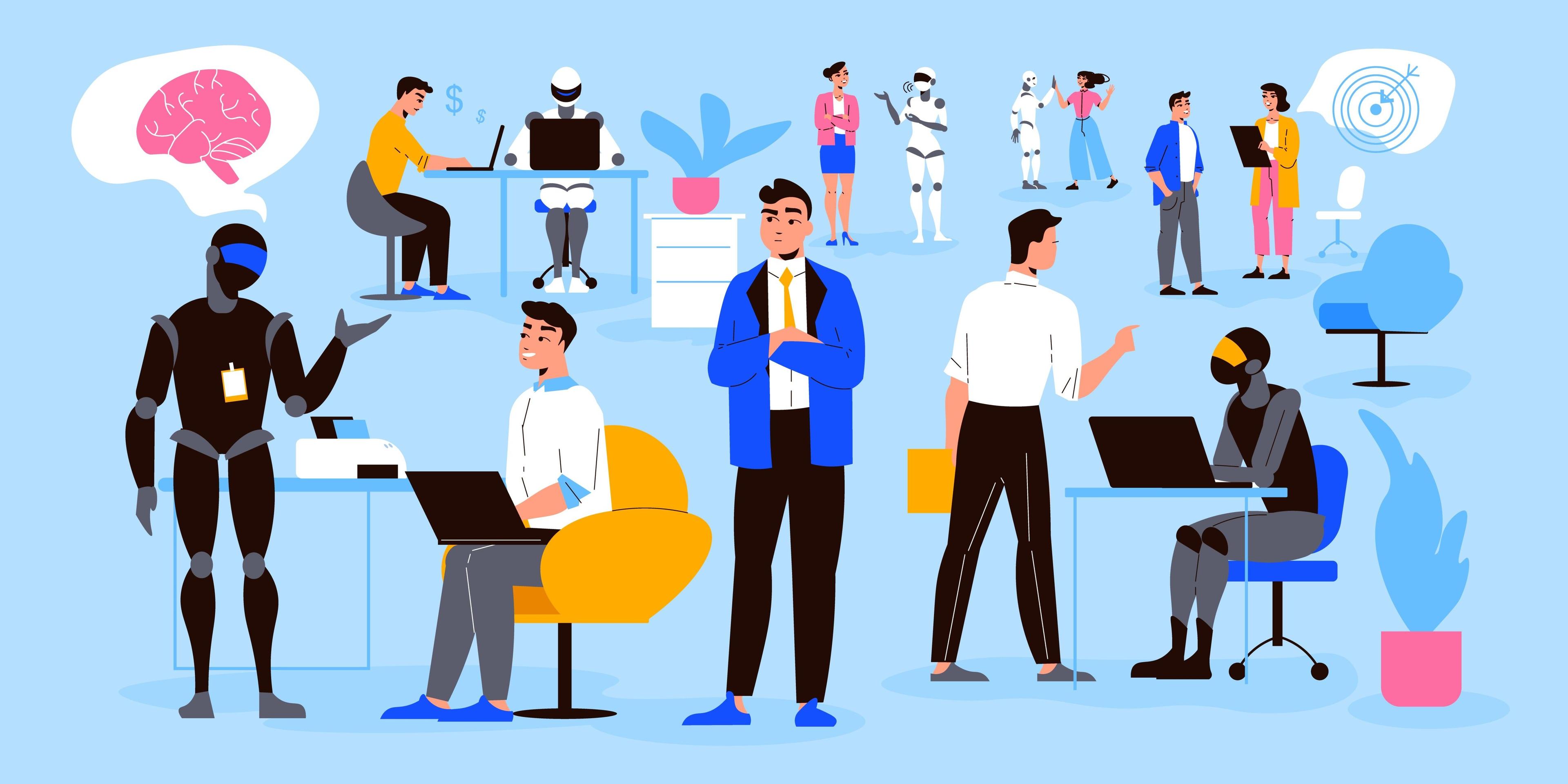
Agentic AI marks a significant shift in how organizations harness digital labor. Unlike earlier automation that executed well-defined instructions, these autonomous agents can understand high‑level goals, reason about the best way to achieve them and carry out multi‑step tasks with minimal supervision. As companies embed them into workflows, a question naturally arises: will these systems make human work obsolete, or will they amplify our capabilities? The reality is complex and often mischaracterized. This blog takes a practical, evidence-based approach to the discussion. Drawing on insights from industry research, interviews and case studies, it examines what makes these systems different, how they are likely to affect employment, which sectors will feel the greatest impact, the opportunities they create and the challenges they pose. Each section is framed as a question to mirror how people search for information online.
What is Agentic AI and Why Does it Matter for the Future of Work?
At its core, Agentic AI refers to intelligent systems that can interpret objectives, decide how to pursue them and act autonomously within defined boundaries. They draw on large language models and other advanced algorithms to analyze diverse data streams, plan and orchestrate tasks, and adjust their approach based on feedback. Unlike conventional automation, which follows predetermined scripts, or generative tools that simply create content, these agents can navigate open‑ended situations and coordinate entire workflows. One expert described it as giving decision rights to the software. That doesn’t mean that they replace human judgment; they operate under human‑set rules and rely on feedback loops to correct course. The ability to handle complexity and adapt to changing conditions is what makes them transformative for the workplace. By managing routine steps and proposing next actions, agents free people to focus on higher-level thinking and relationships.
- Autonomous decision‑making: They assess goals and determine the best sequence of actions.
- Dynamic workflow orchestration: They coordinate tasks across multiple systems and teams, adapting as new information emerges.
- Human-in-the-loop oversight: They remain subject to human guidance and can be paused or overridden at any time.
Will Agentic AI Replace Jobs or Transform Them?
For decades, every major technological advance, from mechanization to personal computing has prompted fears of mass job loss. Those fears have rarely been realised because technology tends to reconfigure work rather than eliminate it. Agentic AI continues that pattern. Experts emphasise that these systems will automate specific tasks within roles, not entire occupations. Routine, rule‑based duties such as sorting documents or generating standard reports may soon be handled by agents. Meanwhile, human roles will shift toward areas that require judgment, empathy and complex problem solving. Leaders across industries note that the workplace of the future is likely to be a hybrid environment in which agents handle repetitive processes and humans focus on creative, strategic and relational work. To prepare for this transition, organizations should break down jobs into tasks, determine which can be fully automated and which require human input, and redesign roles accordingly.
- Tasks suited for Agents: Collecting and synthesizing large datasets, recognizing patterns, executing defined procedures and monitoring systems in real time.
- Tasks reserved for People: Creative problem‑solving, ethical decision‑making, building relationships and understanding social nuance.
- Evolving Roles: As agents assume routine work, employees will pivot toward strategy, innovation and human‑centric interactions.
How will Agentic AI Reshape Industries and Roles?
Every sector that relies on data and process management will feel the impact of agentic systems. In financial services, retail and real estate, agents are already reallocating resources, personalising offers and coordinating logistics. Some organisations have created executive positions such as Chief AI Officer to oversee adoption and ensure alignment with business goals. Professional services like law and healthcare will see agents handle document review and routine administrative tasks, freeing specialists to concentrate on analysis, advising and patient care. Even industries with a strong education, arts and hospitality will use agents to schedule, track and report, leaving practitioners more time for creative and interpersonal aspects. The net effect is not a reduction in headcount but a redefinition of roles. As one industry report notes, this technology is likely to shift work toward higher‑value activities and create roles in governance, policy and systems integration.
- Sectors adopting agents: finance, retail, real estate, transportation, healthcare and professional services.
- New organisational roles: leadership positions like Chief AI Officer and teams dedicated to data governance and compliance.
- Redefined functions: specialists focus on interpretation and strategy while agents manage routine logistics and documentation.
What New Opportunities, Skills and Roles will Emerge?
When a technology automates one set of tasks, it creates demand for others. As adoption of Agentic AI accelerates, new career paths are opening. Organisations need people who can design, supervise and refine these systems. This includes ethicists to ensure fairness, human–AI collaboration coordinators to facilitate teamwork, trainers to refine model behaviours and quality‑assurance leads to test outputs. Generalists who bridge design, software and business will coordinate across functions. Managers are being reimagined as orchestrators who lead blended teams of people and agents; they need a mix of technical understanding, domain expertise, integrative problem solving and socio‑emotional skills. For individuals, developing distinctly human capabilities such as creativity, empathy, and critical thinking that remains paramount. Technical fluency and an understanding of how agents operate will enable them to guide and leverage these tools. A culture of continuous learning is essential because skills quickly become outdated.
- Emerging roles: AI ethics officers, human–AI collaboration coordinators, system trainers and auditors, AI‑augmented service designers and digital process supervisors.
- Essential skills: agentic literacy, deep domain expertise, integrative problem solving and socio‑emotional intelligence.
- Personal growth: cultivate creativity, empathy, curiosity and adaptability while gaining technical fluency to work alongside agents.
What challenges and risks accompany adoption, and how can leaders and individuals prepare?
As Agentic AI matures, organisations face notable risks. Cultural readiness can be a barrier; companies must redesign roles and workflows to support human–machine collaboration rather than bolting agents onto old processes. Skill gaps will emerge if teams lack expertise in AI and ethical decision‑making. Accountability and trust are paramount; agents must have clearly defined boundaries and escalation paths so that humans remain responsible for critical decisions. Another challenge is transparency; employees need to understand how these systems work and how they are being monitored. Public policy will have a role in providing support for workers who face displacement and ensuring that AI gains are broadly shared. To navigate these challenges, leaders should:
- Redesign roles and workflows: focus on outcomes and integrate agents into end‑to‑end processes rather than isolated tasks.
- Invest in training and governance: build agentic literacy across the organisation, cultivate cross‑functional teams and implement clear oversight structures.
- Foster a culture of transparency and trust: communicate how agents operate, encourage feedback and ensure employees can override decisions.
Individuals can prepare by:
- Embracing continuous learning: update skills regularly and stay curious about new technologies.
- Developing human‑centric capabilities: strengthen creativity, ethical reasoning and emotional intelligence to complement agentic systems.
- Building technical fluency: understand how agents function to effectively supervise and collaborate with them.
By addressing these challenges head‑on, organisations and workers can ensure that the rise of autonomous agents enhances rather than diminishes human work. A thoughtful, human‑centred deployment will preserve dignity, create opportunities and help balance the potential of this powerful technology with the needs of society
To Sum Up
Fears of machines taking over every job are not new. History shows that each technological shift, from mechanization to the internet has displaced some tasks while creating new forms of work. The rise of Agentic AI continues this pattern. Autonomous agents will automate routine and data‑heavy tasks and will augment complex processes across industries, but they will not replace the need for human creativity, empathy and judgment. The jobs of tomorrow will blend human and machine strengths, requiring organisations to redesign workflows, invest in new capabilities and build trust through transparent governance. Workers who cultivate distinctive expertise, socio‑emotional skills and an understanding of AI systems will thrive in this landscape. Rather than fearing a jobless future, we should view this technology as a catalyst for reinventing work in more fulfilling and impactful ways.