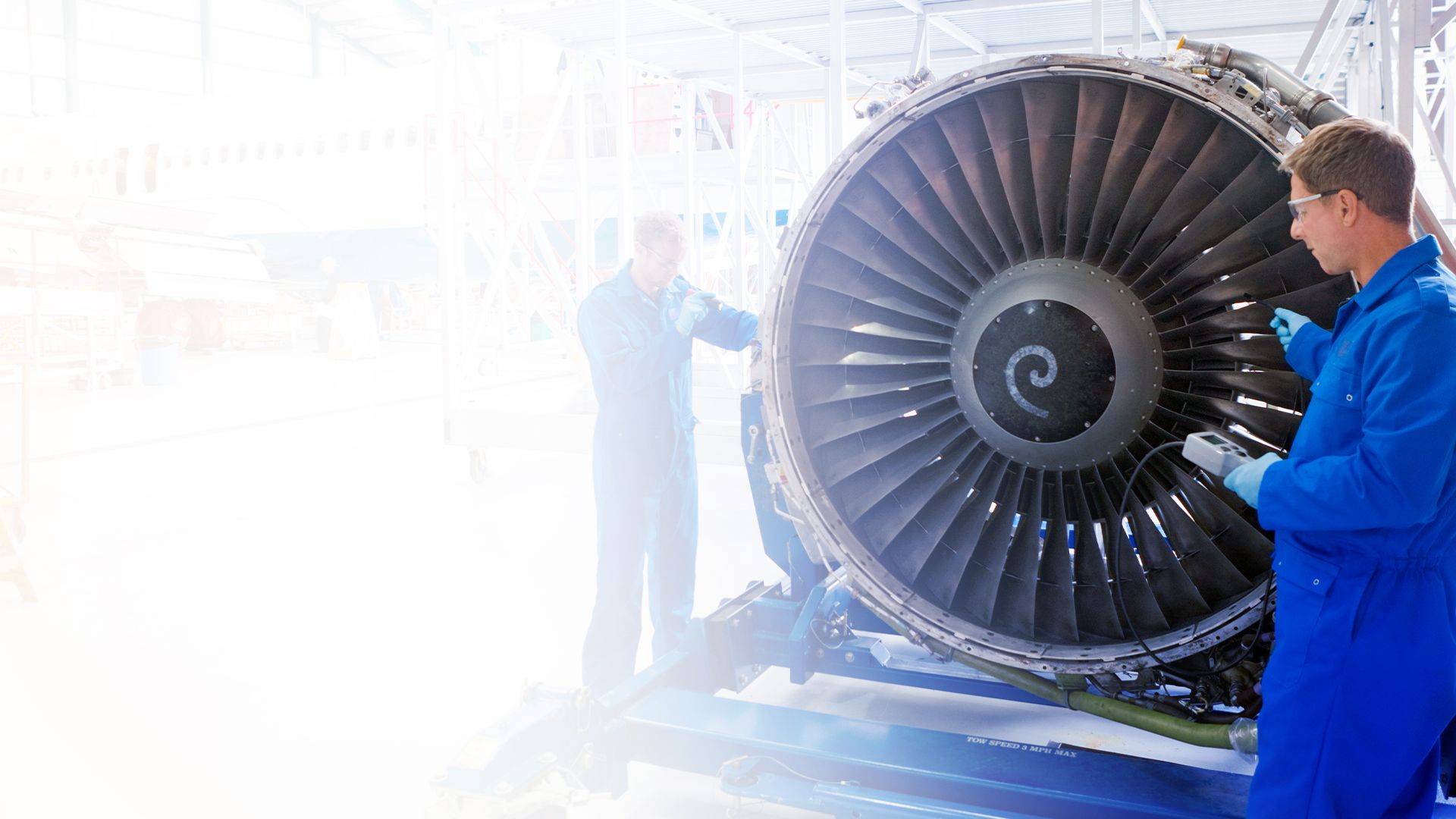
Jet engines operate under extreme conditions, relying on dozens of sensors to continuously monitor temperature, pressure, vibration, and other critical parameters. Detecting developing failures from that data is difficult: true failure events are rare, and conventional data-driven models often struggle to recognize degradation patterns they have never seen before. Aziro built a Physics-Informed Neural Network (PINN) platform that combines sensor data with the physical behavior and constraints of the engine itself, producing predictions that are both statistically meaningful and physically consistent with expected engine behavior. The platform scales from individual sensor readings to full fleet monitoring, giving engineering teams a path from reactive maintenance to predictive, health-based decision-making.
3X Earlier Fault Detection
AI-Powered Video Analytics for Real-Time Safety and Compliance
Overview
Where Rare Failures Meet Rigid Models
Traditional approaches to engine health monitoring struggle with a fundamental data problem: failures are rare, and models trained only on historical patterns miss what they haven't seen before. Purely statistical models can produce outputs that look plausible on paper but don't actually reflect how an engine behaves under real physical constraints. As a result, engineering teams are often left choosing between models that are accurate on paper and models they can actually trust in the field.
- Rare Failure Events, Limited Training Data
True engine failure events are rare, leaving traditional data-driven models with little signal to learn from and few examples of real degradation.
- Unseen Degradation Patterns
Purely statistical models can struggle to recognize degradation patterns they haven't encountered before, limiting their reliability in the field.
- Predictions Without Physical Grounding
Standard AI models can produce statistically plausible outputs that are still physically inconsistent with how an engine actually behaves.
“The model is designed to produce predictions that are not only statistically meaningful, but also physically consistent with expected engine behavior.”
How Physics And AI Learn to See WHAT’s Coming
Aziro's platform combines physics-informed modeling with a flexible interface that scales from a single sensor reading to an entire engine fleet. Rather than treating engine physics and machine learning as separate concerns, the model is trained to respect the physical constraints of the engine while still learning from real sensor data. This gives engineering teams predictions that are not only statistically sound, but also physically defensible.
- Physics-Informed Neural Networks
PINNs combine sensor data with the physical behavior and constraints of the engine, producing predictions that are both statistically meaningful and physically consistent.
- From Single Readings to Bulk CSV Analysis
Engineers can manually enter engine metrics for an instant health assessment, or upload CSV files of sensor data for automated bulk processing and reporting.
- Fleet-Wide Monitoring & Historical Trends
A centralized fleet view tracks the health of multiple engines and individual components, while historical analysis surfaces recurring degradation patterns over time.
Inside The Video Intelligence Platform
- Modeling Approach
- Physics-Informed Neural Networks (PINNs)
- Statistically + Physically Consistent Predictions
- Input Methods
- Manual Sensor Entry
- Bulk CSV Upload & Processing
- Monitoring Views
- Individual Engine Health Assessment
- Fleet-Wide Monitoring Dashboard
- Historical Trend Analysis
- Monitored Parameters
- Temperature
- Pressure
- Vibration
- Other Critical Sensor Metrics
From Reactive Fixes To Predictive Confidence
By tracking degradation trends instead of isolated readings, the platform shifts engine maintenance from reactive to predictive. Instead of waiting for a threshold to be crossed, teams can see how an engine's health is trending and intervene earlier. The result is a maintenance program built around actual engine condition, not fixed schedules or after-the-fact failures.
- 3x Earlier detection of developing faults
- 35% Reduction in unplanned downtime
- 92% Prediction accuracy, physics + sensor data
- 100+ Engines monitored via fleet dashboard
PINN-powered intelligence brings physics and AI together to transform how critical engine health is monitored and managed, supporting a shift from reactive maintenance toward predictive, condition-based decision-making.
How Aziro Can Help
Aziro builds AI systems that go beyond pattern-matching, embedding the physical and domain constraints of critical machinery directly into the model, so predictions hold up not just statistically, but physically.
For organizations operating safety-critical or high-value equipment, Aziro can build physics-informed monitoring platforms tailored to your fleet, scaling from individual asset checks to full fleet-wide predictive maintenance. Reach out to explore how a similar approach could strengthen the reliability of your critical systems.
Connect With Our Domain Experts




Real People, Real Replies.
That's how it usually goes, you reach out with a question or a rough idea, a real person at Aziro responds, and a conversation turns into something big.
私たちと一緒に始めましょう

Talk to us
+1 227 232 3176

Drop us a line at
info@aziro.com