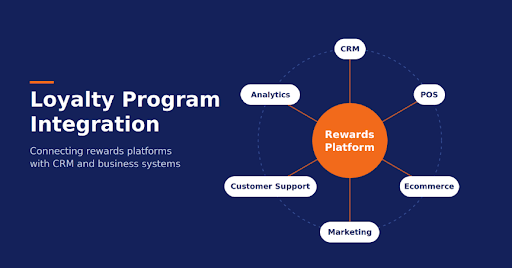
To integrate a rewards platform with your business systems, assess your current stack, define the data to exchange, choose an integration method, map records and rules, secure the data flow, test end to end, and monitor after launch.
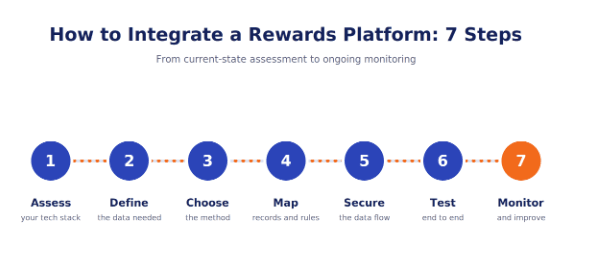
1. Assess Your Existing Technology Stack: List every system involved, including CRM, POS, e-commerce, payments, customer support, marketing automation and analytics. Document current data flows and identify where duplicate records or manual work occur. Note which systems are cloud-based, and which are on-premise, since this affects the integration options available. Review each system’s API documentation, existing connectors and any vendor limits early. This assessment becomes the baseline for your integration plan and helps you spot quick wins.
2. Define the Customer and Rewards Data You Need: Agree on the fields to exchange, such as customer ID, transaction ID, purchase value, points earned and redeemed, current balance, loyalty tier and event timestamps. Share only the data each use case needs. Create a shared data dictionary so every team uses the same field names, formats and definitions. Decide which data must move in real time, such as balances at checkout, and which can sync in batches, such as reporting data. Involve marketing, finance, IT and compliance teams early so everyone agrees before development begins.
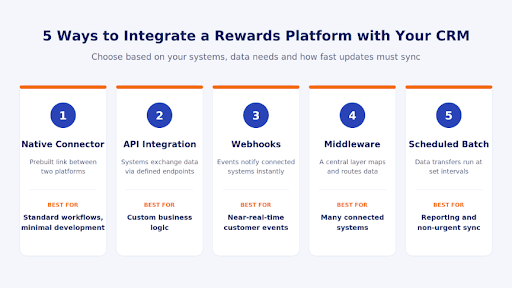
3. Choose the Integration Method: Evaluate native connectors, APIs, webhooks, middleware and scheduled transfers against functionality, implementation effort, reliability, scalability and cost. A native connector may be enough for a simple setup, while a business with multiple channels and regions often benefits from middleware. Many integrations combine methods, for example webhooks for real-time events and scheduled jobs for reconciliation. Factor in long-term maintenance, since custom integrations need ongoing updates as connected platforms change.
4. Map Records and Business Rules: Define how customer identities are matched and duplicates are handled, and which system is authoritative for each field. Document how returns, cancellations, refunds, expired points and reversals are processed. Create a field-level mapping that shows how each data element moves between systems and what transformations apply. Capture edge cases such as partial refunds, split payments and orders placed online but returned in-store. Clear, written rules reduce disputes about balances and make the integration easier to support.
5. Build and Secure the Data Flow: Configure authentication, access controls, encryption, consent handling, logging and data retention in line with the security and privacy requirements that apply to your business and customers. Use secure methods such as OAuth or managed API keys, and store credentials in a secrets manager rather than in code. Apply least-privilege access so each system can only read or write the data it needs. Build in error handling and idempotency from the start, so failed or repeated requests don’t create incorrect balances.
6. Test End-to-end Scenarios: Test eligible and ineligible purchases, duplicate events, delayed messages, failed API calls, refunds, redemptions and balance updates. Confirm that retries never award points twice. Run tests in a sandbox environment with realistic data before moving to production. Include load testing to make sure the integration holds up during peak periods such as holiday sales. Have business users validate results alongside IT, since they can spot rule errors that technical tests may miss.
7. Monitor and Improve After Launch: Track failed transactions, sync delays, mismatched balances and integration errors alongside business outcomes. Assign clear owners for alerts, issue resolution and ongoing maintenance. Set up dashboards and automated alerts so problems are caught before customers notice them. Run regular reconciliation checks between the loyalty platform and connected systems to confirm balances match. Review performance periodically and refine the integration as your program, channels and customer needs evolve.