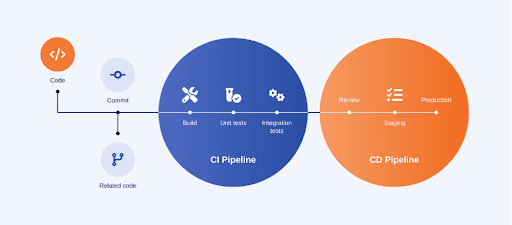
The best CI/CD platform for a DevOps team is the one that fits its code hosting, cloud strategy, security needs and scale. There is no single winner. This guide compares six leading options to help you choose. CI/CD stands for continuous integration and continuous delivery (or deployment). It is the practice of automatically building, testing and releasing code every time a developer makes a change. Instead of bundling weeks of work into a risky release, teams ship small, verified changes many times a day.
CI/CD has become central to modern DevOps. According to the CD Foundation's State of CI/CD Report 2024, 83% of developers are involved in DevOps-related activities, and CI/CD tool usage is associated with better deployment performance across all DORA metrics. AI is raising the stakes further. Google's 2025 DORA report found that 90% of software professionals now use AI at work, a 14% increase from the previous year. More code, written faster, needs pipelines that can test and ship it safely.
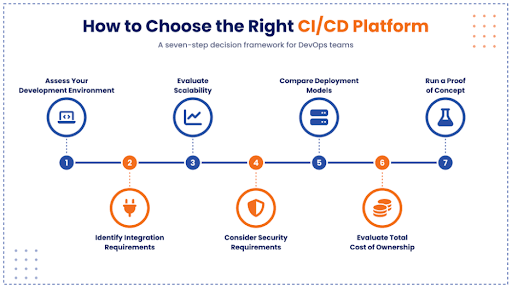
When evaluating a CI/CD platform, organizations should look at pipeline automation, Git integration, testing and deployment features, Kubernetes and cloud support, built-in security, scalability, hosting model, developer experience, enterprise integrations and total cost.
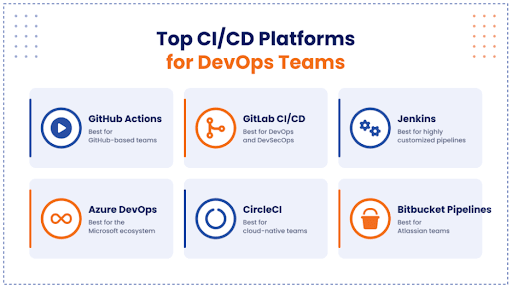
This guide compares six of the most widely used platforms:
- GitHub Actions: CI/CD built directly into GitHub
- GitLab CI/CD: part of GitLab's single DevSecOps platform
- Jenkins: the open-source, plugin-driven automation server
- Azure DevOps: Microsoft's end-to-end DevOps suite
- CircleCI: a cloud-first CI/CD service known for speed
- Bitbucket Pipelines: CI/CD built into Atlassian's Bitbucket Cloud