1. What is cloud infrastructure security?
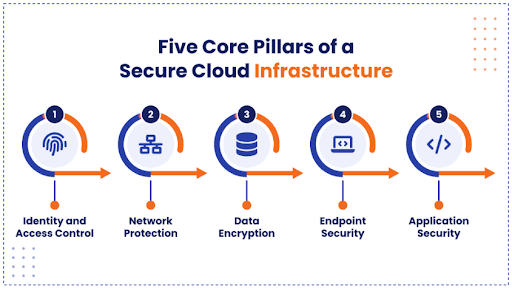
Cloud infrastructure security protects cloud-based compute, storage, networks, identities, workloads, data and configurations through preventive, detective and recovery controls.
2. What are the main risks to cloud infrastructure?
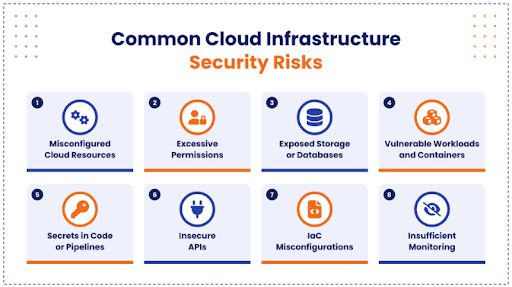
Common risks include misconfiguration, excessive permissions, exposed data, vulnerable workloads, insecure APIs, exposed secrets, and insufficient monitoring.
3. What are cloud infrastructure security best practices?
Core practices include least-privilege access, network segmentation, encryption, continuous configuration monitoring, IaC and CI/CD security checks, centralized monitoring, automated compliance, and tested backup and recovery procedures.
4. How do you assess cloud infrastructure security?
Start with asset discovery, then review identities, networks, data protection, workloads, IaC and CI/CD, and compliance. Prioritize findings by risk, remediate, and establish continuous monitoring going forward.
5. What is the difference between cloud security and cloud infrastructure security?
Cloud security is the broader discipline covering applications, data, identities, and infrastructure together. Cloud infrastructure security focuses specifically on securing the underlying environment, meaning networks, workloads, configurations, and access controls.
6. How does AI improve cloud infrastructure security?
AI helps identify anomalies, correlate security signals across large volumes of telemetry, prioritize risk, assist incident triage, and automate selected remediation or policy-enforcement workflows. It's also becoming a security responsibility in its own right, since AI-driven attacks are growing quickly.
7. How can enterprises secure multi-cloud infrastructure?
Standardize security policies and governance across providers, maintain centralized visibility, apply consistent identity and network controls, and continuously assess configurations in each cloud environment.
8. How does Infrastructure as Code improve cloud security?
IaC makes infrastructure configuration repeatable and reviewable. Security checks applied before deployment to catch insecure configurations earlier in the delivery lifecycle, before they reach production.