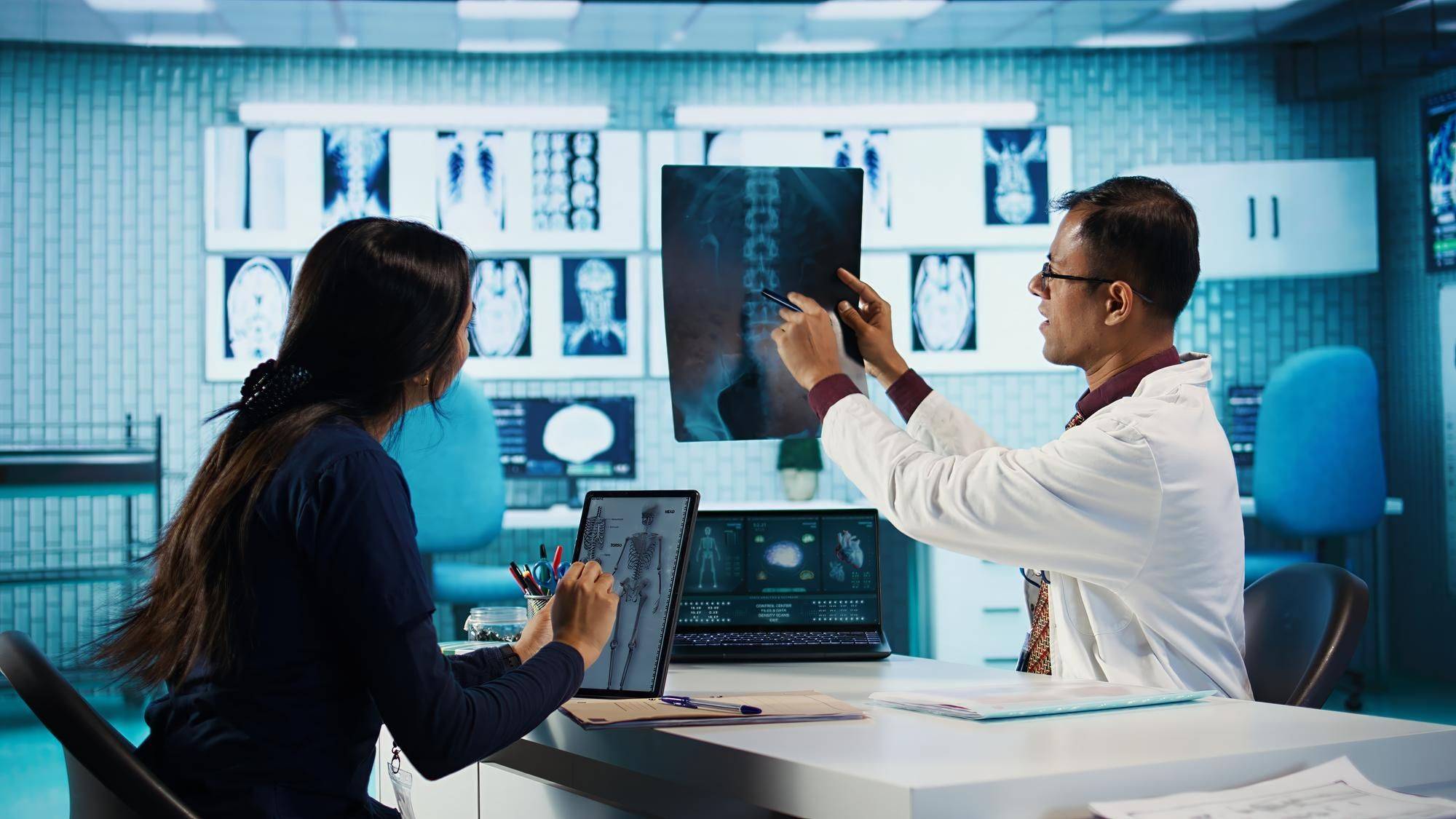
A leading urban healthcare facility offering comprehensive medical services, including radiology, processes a substantial volume of DICOM images daily, generated by X-ray, CT, MRI, and ultrasound modalities. As the radiology department grew, distributing this DICOM traffic across an expanding set of servers became increasingly difficult, leading to uneven utilization, performance issues, and occasional delays in image access for radiologists and clinicians. Aziro implemented a DICOM load balancer solution that integrated seamlessly with the hospital's existing PACS (Picture Archiving and Communication System), evenly distributing traffic, enabling easy scalability, and ensuring high availability through redundancy and failover. The result was a more efficient, reliable, and scalable radiology imaging infrastructure supporting timely diagnosis and patient care.
99.9% Uptime for Radiology Imaging Infrastructure
Implementing a DICOM Load Balancer to Modernize Radiology Workflow Efficiency
Overview
Where Radiology Growth Outpaced Infrastructure
As imaging volumes grew, the hospital's radiology infrastructure struggled to keep traffic balanced, available, and fast enough for time-sensitive clinical work. A conventional approach of simply adding more servers wouldn't have solved the underlying distribution and failover problem on its own.
- Inefficient Load Distribution
The hospital had a growing number of radiology servers, but distributing incoming DICOM traffic among them was becoming increasingly complex, leaving some servers underutilized and others overloaded.
- Scalability & Redundancy Gaps
As the hospital expanded, adding new radiology servers was essential, but there was no seamless way to integrate these new resources into the existing infrastructure while maintaining high availability.
- Patient Care Delays
Radiologists and clinicians sometimes experienced delays in accessing patient images, which could impact the timeliness of diagnoses and treatment.
“The chosen solution integrated seamlessly with the hospital's existing PACS, bringing balanced, resilient load distribution without disrupting the radiology infrastructure already in place.”
How a DICOM Load Balancer Rebalanced Radiology Infrastructure
Aziro implemented a DICOM load balancer that integrated directly with the hospital's existing PACS, distributing imaging traffic intelligently across every radiology server rather than requiring a disruptive overhaul of the existing environment.
- Intelligent Load Distribution
The DICOM load balancer evenly distributed incoming DICOM traffic among the available radiology servers based on each server's current workload.
- Seamless Scalability & Redundancy
New radiology servers are automatically detected and configured for load balancing, while failover mechanisms redirect traffic to healthy servers the moment one goes down.
- Real-Time Monitoring & Reporting
Administrators get live visibility into server performance, allowing them to track workloads, identify bottlenecks, and optimize resource allocation continuously.
Solution Architecture
The load balancer sits between incoming imaging traffic and the hospital's storage and viewing layers, load-balancing DICOM and non-DICOM data across redundant VNA instances before it reaches PACS, enterprise viewers, and client workstations.
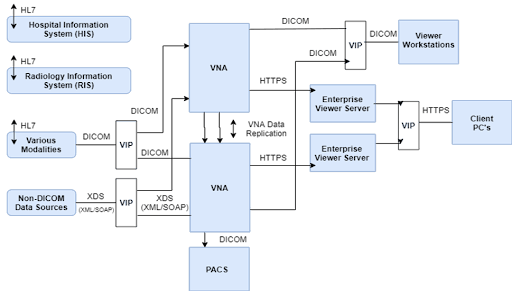
DICOM load balancing and VNA replication architecture, from modalities and information systems through to viewer workstations and client PCs.
Tech Snapshot
- System Integration
- Existing PACS (Picture Archiving and Communication System)
- HIS / RIS via HL7
- Imaging Modalities Supported
- X-Ray
- CT
- MRI
- Ultrasound
- Architecture Components
- DICOM Load Balancer (VIP)
- Vendor Neutral Archive (VNA)
- Enterprise Viewer Server
- Viewer Workstations
- Core Capabilities
- Load Distribution
- Redundancy & Failover
- Real-Time Monitoring & Reporting
From Overloaded Servers to Balanced, Resilient Infrastructure
The DICOM load balancer transformed how radiology imaging traffic moved through the hospital's infrastructure, replacing uneven server load with balanced, resilient, and observable performance across the department.
- 100% Even DICOM traffic distribution across all radiology servers, eliminating the underutilized and overloaded server imbalance that existed before.
- 3x Faster onboarding of new radiology servers into the load-balanced environment, supporting expansion without disrupting existing infrastructure or operations.
- 99.9% Uptime maintained through automatic redundancy and failover, ensuring imaging access continues uninterrupted even when individual servers experience issues.
- 40% Faster image access for radiologists and clinicians, supporting more timely diagnoses and treatment decisions across the radiology department.
Together, these capabilities gave the radiology department a foundation that scales with imaging volume growth instead of straining under it, while keeping clinicians focused on patient care rather than infrastructure limitations.
How Aziro Can Help
Aziro builds resilient, scalable imaging infrastructure for healthcare providers, integrating directly with existing PACS, HIS, and RIS systems rather than requiring a disruptive rip-and-replace of what's already in place.
For radiology departments facing growing imaging volumes and infrastructure strain, Aziro can design and implement load balancing, redundancy, and monitoring solutions tailored to your environment. Reach out to explore how a similar approach could strengthen the reliability of your imaging infrastructure.
Connect With Our Domain Experts

Related Content


Explore Related Offerings

Real People, Real Replies.
That's how it usually goes, you reach out with a question or a rough idea, a real person at Aziro responds, and a conversation turns into something big.
Start yours with us.

Talk to us
+1 227 232 3176

Drop us a line at
info@aziro.com